Free Tools
Catfish Probability Detector
Check whether a dating profile has suspicious identity or photo signals.
Dating Bio Red Flag Detector
Review a bio for scam, pressure, or trust-warning language.
Dating Safety Checklist
Use free GuyID tools before moving from chat to a real date.
Next step
Create your GuyID trust profile
Share consent-based trust signals before a date without turning the conversation into an interrogation.
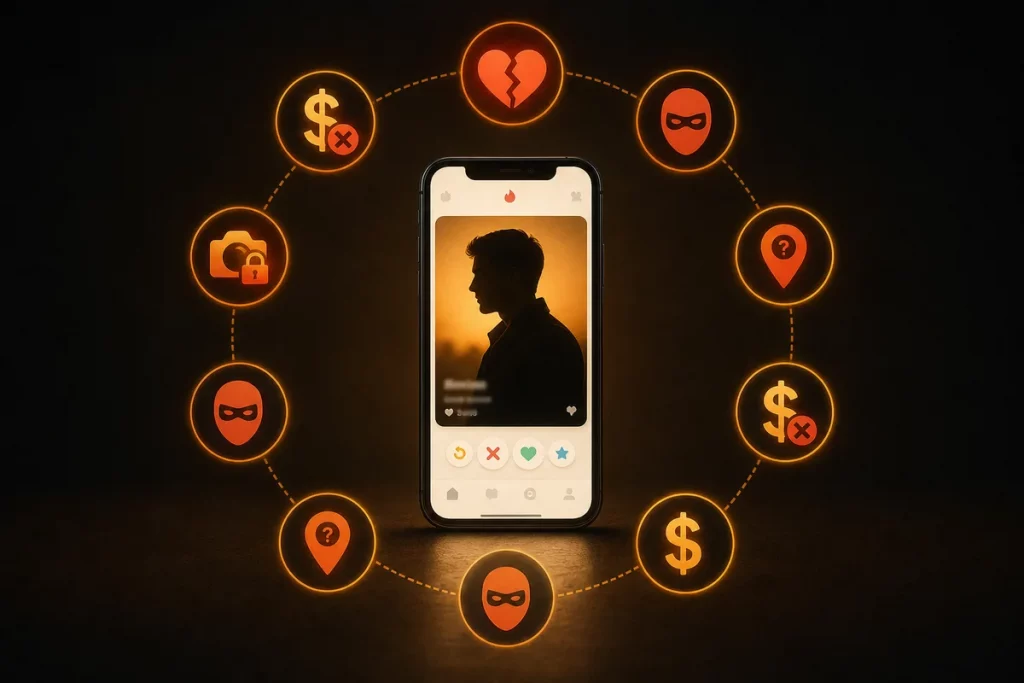
They’re statistical realities that every person swiping, matching, and messaging needs to understand. The good news? Most online dating dangers are preventable when you know what to look for. This guide covers the 12 most serious risks, the data behind each one, and the concrete steps that reduce your exposure to nearly zero.
NavigateTable of Contents28 sections
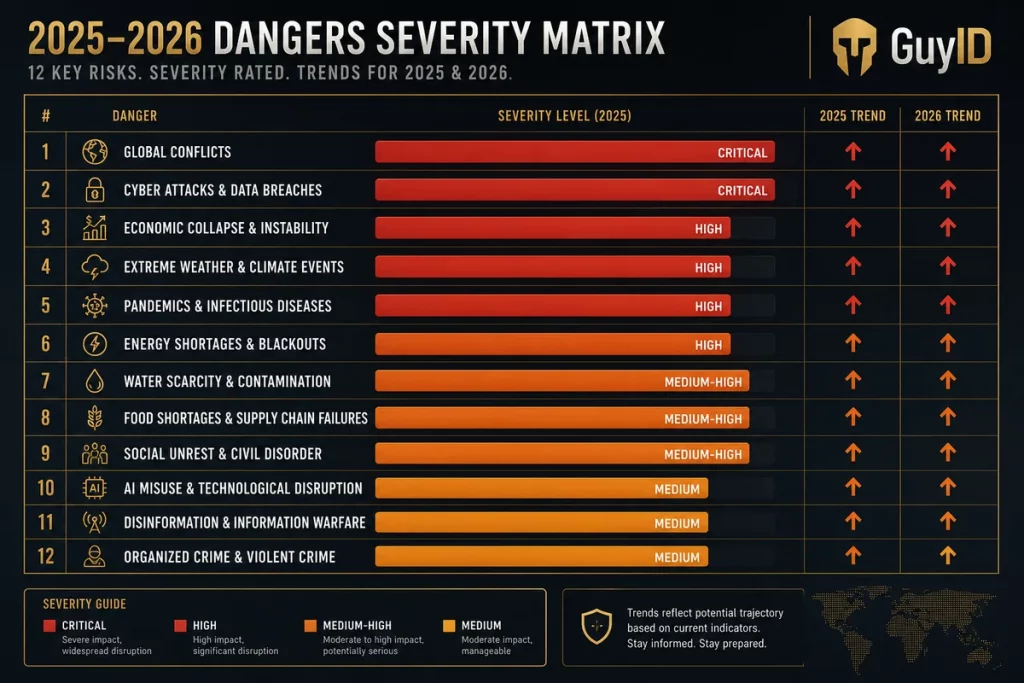
The State of Dating Safety in 2026
Online dating dangers have evolved significantly in the past few years. The threat landscape in 2026 looks very different from even 2023, driven by three major shifts:
AI can increase scam sophistication. Scammers can use generated profile photos, automated conversations, and manipulated video. The Federal Trade Commission recommends recognizing common romance-scam stories and refusing requests to send money or invest.
Scam operations have industrialized. What was once the work of individual con artists is now conducted by organized fraud networks operating from compound facilities in Southeast Asia, West Africa, and Eastern Europe. These operations run like call centers — with shift schedules, performance quotas, and training materials. A single fraud compound can simultaneously target thousands of victims across dozens of dating platforms.
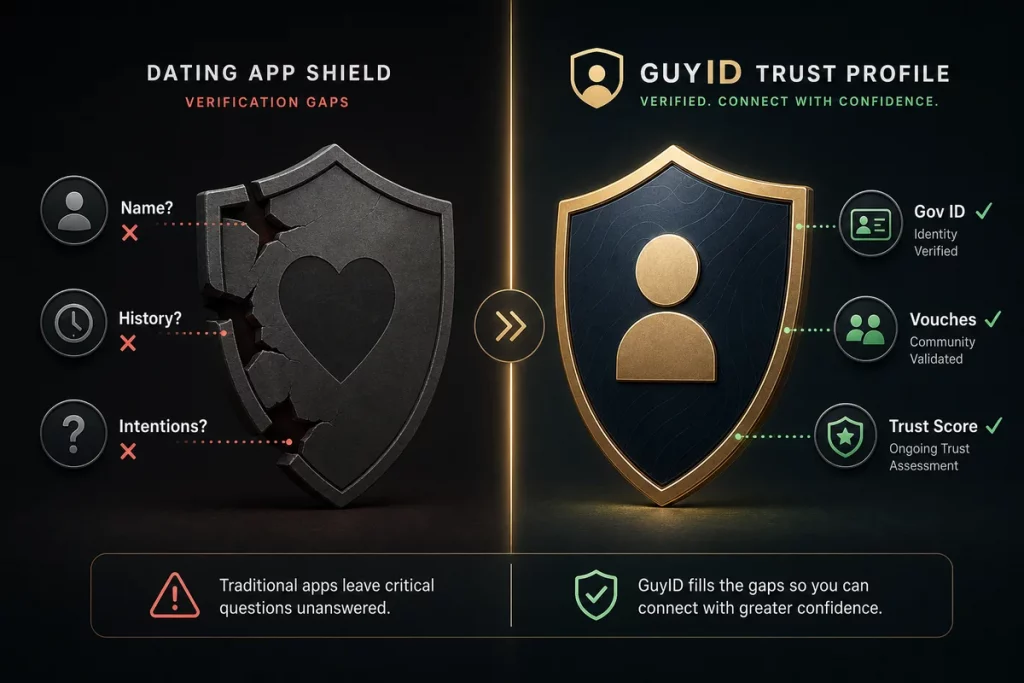
Dating apps haven’t kept pace. While platforms like Bumble, Hinge, and Tinder have introduced photo verification, the underlying technology only confirms that a live person matches the photos — not their name, intentions, or criminal history. This trust gap in online dating leaves users responsible for their own safety at a time when threats are more sophisticated than ever.
Understanding the full scope of online dating dangers is the first step toward dating safely. Here are the 12 risks every user should know.
12 Online Dating Dangers You Need to Know
1. Romance Scams
The most financially devastating of all online dating dangers. A scammer creates a fake profile, builds emotional connection over weeks or months, then fabricates a crisis requiring your money — medical emergencies, travel costs, business failures, or military deployment expenses. Romance scams work because they exploit real human emotions: loneliness, empathy, love, and the desire to help someone you care about.
alone
Protection: Learn the 14 warning signs of a romance scammer
Critical Risk
2. Catfishing
Someone creates a fake online identity — using stolen photos, fabricated personal details, and invented life stories — to deceive you into a relationship. Not all catfish want money; some seek emotional validation, revenge, or entertainment at your expense. The emotional damage from discovering you’ve invested real feelings in a fabricated person can be severe and long-lasting. AI-generated photos have made catfishing dramatically easier — a convincing fake identity can now be created in minutes.
Protection: How to tell if someone is catfishing you
High Risk
3. Investment Fraud (Pig Butchering)
A match builds romantic connection, then introduces cryptocurrency, forex, or stock trading as a casual topic. They guide you to a fake trading platform showing artificial gains, encouraging larger deposits until the platform vanishes with your money. The FBI’s IC3 now ranks it as the #1 internet fraud type by dollar volume.
Potential loss: Losses can be substantial, especially when investment fraud is involved.
Protection: Understand the pig butchering scam pattern
Critical Risk — Highest Financial Loss
4. Sextortion
A match escalates to exchanging intimate photos or video, then threatens to share the material unless you pay. Payment does not guarantee that threats or distribution will stop. Preserve evidence, stop engaging, report the account, and seek appropriate support.
Reporting: Preserve evidence and report threats promptly.
Protection: Never share intimate content with someone you haven’t met in person
Critical Risk — Psychological + Financial
5. Identity Theft
Scammers harvest personal information through dating conversations — your full name, employer, birthday, address, pet names, and other details commonly used in security questions. Some send phishing links disguised as “verification” sites that capture login credentials. Others build complete identity profiles for synthetic identity fraud, credit card applications, or account takeovers. The intimate nature of dating conversations means people share information they’d never reveal to a stranger in any other context.
Protection: Share minimal personal details until you’ve verified someone’s identity through reliable verification methods
High Risk
6. Physical Safety Threats
Meeting someone from a dating app creates inherent physical risk — you’re meeting a stranger whose identity you may not have verified. While violent incidents are uncommon relative to the total number of dates, threats do occur. In its 2023 survey, Pew Research Center found that 6% of American online dating users had been threatened with physical harm on a dating site or app; the share was 11% among women under 50 who had used online dating (Pew Research Center).
Protection: Follow first date safety protocols and prefer a populated public place for an initial meeting
High Risk
7. Stalking and Harassment
Dating apps can expose your location, routine, and personal details to someone who becomes obsessive or threatening. Features like Tinder’s distance display, location-tagged photos, and identifiable backgrounds in pictures can reveal where you live and work. Even after blocking someone on the app, they may have gathered enough information to find you on other platforms or in person. This is one of the online dating dangers that disproportionately affects women and LGBTQ+ individuals.
Protection: Follow dating app privacy best practices and review your app’s safety features
Medium Risk
8. Emotional Manipulation
Not all online dating dangers involve crime. Emotional manipulation — love bombing, gaslighting, breadcrumbing, and future faking — can cause significant psychological harm without crossing legal lines. Manipulators use dating apps to access a steady supply of targets. The early stages of these relationships often feel intensely positive, making it harder to recognize the pattern until significant emotional damage has occurred.
Protection: Learn to recognize emotional manipulation tactics and dating app red flags
Medium Risk
9. Data Privacy Breaches
Dating apps collect deeply personal information — sexual orientation, religious beliefs, political views, location data, conversation content, and behavioral patterns. Data breaches expose this information publicly. In recent years, major breaches have affected Ashley Madison (2015), MeetMindful (2021), and several smaller apps. Even without a breach, dating apps share data with third-party advertisers and analytics companies, often with limited transparency.
Protection: Minimize data exposure and review privacy settings
Medium Risk
10. Fake Profiles and Bots
Fake profiles can include bots, scam accounts, and people using fabricated identities. Platform detection reduces some of this activity, but users should still verify inconsistencies before sharing sensitive information or money.
Protection: Learn how to spot fake dating profiles and use AI detection tools
Medium Risk
11. Undisclosed Relationship Status
A significant percentage of dating app users are in relationships or married. While dating apps generally prohibit this, enforcement is minimal. The emotional harm of discovering your partner has been unfaithful — or that you’ve unknowingly become involved with someone else’s partner — is one of the most common but least discussed online dating dangers.
Protection: Verify identity and relationship status through GuyID’s Trust Profile system, which includes peer vouching from people who know the person in real life
Medium Risk
12. Mental Health Impact
Beyond specific threats, rejection, ghosting, superficial judgment, and choice overload can affect wellbeing differently for different people. If app use is causing persistent distress, take a break and consider speaking with a qualified mental-health professional.
Protection: Set time limits on app usage, take regular breaks, and prioritize quality connections over quantity
Medium Risk
Who Is Most at Risk?
While online dating dangers affect all users, certain groups face disproportionate risk:
Women face higher physical safety risks. Women are significantly more likely to experience stalking, harassment, and physical violence from dating app connections. Women are also more likely to be targeted by sextortion schemes involving intimate images.
Older adults are more likely to have substantial savings, may be more trusting of online connections, and may be less familiar with reverse image search and other verification tools.
LGBTQ+ users face unique threats. In regions where homosexuality is criminalized or socially stigmatized, dating apps can be used to target, entrap, or blackmail LGBTQ+ individuals. Even in accepting regions, LGBTQ+ users face higher rates of harassment and discrimination on dating platforms. See our specific guide on dating safety for LGBTQ+ users.
Recently divorced or bereaved individuals face emotional vulnerability. People re-entering dating after loss or divorce are particularly susceptible to love bombing and emotional manipulation. Scammers actively seek these profiles — prompts mentioning recent divorce, loss of a spouse, or “starting over” are targeting signals. Read our guide on safe online dating after divorce.
Young adults face sextortion risk. The 18-25 age group has the highest sextortion victimization rate, driven by higher comfort with sharing intimate content and less experience recognizing manipulation patterns. The FBI has specifically flagged sextortion of young adults as an epidemic-level threat.
How to Date Safely Online in 2026
The goal isn’t to avoid online dating — it’s to approach it with the same awareness you’d bring to any activity involving strangers. These practices address the full spectrum of online dating dangers:
Verify before you invest emotionally. Before developing feelings for a match, take basic verification steps: reverse image search their photos using reverse image search tools, check for consistent social media presence, and insist on a video call within the first two weeks. These three steps eliminate the vast majority of catfish, romance scammers, and fake profiles.
Require identity verification for serious connections. When a connection moves beyond casual chatting, ask them to verify through GuyID’s government ID verification. A verified Trust Score confirms their real identity, builds credibility through peer vouching, and demonstrates they take safety seriously. Someone who refuses third-party verification when asked politely is telling you something important.
Never send money — period. No matter the story, the emergency, the investment opportunity, or the emotional pressure. This single rule, applied without exception, prevents the most financially devastating online dating dangers entirely.
Protect your personal information. Use a Google Voice number instead of your real phone number for initial conversations. Don’t share your workplace, home address, or daily routine until you’ve met in person multiple times. Review your dating app privacy settings using our privacy guide.
Tell a friend where you’ll be and who you’re meeting. Arrange your own transportation. Don’t leave drinks unattended. Share your GuyID Date Mode link before meeting — it provides your verified trust information while keeping personal details private.
Trust your instincts. If something feels off — the person seems too good to be true, the conversation feels scripted, or you’re being pushed faster than you’re comfortable — trust that feeling. Use GuyID’s free screening tools to check what your gut is telling you.
What Dating Apps Are Doing About It
Major dating platforms have introduced safety features in response to growing online dating dangers, but significant gaps remain:
| Feature | What It Does | What It Doesn’t Do |
|---|---|---|
| Photo verification (Tinder, Bumble, Hinge) | Confirms the person matches their photos | Doesn’t verify name, criminal history, or intentions |
| AI message screening | Flags suspicious messages and known scam patterns | Can’t detect sophisticated or novel scam approaches |
| Block and report | Removes flagged profiles and bans devices | Scammers create new accounts from new devices easily |
| Background checks (some apps) | Screens for criminal records and sex offender registries | Limited to one jurisdiction; easily bypassed with false names |
| Panic buttons / safety features | Emergency contact during dates (Tinder’s Noonlight) | Only useful during physical meetings, not online scams |
The fundamental limitation is that dating apps verify photos, not people. They confirm you look like your pictures — not that you are who you claim to be, that you’re single, or that your intentions are genuine. This is the verification gap that dating apps can’t solve alone and the reason third-party verification tools like GuyID exist.
Some platforms are moving in the right direction. Bumble’s Private Detector uses AI to identify and blur inappropriate images before recipients see them. Hinge’s prompt-based profiles create richer context than swipe-only apps. Tinder’s integration with Noonlight provides a panic button during dates. But none of these features address the core issue: confirming that the person behind the profile is who they claim to be, has good intentions, and can be held accountable. Until dating apps solve the identity verification problem — not just the photo-matching problem — online dating dangers will persist.
What you can do that apps can’t. The safety gap between what apps provide and what you actually need creates a personal responsibility layer. The most effective protections against online dating dangers are user-initiated: reverse image searching before emotional investment, requiring video calls before meeting, using third-party identity verification through GuyID, following first date safety protocols, and maintaining healthy skepticism about stories that haven’t been verified. These individual actions, consistently applied, are more protective than any platform feature.
Free Tools to Protect Yourself
You don’t need expensive subscriptions to stay safe while dating online. These free tools provide meaningful protection against the most common threats:
GuyID Free Screening Tools (guyid.com/tools): Reverse image search, fake profile detection, red flag analysis, and the catfish probability detector. Screen any match in under two minutes. These tools are purpose-built for dating safety, unlike general-purpose search engines that may miss dating-specific red flags.
Google Reverse Image Search: Drag any photo into Google Images to check if it appears on other websites, other dating profiles, or stock photo databases. This catches stolen photos and recycled scam profiles. For best results, test multiple photos from the same profile — a catfish may mix stolen and original images.
GuyID Date Mode Link (guyid.com/blog/date-mode-link-how-it-works): Share your verified Trust Profile with a date without revealing personal information. A mutual safety tool that protects both parties during the critical transition from app to real life. When you share your Date Mode link, you’re signaling that you take safety seriously — and you’re inviting your match to do the same.
GuyID Romance Scam Loss Calculator (guyid.com/blog/romance-scam-loss-calculator): If you’ve already been scammed, this tool helps you calculate total exposure across all payment methods and generates a comprehensive report you can use for law enforcement filings, bank disputes, and insurance claims.
FBI IC3 (ic3.gov): The federal filing system for internet fraud. Free to use and essential for any financial fraud recovery attempt. Filing an IC3 report is the first step in triggering the FBI’s Financial Fraud Kill Chain for wire transfer recovery.
FTC ReportFraud (reportfraud.ftc.gov): The Federal Trade Commission’s consumer fraud reporting portal. Your report contributes to the Consumer Sentinel Network used by over 2,800 law enforcement agencies. Filing here takes about 10 minutes and helps build the national picture of fraud trends that drives policy and enforcement action.
Have I Been Pwned (haveibeenpwned.com): Check whether your email address or phone number has been exposed in a data breach. If your dating app credentials were compromised in a breach, scammers may use those details to target you or access your accounts. Change passwords immediately for any compromised services.
How GuyID Helps
GuyID should appear when it is useful, not as a banner ad. A GuyID Trust Profile gives someone a portable way to share trust signals before a date, while identity verification and social vouching help turn vague profile claims into clearer next steps.
Useful next steps:
- Create a GuyID Trust Profile when you want a cleaner way to share verified trust signals.
- Use GuyID free tools and related guides when you need a checklist before meeting someone.
- Treat identity verification as confidence-building, not a guarantee.
- Use social vouching when you want context from people who already know the person.
- Sign up only when the extra trust layer helps the decision you are already trying to make.
Frequently Asked Questions
What are the biggest online dating dangers in 2026?
By volume, the most common are catfishing, sextortion, and identity theft. By psychological impact, emotional manipulation and sextortion cause the most lasting harm. All of these are preventable with proper verification and awareness.
Is online dating safe?
Online dating can be safe when approached with awareness and verification habits. Millions of people meet partners safely through dating apps every year. The key is understanding online dating dangers and taking basic precautions: video chat before meeting, never send money, reverse image search photos, verify identity through tools like GuyID, and follow first date safety protocols. Safety isn’t about avoiding dating — it’s about dating informed.
How can I date safely online?
Dating safely online requires five core habits: (1) reverse image search photos before investing emotionally, (2) require a video call within two weeks of matching. (3) Never send money to someone you haven’t met in person, (4) verify identity through GuyID before escalating the relationship, and (5) follow first date safety protocols when meeting. These five steps prevent the vast majority of online dating dangers.
Which dating apps are the safest?
Bumble and Hinge generally have stronger moderation tools than most competitors. However, your personal safety habits matter more than which app you use. See our ranking of the safest dating apps in 2026 for a detailed comparison of safety features across all major platforms.
What should I do if I encounter a scammer on a dating app?
Stop communication, screenshot all evidence, report the profile to the dating app, and file reports with the FBI’s IC3 (ic3.gov) and the FTC (ReportFraud.ftc.gov). If you lost money, contact your bank immediately. For a complete guide to the reporting process, see how to report a scammer.
Are online dating dangers getting worse?
The threat mix is changing as fraudsters adopt new tools, including generated images and automated messaging. Verification tools and awareness are also improving. Treat trend claims cautiously unless they cite a defined dataset and period.
How do I protect my children from online dating dangers?
Open conversation is the strongest protection. Discuss sextortion specifically — the FBI has identified it as an epidemic among young adults. Teach them to never share intimate images digitally, to recognize love bombing and emotional manipulation, and to verify identities before meeting anyone. If they’ve been targeted, report to the FBI’s IC3 immediately and reassure them it’s not their fault.
Can dating app verification prevent online dating dangers?
Partially. Dating app photo verification eliminates basic catfish but doesn’t prevent romance scams, investment fraud, sextortion, or emotional manipulation by real people using real photos. Full identity verification — like GuyID’s government ID + social vouching system — provides significantly more protection by confirming who someone actually is, not just what they look like.