Free Tools
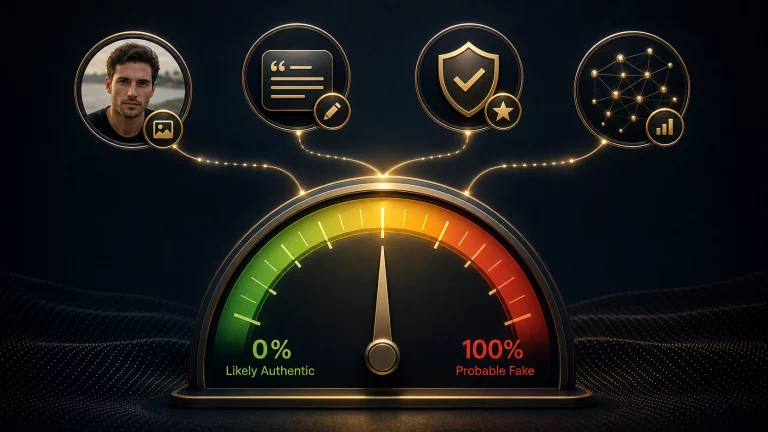
Catfish Probability Detector
Check whether a dating profile has suspicious identity or photo signals.
Dating Bio Red Flag Detector
Review a bio for scam, pressure, or trust-warning language.
Dating Safety Checklist
Use free GuyID tools before moving from chat to a real date.
Next step
Create your GuyID trust profile
Share consent-based trust signals before a date without turning the conversation into an interrogation.
NavigateTable of Contents15 sections
How much could a romance scam actually cost you? The romance scam loss calculator is a free interactive tool that estimates your personal financial exposure to romance scams — translating abstract risk into a concrete dollar figure that makes the threat real and the prevention investment obvious. This guide explains what the calculator measures, how to use it, what the results mean, and the specific prevention steps that reduce your risk score to near zero.
Why a Personal Loss Estimate Changes Behavior
Dating safety statistics are everywhere — and they change almost nobody’s behavior. The reason: abstract numbers about other people don’t feel personal.
The Abstraction Problem
“$1.3 billion in annual romance scam losses” (FTC, 2026) is a number too large to feel real. These statistics inform without motivating because they describe other people’s experience.
The Personalization Solution
The romance scam loss calculator reverses this dynamic. It describes YOUR risk. And it triggers the specific, personal motivation that abstract statistics can’t: “I need to do something about THIS.”
What the Calculator Measures
The romance scam loss calculator evaluates six risk factors that research links to romance scam vulnerability and financial exposure.
| Risk Factor | What It Measures | Why It Affects Exposure |
|---|---|---|
| Financial accessibility | Income level and savings you could access under emotional pressure | Higher accessible funds = higher potential loss ceiling. Scammers extract what’s available. |
| Dating frequency | How actively you’re using dating apps — matches per week, conversations active | Higher volume = more exposure opportunities. More conversations = more chances to encounter a scammer. |
| Screening practices | Whether you screen matches with tools, video calls, and verification | No screening = maximum vulnerability. Systematic screening = dramatically reduced risk. |
| Communication patterns | How quickly you move off-app, share personal info, and deepen emotional investment | Faster emotional investment = higher vulnerability. Quick off-app transitions bypass platform protections. |
| Demographics affect targeting probability. | ||
| Awareness level | Knowledge of scam warning signs and red flag recognition | Low awareness = higher susceptibility. High awareness = early detection. Knowledge is the most cost-effective risk reducer. |
How to Use the Romance Scam Loss Calculator
Step 1: Access the Tool (5 seconds)
Visit guyid.com/tools/romance-scam-loss-calculator. No account needed. No sign-up. Free.
Step 2: Answer the Questions (2 minutes)
The calculator asks about your financial situation, dating behavior, screening practices, and awareness level. Answer honestly — the accuracy of your estimate depends on honest input. Your answers are not stored.
Step 3: Review Your Estimate (30 seconds)
The calculator produces: your estimated financial exposure (dollar range), your risk level (low/moderate/high/very high), the specific factors driving your risk, and personalized recommendations for reducing each factor.
Step 4: Act on the Recommendations (varies)
Each risk factor comes with a specific action: screen with free tools (60 sec/match), request Trust Profiles (10 sec to check), video call before meeting (5 min), and never send money to anyone you haven’t met (permanent rule). Each action reduces the corresponding risk factor toward zero.
Understanding Your Results
| Risk Level | Estimated Exposure | What It Means | Priority Action |
|---|---|---|---|
| Limited financial accessibility to scammers. Current behavior is protective. | Maintain practices. Screen every match — even low-risk individuals benefit from consistent screening. | ||
| Financial exposure is meaningful. One successful scam attempt could cause real damage. | Close screening gaps: add GuyID tools to every match evaluation. Request Trust Profiles before meeting. Video call within the first week. | ||
| Active dating increases encounter probability. Significant potential for financial harm. | Implement the full proactive safety framework immediately. Screen every match. Never send money. Build your Trust Profile to establish the screening mindset. | ||
| Stop dating app activity until the prevention framework is in place. Read the scam recognition guide. Learn screening tools. Resume with the full safety protocol active. |
💡
Your Risk Score Is Not Your Destiny A high-risk score doesn’t mean you WILL be scammed. It means your current combination of behavior and circumstances creates above-average vulnerability. Every risk factor is modifiable: screening practices can be added in minutes, awareness can be built in hours, and financial safeguards (never send money to dating matches) can be implemented permanently right now. A high score today can be a low score tomorrow.
Inline visual 1
The Risk Factors That Increase Your Exposure
Highest-Impact Risk Factors
- No screening practices (highest impact): Engaging with every match without reverse image search, catfish detection, or verification checks. This single factor is the largest contributor to scam vulnerability — because screening catches the majority of scams before they begin.
- Accessible liquid savings: Having significant savings that could be accessed under emotional pressure. Scammers don’t create financial resources — they extract existing ones. Higher accessible funds = higher extraction ceiling.
- Rapid off-app transition: Moving to WhatsApp within hours/days of matching — removing platform protections before any verification occurs.
Moderate-Impact Risk Factors
- High dating volume without proportional screening: More matches per week without more screening per match = more unscreened exposure opportunities
- Low awareness of scam patterns: Not knowing the signs of romance scammers, pig butchering patterns, or AI-era scam techniques
- Demographic targeting factors: Men over 40 face elevated investment scam targeting. Adults 50+ face the highest per-incident losses. Single people after divorce face elevated vulnerability during emotional transition (see divorce safety guide).
How to Reduce Your Risk Score to Near Zero
Every risk factor the calculator identifies has a specific, implementable prevention action.
Screen Every Match (Reduces: Screening Gap)
GuyID free tools: reverse image search + catfish probability + bio red flags. 60 seconds per match. Free. No account. Catches the majority of fake profiles before conversation begins. The single highest-impact risk reduction action available.
Verify Before Meeting (Reduces: Identity Risk)
Request GuyID Trust Profile before any in-person meeting (10-second check). Video call within the first week (5 min). Both together confirm: the person is real, their identity is verified, and their face matches their photos. Catches catfish and deepfakes.
Never Send Money (Reduces: Financial Exposure to Zero)
Absolute rule, zero exceptions: never send money, gift cards, crypto, or “investments” to anyone you’ve met through a dating app and haven’t met in person. No emergencies. No “just until payday.” No investment opportunities. This single rule, followed absolutely, reduces financial scam loss to zero — regardless of every other risk factor.
Build Awareness (Reduces: Vulnerability)
Read the romance scam guide, pig butchering guide, AI scam guide, and red flag recognition framework. Knowledge is the most cost-effective risk reducer — free, permanent, and applicable to every future interaction.
Combined implementation time: ~45 minutes once (reading + Trust Profile build) + 60 seconds per match (ongoing screening). The result: risk score approaching zero. The investment: negligible.
Inline visual 2
The Real Cost of Romance Scams Beyond Money
The romance scam loss calculator estimates financial exposure because financial loss is measurable. But the total cost of a romance scam extends far beyond money.
- Time invested: Average scam relationship duration: 3-6 months of daily communication. That’s 3-6 months of emotional investment in a fictional person — time that can’t be recovered.
- Emotional damage: Betrayed trust, shame, self-blame, anxiety about future dating, and in some cases clinical depression. The shame suppresses both reporting and recovery.
- Trust erosion: After being scammed, many victims disengage from dating entirely — the trust gap becomes personal. The scam doesn’t just cost money; it costs future relationship opportunities.
- Ripple effects: Financial loss affects housing, savings, retirement. Emotional damage affects work performance, friendships, family relationships. The scam’s impact radiates beyond the dating context into every area of life.
The calculator captures the financial dimension. The human dimension is incalculable — and it’s the dimension that makes prevention worth any amount of effort. 60 seconds of screening per match protects not just your bank account but your emotional wellbeing, your trust in others, and your ability to date with confidence rather than fear.
Summary: Know Your Number. Then Prevent It.
The romance scam loss calculator does what abstract statistics can’t: it makes the threat personal. Your estimated financial exposure — based on your income, your screening practices, your dating patterns, and your awareness level — is the number that motivates action. Not because a guide told you to be careful, but because YOUR number is too high to ignore.
Use the calculator. See your number. Then implement the prevention stack that reduces it to near zero: screen every match (60 seconds, free), verify before meeting (10-second Trust Profile check), never send money (permanent rule), and build the awareness that catches what tools miss. 45 minutes of one-time investment + 60 seconds per match ongoing. The math is simple. The prevention is available. Start now.
Frequently Asked Questions
Is the romance scam loss calculator free?
How accurate is the estimated loss amount?
What if my risk score is high?
Does the calculator store my financial information?
How do I reduce my risk score?
Related Reading
Evidence note
The FTC reported 64,003 romance-scam reports in 2023, with $1.14 billion in reported losses and a $2,000 median reported loss (Federal Trade Commission, 2024).