
How to Tell If Someone Is Catfishing You: 15 Signs + Detection Guide (2026)
The person you’ve been talking to for three weeks seems perfect — but you’ve never video-called, their stories don’t quite add up, and your friends think you’re being naive. You need to know how to tell if someone is catfishing you before you invest another week of emotional energy — or worse, money — into someone who might not exist. With 1 in 4 Americans encountering fake profiles or AI bots on dating apps (McAfee, Feb 2026), AI-generated identities that look indistinguishable from real people, and $1.3 billion lost annually to romance scams (FTC, 2026), catfishing has evolved from a niche internet scam to a mainstream dating threat that affects millions.
This guide covers every dimension of how to tell if someone is catfishing you — the classic warning signs that haven’t changed, the new AI-era signs that most people don’t know about, the step-by-step verification process that catches catfish at every sophistication level, and what to do when you confirm you’re being deceived. Whether you’re already suspicious or just want to know what to watch for, this is the most comprehensive catfish detection guide available in 2026.
What Is Catfishing in 2026? The Evolved Threat
Before covering how to tell if someone is catfishing you, understanding what catfishing looks like in 2026 sets the right detection framework. Catfishing has evolved dramatically from its original definition.
Classic Catfishing (2010-2022)
The original catfish stole photos from a real person’s social media, created a dating profile under a fake name, and conducted text-based relationships while avoiding video calls and in-person meetings. The motivation varied — emotional manipulation, loneliness, revenge, or financial exploitation. Detection was relatively straightforward: reverse image search found the stolen photos, and insisting on a video call exposed the deception.
AI-Era Catfishing (2023-Present)
In 2026, catfishing has been transformed by AI technology. The new catfish uses AI-generated photos of a person who has never existed — no stolen photos to detect. They use deepfake face-swapping to appear on video calls as their fake identity. They use AI chatbots to maintain multiple simultaneous conversations with emotionally intelligent, personalized messaging — 60+ messages in 12 hours (McAfee Labs, 2026). They use voice cloning to make phone calls that match their visual identity.
This evolution means that learning how to tell if someone is catfishing you in 2026 requires both the classic detection methods (which still catch the majority of catfish who use older techniques) and new AI-era detection methods (which catch the sophisticated minority that classic techniques miss). This guide covers both.
The Catfishing Spectrum
Catfishing exists on a spectrum from relatively harmless identity embellishment to devastating financial fraud. Understanding where your situation falls helps calibrate your response.
- Mild catfishing: Using outdated photos, shaving years off their age, embellishing career or education claims. Deceptive, but the underlying person is real. Often motivated by insecurity rather than malice.
- Moderate catfishing: Using someone else’s photos entirely, creating a substantially fabricated identity, maintaining the deception across weeks of conversation. Motivated by emotional manipulation, loneliness, or the thrill of deception.
- Severe catfishing / romance scam: Creating an entirely fake identity — using stolen or AI-generated photos, fabricated life story, AI-assisted conversations — for the explicit purpose of financial exploitation. This is the variant that costs victims $2,001–$4,000 on average (NordProtect, Jan 2026) and can reach $50,000–$500,000+ in pig butchering operations.
The 15 Warning Signs: How to Tell If Someone Is Catfishing You
These 15 signs — organized by category — form the complete detection framework for how to tell if someone is catfishing you. No single sign is definitive on its own. Three or more signs occurring together create a strong pattern. Five or more is near-certain catfishing.
The Definitive Signs (Any ONE of These Is a Major Red Flag)
- They refuse video calls repeatedly. The single most reliable catfish indicator across every variant and era. A person who texts constantly but produces excuse after excuse for why they can’t appear on video — broken camera, bad connection, camera-shy, too busy — is hiding their visual identity. One declined call is normal. Three+ declined calls with different excuses is a pattern. This sign alone should trigger the full verification process described later in this guide.
- Reverse image search finds their photos under a different name. If GuyID’s reverse image search or Google Images returns their profile photo attached to a different person’s social media or dating profile, the catfish is confirmed. This is definitive — no explanation overrides it.
- They ask for money in any form. ANY financial request — emergency money, gift cards, investment platforms, customs fees, cryptocurrency — from someone you’ve only communicated with online is a romance scam, not a relationship. This applies regardless of how long you’ve been talking, how genuine the connection feels, or how plausible their emergency sounds. Read our full romance scammer detection guide for the complete financial exploitation pattern.
The Strong Signs (Two or More Together = High Probability)
- They have very few photos — and all look like the same session. Real people’s camera rolls include photos across different settings, times, outfits, and lighting. A catfish has a limited set from one source — either a small batch stolen from one person’s social media or a set generated from the same AI prompt. The telltale pattern: 3-4 photos, all similar quality, all similar lighting, no friends visible.
- Their stories contain inconsistencies over time. They said they grew up in Boston last week but mentioned a childhood in Dallas today. Their sister’s name changed. Their job title shifted. Catfish managing multiple targets confuse details across conversations. Track what they tell you — inconsistencies across weeks are the natural byproduct of fabrication under cognitive load.
- They escalated emotionally at an impossible speed. “I love you” within the first week. “I’ve never felt this way.” “You’re my soulmate.” This love-bombing creates emotional dependency that makes subsequent red flags harder to act on. Genuine feelings develop over weeks and months of real interaction — not through a few days of texting.
- They pushed to leave the dating app immediately. Urgently moving the conversation to WhatsApp, Telegram, or personal phone within the first few messages removes you from the platform’s monitoring and reporting tools — exactly what a catfish needs.
- They avoid meeting in person with escalating excuses. Work emergency, family crisis, illness, travel delay, visa problems — if every planned meeting falls through and the excuses keep changing, the person either can’t or won’t appear in real life because they don’t match their profile.
The Supporting Signs (Contribute to Pattern, Not Definitive Alone)
- Their bio is vague with no verifiable specifics. “Love life, travel, and good food” versus “Physical therapist at Cleveland Clinic, amateur potter, training for the Chicago Marathon.” Vagueness protects a fabricated identity from verification attempts.
- They know suspiciously little about their claimed profession. They claim to be a surgeon but can’t describe their specialty. They claim to work in finance but can’t discuss markets. Catfish choose impressive careers but lack the domain knowledge to sustain detailed conversations about them.
- Their messaging availability doesn’t match their claimed life. They claim to work 9-5 as a corporate lawyer but respond instantly at all hours. They claim to live in London but send messages at 3am GMT. Timezone and availability patterns that don’t align with claimed lifestyle suggest the person is somewhere else, doing something else.
- They’re too perfect — sharing all your interests and values. Perfect mirroring where they agree with everything you say, love everything you love, and share all your values with no genuine disagreements indicates scripted rapport-building rather than authentic compatibility.
- They have no social media presence — or it’s very thin. A real person in 2026 has years of digital footprint across multiple platforms. A catfish either has no social media, recently created accounts, or accounts with purchased followers and no genuine engagement.
- They send only pre-composed, polished photos — never spontaneous selfies. When you ask for a selfie right now, there’s always a delay, an excuse, or the photo arrives looking suspiciously well-composed rather than casually taken. A real person snaps and sends in seconds.
- Your friends and family express concern. Outside observers who aren’t emotionally invested often see patterns that the target rationalizes away. If multiple people in your life independently raise concerns about someone you’ve never met or video-called, their collective judgment deserves serious weight.

Photo Red Flags: How to Tell If Someone Is Catfishing You Through Their Images
Photos are the foundation of most catfish profiles — and the area where detection tools are most effective. Understanding photo-based detection is essential for knowing how to tell if someone is catfishing you.
The Reverse Image Search Test (30 Seconds)
The single most powerful catfish detection technique: save their profile photo and upload to GuyID’s free reverse image search, then Google Images, TinEye, and Yandex. If the photo appears under a different name — catfish confirmed. If the photo appears on a stock photography site — catfish confirmed. If the photo appears across multiple dating profiles under different names — scam operation confirmed. Run every photo, not just the main one — catfish often mix sources.
AI-Generated Photo Detection
When reverse image search returns no results (which happens with both genuine photos and AI-generated photos), examine for AI characteristics: excessively smooth skin, background artifacts (distorted text, impossible architecture), accessory inconsistencies (mismatched earrings), hand anomalies (wrong finger count), and the “uncanny valley” quality of photos that look too perfect to be casual selfies. See our complete fake profile detection guide for detailed AI photo analysis techniques.
The Spontaneous Selfie Test
The most effective anti-catfish photo technique: request a specific, spontaneous selfie. “Send me a photo right now holding up three fingers with your other hand on your head.” This takes a real person 10 seconds. No catfish — whether using stolen photos or AI — can produce this on demand. A delay of more than 30 seconds, a refusal, or an excuse is a significant red flag that strongly contributes to knowing how to tell if someone is catfishing you.
Conversation Red Flags: What Catfish Say and How They Say It
Beyond photos, conversation patterns reveal catfishing through content and style analysis. Learning how to tell if someone is catfishing you through conversation catches deceptions that photo analysis alone can’t detect.
Content Red Flags
- Emotional depth without factual depth: They tell you about their feelings, dreams, fears, and emotional experiences in vivid detail — but can’t provide concrete facts about their daily life (what restaurant they went to, what street they live on, what their commute looks like). Emotions are universal and easy to fabricate. Facts are specific and exposable.
- Future-pacing without present grounding: Extensive talk about “when we finally meet” and “our future together” while current life details remain suspiciously vague. The future is hypothetical and safe to discuss; the present is real and risky for a fabricator.
- Deflection when you ask verifiable questions: “What floor is your office on?” → “Oh, let’s not talk about work — tell me about your weekend!” Occasional topic changes are normal. Consistent deflection every time you ask for verifiable details is systematic evasion.
Style Red Flags
- Unnaturally consistent writing quality: Real texting includes typos, abbreviations, fragments, and quality variation. If every message reads like a polished paragraph with perfect grammar and flowing prose, it may be AI-generated. Conversely, inconsistent writing register (alternating between very formal and very casual) may indicate multiple operators on the same account or AI-generated responses mixed with human ones.
- Responses that feel slightly “off” contextually: AI chatbots handle most conversational contexts well but occasionally produce responses that feel contextually misaligned — answering a different question than you asked, inserting an emotional statement where a factual response was expected, or pivoting to a pre-scripted topic when the conversation moves in an unexpected direction.
- Copy-paste indicators: Messages that arrive perfectly composed within seconds of receiving yours (faster than any human could type that length), or messages that seem to address the topic broadly rather than responding to your specific phrasing, may be pre-written scripts or AI outputs pasted into the conversation.
Behavioral Red Flags: Actions That Expose Catfishing
What a person does — not just what they say — often provides the clearest signals for how to tell if someone is catfishing you. These behavioral patterns emerge over days and weeks of interaction.
Availability and Timing Patterns
- Always available but never for real-time interaction: They respond to texts within minutes at all hours but can never get on a video call, voice call, or in-person meeting. Text is the only channel they’re comfortable with because it’s the only channel where their deception is invisible.
- Activity patterns that don’t match their claimed timezone: Consistent messages at 3am in their claimed city. “Good morning” texts that arrive at noon their time. “Last seen” on WhatsApp at hours that contradict their described schedule. These timing inconsistencies suggest they’re operating from a different location than claimed.
- Disappearing for days then returning with dramatic stories: Periodic disappearances followed by elaborate explanations (hospitalization, family emergency, phone stolen, work crisis) that generate sympathy and reset the relationship’s emotional baseline. Each disappearance and return deepens the emotional roller coaster that catfish use to maintain control.
Relationship Progression Patterns
- Intense emotional progression without in-person milestones: They’re declaring love, discussing exclusivity, making future plans — all without ever meeting in person or even video-calling. The relationship exists entirely in text, creating an emotional reality that has no physical foundation. Real relationships require in-person contact to progress naturally.
- Resistance to any verification step: Won’t video call. Won’t share social media. Won’t send spontaneous photos. Won’t share their last name. Won’t meet in a public place. Each individual refusal could have an explanation — but a pattern of resisting every form of verification is a pattern of hiding identity. This is the behavioral summary of how to tell if someone is catfishing you: they consistently resist any action that would require them to prove they are who they claim to be.
New AI-Era Catfish Signs Most People Miss
The classic catfish signs described above still catch the majority of catfish in 2026. But AI technology has created a new breed of catfish that doesn’t trigger the traditional warning signs. Learning how to tell if someone is catfishing you in the AI era means watching for these newer indicators.
The “Too Good” Conversation Pattern
AI chatbots produce conversations that are suspiciously high-quality — always saying the right thing, never having an off day, consistently emotionally attuned, and available 24/7. Real human conversation has natural imperfections: awkward pauses, misunderstandings, mundane exchanges about routine tasks, moments of distraction, and responses that occasionally miss the emotional mark. If every exchange with your match feels like talking to a therapist-poet-best friend who never has a bad day, the conversation may be AI-assisted.
The Volume-Consistency Paradox
AI bots send 60+ messages in 12 hours (McAfee Labs, 2026) while maintaining perfect emotional consistency. No real human — regardless of how into you they are — maintains this message volume and quality for more than a few days. Real messaging has natural ebbs and flows: busy periods with minimal contact, casual one-word responses during work, verbose emotional exchanges in the evening. Consistent high-volume, high-quality messaging across all hours is the AI chatbot signature.
Perfect Mirroring Without Real Disagreement
AI chatbots are trained to agree and validate — they produce maximum engagement by reflecting the user’s values, interests, and emotional state. A catfish using AI assistance produces conversations where you never genuinely disagree, where every interest of yours becomes their interest too, and where your emotional states are mirrored back with uncanny precision. Real compatibility includes productive disagreements, different perspectives, and interests that don’t overlap. Perfect alignment is performed, not natural.
Photos That Pass Reverse Image Search but Feel Artificial
AI-generated photos produce no reverse image search results (because they’re originals) but may trigger your intuition with their excessive perfection. If photos look like professional magazine shots but the person claims they’re casual selfies — if every photo has identical lighting quality, if no photo includes friends or specific identifiable locations — the images may be AI-generated even though no detection tool flagged them. Trust the “something’s off” feeling. It’s your brain detecting statistical anomalies that AI photo generation creates.
The Catfish Verification Process: Confirm or Clear in 15 Minutes
If you suspect catfishing based on the signs above, this structured process either confirms or clears the suspicion efficiently. This is the practical answer to how to tell if someone is catfishing you — a systematic process rather than a gut feeling.
☐ Screenshot ALL their profile photos
☐ Run through GuyID reverse image search
☐ Run through Google Images
☐ Check for AI photo characteristics
☐ Request a spontaneous selfie with specific criteria
Outcome: Stolen photos caught = catfish confirmed. Clean results = proceed to Step 2.
☐ GuyID catfish probability detector
☐ GuyID bio red flag detector
☐ Count the 15 warning signs — how many are present?
Outcome: High catfish probability or 5+ signs = likely catfish. Low probability + few signs = proceed to Step 3.
☐ Search their name on LinkedIn, Instagram, Facebook
☐ Cross-reference claimed career, age, location against social media
☐ Google their full name + city + profession
☐ Google their phone number for scam database matches
Outcome: No digital footprint or major inconsistencies = likely catfish. Consistent footprint = proceed to Step 4.
☐ Request a video call — their response tells you everything
☐ If they agree: apply active deepfake testing
☐ If they refuse: strong catfish indicator
☐ Request their GuyID Trust Profile link
Outcome: Refused video + refused verification = catfish. Passed video + verified identity = cleared.
This process takes 15 minutes and moves from fastest/least-intrusive checks to most comprehensive. At each stage, the result either confirms the catfish (stop and take action) or provides enough confidence to proceed to the next stage. By the end, you either have definitive confirmation of catfishing or sufficient verification to proceed with reasonable confidence.

What to Do If You’re Being Catfished
If the verification process confirms catfishing, here’s the action plan — organized by urgency.
Immediate Actions
- Stop communicating. Do not confront the catfish. Confrontation alerts them, may trigger manipulation attempts, and serves no protective purpose. Block them on all platforms.
- Screenshot everything first. Before blocking, save all conversation evidence — screenshots of messages, photos they sent, their profile information, phone numbers, and any financial transactions. Store in a dedicated folder with cloud backup.
- If money was exchanged: Contact your bank immediately for potential wire recall or chargeback. Time is critical — wire recalls have the highest success rate within 24 hours. Follow the complete romance scammer reporting process.
Reporting Actions
- Report to the dating platform where you matched — with evidence and details. This triggers profile removal, protecting other potential targets.
- Report to FBI IC3 at ic3.gov if any financial exploitation occurred or was attempted. Your report contributes to pattern identification across thousands of cases.
- Report to FTC at reportfraud.ftc.gov to contribute to national fraud statistics that inform policy and enforcement.
Recovery Actions
Being catfished — particularly over an extended period — produces real emotional impact. The grief of losing a relationship that felt real, the shame of being deceived, and the anger at the deceiver are all valid responses. Talk to trusted friends or family who can provide perspective. Consider professional counseling if the emotional impact is significant. Remember that catfishing is a form of calculated manipulation — being deceived by a skilled manipulator is not a reflection of your intelligence or judgment. The 55% non-reporting rate (AARP, Feb 2026) indicates that the majority of victims never tell anyone — breaking that silence is the first step toward recovery.
How to Prevent Catfishing Before It Starts
The most powerful answer to how to tell if someone is catfishing you is preventing catfish from reaching you in the first place. The proactive dating safety approach makes verification routine — catching catfish before emotional investment, not after.
The Proactive Prevention Stack
- Reverse image search every match through GuyID’s free tools before deepening any conversation. 30 seconds per match catches stolen-photo catfish before they have any opportunity to build rapport.
- Run the catfish probability detector on every profile that interests you. Objective risk assessment before emotional investment means you’re evaluating with clear judgment, not through the fog of attraction.
- Video call within the first week as a standard step, not a suspicious test. “I’d love to put a face to the voice — quick video call this week?” Normalizing this eliminates catfish who can’t appear on camera and tests for deepfakes early.
- Ask for verified identity before meeting through GuyID Trust Profiles. Government ID verification + social vouching is the one check that eliminates catfishing at every sophistication level — from basic photo theft to advanced AI-generated identities. Women check for free.
- Share your own verified profile proactively. If you’re a man, creating a GuyID Trust Profile and sharing your Date Mode link sets the standard: “I verify, and I expect the same.” This mutual verification culture is the long-term solution to catfishing — making unverified interaction the exception rather than the norm.
Summary: The Complete Catfish Detection Checklist
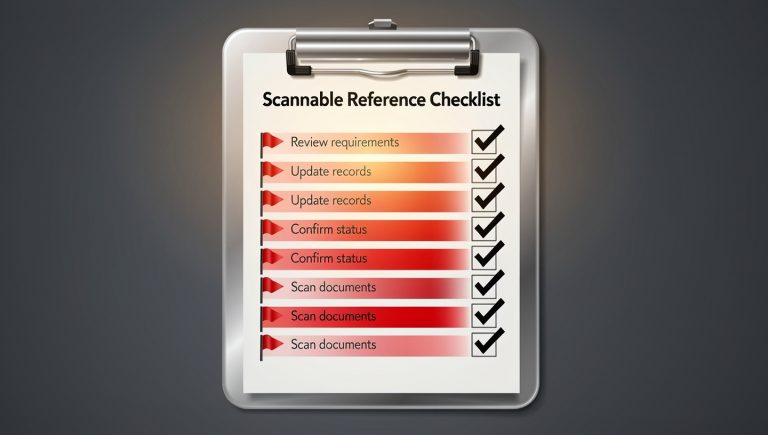
Knowing how to tell if someone is catfishing you comes down to watching for the 15 warning signs, running the 4-step verification process, and adopting the proactive prevention practices that catch catfish before they have the chance to deceive. Here’s the complete checklist.
☐ Repeated refusal/deflection of video calls
☐ Reverse image search finds photos under different name
☐ Any request for money in any form
☐ Very few photos / all same session quality
☐ Story inconsistencies over time
☐ Love-bombing / rapid emotional escalation
☐ Immediate push to leave dating app
☐ Escalating excuses to avoid meeting in person
☐ Vague bio with no verifiable specifics
☐ Limited knowledge of their claimed profession
☐ Availability doesn’t match claimed timezone/schedule
☐ Too-perfect mirroring of your interests
☐ No social media presence or very thin digital footprint
☐ Never sends spontaneous selfies
☐ Friends and family express concern
☐ Conversation quality is unnaturally consistent
☐ 60+ messages/day with no quality drop
☐ Perfect mirroring without any genuine disagreement
☐ Photos look professional but claimed as casual
☐ Every response feels “too right” — AI-level emotional attunement
The scoring guide: 1 definitive sign = investigate immediately. 2+ strong signs = high probability catfish — run the 4-step verification process. 3+ supporting signs = elevated concern — increase verification intensity. Any AI-era signs combined with classic signs = likely AI-enhanced catfish targeting you specifically.
The best defense isn’t detection — it’s prevention. Use GuyID’s free safety tools on every match. Run the catfish probability detector before deepening conversations. Request video calls as a standard step. Ask for verified GuyID Trust Profiles before meeting. When verification is routine, catfish can’t survive the process — they’re caught before they ever get the chance to deceive.
For the detailed breakdown of the threats catfish deploy, review our guides on how to spot a romance scammer, AI romance scams, deepfake dating scams, WhatsApp scam signs, and the latest romance scam statistics for 2026.
GuyID’s free catfish probability detector tells you in 10 seconds whether a profile shows deception patterns. Combine with reverse image search, bio red flag analysis, and verified Trust Profiles for complete protection. Women check for free.
Frequently Asked Questions: How to Tell If Someone Is Catfishing You
What is the biggest sign someone is catfishing you?
How can I check if someone is catfishing me for free?
Can someone catfish you with AI-generated photos?
How many warning signs mean I’m being catfished?
What should I do if I find out I’m being catfished?
Can someone catfish you even on a video call?
How can I prevent being catfished?
Is catfishing illegal?

Founder, GuyID · Dating Safety Researcher · 13+ Years in Data Analytics
Ravishankar Jayasankar is the founder of GuyID, a consent-based dating trust verification platform. With 13+ years in data analytics and a deep focus on consumer trust, Ravi built GuyID to close the safety gap in digital dating. His research found that 92% of women report dating safety concerns — validating GuyID’s mission to make online dating safer through proactive, consent-based verification. GuyID offers government ID verification, social vouching, a Trust Tiers system, and 60+ free interactive safety tools.