
Reader Briefing
Reader Briefing
Start here if you need a practical read on how does hinge verification work? 200% more dates explained: who should use verification, what signals to check, and what to do before moving from online interest to an in-person plan.
Who this is for
- People meeting someone from a dating app or social platform.
- Anyone checking identity, profile consistency, and trust signals.
- People trying to avoid romance scams, fake profiles, or pressure tactics.
- Online daters improving conversations, profiles, or match screening.
You’ll learn
- How to evaluate identity signals without treating any single check as certainty.
- Which trust signals matter and how to weigh them together.
- How to spot inconsistencies, pressure, or behavior patterns that deserve caution.
- How to move from online conversation to a safer first meeting.
- Where GuyID tools fit into a quick pre-date screening workflow.
- How to compare options using practical safety and trust criteria.
Bottom line
Verification reduces uncertainty; it does not guarantee future behavior. Use a layered approach: confirm identity signals, compare profile consistency, ask for a short video call, keep early plans public, and slow down when someone pressures you to skip normal safety steps.
Key takeaways
- Identity verification improves confidence, not certainty.
- Patterns matter more than isolated incidents.
- Verify before meeting privately or sharing sensitive details.
- A short video call can reveal many inconsistencies.
- Pressure to skip reasonable safety steps is useful information.
Free Tools
Catfish Probability Detector
Check whether a dating profile has suspicious identity or photo signals.
Dating Bio Red Flag Detector
Review a bio for scam, pressure, or trust-warning language.
Dating Safety Checklist
Use free GuyID tools before moving from chat to a real date.
Next step
Create your GuyID trust profile
Share consent-based trust signals before a date without turning the conversation into an interrogation.
That statistic alone makes understanding how Hinge verification works essential for anyone serious about online dating in 2026.
NavigateTable of Contents29 sections
⚡ Key Takeaways
Hinge uses video selfie verification — the strongest among major apps
Unlike Tinder’s static pose or Bumble’s gesture selfie, Hinge captures a short video for verification. This provides stronger liveness confirmation through natural movement and temporal consistency. It’s the most robust photo-matching system available on a mainstream dating app.
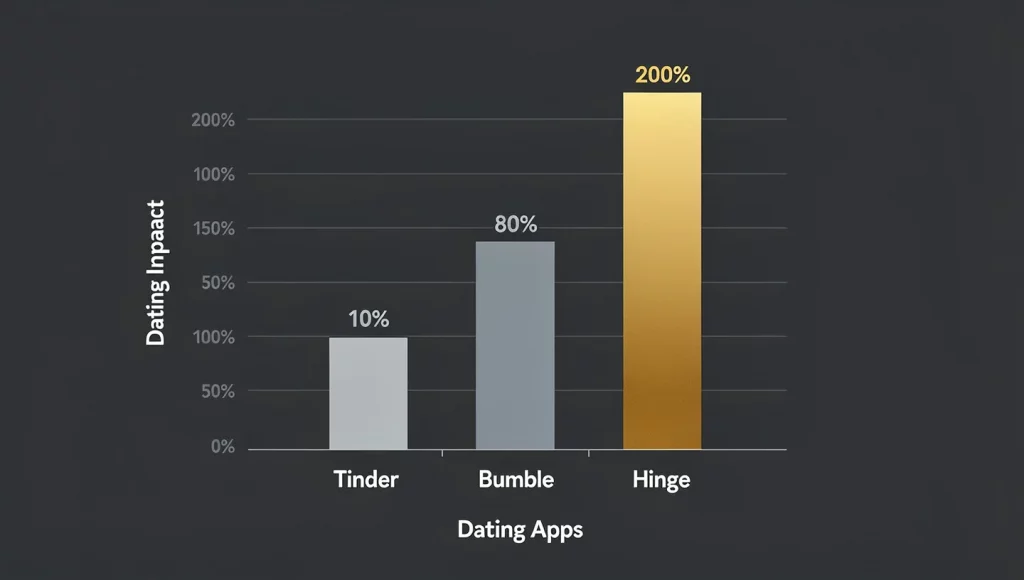
This is measured dating behavior, not a preference survey. Hinge verified profiles receive more likes, more responses, and dramatically more dates. The verification badge is the single most effective dating strategy on the platform.
Still photo matching, not identity verification
Despite being the strongest photo-matching system, Hinge verification confirms the same narrow thing as every other app: a live person matches profile photos. Name, age, career, background, and character remain unverified.
Hinge’s relationship focus makes it a prime scam target
“Designed to be deleted” attracts users seeking serious relationships — exactly the emotional investment profile that romance scammers and pig butchering operators exploit. Deeper emotional investment = higher financial extraction.
Hinge verification + GuyID = comprehensive protection
Hinge provides the strongest in-app photo matching. GuyID provides the identity verification Hinge doesn’t — government ID + social vouching + Trust Tiers. Together, they deliver the most complete dating verification possible.
How Does Hinge Verification Work: The Complete Step-by-Step Process
How Hinge verification works is technically the most sophisticated process among the three major dating apps. Where Tinder captures a posed selfie and Bumble captures a gesture selfie, Hinge captures a short video — providing temporal data that significantly strengthens liveness confirmation.
Step 1: Initiate Selfie Verification
Open Hinge, navigate to your profile, and tap the selfie verification prompt. Hinge surfaces verification encouragement through profile settings, in-app notifications, and prompts that appear when users browse profiles of other verified users — creating social proof pressure to verify.
Step 2: Video Selfie Capture
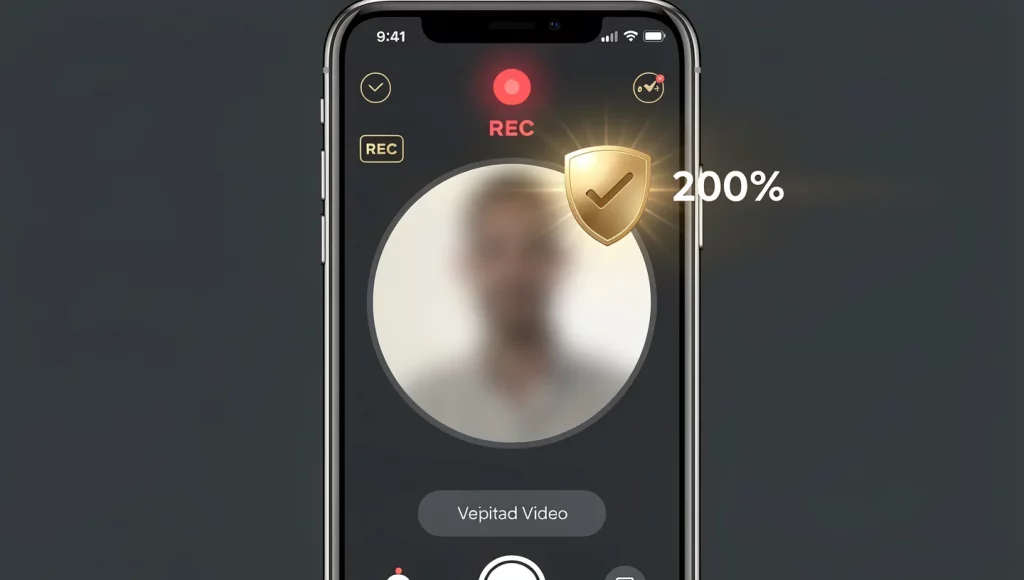
Hinge asks you to record a short video selfie rather than taking a static photo. The video typically lasts several seconds and captures you looking at the camera, moving naturally, and following any on-screen prompts. This video-based approach is the critical difference in how Hinge verification works compared to competitors. Video provides multiple frames of facial data, captures natural micro-movements (blinking, breathing, slight head movements), and creates a temporal sequence that’s harder to fabricate than a single photo.
Step 3: Multi-Frame AI Analysis
Hinge’s AI system analyzes the video across multiple frames, checking for consistent facial geometry throughout the clip (ensuring it’s the same face, not a quick swap mid-video), natural movement patterns (detecting whether the motion is organic or artificially generated), liveness indicators (real-time animation rather than a replayed recording), and facial matching against every uploaded profile photo. The multi-frame analysis provides more data points than Tinder’s single-frame or Bumble’s single-frame-plus-gesture approaches.
Successfully verified profiles receive Hinge’s selfie verification badge — visible to everyone who views the profile. This isn’t a marginal advantage — it’s a tripling of dating outcomes. The badge also affects algorithmic positioning, with verified profiles receiving enhanced visibility in Hinge’s “Most Compatible” and discovery feeds.
📊
The 200% Advantage in Context
This means a verified Hinge profile is, on average, going on three times as many dates as an equivalent unverified profile. For anyone wondering whether understanding how Hinge verification works is worth their time — the dating ROI alone makes it essential.
What Hinge’s Selfie Verification Badge Proves
The video-based approach in how Hinge verification works provides the strongest photo-matching confirmation among mainstream dating apps. Here’s exactly what the badge confirms.
- Photo authenticity (strongest available): The person who recorded the verification video has the same face as the profile photos. The multi-frame video analysis provides higher confidence in this match than single-frame selfie approaches — reducing the chance of successful still-image manipulation.
- Robust liveness: The video captures natural movement, blinking, and facial animation over several seconds — confirming a live human was present. This is significantly harder to fake with a static printed photo, a screen replay, or a simple face-swap on a single frame. Video liveness is the gold standard of camera-based verification.
- Temporal consistency: The video confirms the same face appears across multiple frames in a continuous sequence — catching crude attempts where different images might be spliced together or where a face-swap falters mid-recording.
In practical terms, Hinge’s badge tells you: “A real human with this face was alive, moving naturally, and consistent in appearance across a multi-second video that was compared against these profile photos.” This is the most any camera-based dating app verification can confirm — and Hinge delivers it better than its competitors.
What Hinge Verification Does NOT Prove
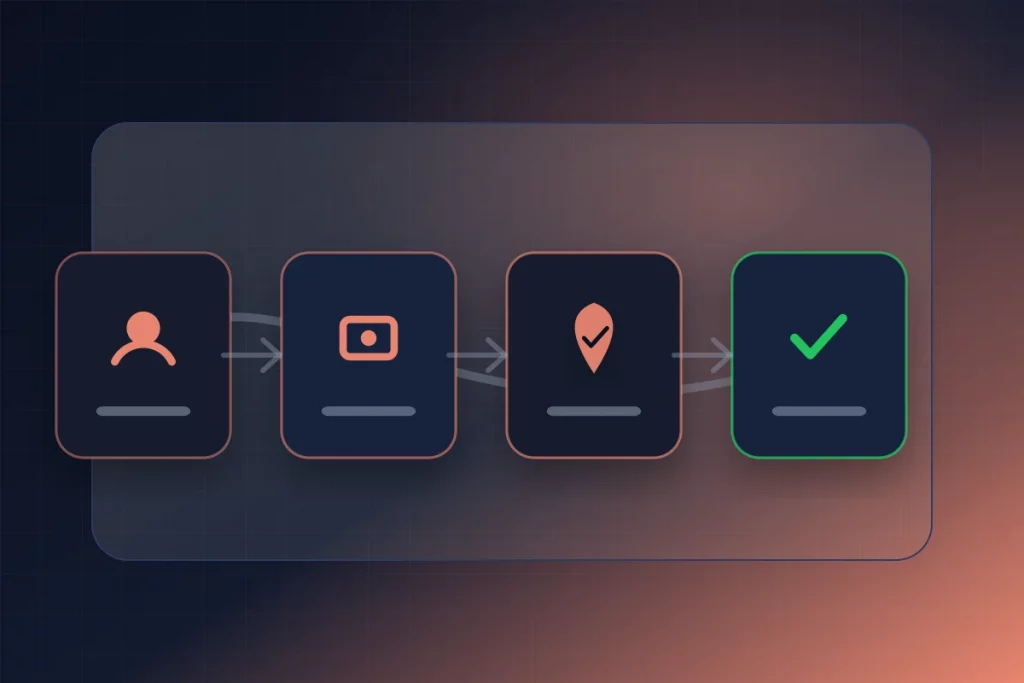
Despite being the strongest photo-matching system available, understanding how Hinge verification works means confronting the same universal limitations that apply to all dating app verification. The badge confirms appearance. It does not confirm identity.
The Unchanged Gaps
- Real name: The name on a Hinge profile is self-reported. “Sarah, 29, Marketing Director” could be anyone — the verification confirmed the face, not the name, age, or career. Hinge does not cross-reference against any government document or external database.
- Age accuracy: Age is self-declared with no document verification. The person verified to look like their photos may have claimed any age — the video selfie doesn’t check identification.
- Career and education claims: Hinge prominently displays career and education — “Works at Google,” “Studied at NYU” — giving these claims visibility that implies verification. They are entirely self-reported. A scammer claiming to work at a prestigious firm receives the same badge treatment as a person who actually does.
- Relationship status: No mechanism confirms whether the user is single, separated, or married. The verification badge has no bearing on relationship honesty.
- Criminal background: No screening of any kind is part of how Hinge verification works. The badge does not indicate safety clearance.
- Character and intentions: A verified Hinge profile could belong to someone genuinely seeking a relationship, someone building a pig butchering scam over weeks, or someone with a completely fabricated life story. The video confirmed their face — not their honesty.
| What Users Assume About the Hinge Badge | What the Badge Actually Confirms |
|---|---|
| “Hinge verified this person’s identity” | A video selfie matched profile photos |
| “Their career and education are confirmed” | Career and education are self-reported — zero verification despite prominent display |
| “This person is safe and relationship-ready” | No safety screening, background check, or intention assessment |
But understanding how Hinge verification works requires examining both sides of this powerful advantage.
The Bright Side: Genuine Users Benefit Enormously
For genuine users, Hinge verification is the single highest-ROI action available. A few seconds of video recording translates to triple the dating outcomes. Verified profiles appear in “Most Compatible” suggestions more frequently. Likes and comments from verified profiles receive more engagement.
The Dark Side: Scammers Benefit Equally
On Hinge specifically, where conversations tend to be deeper and more emotionally invested than Tinder’s casual exchanges, a verified scammer has access to targets who are already investing more emotional energy per match.
This creates a particularly dangerous dynamic: Hinge’s relationship-focused users invest more emotionally → verified profiles receive disproportionate trust → scammers with verification badges receive both more targets and more invested targets → the average emotional and financial damage per scam is potentially higher on Hinge than on casual platforms. Understanding how Hinge verification works within this context explains why supplementary verification is especially important on this platform.
How Hinge Compares to Tinder, Bumble, and GuyID
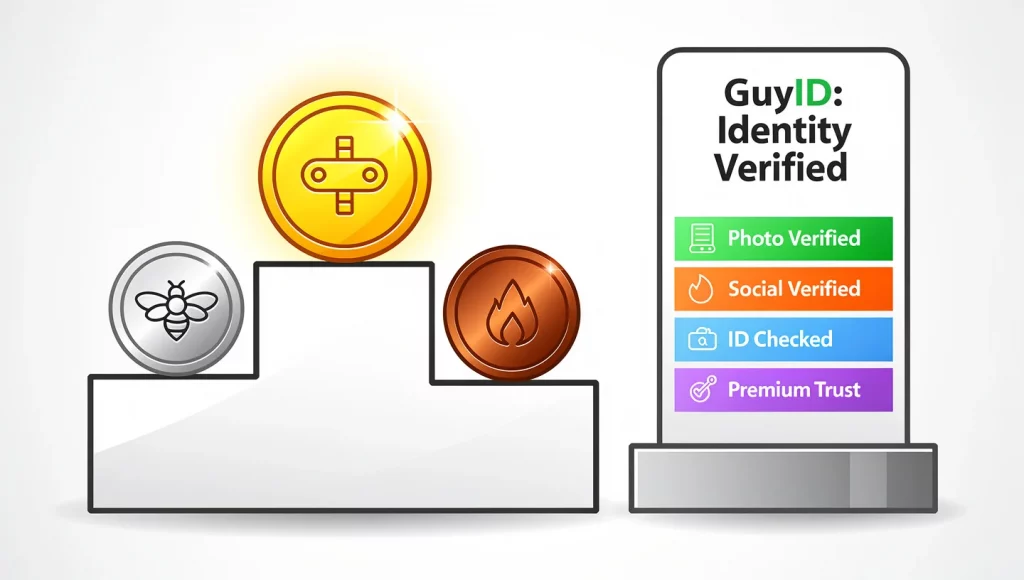
Placing how Hinge verification works alongside the competition reveals why Hinge leads in photo-matching quality but still falls short of comprehensive identity verification.
| Feature | Hinge | Tinder | Bumble | GuyID |
|---|---|---|---|---|
| Method | Video selfie | Pose selfie | Gesture + selfie | Gov ID + vouching |
| Liveness strength | Strong (video) | Basic (pose) | Medium (gesture) | N/A (document-based) |
| Deepfake resistance | Medium | Low | Low-Medium | Very High |
| Confirms legal identity | ❌ | ❌ | ❌ | ✅ |
| Confirms character | ❌ | ❌ | ❌ | ✅ |
| Portable across platforms | ❌ | ❌ | ❌ | ✅ |
But it shares the same zero score on identity confirmation, character assessment, and cross-platform portability. For the full comparison across all platforms, see our complete dating app verification comparison.
Can Scammers Get Verified on Hinge?

Hinge’s video-based verification is harder to bypass than Tinder’s or Bumble’s — but “harder” isn’t “impossible.” Understanding how Hinge verification works means understanding its vulnerabilities alongside its strengths.
Method 1: Advanced Deepfake Video
Current deepfake face-swapping operates in real-time on video — not just single frames. A scammer running face-swap software can record a several-second video where the synthetic face tracks their real facial movements, producing a continuous video that matches AI-generated profile photos. Hinge’s multi-frame analysis is stronger than single-frame checks (it catches frame-by-frame inconsistencies), but state-of-the-art face-swapping maintains consistency across video sequences. Hinge verification raises the technical bar — but sophisticated operations clear it.
Method 2: Accomplice Verification
The same accomplice-based bypass that works on Tinder and Bumble works on Hinge: a real person records the verification video using their genuine face (which matches genuinely uploaded photos), receives the badge, and the scammer takes over account operations. The video verification was legitimately completed by a real person — the operator has simply changed.
Method 3: Account Takeover
Pre-verified Hinge accounts can be sold or transferred. The original user completes video verification legitimately, then sells or gives the account to a scammer who replaces photos and content while potentially retaining the badge.
Hinge’s Relative Advantage
Despite these bypass methods, Hinge verification is objectively harder to circumvent than Tinder’s or Bumble’s. The video requirement demands sustained face-swap performance (not a single-frame pass), catches crude manipulation attempts that static photo checks miss, and creates more data points for Hinge’s AI to analyze. Hinge verification catches more fraud than its competitors — it just doesn’t catch all fraud. The badge should be weighted more heavily than a Tinder blue check but still not treated as proof of identity.
Why Hinge’s Relationship Focus Makes Verification More Critical
Understanding how Hinge verification works is especially important because Hinge’s design philosophy — “designed to be deleted” — creates a user base and interaction pattern that amplifies both the benefits of verification and the risks when verification fails.
Deeper Emotional Investment per Match
Hinge’s design encourages substantive engagement: users like specific photos or prompts with comments, creating a personalized first interaction. Conversations tend to be longer and more meaningful than Tinder’s “hey” → “hey back” pattern. Users invest more time, more emotional energy, and more personal disclosure per match. This deeper investment is the product’s strength — it produces better relationships when both parties are genuine. It’s also the vulnerability — deeper investment means deeper emotional damage when the other party is a scammer.
The Long-Con Vulnerability
Hinge’s relationship-oriented users are the ideal targets for long-con scams — particularly pig butchering investment scams that require weeks of trust-building before introducing the financial exploitation phase. On Tinder, where interactions are casual and attention spans are short, scammers have limited time to build trust. On Hinge, where users expect and engage in the kind of deep, extended conversations that build genuine connection, the scammer has the perfect environment for a multi-week manipulation campaign — and a verified badge to anchor the target’s trust throughout.
Prompt Vulnerability
Hinge’s prompt-based profiles reveal significant personal information — values, humor style, life goals, past experiences, dealbreakers. A scammer with access to these prompts can craft responses that precisely mirror the target’s values and preferences, creating the illusion of exceptional compatibility. With AI chatbots analyzing prompt responses and generating tailored messages, the mirroring can be automated at scale. This prompt-driven personalization is unique to Hinge and makes the verification gap especially dangerous — the scammer appears both verified (badge) and deeply compatible (mirrored prompts).
“On Tinder, a scammer steals your attention. On Hinge, a scammer steals your trust.
How to Evaluate a Verified Hinge Match
The evaluation process for a verified Hinge match follows the same 5-level verification system — but with specific attention to Hinge’s unique features and vulnerabilities.
Hinge-Specific Evaluation Steps
- Reverse image search their photos through GuyID’s free tools — even the strongest photo verification doesn’t prevent AI-generated or post-verification swapped images. (30 seconds)
- Evaluate their prompt responses for authenticity. Genuine Hinge users answer prompts with specific, personality-revealing responses: “A life goal of mine: running all six World Marathon Majors (3 down, 3 to go).” Scam profiles answer generically: “A life goal of mine: to be happy and find love.” The gap between specific and generic is the gap between real and performed. Run responses through GuyID’s bio red flag detector for automated analysis.
- Check the engagement quality of their comments. When a Hinge user likes your prompt or photo, they often add a comment. Genuine comments reference specific details: “That hiking photo is incredible — is that the Dolomites?” Scam comments are generic: “Love your smile!” or “You seem amazing!” Pattern of only generic comments across multiple interactions = flag.
- Use GuyID’s catfish probability detector for a holistic risk assessment across all profile signals. (10 seconds)
- Cross-reference their career and education claims. Hinge prominently displays “Works at” and “Studied at.” Search their name + claimed employer on LinkedIn. Search their name + claimed university on alumni databases. Hinge makes career verification easy because the claims are front and center — take advantage of that visibility.
- Video call within the first week with active deepfake testing. Hinge doesn’t have built-in video calling — suggest FaceTime, Google Meet, or WhatsApp video. (5-15 minutes)
- Request their GuyID Trust Profile before meeting — the definitive verification that confirms identity, character, and sustained trustworthiness beyond what any photo-matching badge can provide. (2 minutes, free for women)
The Hinge + GuyID Strategy for Maximum Safety and Dating Success
Understanding how Hinge verification works reveals that Hinge provides the best camera-based verification in dating — but camera-based verification alone cannot confirm identity, character, or trust. GuyID fills exactly these gaps, creating a powerful combination when used together.
For Hinge Users Getting Verified
Reference your GuyID in your Hinge profile — use a prompt answer like: “The key to my heart is: someone who takes trust seriously. I’m identity-verified on GuyID → [Date Mode link].” This prompt answer does triple duty: it signals your values (trust matters to you), demonstrates your commitment (you’ve proactively verified), and provides a clickable verification link.
For Hinge Users Evaluating Matches
The Hinge verification badge is the strongest starting point among dating apps — weight it more heavily than a Tinder or Bumble badge. But don’t stop there. Use GuyID’s free tools for supplementary analysis. Cross-reference career claims on LinkedIn. Evaluate prompt response authenticity. Request a video call with active testing. And ask for a GuyID Trust Profile before any in-person meeting.
On Hinge specifically, the deeper emotional investment per match makes pre-meeting verification more valuable than on casual platforms. The same depth of conversation that makes Hinge rewarding for genuine connections makes it rewarding for scammers. Verification before emotional investment — the proactive dating safety approach — is proportionally more important on Hinge than anywhere else.
Why GuyID’s Portability Matters on Hinge
Hinge conversations inevitably migrate — to text, to WhatsApp, to Instagram, to phone calls. At each migration, Hinge’s verification badge disappears. The person you’ve been conversing with on Hinge becomes an unverified contact on WhatsApp. GuyID’s portable Date Mode link maintains verified trust through every platform transition. The verification you checked once on Hinge continues confirming identity on WhatsApp, text, and every subsequent channel — closing the trust gap that reopens every time a conversation moves off-platform.
Summary: The Full Truth About How Hinge Verification Works
How does Hinge verification work? It uses a video selfie — the strongest camera-based liveness check among major dating apps — to confirm that a real person’s face matches the photos on a Hinge profile. The video approach provides multi-frame facial analysis, natural movement verification, and temporal consistency checking that Tinder’s static pose and Bumble’s gesture-based selfie cannot match.
What Hinge verification proves: the person behind the profile recorded a video selfie that matches their photos, with strong liveness confirmation. What it does NOT prove: real name, real age, career claims (despite prominent display), education claims, relationship status, criminal background, character, or intentions. The badge is the best photo-matching verification in dating — and it’s still only photo matching.
Hinge’s “designed to be deleted” philosophy creates a relationship-focused user base that invests deeply per match — making Hinge both the best platform for genuine connection and the most dangerous for sophisticated scams.
Hinge builds the best photo verification. GuyID builds the best identity verification. Together, they provide the most complete dating verification available in 2026. Understanding how Hinge verification works is step one. Supplementing it with the layers it can’t provide is what actually keeps you safe on a platform where the stakes — emotional and financial — are higher than anywhere else in online dating.
Hinge gives you the best photo verification in dating. GuyID gives you the identity verification Hinge doesn’t: government ID + social vouching + Trust Tiers + portable trust profiles. 60+ free safety tools. Women check for free.
Try Free Safety Tools
Get Verified on GuyID
Frequently Asked Questions
Does Hinge verification check your real identity?
Can scammers get verified on Hinge?
How do I evaluate a verified Hinge match?
How does Hinge verification compare to GuyID?
Evidence note
NIST Digital Identity Guidelines distinguish identity proofing, authentication, and federation as separate parts of digital identity risk management (NIST, 2025).