
Reader Briefing
Reader Briefing
Start here if you need a practical read on what does verified mean on dating apps? the surprising truth: who should use verification, what signals to check, and what to do before moving from online interest to an in-person plan.
Who this is for
- People meeting someone from a dating app or social platform.
- Readers preparing for a first in-person date.
- Anyone checking identity, profile consistency, and trust signals.
- People trying to avoid romance scams, fake profiles, or pressure tactics.
You’ll learn
- How to evaluate identity signals without treating any single check as certainty.
- Which trust signals matter and how to weigh them together.
- How to spot inconsistencies, pressure, or behavior patterns that deserve caution.
- How to move from online conversation to a safer first meeting.
- Where GuyID tools fit into a quick pre-date screening workflow.
- How to compare options using practical safety and trust criteria.
Bottom line
Verification reduces uncertainty; it does not guarantee future behavior. Use a layered approach: confirm identity signals, compare profile consistency, ask for a short video call, keep early plans public, and slow down when someone pressures you to skip normal safety steps.
Key takeaways
- Identity verification improves confidence, not certainty.
- Patterns matter more than isolated incidents.
- Verify before meeting privately or sharing sensitive details.
- A short video call can reveal many inconsistencies.
- Pressure to skip reasonable safety steps is useful information.
Free Tools
Catfish Probability Detector
Check whether a dating profile has suspicious identity or photo signals.
Dating Bio Red Flag Detector
Review a bio for scam, pressure, or trust-warning language.
Dating Safety Checklist
Use free GuyID tools before moving from chat to a real date.
Next step
Create your GuyID trust profile
Share consent-based trust signals before a date without turning the conversation into an interrogation.
You see the blue checkmark on Tinder, the verification badge on Bumble, or the selfie-verified label on Hinge. They all say “verified.” But what does verified mean on dating apps? It usually describes a specific photo-matching step, not a background check, character assessment, or assurance that meeting the person is safe. Understanding that limited scope helps you use the badge as one signal rather than proof of identity or intent.
This guide decodes the “verified” badge on every major dating platform, explains the massive gap between what users believe verified means and what it actually confirms, documents how the verification gap enables scammers, and outlines what real verification — the kind that actually confirms someone’s identity — looks like in 2026.
NavigateTable of Contents37 sections
⚡ Key Takeaways
“Verified” on dating apps means one thing: a selfie matched profile photos
Across Tinder, Bumble, Hinge, and every other major platform, verified on dating apps means a live selfie was compared to uploaded photos and the faces matched. Period. Nothing else was checked.
The word “verified” implies far more than the badge delivers
Users interpret “verified” as identity confirmed, safety screened, trustworthy. The platform means “photos match a real face.” This perception gap is the most dangerous misunderstanding in online dating.
Scammers exploit the perception gap deliberately
A verified scammer receives disproportionate trust from users who interpret the badge broadly.
Real verification confirms identity, not just appearance
True identity verification requires government ID, social vouching, and progressive trust measurement — what GuyID provides and what no dating app badge delivers.
What Verified Actually Means on Dating Apps: The One-Sentence Truth
Here it is, the complete answer to what does verified mean on dating apps in one sentence: A live selfie taken during a verification process matched the profile photos, confirming that the person who completed verification has the same face as the uploaded images.
That’s it. That’s the entire scope. The badge does not confirm the person’s name. It does not confirm their age. It does not confirm their career. It does not confirm their relationship status. It does not check their criminal background. It does not assess their character, honesty, or intentions. It confirms a face matched other faces — a visual similarity check that takes seconds to complete and addresses a narrow slice of the trust equation.
This one-sentence truth is the foundation of understanding what verified means on dating apps. Every insight in this guide flows from the gap between this narrow truth and the broad interpretation that most users carry when they see the badge.
What Verified Means on Each Major Dating App
While the core meaning is the same across platforms, the specific verification methods differ. Here’s what “verified” means on each major app — the exact process, nothing more.
Tinder: Blue Checkmark
What it means: A pose-based selfie matched uploaded profile photos. You mimicked a specific head position, Tinder’s AI compared your face to your photos, and the similarity passed the threshold. See our complete Tinder verification guide for the full process.
What it takes: Under 30 seconds. One selfie matching one pose.
Bumble: Photo Verification Badge
What it means: A gesture-based selfie matched uploaded profile photos. You performed a specific action (touching your ear, pointing in a direction) while Bumble’s AI compared your face to your photos. The gesture adds a liveness layer beyond Tinder’s static pose. See our complete Bumble verification guide.
What it takes: Under 60 seconds. One selfie with gesture matching.
Enhanced algorithmic visibility.
Hinge: Selfie Verification Badge
What it means: A short video selfie matched uploaded profile photos. Multi-frame analysis confirmed consistent facial features across several seconds of natural movement. This is the strongest photo-matching verification among major apps. See our complete Hinge verification guide.
What it takes: A few seconds of video recording.
Facebook Dating
What it means: The profile is linked to an existing Facebook account. No independent verification occurs — the “verification” is inherited from the Facebook account’s existing history, friends, and activity. This provides social graph signals but is vulnerable to hacked account exploitation.
Plenty of Fish
What it means: Basic photo matching with limited liveness confirmation.
The Universal Answer
Regardless of the specific platform, what verified means on dating apps is the same fundamental thing: photos were matched to a live face. The method varies (pose, gesture, video). The robustness varies (Hinge video > Bumble gesture > Tinder pose > POF basic). But the scope is identical: photo matching, not identity verification.
The Perception Gap: What Users Think “Verified” Means vs What It Actually Means
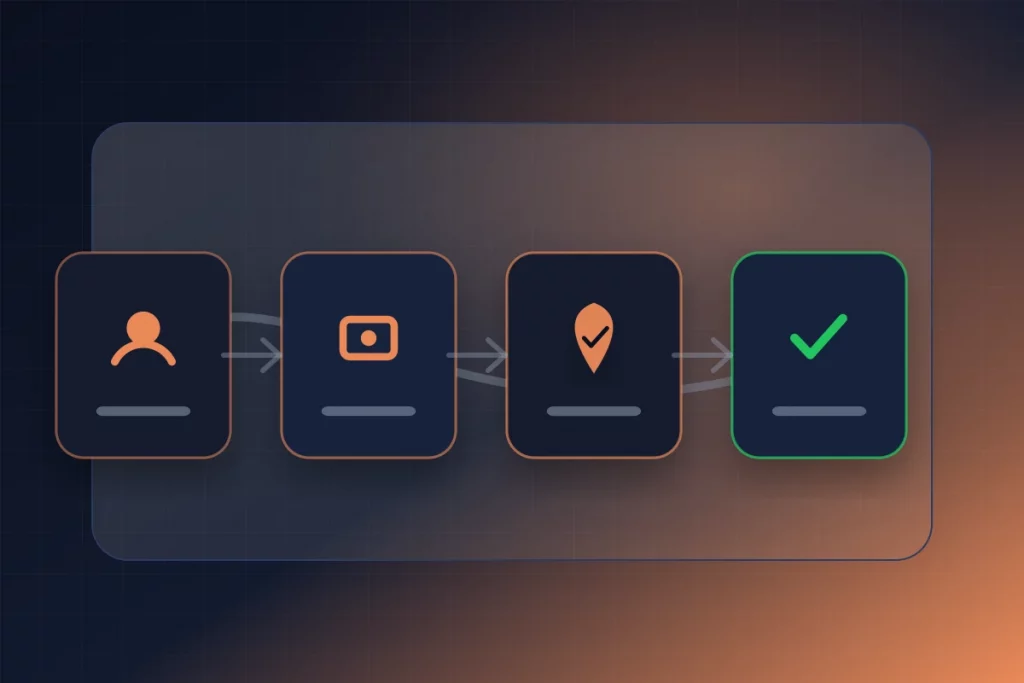
The most dangerous dimension of what verified means on dating apps isn’t the verification itself — it’s the gap between what users believe the badge represents and what it actually confirms. This perception gap is measurable, documented, and directly responsible for enabling fraud.
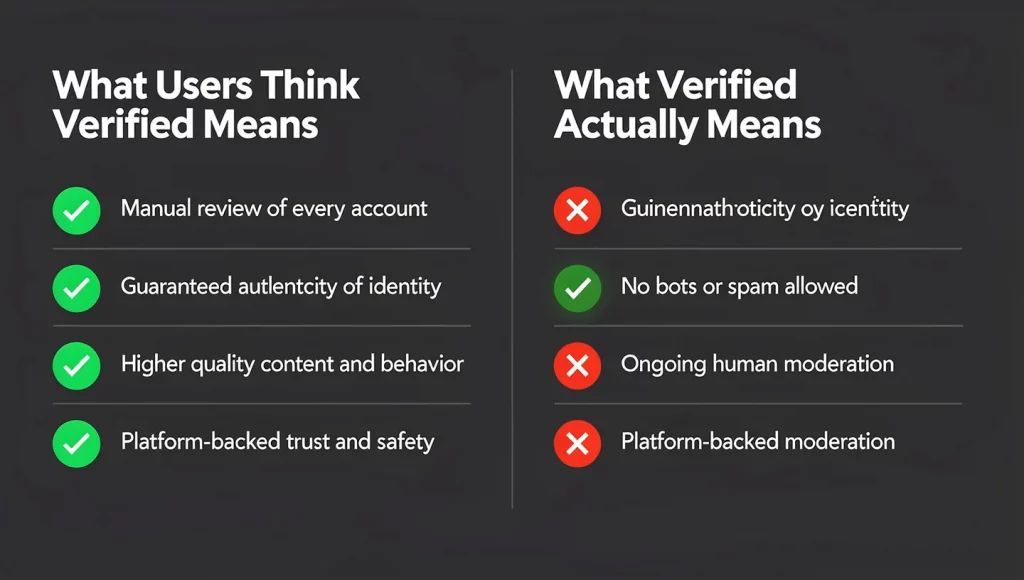
What Users Believe
When people see a “verified” badge on a dating profile, they typically interpret it to mean some combination of:
- “This person’s identity has been confirmed by the dating app”
- “Their name, age, and biographical details have been checked”
- “This person has been screened for safety — background checked or at least reviewed”
- “This person is more trustworthy than unverified profiles”
- “The dating app is vouching for this person”
- “I can relax my guard because the platform has done due diligence”
What Platforms Actually Confirm
- “A selfie matched the profile photos”
- “Nothing else”
The Gap in Numbers
The behavioral data quantifies this perception gap perfectly. If users understood that “verified” means only “photos match a face,” the behavioral premium would be a fraction of what it is. The premium exists because the perception exceeds the reality.
This perception gap is the core of the trust gap in online dating. Users may extend trust calibrated to comprehensive verification while receiving photo-only confirmation. Precise labels and independent, consent-based checks help keep trust proportional to what was actually verified.
“The most dangerous word in online dating isn’t ‘scam’ or ‘catfish’ — it’s ‘verified.’ Because ‘scam’ triggers caution and ‘catfish’ triggers suspicion, but ‘verified’ triggers trust. And the trust it triggers is vastly disproportionate to the verification it represents.”
What “Verified” Does NOT Mean on Any Dating App
A comprehensive understanding of what verified means on dating apps requires an equally clear understanding of what it doesn’t mean. Here’s the complete list of things the badge explicitly does NOT confirm on any major dating platform.
| Dimension | Is It Verified by Any Dating App? | What Would Be Needed to Verify It |
|---|---|---|
| Legal name | ❌ No — name is self-reported on all platforms | Government ID check against profile name |
| Real age | ❌ No — age is self-declared | Date of birth from government ID |
| Career / employer | ❌ No — self-reported (The League uses LinkedIn, which is also self-reported) | Employment verification or LinkedIn cross-reference |
| Education | ❌ No — self-reported | Alumni database verification |
| Relationship status | ❌ No — self-declared, no cross-reference | Marriage registry check (no app does this) |
| Criminal background | ❌ No — no screening of any kind | Criminal background check service |
| Character / honesty | ❌ No — no assessment mechanism | Social vouching from real people who know the person |
| Intentions | ❌ No — no assessment possible through photo matching | Sustained trust demonstration over time (Trust Tiers) |
| Photo authenticity (AI-generated) | ⚠️ Partially — catches stolen photos, may miss AI-generated ones | AI image detection + government ID biometric matching |
Every row marked ❌ represents a dimension where the badge provides zero information — but where users extend trust based on the broad implication of “verified.” The cumulative effect: users make significant trust decisions (sharing personal information, meeting in person, deepening emotional investment) based on a badge that confirms none of the factors actually relevant to those decisions.
Why Dating Apps Use “Verified” for Photo Matching
If photo matching is so limited, why do dating apps call it “verified” rather than “photo-matched” or “selfie-confirmed”? Understanding the business logic behind the word choice deepens your understanding of what verified means on dating apps — and why the perception gap persists.
The Business Incentive
Dating apps are businesses optimized for user engagement and revenue growth. The word “verified” accomplishes two business objectives simultaneously. First, it increases user trust and engagement — users who believe profiles are verified swipe more, match more, and subscribe more. Second, it creates a competitive safety narrative — “our platform has verification” sounds better in marketing than “our platform checks if selfies match photos.”
Using a more accurate term like “photo-matched” would reduce the perception premium. Users who understood the badge meant “this person’s selfie matched their uploaded photos and nothing else was checked” would extend less trust and engagement to verified profiles. This would reduce the behavioral metrics (match rates, conversation rates, dates) that drive platform valuations and advertising claims.
The Legal Positioning
Dating apps are careful to describe their verification accurately in their terms of service and help documentation. Tinder’s help page explains that Photo Verification “compares your selfie to your profile photos.” Bumble describes its system as confirming “you’re the person in your photos.” The accurate descriptions exist — they’re just buried in help pages that most users never read, while the broad “verified” badge occupies the prominent position on every profile card.
This creates a situation where the platform is technically accurate (the help page describes photo matching) while being practically misleading (the prominent badge implies comprehensive verification). Understanding this dynamic is central to understanding what verified means on dating apps in practice versus marketing.
How the Verification Gap Enables Scammers
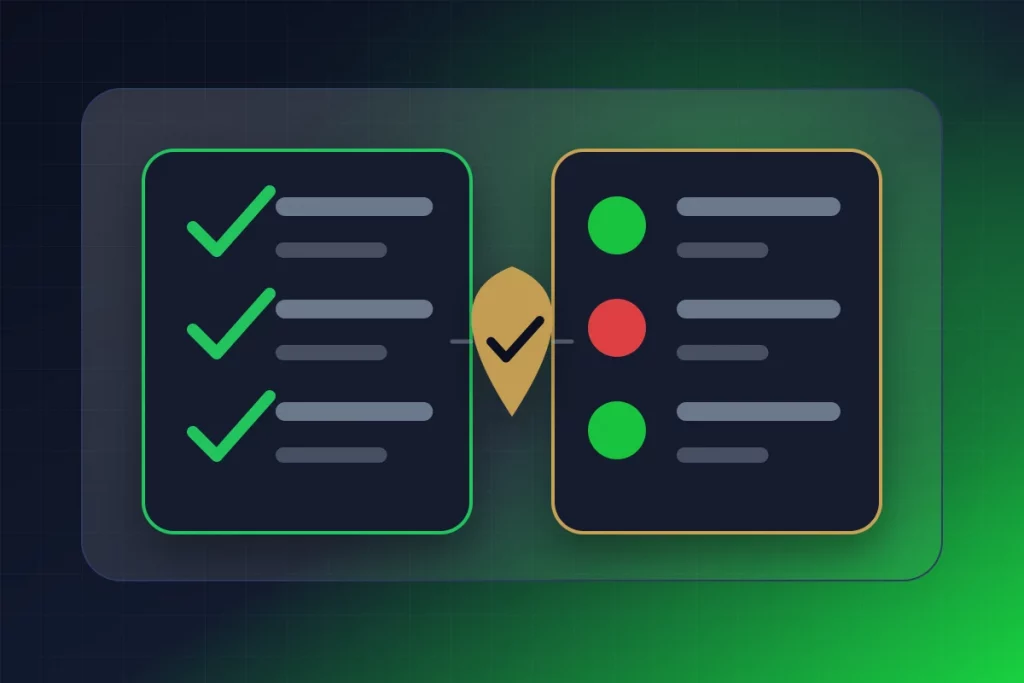
The gap between what “verified” implies and what it confirms creates specific exploitation opportunities for the organized scammers targeting dating apps. Understanding how scammers weaponize the verification gap is the practical safety dimension of knowing what verified means on dating apps.
The Verified Scammer Advantage
Targets who see the badge relax their guard, engage more openly, invest more emotionally, and proceed more quickly toward meeting or financial trust — all because the badge implied comprehensive verification that never occurred.
This creates a paradox: verified scammers may actually be more dangerous than unverified ones because the badge creates false confidence that suppresses the natural caution targets would otherwise maintain. An unverified profile triggers at least some suspicion. A verified profile triggers trust — trust calibrated to comprehensive verification but based on photo matching alone.
How Scammers Get Verified
As documented in our platform-specific guides (Tinder, Bumble, Hinge), scammers bypass verification through deepfake face-swapping during liveness checks, accomplice-based verification, post-verification photo swapping, and account purchase. Each method exploits the same limitation: photo matching confirms appearance, not identity. A person can look like their photos and still be a scammer.
The Financial Impact
Romance scams occur on platforms where verification badges are present. A person may place more trust in a badge than its underlying check supports. Treat the badge as evidence that a platform process was completed, not evidence of character, financial intent, or future behavior.
They were real. Real in the sense that a real face matched real photos. But “real face matching real photos” is not what the victim meant when they said “real.” They meant “a real person with a real identity whose claims about themselves are confirmed.” And that’s not what verified means on dating apps. Not on any of them.
The Three Levels of Verification: What Verified Should Mean
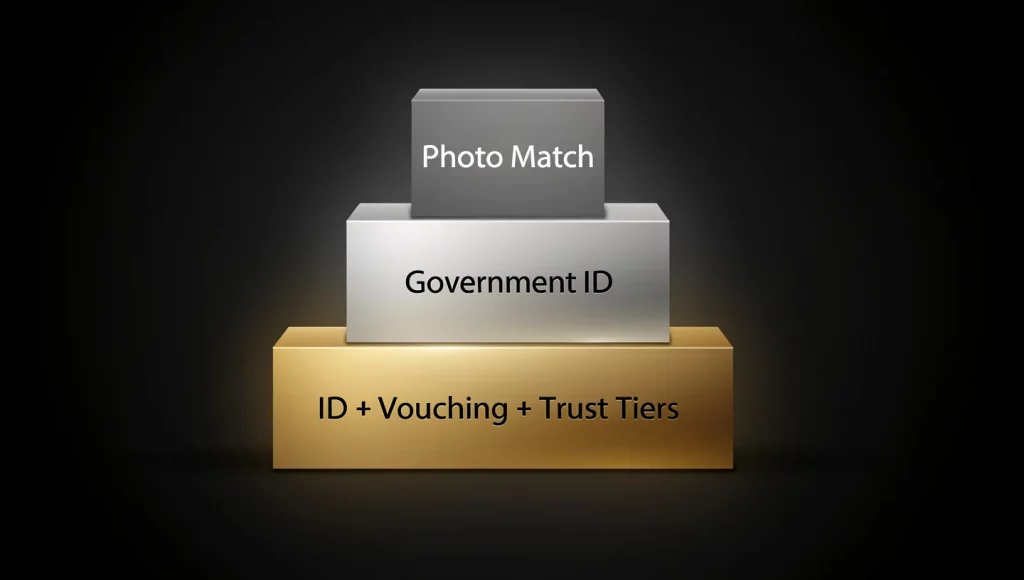
Now that you understand what verified means on dating apps (photo matching), here’s the framework for what verification could mean — organized into three levels that provide progressively more meaningful trust information. This framework, detailed in our complete dating profile verification guide, is the standard against which all verification should be measured.
Level 1: Photo Matching (What Dating Apps Provide)
What it confirms: A live face matched uploaded photos.
What it misses: Name, age, career, background, character, intentions — everything except visual appearance.
AI resistance: Low. Deepfakes can pass liveness checks. AI-generated photos match AI-generated verification selfies.
Trust warranted: Marginal. The person exists and looks like their photos. Every other trust dimension remains unknown.
Level 2: Government ID Verification
What it confirms: Legal identity — real name, real face matched against a government-issued document, government-verified existence.
What it misses: Character, intentions, relationship status, sustained trustworthiness.
AI resistance: High. AI cannot generate legitimate government identification with valid biometric data.
Trust warranted: Significant. You know who this person legally is. What you don’t know is whether they’re trustworthy.
Level 3: Comprehensive Verification (What GuyID Provides)
What it confirms: Legal identity (government ID) + character (social vouching from real people) + sustained trustworthiness (progressive Trust Tiers earned over time).
What it misses: Nothing that current technology and methodology can address. No system is infallible, but Level 3 covers identity, character, and behavioral trust.
AI resistance: Very high. AI cannot generate government documents, cannot produce real friends who vouch, and cannot accumulate trust history in a progressive system.
Trust warranted: High. This is the level where “verified” means what most users think it means when they see any verification badge.
Currently, every major dating app offers Level 1. GuyID offers Level 3. The gap between Level 1 and Level 3 is the trust gap — and it’s what consent-based verification is designed to close.
What Real Verification Looks Like: The GuyID Model
If what verified means on dating apps is limited to photo matching, what does real verification — the kind that actually confirms identity and character — look like? GuyID was built to answer this question.
Government ID Verification
Biometric matching against official government documents — driver’s license, passport, national ID card. This confirms the person’s legal name, real face matched to an official document, and government-verified existence. It’s the verification standard used in banking, travel, and employment — applied to dating for the first time through consent-based verification.
Social Vouching
Real friends and colleagues confirm the person’s identity and vouch for their character. Each voucher is a real person staking their own reputation. This provides the character assessment dimension that no document check and no algorithm can deliver. When real humans who know someone personally confirm their identity and character, it provides trust information that a selfie-matching AI never could.
Trust Tiers
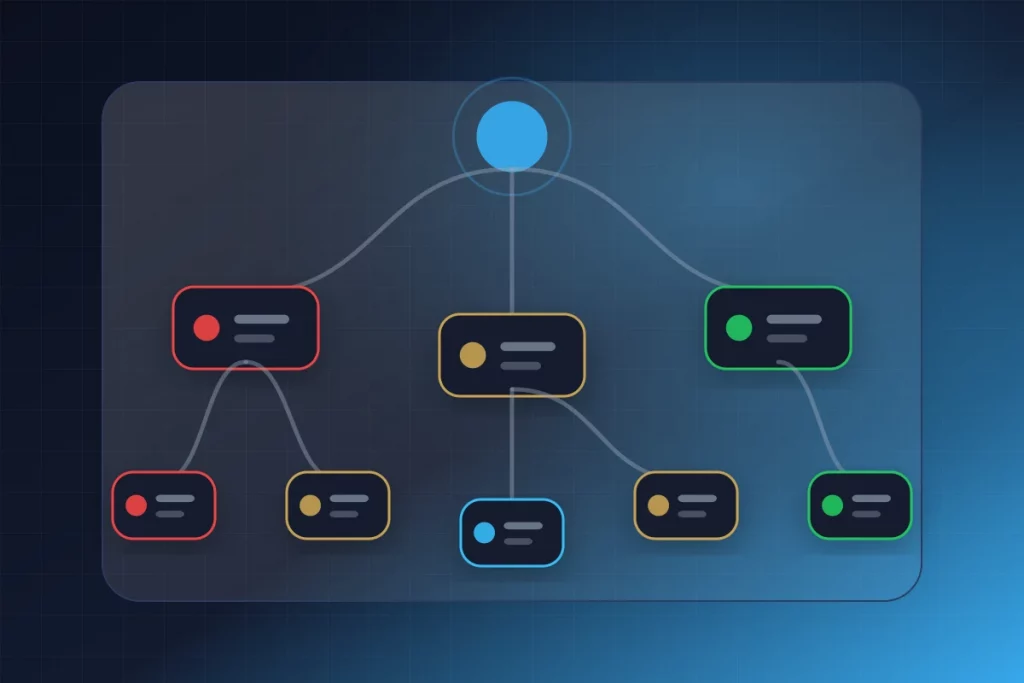
GuyID’s progressive system — GHOST → STARTER → BUILDER → TRUSTED → ELITE → LEGEND — tracks verification investment and sustained trustworthiness over time. Each tier requires additional verification actions and consistent positive behavior. A TRUSTED tier tells you someone has completed government ID verification, earned social vouches, and maintained trustworthiness over a meaningful period. A GHOST tier tells you someone just arrived. The tier system adds the temporal dimension that binary badges (verified/not) completely miss.
Portable Across Every Platform
The Date Mode link works on Tinder, Bumble, Hinge, WhatsApp, Instagram, text — every platform and every channel. When a dating app badge disappears the moment conversation moves off-platform, GuyID’s portable trust profile maintains verified identity across every transition. Women check for free, always.
This is what “verified” should mean: identity confirmed through government documents, character vouched by real people, trust demonstrated over time, portable across every platform.
How to Protect Yourself Beyond the Badge
Now that you understand what verified means on dating apps — and what it doesn’t — here’s the practical framework for supplementing platform badges with verification that actually protects you.
Rule 1: Treat the Badge as One Data Point, Not Proof
The Federal Trade Commission advises people never to send money or gifts to a romantic interest they have not met in person (FTC). A verification badge does not change that rule because it does not establish the person’s intent or independently validate every profile claim.
A verification badge is a positive signal — it’s better than no badge. But calibrate your trust accordingly: “This person’s selfie matched their photos” is all the badge confirms. Extend exactly that much trust and no more. Don’t relax your standard verification process because a badge is present.
Rule 2: Run Your Own Verification on Every Match
Regardless of badge status, use the 5-level verification system on every match: reverse image search through GuyID’s free tools (30 seconds), catfish probability check (10 seconds), bio red flag analysis (10 seconds), video call with active deepfake testing (5-15 minutes), and GuyID Trust Profile check before meeting (2 minutes). This process provides the verification that the badge doesn’t.
Rule 3: Ask for Verified Identity, Not Just Verified Photos
Before meeting anyone in person, ask for their GuyID Trust Profile link. Keep the wording reciprocal: “I prefer exchanging identity signals before a first date. Can we share our GuyID profiles?” This request upgrades the trust standard from “their selfie matched their photos” (what the dating app badge means) to “their legal identity is confirmed and real people vouch for them” (what the GuyID Trust Profile confirms).
Rule 4: Be the Verification Standard You Want to See
If you want matches who verify their identity, start by verifying your own. Creating a GuyID Trust Profile and sharing your Date Mode link in your bio or early in conversations sets the standard: “I verify, and I value partners who do the same.” This mutual verification norm is the long-term answer to the gap between what verified means on dating apps and what it should mean.
Summary: What Verified Should Mean vs What It Does Mean
What does verified mean on dating apps? It means a selfie matched profile photos. On Tinder, through a posed selfie. On Bumble, through a gesture-based selfie. On Hinge, through a video selfie. On all platforms: photo matching, not identity verification. Name unconfirmed. Age unconfirmed. Career unconfirmed. Background unchecked. Character unassessed.
The perception gap between what “verified” implies and what it actually confirms can lead users to extend more trust than a photo-matching badge supports. Clear labels and layered checks reduce that ambiguity. A badge remains a useful signal, but it is not proof of identity, background, character, or safety.
What verified should mean — and what GuyID makes it mean — is: legal identity confirmed through government ID, character vouched by real people, trustworthiness demonstrated over time through progressive Trust Tiers, and verification portable across every platform.
Until dating apps upgrade “verified” from photo matching to identity confirmation, protecting yourself means understanding that the badge is a starting point — not a conclusion. Use GuyID’s free safety tools to supplement what the badge doesn’t cover. Ask for GuyID Trust Profiles before meeting. And adopt the proactive dating safety approach that verifies identity before emotional investment — because knowing what verified means on dating apps means knowing that the badge alone isn’t enough.
Now You Know What “Verified” Really Means. Want Real Verification?
GuyID provides what “verified” should mean: government ID confirmation + social vouching + Trust Tiers + portable trust profiles. 60+ free safety tools. Women check for free. Because photo matching isn’t identity verification.
Try Free Safety Tools
Get Real Verification on GuyID