Free Tools
Catfish Probability Detector
Check whether a dating profile has suspicious identity or photo signals.
Dating Bio Red Flag Detector
Review a bio for scam, pressure, or trust-warning language.
Dating Safety Checklist
Use free GuyID tools before moving from chat to a real date.
Next step
Create your GuyID trust profile
Share consent-based trust signals before a date without turning the conversation into an interrogation.
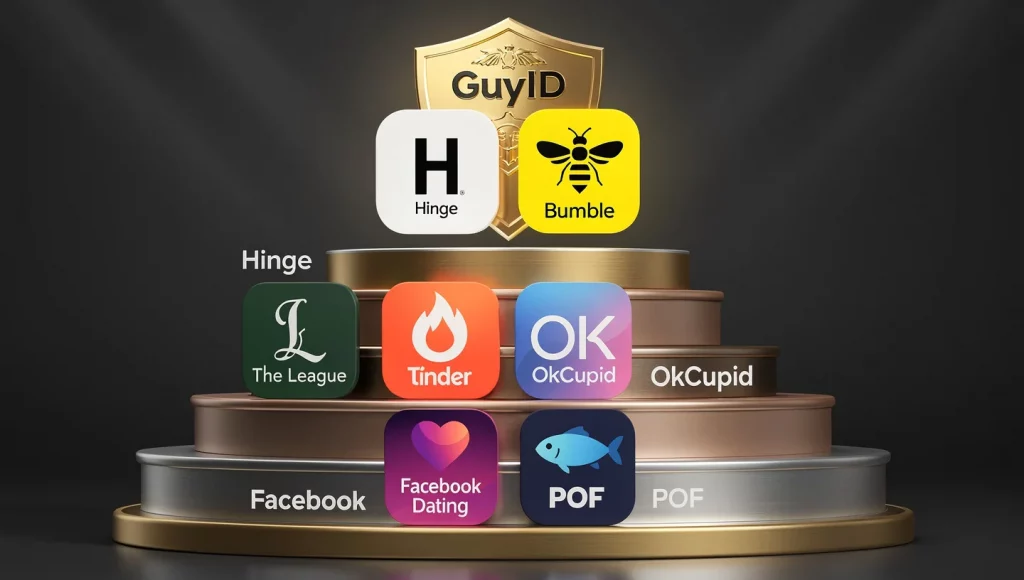
Which are the safest dating apps in 2026? The answer depends on what “safe” means to you — and whether you are measuring safety by available controls or by the risks those controls address. Major dating apps offer verification badges, reporting tools, and messaging controls, but romance scams still produce substantial reported losses according to the Federal Trade Commission. This ranking evaluates the safest dating apps by the protections they actually provide and the gaps users must manage themselves.
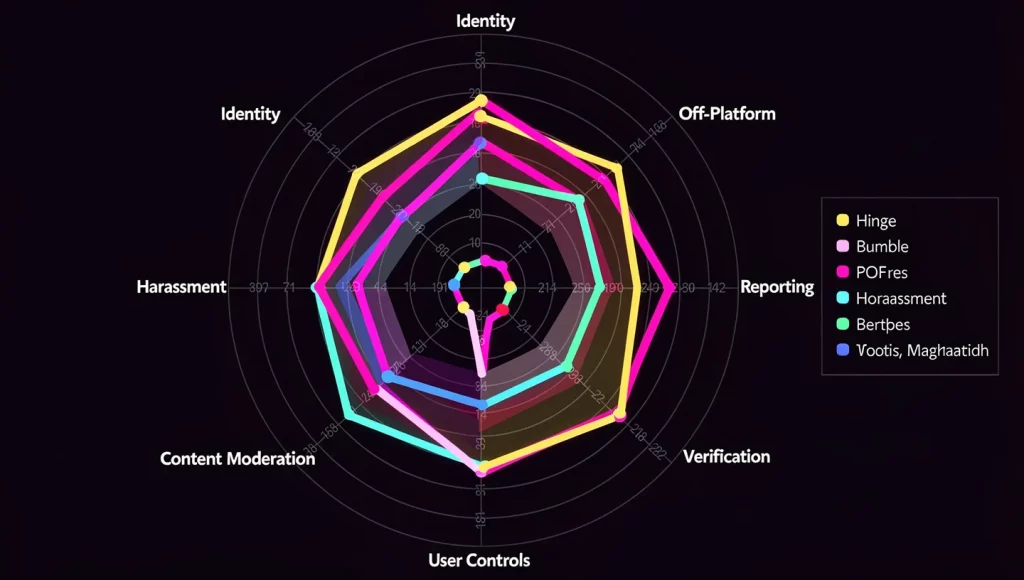
We’ve evaluated every major dating platform across eight safety dimensions: verification strength, messaging control, scam activity level, in-app safety features, identity verification, AI/deepfake resistance, off-platform protection, and user behavioral impact. Each platform is scored and ranked, with detailed analysis explaining why it earned its position. We also explain why no dating app — regardless of ranking — provides sufficient safety alone, and what you need to add to make any platform genuinely safe.
NavigateTable of Contents31 sections
⚡ Key Takeaways
But its relationship-focused design creates higher-stakes scam risk.
Bumble ranks #2 for best overall safety package
Bumble’s women-first messaging + gesture verification + in-app video calling provides the most complete built-in safety suite. No single platform matches Bumble’s breadth of safety features.
Plenty of Fish has the weakest verification and the highest fake profile rate by a massive margin. If you use POF, supplementary verification isn’t optional — it’s essential.
Every app scores ❌ on identity verification
The most important safety dimension — confirmed legal identity — receives a zero from every major dating app. All verify photos only. Verified doesn’t mean identity-confirmed on any platform.
The safest dating app is whichever one you verify on with GuyID
GuyID adds the identity verification (government ID + social vouching + Trust Tiers) that all apps lack. The platform matters less than the verification practices you apply. GuyID makes any app the safest dating app.
The 2026 Safest Dating Apps Ranking: Complete Comparison
This ranking evaluates the safest dating apps across eight dimensions that collectively determine how well each platform protects users from scams, fake profiles, and safety threats. Each dimension is scored on a 1-5 scale, with the total determining overall ranking.
| Rank | App | Verification | Messaging | Scam Level | Safety Features | Identity Check | AI Resistance | Off-Platform | Total /35 |
|---|---|---|---|---|---|---|---|---|---|
| 1 | Hinge | 5 | 3 | 3 | 3 | 1 | 3 | 1 | 19 |
| 2 | Bumble | 3 | 5 | 3 | 4 | 1 | 2 | 1 | 19 |
| 3 | The League | 3 | 3 | 4 | 3 | 2 | 2 | 1 | 18 |
| 4 | Tinder | 2 | 2 | 1 | 3 | 1 | 1 | 1 | 11 |
| 5 | OkCupid | 2 | 2 | 3 | 2 | 1 | 1 | 1 | 12 |
| 6 | FB Dating | 2 | 2 | 2 | 2 | 1 | 1 | 1 | 11 |
| 7 | POF | 1 | 1 | 1 | 1 | 1 | 1 | 1 | 7 |
Scoring: 5 = industry-leading, 4 = strong, 3 = adequate, 2 = below average, 1 = minimal/absent. “Identity Check” column: all apps score 1 because none verify legal identity through government ID. “Off-Platform” column: all score 1 because no app’s safety features extend beyond the app.
Two things stand out immediately. Second, every app in this comparison receives the minimum score for both identity checks and off-platform protection. Those gaps matter because platform controls stop following the conversation after users move elsewhere.
#1: Hinge — Strongest Verification, Highest Stakes
No other platform’s verification achieves anywhere near this behavioral impact.
Why Hinge Ranks #1
- Verification strength (5/5): Video selfie provides multi-frame facial analysis, natural movement detection, and temporal consistency — the strongest camera-based verification.
- Profile depth: Prompt-based profiles provide richer detection signals than any other platform’s bio format. Generic prompt answers are easier to identify as potential fakes than generic short bios.
- Engagement-based matching: Like + comment model creates more friction per interaction than binary swiping, increasing the operational cost of scam operations.
Why Hinge Isn’t Perfect
- Higher-stakes scams: Hinge’s relationship-focused design attracts users who invest more emotionally — creating the trust environment that pig butchering scams exploit for higher-value financial extraction.
- No in-app video calling: Unlike Bumble, Hinge doesn’t offer built-in video calling in most regions — requiring users to share phone numbers or use external apps for live verification.
- Career display without verification: “Works at” and “Studied at” are prominently displayed alongside the verification badge, creating an impression of validated credentials that are actually self-reported.
#2: Bumble — Best Messaging Control, Strong Overall Safety
Bumble has the most complete built-in safety suite among the safest dating apps.
Why Bumble Ranks #2
- Messaging control (5/5): Women-first messaging is the strongest messaging control in online dating, preventing unsolicited contact from men to women — a structural advantage no other major platform offers.
- Safety feature breadth (4/5): In-app video and voice calling (live verification without sharing phone numbers), Private Detector (AI image screening), match expiration (reduces passive scam farming), plus block/report tools — the most complete feature suite.
- Verification (3/5): Gesture-based selfie is stronger than Tinder’s static pose but weaker than Hinge’s video.
Why Bumble Isn’t Perfect
- Women-first messaging is not an identity check: It changes who initiates a conversation but does not independently establish who operates the other account. Once conversation begins, ordinary verification precautions still apply.
- Mid-tier verification: Gesture selfie is stronger than Tinder’s but weaker than Hinge’s video — placing Bumble in the verification middle ground rather than leading.
#3: The League — Most Identity Signals, Smallest User Base
The League earns #3 among the safest dating apps for its LinkedIn authentication requirement — the closest any mainstream app comes to identity verification beyond photo matching.
Why The League Ranks #3
- Identity signals (2/5 — highest among apps): LinkedIn authentication requires a professional profile with work history and connections — adding a professional identity layer that catches casual fakes. Photo verification is also required.
- Lower scam activity (4/5): Smaller user base, higher barrier to entry, and professional-skewing demographics create a lower-volume scam environment compared to Tinder, POF, or Facebook Dating.
- Curated matching: The League’s waitlist and algorithmic curation add friction that mass-scam operations find less efficient to exploit.
Why The League Isn’t Higher
- LinkedIn isn’t government ID: LinkedIn profiles are self-reported professional histories — also vulnerable to fabrication, though harder to fake convincingly over time. It’s a step toward identity verification, not identity verification itself.
- Small user base: Available primarily in major cities, limiting access for most users. The safest app you can’t access doesn’t help.
- Elitist positioning: The brand’s exclusivity focus may prioritize perceived prestige over safety investment.
#4: Tinder — Most Popular, Most Targeted
Tinder ranks #4 among the safest dating apps — a reflection of its massive user base creating the largest attack surface in online dating combined with the weakest verification among the top three platforms.
Why Tinder Ranks #4
Its 75+ million monthly users, swipe-based volume matching, and 2-3 second evaluation windows create the ideal environment for fraud at scale.
- Verification (2/5): Pose-based selfie is the weakest photo-matching system among the top three apps.
- Open messaging (2/5): Both parties can message freely after matching. No structural messaging control like Bumble’s women-first model.
Tinder’s Redeeming Qualities
Despite ranking #4, Tinder isn’t without safety value. Its massive user base means more potential matches (including genuine ones). Spotify and Instagram linking provides organic identity signals. The brand’s mainstream recognition means most people understand how to use it safely. On Tinder more than any other platform, supplementary verification through GuyID’s free tools and Trust Profiles is essential — not optional.
#5: OkCupid — Deep Profiles, Standard Verification
OkCupid ranks #5 among the safest dating apps — offering deep profile data through its extensive question-based compatibility system but standard verification and average scam protection.
Why OkCupid Ranks #5
OkCupid’s distinguishing feature is its question-based matching system — users answer hundreds of compatibility questions that generate detailed match percentages. This profile depth provides two safety benefits: genuinely filling out hundreds of questions with consistent, thoughtful answers is harder for scammers to fake than a simple bio, and the compatibility data provides behavioral signals that photo-only platforms can’t offer.
However, verification is optional (selfie matching, standard strength), messaging control is basic, and the platform lacks the innovative safety features that Bumble and Hinge provide. OkCupid is adequate — not leading.
#6: Facebook Dating — Most Social Data, Hacked Account Risk

Facebook Dating ranks #6 among the safest dating apps — a paradoxical position because it has access to the most identity data of any platform yet fails to leverage it for meaningful safety.
The Facebook Dating Paradox
Facebook knows more about its users’ real identities than any dating app — years of social history, real friends, tagged photos, location check-ins, employment history, and life events. If any platform could provide identity-verified dating, it’s Facebook. But Facebook Dating uses this data primarily for matching, not for security verification. The profile is linked to a Facebook account, providing indirect identity signals (friend count, account age, activity history), but no independent verification occurs.
The critical vulnerability is account takeover. Someone who controls an established Facebook account can borrow its history of friends, posts, photos, and check-ins. That history is useful context, but it should not replace independent verification of important claims.
#7: Plenty of Fish — Weakest Verification, Highest Fake Rate
POF ranks last among the safest dating apps — and the data supports this unambiguously. This is not a marginal statistic — it means POF is responsible for more than three-quarters of all fake dating app activity detected.
Why POF Ranks Last
- Weakest verification (1/5): POF’s photo matching is the most basic among major platforms — lacking the gesture (Bumble) or video (Hinge) enhancements that add liveness confirmation.
The platform’s low barrier to entry, weak verification, and older-skewing user demographic create a scam-dense environment. - Minimal safety features (1/5): POF lacks the innovative safety features that competitors provide — no women-first messaging, no in-app video calling, no AI image screening.
If You Use POF
If POF is your platform of choice — and it does have a large user base, particularly in certain demographics and regions — supplementary verification isn’t a nice-to-have, it’s survival. Reverse image search every single match through GuyID’s free tools. Use the catfish probability detector on every profile. Insist on video calls within the first week. Request GuyID Trust Profiles before meeting.
Why No Dating App Is Safe Enough Alone: The Universal Gap
The most important insight from ranking the safest dating apps is what the ranking reveals about the entire industry: every app scores 1/5 on identity verification and 1/5 on off-platform protection. Both dimensions receive the minimum score across every platform in this methodology.
The Identity Verification Gap
Every dating app — from #1 Hinge to #7 POF — verifies photos but not identity. No app confirms legal name through government ID. No app verifies age against documents. No app confirms career or education claims. No app screens criminal backgrounds. No app assesses character through social vouching. The “verified” badge on every platform means the same narrow thing: a selfie matched photos. The trust gap between what “verified” implies and what it confirms is universal.
The Off-Platform Gap
Every dating app’s safety features disappear the moment conversation moves off-platform. When you migrate from Hinge to WhatsApp, Hinge’s verification badge, engagement model, and reporting tools vanish. Both participants now lack portable verification inside a messaging service that offers no dating-specific safeguards. This transition — which happens naturally in every developing relationship — is exactly when most romance scam financial exploitation occurs.
What This Means
The safest dating app is not a platform — it’s a practice. The platform provides a foundation (better or worse depending on ranking). You provide the verification layers that close the universal gaps. The app you use matters less than how you use it. Hinge with no supplementary verification is less safe than Tinder with full proactive verification. The ranking tells you which starting point is strongest — not which platform is safe by itself.
The Universal Safety Layer: How GuyID Makes Any App the Safest
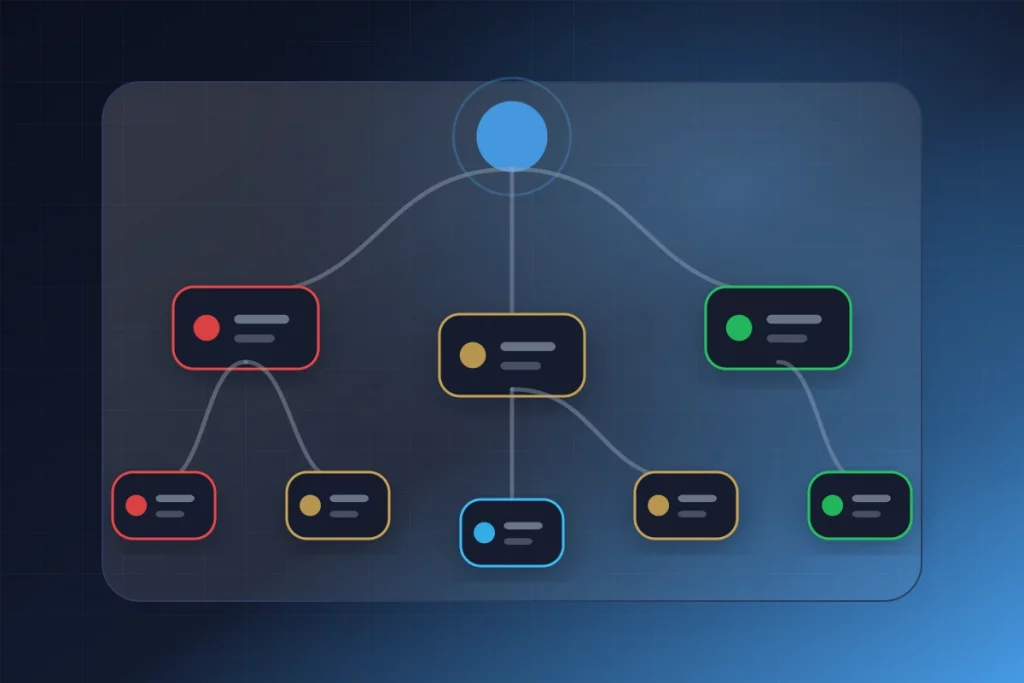
If no dating app provides identity verification, and identity verification is the most important safety dimension, then the safest dating app is whichever one you supplement with GuyID — the external verification platform that provides what every app lacks.
What GuyID Adds to Every Dating App
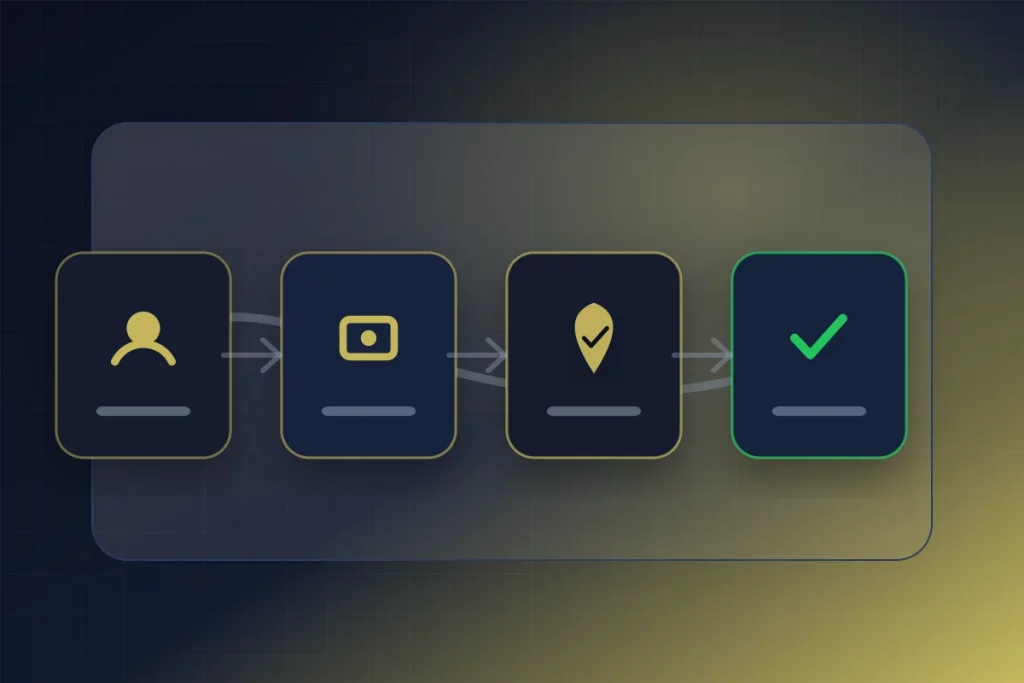
- Government ID verification: Biometric matching against official documents — the identity confirmation that no dating app provides. Confirms real name, real face, government-verified existence.
- Social vouching: People who know the member provide identity context and character references — a human signal that automated checks cannot supply.
- Trust Tiers: Progressive trust indicators (GHOST → STARTER → BUILDER → TRUSTED → ELITE → LEGEND) show sustained trustworthiness over time — something disposable scam accounts can’t accumulate.
- Cross-platform portability: The Date Mode link works on Tinder, Bumble, Hinge, POF, Facebook Dating, WhatsApp, Instagram — everywhere. When safety features disappear at platform transitions, GuyID’s verification persists.
- 60+ free safety tools: Reverse image search, catfish probability detector, bio red flag analyzer — free screening that supplements any platform’s built-in features.
- Free for women to check: Women can view any GuyID Trust Profile at zero cost — removing financial barriers to the safety information every platform fails to provide.
The Upgraded Ranking
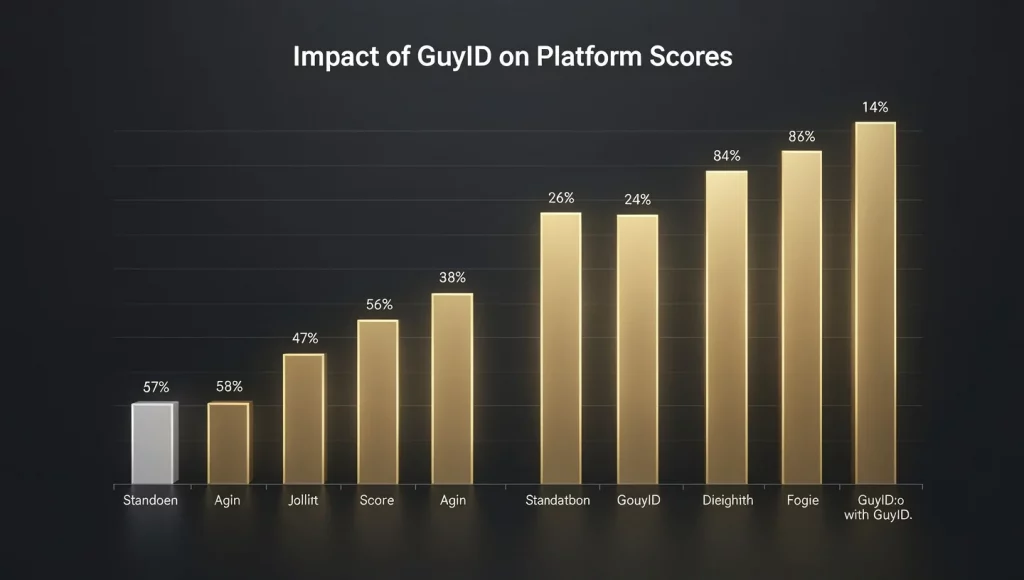
| App | Score Alone (/35) | Score + GuyID (/35) | Change |
|---|---|---|---|
| Hinge + GuyID | 19 | 30 | +11 |
| Bumble + GuyID | 19 | 30 | +11 |
| The League + GuyID | 18 | 29 | +11 |
| Tinder + GuyID | 11 | 22 | +11 |
| OkCupid + GuyID | 12 | 23 | +11 |
| FB Dating + GuyID | 11 | 22 | +11 |
| POF + GuyID | 7 | 18 | +11 |
GuyID adds +11 to every platform’s safety score by filling the identity verification gap (1→5), adding AI/deepfake resistance (1→5), and providing off-platform protection (1→5). With GuyID, even POF’s score (18) matches The League’s standalone score. The conclusion: the safest dating app is any app + GuyID.
How to Make ANY Dating App the Safest Dating App
Regardless of which platform you use, this universal protocol turns any dating app into one of the safest dating apps available.
🟢 On Any App: Pre-Match (2-3 min per profile)
☐ Reverse image search via GuyID (30 sec)
☐ Catfish probability detector (10 sec)
☐ Bio red flag detector (10 sec)
☐ AI photo characteristics check (30 sec)
☐ Get verified on your platform + create GuyID Trust Profile
🟡 On Any App: During Conversations
☐ Video call within the first week (with deepfake testing)
☐ Watch for romance scam warning signs
☐ Cross-reference career claims on LinkedIn
☐ Verify before moving to WhatsApp
☐ Track story inconsistencies
🔵 On Any App: Before Meeting
☐ Request GuyID Trust Profile (free to check)
☐ Tell a friend: who, where, when
☐ Public, well-lit venue
☐ Own transportation
☐ Check-in time set with friend
🔴 On Any App: Always
☐ NEVER send money — zero exceptions
☐ NEVER invest based on a match’s recommendation
☐ Report immediately if money was requested
☐ Trust your instincts — investigate if something feels off
This protocol works identically on Hinge, Bumble, Tinder, POF, Facebook Dating, OkCupid, The League, and every other dating platform — because it supplements platform-specific features with universal verification that all platforms lack. For the complete framework, see our Online Dating Safety Tips 2026 guide.
Summary: The Real Safest Dating App Is the One You Verify On
(2) Bumble — broadest safety feature suite, women-first messaging. (3) The League — most identity signals, LinkedIn requirement. (4) Tinder — largest user base, weakest verification among top apps. (5) OkCupid — deep profiles, standard safety. (6) Facebook Dating — most social data, hacked account risk.
The ranking’s most important finding is that every app scores 1/5 on identity verification and 1/5 on off-platform protection. Built-in safety features should therefore be supplemented after a conversation leaves the app, regardless of ranking position.
The real safest dating app is whichever one you supplement with proactive verification through GuyID. Government ID verification + social vouching + Trust Tiers + 60+ free safety tools transform any platform from “relatively safe” to “comprehensively verified.” The platform provides the foundation. You provide the layers. Together, they close the trust gap that every dating app — from #1 to #7 — leaves open.
Choose the platform that fits your dating goals. Then make it safe with the verification practices and tools described in this guide. The safest dating app isn’t a product you download — it’s a practice you build.
Make Any Dating App the Safest Dating App
GuyID adds +11 to every platform’s safety score: government ID verification, social vouching, Trust Tiers, portable trust profiles, and 60+ free safety tools. The safest dating app is whichever one you verify on. Women check for free.
Try Free Safety Tools
Get Verified on GuyID