Reader Briefing
Reader Briefing
Start here if you need a practical read on is bumble bff safe? what to know: who should use verification, what signals to check, and what to do before moving from online interest to an in-person plan.
Who this is for
- People meeting someone from a dating app or social platform.
- Readers preparing for a first in-person date.
- Anyone checking identity, profile consistency, and trust signals.
- People trying to avoid romance scams, fake profiles, or pressure tactics.
You’ll learn
- How to evaluate identity signals without treating any single check as certainty.
- Which trust signals matter and how to weigh them together.
- How to spot inconsistencies, pressure, or behavior patterns that deserve caution.
- How to move from online conversation to a safer first meeting.
- Where GuyID tools fit into a quick pre-date screening workflow.
- How to compare options using practical safety and trust criteria.
Bottom line
Verification reduces uncertainty; it does not guarantee future behavior. Use a layered approach: confirm identity signals, compare profile consistency, ask for a short video call, keep early plans public, and slow down when someone pressures you to skip normal safety steps.
Key takeaways
- Identity verification improves confidence, not certainty.
- Patterns matter more than isolated incidents.
- Verify before meeting privately or sharing sensitive details.
- A short video call can reveal many inconsistencies.
- Pressure to skip reasonable safety steps is useful information.
Free Tools
Catfish Probability Detector
Check whether a dating profile has suspicious identity or photo signals.
Dating Bio Red Flag Detector
Review a bio for scam, pressure, or trust-warning language.
Dating Safety Checklist
Use free GuyID tools before moving from chat to a real date.
Next step
Create your GuyID trust profile
Share consent-based trust signals before a date without turning the conversation into an interrogation.
Bumble BFF promises to solve the adult friendship crisis — but swiping for friends comes with its own set of safety questions that most people don’t think to ask. Is Bumble BFF safe in 2026? The feature shares Bumble’s dating infrastructure — photo verification, reporting systems, and message screening — but also inherits vulnerabilities that take different forms in a friendship context. From romance scammers who use BFF mode as a backdoor to catfish who build fake friendships for financial exploitation, the risks on Bumble BFF are real but different from the dating side. This guide covers what Bumble BFF actually protects, the specific risks unique to friend-finding, and how to make genuine connections safely.
NavigateTable of Contents16 sections
What Is Bumble BFF?
Bumble BFF is a friend-finding feature within the Bumble app that uses the same swipe-based matching interface as Bumble’s dating mode, but for platonic connections. Launched in 2016 and expanded significantly since, BFF mode lets users create a separate profile specifically for finding friends — matching with people nearby who are also looking for platonic relationships. Once two users match, both people can initiate conversation freely (unlike Bumble dating where only women message first).
The feature addresses a genuine and growing problem in modern society: adult loneliness and social isolation. Research from the American Psychological Association identifies social isolation as a public health concern affecting an estimated one-third of adults, with rates increasing significantly since the COVID-19 pandemic reshaped social interaction patterns. Traditional traditional friendship-making avenues (school environments, organized activities, proximity-based social circles and neighborhood communities) diminish in adulthood, and Bumble BFF attempts to fill the gap with technology-facilitated friend matching.
But the question “is Bumble BFF safe” matters because the platform designed for dating carries specific assumptions about user verification, safety infrastructure, and risk management that don’t automatically translate to the friendship context. The same app architecture that helps you find a date also processes your friend search — and that shared infrastructure has both advantages and blind spots.
A critical distinction: the safety expectations people bring to friendship apps are typically lower than those they bring to dating apps — and this expectation gap is exactly what bad actors exploit. On a dating app, you might run a reverse image search, request a video call, and verify identity before meeting. On a friendship app, most people skip these steps because “it’s just a friend meetup.” This reduced vigilance makes BFF mode a more attractive environment for scammers, recruiters, and people with misrepresented intentions — not because the platform is less safe, but because the users are less guarded.
How Bumble BFF Differs from Bumble Dating
Understanding the structural differences helps assess whether Bumble BFF is safe for your specific situation:
Messaging dynamics. Unlike Bumble dating (where only women can message first), BFF mode allows both matched users to initiate conversation. This removes the women-first safety layer that Bumble dating provides — meaning anyone in a BFF match can begin contact immediately after matching.
Profile intent ambiguity. On Bumble dating, the mutual understanding is romantic/sexual interest. On BFF, the stated intent is friendship — but the platform has no mechanism to verify or enforce that intent. Users can create BFF profiles for any reason, and the platform relies on self-reporting and community reporting to address misuse. This intent ambiguity is the core structural weakness when evaluating whether Bumble BFF is safe.
Lower social stakes perception. Meeting a potential friend feels lower-stakes than meeting a potential romantic partner — which reduces the caution people apply. Fewer BFF users run background checks, insist on video calls, or verify identity before meeting compared to dating users. Yet the physical safety equation is identical: you’re meeting a stranger from the internet in both cases.
Different scam profiles. Bumble dating attracts romance scammers seeking financial exploitation through emotional manipulation. Bumble BFF attracts MLM recruiters, networking scammers, and people seeking to build trust relationships for longer-term exploitation. The scam timelines are often longer on BFF because friendship-based trust takes more time to build than romance-based intensity. The National Library of Medicine research on social engineering confirms that friendship-based manipulation is more effective than stranger-based approaches because the trust foundation has been established before the exploitation begins.
Bumble BFF Safety Features
Because Bumble BFF runs on the same platform as Bumble dating, it inherits the dating app’s safety infrastructure:
Photo verification. Bumble’s selfie verification system works identically in BFF mode — users can verify that their photos match their real appearance by completing a real-time selfie that’s compared against their profile images. Verified users receive a blue checkmark visible to all potential matches. This catches basic catfishing where someone uses an entirely different person’s photos, but it doesn’t verify name, age, location, or identity beyond facial appearance. The verification confirms “this person looks like their pictures” — nothing more, nothing less.
Block and report system. Users can block and report BFF matches for inappropriate behavior, romantic/sexual solicitation (a common BFF-specific issue), scam attempts, harassment, and fake profiles. Bumble’s moderation team reviews reports across both dating and BFF modes.
AI message screening. Bumble’s machine learning system monitors messages for potentially inappropriate, threatening, or scam-related content — including detecting when BFF conversations shift to romantic or sexual solicitation, which violates the platform’s BFF terms of use.
Private detector. Bumble’s system can detect and blur unsolicited intimate images before they reach the recipient — relevant because some users misuse BFF mode for sexual purposes.
What Bumble BFF doesn’t do: Verify real identity (name, background, intentions), screen for criminal records, confirm that users are genuinely seeking friendship rather than exploiting BFF mode for other purposes, or verify any biographical claims in profiles. The question “is Bumble BFF safe” has the same fundamental answer as all dating/social apps: the platform provides tools, but personal verification practices are what ultimately determine your actual safety.
Is Bumble BFF Safe? The Real Risks
The risks on Bumble BFF differ from Bumble dating in important ways:
Romantic/sexual solicitation disguised as friendship. Some users create BFF profiles with the actual intention of pursuing romantic or sexual connections — either because they’ve been banned from dating mode, because they’re targeting users who have their guard down in a “friendship” context, or because they’re seeking affairs while hiding dating app activity from a partner. This is the most commonly reported misuse and directly undermines the question of whether Bumble BFF is safe for its intended purpose. Watch for matches who quickly steer conversations toward appearance-based compliments, physical meetup pressure, or topics that feel more flirtatious than friendly.
MLM and pyramid scheme recruitment. Multi-level marketing recruiters have discovered that BFF mode provides a pre-built system for approaching people under the guise of friendship — then pivoting to sales pitches for essential oils, supplements, financial products, or “business opportunities.” The friendship framing lowers defenses: “My new friend invited me to a coffee meetup” feels different from “A stranger is trying to sell me something.” If a BFF match mentions their “side business,” invites you to a “networking event,” or suggests you’d be “great at” what they do within the first few conversations, the friendship is likely a recruitment funnel.
Financial scams through friendship building. The same romance scam playbook operates on BFF mode with modifications: building emotional connection through friendship, establishing trust over weeks, then introducing a financial request — an “investment opportunity,” a “lending situation,” or a “business partnership.” The friendship context makes financial requests feel less suspicious than they would from a dating match. The FTC has documented increasing fraud complaints originating from friendship-based social platforms.
Catfishing for emotional manipulation. Catfish on BFF mode may not seek money — they may seek emotional supply, personal information for identity theft, or the satisfaction of maintaining a fake persona. A “friend” who seems too perfect, too available, and too invested too quickly may be a catfish building a fake friendship. The same fake profile red flags that apply to dating profiles apply to BFF profiles.
Personal safety risks. Meeting a stranger from any app — including BFF mode — carries physical safety risks. The friendship framing may cause users to lower their guard compared to dating meetups: meeting at someone’s home for a “hangout” rather than in public, sharing personal information faster because “it’s just a friendship,” or skipping the video call step because friend-meeting feels lower-stakes. These reduced precautions significantly increase your exposure to the same risks that dating safety protocols are designed to mitigate.
Data and privacy concerns. Bumble BFF profiles share the same app and data infrastructure as dating profiles. Information shared in BFF mode (photos, location, biographical details) is subject to the same data handling practices as dating mode. Users who are cautious about their dating profile data should apply the same caution to their BFF profile — the data exposure is identical.
Common Bumble BFF Scams
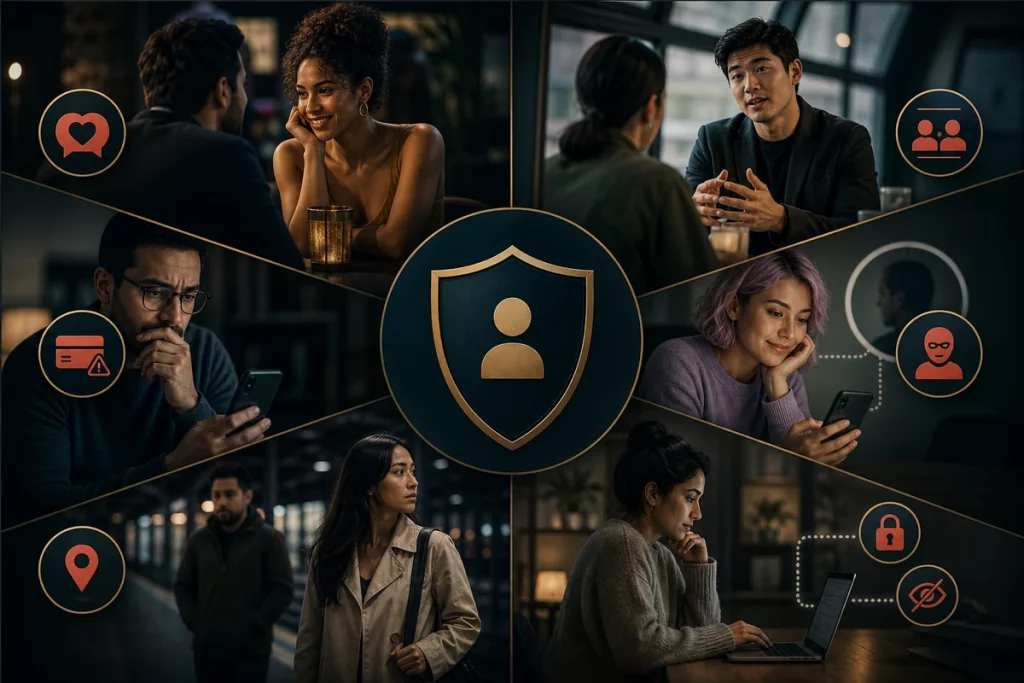
Knowing the specific scam patterns that target Bumble BFF users helps you recognize them before they succeed:
The “investment opportunity” friend. They build genuine-seeming friendship over 2-4 weeks — asking about your life, sharing theirs, meeting for coffee. Then they casually mention an investment that’s “doing really well” and suggest you should look into it. The friendship was the funnel; the investment pitch is the goal. Legitimate friends don’t recruit you into financial schemes.
The “emergency” friend. After establishing friendship through consistent interaction, they develop a sudden financial emergency — medical bills, car breakdown, family crisis — and ask to borrow money. The emotional investment of the friendship makes refusing feel like abandoning a friend in need. Remember: genuine friends you’ve known for weeks don’t ask for financial help from someone they met on an app. Report and see our guide on how to report a scammer.
The “networking event” recruiter. They invite you to what sounds like a social gathering — a brunch, a meetup, a workshop — that turns out to be an MLM presentation or sales pitch. The social framing disguises the commercial intent. Before attending any event a BFF match organizes, ask directly: “Is this a social event or is there a business component?” Evasive answers are your answer.
The romantic pivot. They match as a friend, build rapport, then gradually shift the conversation toward romantic or sexual territory — testing whether you’ll reciprocate. If a BFF match crosses into romantic territory and you’re not interested, set a clear boundary: “I’m only looking for friendship on here.” Their response to that boundary tells you everything about their intentions.
How to Stay Safe on Bumble BFF
The same safety principles that protect you on dating apps apply to BFF mode — with some friendship-specific additions:
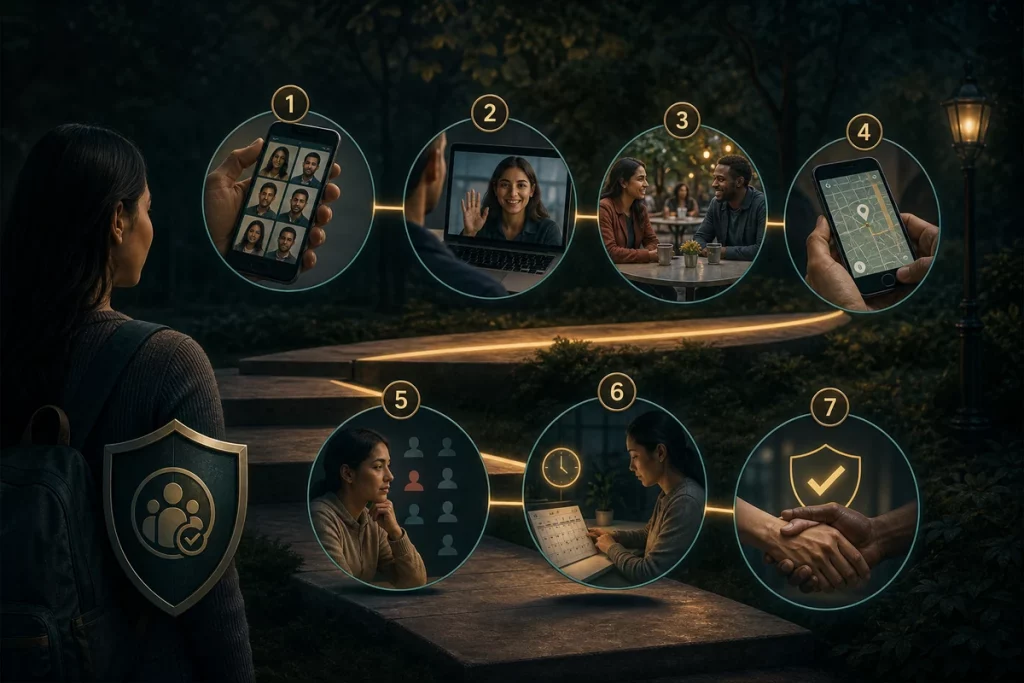
Apply dating-level verification to friendship matches. Don’t lower your guard because it’s “just friendship.” Run a reverse image search on their profile photos. Cross-reference their name on social media for a consistent digital footprint. If their BFF profile claims don’t match their social media reality, the profile may not represent a genuine person or genuine intentions. Use GuyID’s free screening tools for comprehensive profile analysis.
Video call before meeting in person. A 5-minute video call confirms the person matches their photos and can interact naturally. This step is as important for BFF matches as for dating matches — catfish and scammers operate in both modes. If a BFF match refuses video after two requests, treat it with the same suspicion you would on the dating side.
Meet in public for the first several interactions. Coffee shops, parks, public events — not private homes. The friendship context may tempt you to skip this precaution (“We’re just hanging out”), but meeting strangers from any platform at private locations before establishing trust is a risk regardless of the relational framing. Apply the same first meeting safety protocol you would for a date.
Tell someone where you’re going. Share your location with a trusted friend or family member before any BFF meetup. Establish check-in times. This takes 30 seconds and provides a safety net that costs nothing. The fact that you’re meeting a potential friend rather than a date doesn’t change the fundamental safety equation of meeting a stranger.
Watch for the MLM pivot. If a new BFF match mentions their “business,” “side hustle,” “amazing opportunity,” or invites you to any event with a vague description, proceed with caution. Ask directly: “Is this a social friendship or are you involved in network marketing?” Direct questions produce either honest answers or revealing evasiveness.
Trust the pace of genuine friendship. Real friendships develop gradually — shared interests, natural rapport, organic deepening over weeks and months. If a BFF connection feels unusually intense, unusually invested, or unusually eager to integrate into your life quickly, the intensity may be strategic rather than organic. The same love bombing concept applies to friendships: overwhelming attention designed to create dependency before the real agenda reveals itself.
Ask for GuyID verification. If you’re meeting a BFF match in person, sharing your Date Mode link and asking them to verify through GuyID provides identity confirmation that Bumble’s photo verification doesn’t offer. A person genuinely seeking friendship has no reason to resist identity verification — and their response to the request reveals whether their intentions align with their stated purpose on the platform.
How GuyID Helps
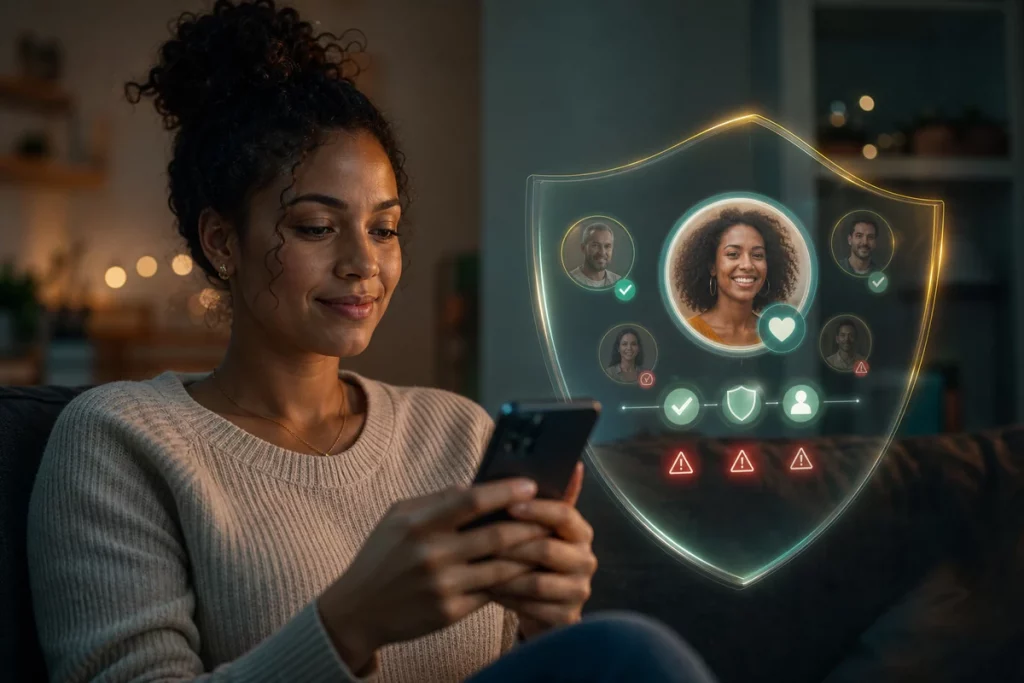
GuyID should appear when it is useful, not as a banner ad. A GuyID Trust Profile gives someone a portable way to share trust signals before a date, while identity verification and social vouching help turn vague profile claims into clearer next steps.
Useful next steps:
- Create a GuyID Trust Profile when you want a cleaner way to share verified trust signals.
- Use GuyID free tools and related guides when you need a checklist before meeting someone.
- Treat identity verification as confidence-building, not a guarantee.
- Use social vouching when you want context from people who already know the person.
- Sign up only when the extra trust layer helps the decision you are already trying to make.
Frequently Asked Questions
Is Bumble BFF safe to use in 2026?
Bumble BFF provides photo verification and block-and-report controls, but using it still involves risk. These features do not establish a person’s complete identity or intentions, so protect personal information, keep early communication on-platform, and meet new contacts in public.
Do people use Bumble BFF for dating?
Yes — it’s one of the most common complaints about the platform. Some users create BFF profiles with romantic/sexual intentions, either because they’ve been banned from dating mode, because they’re pursuing affairs while hiding dating activity, or because they prefer the lowered defenses of a “friendship” context. If a BFF match steers conversations toward appearance, romance, or anything that feels more like flirting than friendship, set a clear boundary. If the boundary is violated, report the profile.
How do I spot an MLM recruiter on Bumble BFF?
Warning signs: they mention a “business” or “side hustle” within the first few conversations, they describe themselves as an “entrepreneur” or “business owner” without specifics. They invite you to vaguely described “events” or “meetups,” they talk about “financial freedom” or “passive income,” or they pivot from friendship talk to opportunity pitching. Ask directly: “Are you involved in network marketing?” Genuine friends share interests, not business pitches.
Should I meet Bumble BFF matches in public?
The friendship context may make private meetups feel lower-risk than dating meetups, but the fundamental safety equation is identical: you’re meeting a stranger from the internet. Coffee shops, parks, public events, and restaurants provide safety through visibility. Private homes should wait until you’ve established trust through multiple public interactions, video calls, and identity verification.
Can I get scammed on Bumble BFF?
Yes. Financial scams, MLM recruitment, catfishing, and identity theft all occur on Bumble BFF. The friendship framing actually makes some scams MORE effective because people lower their guard for “friends” compared to dates. Never send money to someone you met on Bumble BFF regardless of the reason, verify profiles through GuyID’s screening tools, and watch for the specific scam patterns described in this guide.
Is Bumble BFF safer than other friend-finding apps?
Bumble BFF benefits from Bumble’s established safety infrastructure — photo verification, message screening, and a large moderation team — which most standalone friend-finding apps don’t match. Alternatives like Meetup focus on group activities (which naturally reduces the one-on-one stranger risk), and Peanut (for moms) and Yubo (for teens) serve specific demographics. Among general friend-finding tools, Bumble BFF has the most robust safety features — but the same limitations (no identity verification, no scam prevention) apply across all platforms. Personal verification practices matter more than platform choice.
Does Bumble BFF show my profile to dating users?
No. Bumble BFF and Bumble dating operate as separate modes within the same app. Your BFF profile is only shown to other BFF users, and your dating profile (if you have one) is only shown to dating users. The profiles can have different photos and bios. However, both profiles share the same account, verification status, and data infrastructure — so information you share in one mode is technically accessible within the same system, even though profiles aren’t cross-displayed to users.
How do I verify a Bumble BFF match’s identity?
Use the same verification protocol as dating: reverse image search their photos, cross-reference on social media (Facebook, Instagram, LinkedIn), video call before meeting in person, and ask for GuyID verification for government ID confirmation. The friendship context doesn’t reduce the importance of knowing who you’re actually meeting. GuyID’s free tools work for friend verification just as effectively as for dating verification.