
Is Facebook Dating Safe? Hacked Accounts & the 50+ Risk (2026)
Is Facebook Dating safe? Facebook Dating occupies a unique and paradoxical position in online dating safety: it has access to more real identity data than any other dating platform — years of social history, real friend networks, tagged photos, employment records, and life events — yet fails to leverage that data for meaningful safety verification. The result is a platform where the social proof appears stronger than any competitor but where hacked account exploitation creates the most convincing scam cover available anywhere in online dating. With 11 million Americans aged 50+ targeted through online romantic connections (AARP, Feb 2026) and Facebook serving as a primary dating channel for this demographic, understanding is Facebook Dating safe is critical for the millions of users who trust the Facebook name with their romantic lives.
This guide provides the complete safety assessment: what Facebook Dating does differently, why its strengths create unique vulnerabilities, how hacked account scams exploit Facebook’s social proof, how it compares to Tinder, Bumble, and Hinge, and the specific safety protocol that Facebook Dating users need to follow.
Is Facebook Dating Safe? The Honest Assessment
The answer to is Facebook Dating safe is a qualified “it depends on which threat you’re most concerned about.” For basic catfishing with entirely fabricated profiles, Facebook Dating is actually safer than average — the linked Facebook account provides social history signals that standalone dating apps can’t match. For sophisticated scams using hacked accounts, Facebook Dating is one of the most dangerous platforms available — because the hacked account’s years of genuine history create scam credibility that no amount of photo verification can detect.
Facebook Dating scores 11/35 in the safest dating apps ranking — tied with Tinder, behind Bumble (19/35) and Hinge (19/35), and ahead of only POF (7/35). The score reflects a platform with strong identity data assets but weak safety implementation — a gap that’s particularly dangerous given the demographic it serves.
What Makes Facebook Dating Different from Every Other Dating App
To fairly evaluate is Facebook Dating safe, understanding what makes it structurally unique is essential — because these differences create both unique advantages and unique vulnerabilities.
The Social Graph Advantage
Facebook Dating is the only major dating platform backed by a comprehensive social graph. Every Facebook Dating profile is linked to a Facebook account that may contain years of posts, hundreds of friends, tagged photos with real people, employment history, education history, location check-ins, life events (marriages, births, job changes), and group memberships. No standalone dating app — not Tinder, Bumble, or Hinge — has access to anything approaching this depth of identity data.
For legitimate users, this social graph creates genuine trust signals. You can see mutual friends. You can check if their Facebook account has years of authentic activity. You can see tagged photos where other real people identify them. These signals are harder to fake than a dating profile bio because they require years of organic social media activity — something scammers creating fresh fake accounts can’t replicate.
The Mutual Friends Signal
Facebook Dating shows mutual friends between you and potential matches. This is the most powerful trust signal available on any dating platform — because a mutual friend provides a real-world reference point. “I have 3 friends in common with this person” is meaningfully more trust-informative than any dating app verification badge. You can ask your mutual friend about the person, establishing trust through your existing social network.
The Separation from Main Facebook
Facebook Dating operates as a separate section within the Facebook app — dating activity doesn’t appear on your Facebook timeline, and your Facebook friends don’t see your dating profile (unless you opt into “Secret Crush” for specific friends). This separation provides privacy within the Facebook ecosystem, though it also means that dating-specific safety features operate independently of Facebook’s broader content moderation.
The Hacked Account Problem: Facebook Dating’s Unique and Most Dangerous Vulnerability
The critical vulnerability that shapes the answer to is Facebook Dating safe is the hacked account problem — a threat unique to Facebook Dating and more dangerous than anything other platforms face.
How Hacked Account Scams Work
A scammer gains access to a legitimate Facebook account — through phishing, credential stuffing, data breach exploitation, or social engineering. The hacked account has years of genuine history: real friends, real posts, real photos, real check-ins. The scammer activates Facebook Dating using this account and begins matching with targets. The target sees a Facebook Dating profile backed by a Facebook account with 500+ friends, years of posts, tagged photos with real people, and organic activity — and reasonably concludes this is a real person.
Except the person operating the account is not the person who built it. The scammer has inherited the entire trust infrastructure of a real human’s social media life — creating a scam cover that no fake profile detection technique can penetrate through photo analysis alone. Reverse image search finds the person’s real social media — confirming the identity appears legitimate, because it was legitimate until the account was compromised.
Why This Is More Dangerous Than Fake Profiles
On Tinder, Bumble, or Hinge, a scam profile is built from scratch — limited photos, no social history, no friend connections. These profiles have detectable characteristics: thin digital footprints, recently created accounts, limited photo variety. On Facebook Dating, a hacked account has none of these tells. It has the thick digital footprint, the old account history, the real friend connections, and the authentic photo archive of a real person. The scam isn’t building a fake identity — it’s stealing a real one.
This makes the hacked account scam on Facebook Dating virtually undetectable through the standard screening techniques that work on other platforms. The profile passes reverse image search (photos belong to a real person). It passes social media cross-referencing (the Facebook account exists with years of genuine activity). It even passes the “mutual friends” check (the original account holder’s friends are real). The only things that detect a hacked account scam are behavioral analysis (the person’s communication style doesn’t match their profile history) and identity verification that confirms the current operator is the account holder — exactly what GuyID Trust Profiles provide.
The Scale of the Problem
Facebook reported hundreds of millions of fake accounts detected and removed quarterly — indicating the massive scale at which account compromise and fake account creation occur on the platform. While Facebook’s security teams address this at scale, the arms race between account security and account compromise means hacked accounts consistently enter Facebook Dating before they’re detected and disabled. For users evaluating is Facebook Dating safe, this ongoing vulnerability is the platform’s most significant safety limitation.

Why Facebook Dating Is a Prime Target for Romance Scams Against Older Adults
The demographic dimension of is Facebook Dating safe is critical — because Facebook Dating’s user base overlaps significantly with the population most vulnerable to romance scams.
The 50+ Demographic
Facebook’s overall user base skews older than Tinder, Bumble, or Hinge. Facebook Dating inherits this demographic profile, with a significant proportion of users aged 40-65+. The AARP reports 11 million Americans aged 50+ have been targeted through online romantic connections — and Facebook is a primary channel for this demographic’s online social activity. The intersection of Facebook Dating’s older user base with the 50+ population most targeted by romance scams creates elevated risk.
Why Older Adults Face Higher Scam Risk
This isn’t about intelligence or naivety — it’s about threat exposure and unfamiliarity with emerging attack vectors. Users who joined Facebook in 2008-2012 may be comfortable with the platform’s social features but less familiar with AI-generated photos, deepfake technology, and the sophisticated psychological manipulation techniques that modern scam operations deploy. They may also have higher disposable income and retirement savings that make them higher-value targets — average romance scam losses for victims over 60 exceed those of younger demographics.
The combination of platform familiarity (comfortable using Facebook), demographic targeting (higher-value targets), and threat unfamiliarity (less awareness of AI/deepfake techniques) makes Facebook Dating’s older user base particularly vulnerable — and makes the answer to is Facebook Dating safe especially important for this group.
53% Find Romance Scams Harder to Discuss
NordProtect’s January 2026 research found that 53% of victims find romance scams harder to discuss than other forms of fraud — and this stigma is amplified for older adults. The shame of being deceived through a romantic channel makes reporting and seeking help less likely, which in turn makes the scam data incomplete (55% of victims never report per AARP) and allows scammers to operate longer without detection.
Facebook Dating Safety Features: What Works and What Doesn’t
Evaluating is Facebook Dating safe requires understanding what the platform actually provides — and the significant gaps in its safety toolkit.
What Facebook Dating Provides
- Linked Facebook account: The most significant safety signal — every Facebook Dating profile is connected to a Facebook account with its associated social history. This provides more context than any standalone dating app.
- Mutual friends visibility: Seeing shared connections provides a real-world trust reference point unavailable on other platforms.
- Separation from main Facebook: Dating activity is private from your Facebook friends, providing discretion while maintaining the social graph advantage.
- Block and report: Standard reporting tools with the additional capability of blocking both the dating profile and the underlying Facebook account.
- No screenshots (some regions): Facebook Dating blocks screenshot capability in some implementations, reducing the risk of intimate photo sharing being captured and misused.
What Facebook Dating Is Missing
| Safety Feature | Bumble | Hinge | Tinder | Facebook Dating |
|---|---|---|---|---|
| Independent photo verification | ✅ Gesture selfie | ✅ Video selfie | ✅ Pose selfie | ❌ Relies on FB account |
| Women-first messaging | ✅ | ❌ | ❌ | ❌ |
| In-app video calling | ✅ | ❌ | Limited | ❌ (Messenger available separately) |
| AI image screening | ✅ Private Detector | ❌ | ❌ | ❌ |
| Government ID verification | ❌ | ❌ | ❌ | ❌ |
| Hacked account detection | N/A | N/A | N/A | ⚠️ Platform-wide efforts but gaps remain |
The most striking gap: Facebook Dating doesn’t perform independent photo verification at all. Where Tinder, Bumble, and Hinge each require a verification selfie, Facebook Dating relies entirely on the linked Facebook account as its trust signal. This means there’s no confirmation that the person currently operating the Facebook Dating profile is the person who owns the underlying Facebook account — the exact vulnerability that hacked account scams exploit.
 Scams That Target Facebook Dating Users
Specific scam types thrive on Facebook Dating because of the platform’s unique characteristics. Understanding them is essential for anyone asking is Facebook Dating safe.
Hacked Account Romance Scams
The most dangerous Facebook Dating scam: a scammer operates a hacked Facebook account with years of genuine social history. The target checks the linked Facebook profile and sees real friends, real posts, and real photos — concluding the person is legitimate. The scammer builds a romantic relationship through Facebook Dating and Messenger, eventually introducing financial requests. Because the account appears thoroughly legitimate, the target’s guard is lower than it would be on a platform where profiles are built from scratch.
Slowly-Built Fake Account Scams
Some scam operations invest months building fake Facebook accounts — adding friends (who accept random friend requests), posting content, joining groups, and creating the appearance of an authentic multi-year Facebook presence. These accounts are then activated on Facebook Dating with a credible-looking social history that wasn’t hacked but was deliberately constructed over time. While less common than hacked accounts (building a fake account takes significant investment), these scams are equally difficult to detect through standard screening.
Romance Scams Targeting Older Adults
The classic romance scam playbook — love-bombing, emotional dependency, financial crisis stories, escalating money requests — is deployed extensively on Facebook Dating, specifically targeting the 40+ demographic. The scammer often claims to be widowed (matching the life stage of many 50+ users), retired military (explaining unavailability), or recently relocated (explaining limited local social connections). The Facebook account’s social history adds credibility to these narratives in ways that a bare Tinder profile never could.
Pig Butchering via Facebook Dating
Pig butchering investment scams target Facebook Dating users who have retirement savings and investment accounts. The scammer builds a romantic relationship backed by the credibility of a robust Facebook account, then introduces a fake investment platform. For victims with decades of savings, the losses can be catastrophic — $50,000 to $500,000+ in documented cases. The $12.5 billion in total investment scam losses in 2024 (FTC) includes a significant proportion originating through Facebook-based romantic contacts.
If you’re 50+ and using Facebook Dating: you are in the exact demographic most targeted by romance scammers, on a platform where hacked accounts provide the most convincing scam cover available. This isn’t meant to frighten — it’s meant to motivate maximum safety practices. GuyID’s free tools take minutes to use. A GuyID Trust Profile check takes 2 minutes and is free. These steps are the difference between navigating Facebook Dating safely and becoming one of the 11 million Americans targeted through online romantic connections.
Facebook Dating Safety Compared to Tinder, Bumble, and Hinge
| Safety Dimension | Facebook Dating | Bumble | Hinge | Tinder |
|---|---|---|---|---|
| Identity data available | Most (full social graph) | Limited (profile only) | Limited (profile only) | Some (Spotify/IG links) |
| Identity data used for safety | Minimal (no independent verification) | Gesture verification | Video verification | Pose verification |
| Hacked account risk | Highest (years of inherited credibility) | Minimal | Minimal | Minimal |
| Demographic risk | Higher (older user base, 50+ targeting) | Medium (younger base) | Medium (relationship-focused) | Medium (youngest base) |
| Mutual friends signal | Yes (unique advantage) | No | No | No |
| Overall safety ranking | #6 (11/35) | #2 (19/35) | #1 (19/35) | #4 (11/35) |
The paradox is visible in the data: Facebook Dating has the most identity data (top row) but among the weakest safety implementations (second row). It’s the only platform with meaningful hacked account risk (third row) and the highest demographic risk (fourth row). Its one unique advantage — mutual friends (fifth row) — is genuinely valuable but insufficient to overcome the compounding vulnerabilities. Is Facebook Dating safe compared to competitors? Tied with Tinder, behind Bumble and Hinge, ahead of only POF.
How to Stay Safe on Facebook Dating: The Complete Protocol
The answer to is Facebook Dating safe becomes “yes” when the platform’s unique advantages (social graph, mutual friends) are combined with verification that addresses its unique vulnerabilities (hacked accounts, demographic targeting).
Step 1: Leverage Facebook’s Social Graph (Its One Real Advantage)
- Check mutual friends first. If you have mutual friends with a match, message those friends directly: “Hey, I matched with [name] on Facebook Dating — do you actually know them?” This human verification through your existing social network is the most reliable trust signal on Facebook Dating and is unavailable on any other platform.
- Examine their Facebook account depth. Click through to their linked Facebook profile. Check: account age (years of history vs. recently active), friend count and quality (hundreds of real friends vs. few/fake), post history (years of organic posts vs. sparse/recent), tagged photos (appearing in other people’s photos with natural interactions vs. only self-posted), and activity patterns (consistent over years vs. recently changed behavior).
Step 2: Screen for Hacked Account Indicators
This is the Facebook Dating-specific safety step that other platforms don’t require. Look for signs that a genuine Facebook account has been taken over:
- Recent behavioral change: Years of posts about gardening, grandchildren, and local events suddenly followed by no activity for weeks, then Facebook Dating activation. The gap and topic shift suggest the original user lost access.
- Communication style mismatch: If their Facebook posts are written in one style (casual, regional dialect, frequent emoji) but their dating messages are written in a different style (formal, generic, different language patterns), the operator may not be the account holder.
- Friends from unexpected regions: A claimed American with a sudden influx of friend connections from West Africa, Southeast Asia, or Eastern Europe — regions associated with major scam operations — may indicate account compromise.
- Profile photo recently changed: If the profile photo was recently updated to show a different or more attractive person, the account may have been taken over and the photos changed to appeal to dating targets.
Step 3: Run Standard Verification (Same as All Platforms)
- GuyID reverse image search on their dating and Facebook profile photos. Even for accounts that appear legitimate, verify photos aren’t appearing under different identities elsewhere. (30 seconds)
- Catfish probability detector for holistic risk assessment. (10 seconds)
- Video call through Messenger within the first week. Facebook Messenger’s video calling provides a path to live verification without leaving the Facebook ecosystem. Apply active deepfake testing: head turns, hand movements, room changes.
Step 4: Request GuyID Trust Profile Before Meeting
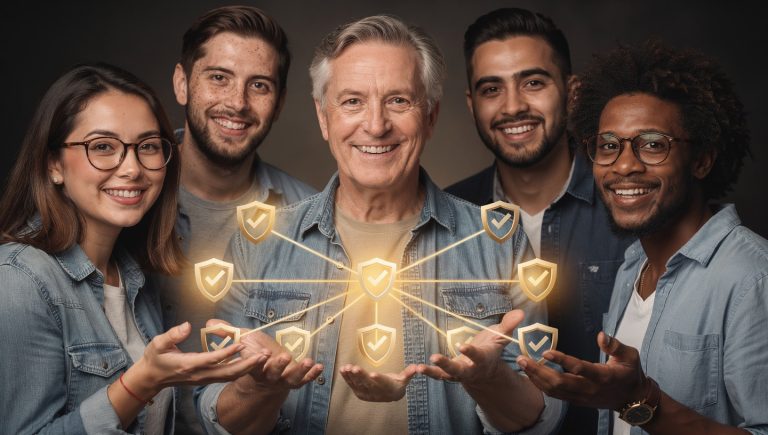
The definitive safety step for Facebook Dating — especially given the hacked account vulnerability. A GuyID Trust Profile confirms that the person you’re talking to is the person whose identity the Facebook account represents — through government ID biometric matching that no hacked account operator can pass. This single step eliminates the hacked account vulnerability entirely. Women check for free.
Step 5: Financial Vigilance (Especially for 50+ Users)
The absolute financial rules apply with extra emphasis on Facebook Dating, where the demographic vulnerability is highest. Never send money in any form. Never invest in platforms recommended by a dating match. Never share financial information. Never pay fees for fictitious packages or gifts. If you’re sharing Facebook Dating with family members or friends over 50, ensure they understand these rules — the average victim loses $2,001–$4,000 (NordProtect, Jan 2026), and losses for older victims are typically higher.
Summary: Is Facebook Dating Safe Enough?
Is Facebook Dating safe? Facebook Dating has one genuine safety advantage that no competitor can match: the linked Facebook social graph, including mutual friends, years of social history, and real friend networks. For identifying basic catfish with entirely fabricated profiles, this social context is more informative than any dating app verification badge.
But is Facebook Dating safe enough? No — because its unique vulnerability (hacked account exploitation) is more dangerous than the threats other platforms face, and its demographic profile (significant 50+ user base) overlaps with the population most targeted by romance scammers. Facebook has the data to build the safest dating platform in existence — but the gap between available data and implemented safety means that Facebook Dating ranks #6 out of 7 in the safest dating apps ranking, tied with Tinder at 11/35.
The protocol for making Facebook Dating safe: leverage its social graph advantage (check mutual friends, examine account depth), screen for hacked account indicators (behavioral changes, communication style mismatches, unexpected friend patterns), run standard verification through GuyID’s free tools, video call through Messenger with active testing, and request GuyID Trust Profiles before meeting — the one verification that confirms the current operator is the identity holder, eliminating the hacked account vulnerability entirely.
For users over 50 specifically: you are using the platform where scammers most effectively exploit stolen credibility, targeting the demographic most frequently victimized. The proactive safety steps in this guide are not optional — they’re the minimum standard for navigating Facebook Dating safely in 2026. Share this guide with family and friends who use Facebook Dating. The trust gap is widest where the trust appears strongest — and on Facebook Dating, the appearance of social proof makes the gap especially dangerous.
GuyID provides the identity verification Facebook Dating doesn’t: government ID confirmation that proves the operator is the account holder. Plus social vouching, Trust Tiers, and 60+ free safety tools. Women check for free.
Frequently Asked Questions: Is Facebook Dating Safe
Is Facebook Dating safe to use in 2026?
Can scammers use hacked Facebook accounts for dating?
Is Facebook Dating safe for people over 50?
Is Facebook Dating safer than Tinder?
How can I tell if a Facebook Dating profile is a hacked account?
Does Facebook Dating verify your identity?
What scams are most common on Facebook Dating?
How do I stay safe on Facebook Dating?

Founder, GuyID · Dating Safety Researcher · 13+ Years in Data Analytics
Ravishankar Jayasankar is the founder of GuyID, a consent-based dating trust verification platform. With 13+ years in data analytics and a deep focus on consumer trust, Ravi built GuyID to close the safety gap in digital dating. His research found that 92% of women report dating safety concerns — validating GuyID’s mission to make online dating safer through proactive, consent-based verification. GuyID offers government ID verification, social vouching, a Trust Tiers system, and 60+ free interactive safety tools.