Reader Briefing
Reader Briefing
Start here if you need a practical read on hike date ideas: 15 trail dates that build real connection: who should use verification, what signals to check, and what to do before moving from online interest to an in-person plan.
Who this is for
- People meeting someone from a dating app or social platform.
- Readers preparing for a first in-person date.
- Anyone checking identity, profile consistency, and trust signals.
- People trying to avoid romance scams, fake profiles, or pressure tactics.
You’ll learn
- How to evaluate identity signals without treating any single check as certainty.
- Which trust signals matter and how to weigh them together.
- How to spot inconsistencies, pressure, or behavior patterns that deserve caution.
- How to move from online conversation to a safer first meeting.
- Where GuyID tools fit into a quick pre-date screening workflow.
- When to slow down, ask for more context, or walk away.
Bottom line
Verification reduces uncertainty; it does not guarantee future behavior. Use a layered approach: confirm identity signals, compare profile consistency, ask for a short video call, keep early plans public, and slow down when someone pressures you to skip normal safety steps.
Key takeaways
- Identity verification improves confidence, not certainty.
- Patterns matter more than isolated incidents.
- Verify before meeting privately or sharing sensitive details.
- A short video call can reveal many inconsistencies.
- Pressure to skip reasonable safety steps is useful information.
Free Tools
Catfish Probability Detector
Check whether a dating profile has suspicious identity or photo signals.
Dating Bio Red Flag Detector
Review a bio for scam, pressure, or trust-warning language.
Dating Safety Checklist
Use free GuyID tools before moving from chat to a real date.
Next step
Create your GuyID trust profile
Share consent-based trust signals before a date without turning the conversation into an interrogation.
A hike date does something that coffee shops and cocktail bars can’t — it reveals who someone actually is when they’re outside their comfort zone, slightly out of breath, and navigating the world alongside you rather than across a table from you. The best hike date ideas combine the right trail difficulty, the right distance, and the right atmosphere to create an experience that’s memorable without being miserable. Whether you’re planning a first date that sidesteps the awkwardness of face-to-face interrogation or a deeper date that tests compatibility through shared challenge, this guide covers 15 hike date ideas across every skill level, season, and relationship stage — plus the safety and planning details that turn “let’s go for a hike” into an experience both people actually enjoy.
NavigateTable of Contents29 sections
Why Hiking Makes an Exceptional Date
Hike date ideas consistently rank among the most recommended date activities for reasons that go beyond fresh air and pretty views. The psychology of why hiking dates work is grounded in research on bonding, stress, and authentic self-presentation:
Side-by-side conversation reduces pressure. Research from the National Library of Medicine on conversational dynamics confirms that side-by-side positioning produces more relaxed, authentic communication than face-to-face positioning. On a trail, you’re walking beside each other rather than staring across a table — which reduces the social evaluation pressure that makes traditional first dates feel like interviews. The reduced eye-contact intensity allows both people to speak more freely, share more honestly, and process responses without the self-consciousness that constant facial scrutiny produces.
Physical activity produces neurochemical bonding. Shared physical exertion releases endorphins in both people simultaneously — and the brain associates those positive neurochemical states with the person present when they occur. This “misattribution of arousal” effect (documented extensively in attraction research) means that the natural high of a good hike gets partially attributed to the person beside you, amplifying perceived attraction and connection. Hike date ideas leverage this neurochemistry automatically — the trail does the bonding work that conversation alone can’t replicate.
Trails reveal character. How does your date handle an unexpected detour? Do they complain about the incline or embrace the challenge? When they encounter something beautiful — a waterfall, a viewpoint, an unusual bird — do they stop to appreciate it or rush past toward the endpoint? Hiking creates dozens of micro-moments that reveal personality, resilience, flexibility, and values in ways that a controlled restaurant environment never can. The American Psychological Association’s research on behavioral observation confirms that watching someone navigate real-world challenges produces more accurate personality assessment than asking them to describe themselves — which makes hiking one of the most information-rich date formats available.
Natural conversation flow with built-in pauses. Unlike dinner dates where silence feels awkward, trail walking normalizes silence — stopping to catch your breath, pausing at a viewpoint, focusing on a tricky section of trail. These natural pauses give both people space to think, observe, and let conversation develop organically rather than forcing continuous dialogue. Many couples report that their most meaningful early conversations happened during hikes because the pacing allowed deeper reflection between exchanges.
Beginner-Friendly Hike Date Ideas
1. The Coffee-to-Trail Date
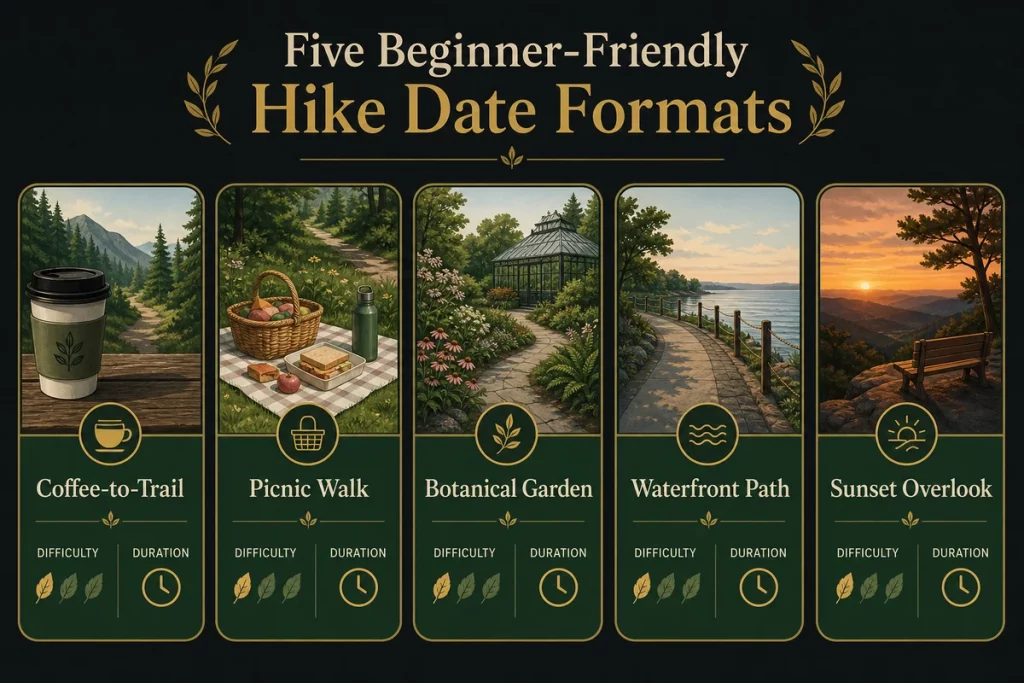
Start at a coffee shop near a trailhead — get drinks to go, then walk a flat, easy trail for 45-60 minutes. This hybrid hike date idea combines the familiarity of a coffee date with the bonding benefits of walking together. The coffee shop provides a comfortable starting point if either person is nervous, and the transition to the trail feels natural rather than committed. Best for: first dates and early-stage connections where you want low-stakes physical activity without full hiking commitment. Trail criteria: paved or well-maintained, flat terrain, under 3 miles round trip, accessible restrooms at the trailhead.
2. The Picnic Hike
Pack a simple picnic (sandwiches, fruit, cheese, drinks) and hike to a scenic spot where you’ll eat together. The picnic adds a sharing element that pure hiking doesn’t — preparing food shows effort, sharing it creates intimacy, and sitting together at a viewpoint after walking creates a natural transition from activity to connection. Best for: second or third dates where you want to demonstrate investment beyond buying someone a drink. Trail criteria: moderate difficulty with a defined destination point (overlook, lake, clearing), 2-4 miles round trip, enough flat space at the destination for comfortable sitting.
3. The Botanical Garden or Nature Preserve Walk
Not technically hiking — but for dates where one person isn’t outdoorsy or when weather is uncertain, botanical gardens and nature preserves provide the side-by-side walking experience with maintained paths, interesting talking points (plants, wildlife, installations), and indoor retreat options. Many botanical gardens host evening events with lighting that transforms the daytime experience into something magical. Best for: dates where you want the hiking format without the trail difficulty, or when accessibility matters.
4. The Waterfront Trail Date
Lake paths, river walks, canal towpaths, or coastal trails provide the scenic benefits of nature hiking with the accessibility of urban infrastructure — water fountains, benches, restrooms, and bail-out points where you can end the walk and transition to a nearby restaurant if the connection warrants extending the date. Waterfront trails are among the most versatile hike date ideas because they scale naturally: a 30-minute walk if chemistry is uncertain, a 2-hour exploration if conversation is flowing. Best for: any relationship stage, any fitness level, any weather above freezing.
5. The Sunset Overlook Hike
Time a short hike to arrive at a scenic overlook 20-30 minutes before sunset. The combination of earned arrival (you hiked there), shared visual experience (sunsets are inherently connective), and natural time boundary (sunset = time to head back) creates one of the most effortlessly romantic hike date ideas available. The trick is timing: check sunset time, estimate trail pace conservatively, and add a 15-minute buffer. Arriving too late means hiking back in the dark (dangerous); arriving too early means waiting (less dramatic). Best for: second dates and beyond, where you want to create a memorable experience without the pressure of a formal dinner.
Intermediate Hike Date Ideas for Established Connections
6. The Waterfall Hike
Trails leading to waterfalls provide a natural “wow moment” destination that makes the hike feel purposeful and rewarding. The waterfall itself creates photo opportunities, conversation about the landscape, and a shared experience that becomes a memory anchor for the relationship. Waterfall hikes typically involve more elevation change than flat trails, making them better for dates where both people have confirmed they enjoy hiking rather than first-date experiments. Best for: third date and beyond with confirmed mutual hiking interest.
7. The Photography Walk
Bring phones or cameras and turn the hike into a collaborative photography session — challenge each other to find the best shot of a specific subject (textures, colors, wildlife, landscapes). This hike date idea adds creative interaction to the physical activity, reveals aesthetic sensibilities, and produces shared digital artifacts (the photos) that create natural follow-up conversation opportunities: “I just edited that photo from our hike — it turned out amazing.” Best for: creative types, dates where you want interaction beyond walking and talking.
8. The Sunrise Hike
Early morning hikes require commitment — which makes them perfect for demonstrating genuine interest (you woke up at 5 AM for this person). Sunrise hikes offer cooler temperatures, fewer other hikers, and the shared experience of watching the world wake up. The early hour also creates a natural brunch transition: hike to sunrise, then eat together afterward, extending the date while both of you are already energized from the activity. Best for: established connections where both people are comfortable with early mornings and the implied intimacy of pre-dawn coordination.
9. The Loop Trail Challenge
Choose a moderate loop trail (5-8 miles) that takes 3-4 hours and provides genuine physical challenge without being grueling. The extended time together — much longer than a typical dinner date — tests conversational sustainability, comfort with silence, and mutual support during difficult sections. How your date handles fatigue, frustration with a wrong turn, and the satisfaction of completing the loop reveals more about compatibility than three months of dinner dates ever could. Best for: connections you’re considering getting serious about, where you want an extended compatibility test in a natural setting.
10. The Seasonal Specialty Hike
Time your hike date to seasonal highlights: fall foliage trails in October, wildflower meadows in spring, frozen waterfall routes in winter, or swimming-hole destinations in summer. Seasonal specificity makes the date feel curated rather than generic — “I know a trail where the aspens turn gold in October and it’s incredible” demonstrates local knowledge, planning effort, and attentiveness to timing. Best for: any stage, when you want the hike to feel special rather than routine.
Creative Hike Date Variations
11. The “Question Jar” Hike
Write 20 conversation-starting questions on slips of paper, put them in a jar or bag, and pull one every 10-15 minutes along the trail. The format gamifies conversation and introduces topics neither person would have raised organically: “What’s something you believed at 18 that you’ve completely changed your mind about?” “What’s the kindest thing a stranger ever did for you?” The questions create shared vulnerability in a setting that makes vulnerability easier — side by side, walking, with nature as a buffer. Our relationship icebreaker questions guide provides the question bank.
12. The Geocaching Hike
Download a geocaching app and turn the hike into a treasure hunt. Geocaching adds collaborative problem-solving, shared excitement when you find the cache, and a playful competitive element that generates laughter and bonding. The format works especially well for people who find “just walking and talking” insufficient — the geocaching game provides constant interaction points that keep the date energetically engaged. Best for: playful, game-oriented personalities who enjoy goal-directed activities.
13. The Stargazing Hike
Evening hike to a dark-sky location with a blanket, thermos of hot chocolate, and a stargazing app. The transition from active hiking to quiet stargazing creates a natural shift from conversational energy to contemplative intimacy — lying side by side looking at stars produces a specific kind of closeness that restaurant tables never achieve. Safety note: bring headlamps, know the trail well, and tell someone your plan. Best for: established connections where evening isolation feels safe rather than concerning.
14. The Dog-Friendly Hike Date
If one or both of you have dogs, a dog-friendly trail creates a natural icebreaker (the dogs), reduces awkwardness (attention splits between conversation and dog management), and reveals how both people interact with animals — which many people consider a fundamental compatibility indicator. Dog hike date ideas also test practical compatibility: can two people coordinate leashes, treats, water, and trail navigation while maintaining a conversation? The logistical collaboration previews domestic partnership in miniature.
15. The Multi-Trail Progressive Date
Plan three short trail segments in the same area, each with a different character: a forest section, a waterside section, and a viewpoint section. The variety prevents monotony, creates natural conversation transition points (“okay, next section — this one’s the steep part”), and builds a sense of shared adventure that a single trail can’t replicate. Cap it with a meal at a trailside restaurant for the complete progressive experience. Best for: longer dates (half-day) where both people want an experience rather than just an activity.
Planning the Perfect Hike Date
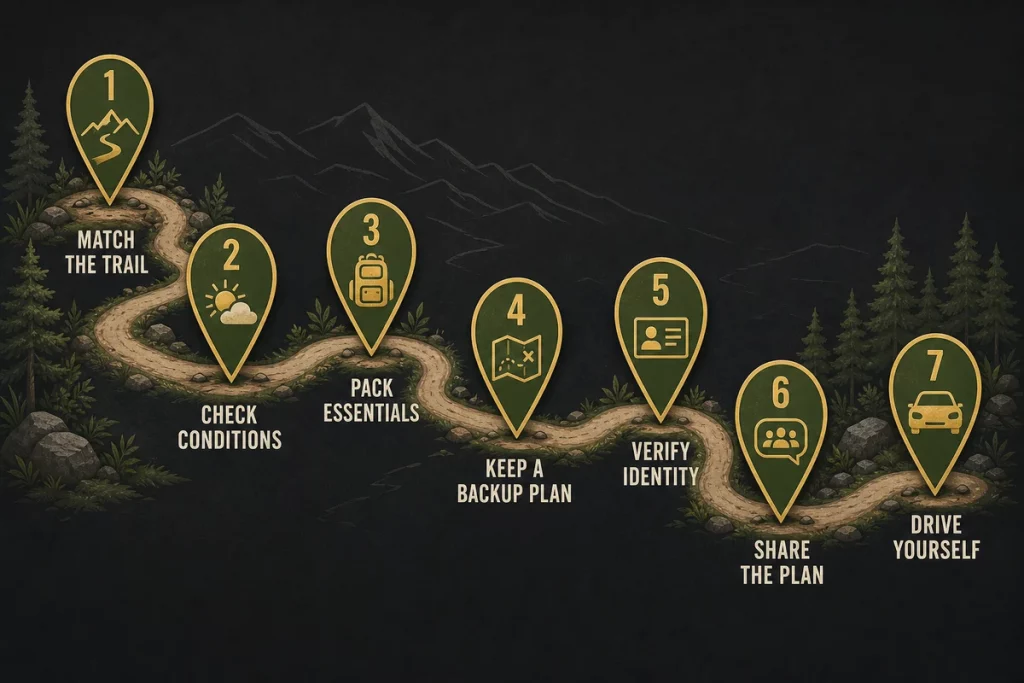
Match the trail to the relationship stage. First date: easy, short, paved, near civilization. Third date: moderate, scenic, 2-3 hours. Established connection: challenging, remote, full-day. Mismatching trail difficulty to relationship stage produces either boredom (too easy for an established couple) or distress (too difficult for a first encounter). The trail IS the date — choose it as carefully as you’d choose a restaurant, because the experience it produces is entirely determined by the match between trail and context.
Check conditions before committing. Trail conditions, weather forecast, park hours, parking availability, and restroom access all affect the experience. Showing up to a closed trailhead or a trail that’s been washed out transforms a planned date into a scramble — which can be funny in retrospect but stressful in the moment. Check AllTrails or local park websites within 24 hours of the date. Weather: dress for 10 degrees cooler than the forecast (shade + elevation + wind makes trails colder than cities). Our searching for singles guide covers activity-based meeting strategies beyond hiking.
Pack appropriately. Water for both people (don’t assume they’ll bring their own — bringing theirs demonstrates thoughtfulness). Snacks. Sunscreen. First aid basics (bandaids, ibuprofen). A portable phone charger. These aren’t survival-mode preparations — they’re demonstrations of care and planning that your date will notice. The person who shows up with a daypack containing water, snacks, and sunscreen communicates a fundamentally different level of investment than the person who shows up with nothing and assumes the other person prepared for both.
Have a backup plan. Rain, unexpected closure, physical limitations you didn’t anticipate — any of these can derail the hike. Having a backup (“if the trail is closed, there’s a great coffee spot nearby” or “if the weather turns, we can check out the indoor market instead”) demonstrates adaptability and prevents the entire date from collapsing if the primary plan fails. The backup plan also communicates that you value spending time with THIS PERSON, not just doing THIS ACTIVITY — the hike is the vehicle, the connection is the purpose.
Communicate logistics clearly. Share the meeting point, current parking or transit information, expected duration, terrain, weather plan, and what each person should bring. Check official trail information because fees and conditions can change. Clear logistics and expectations can reduce uncertainty, but each person should still carry their own essentials and have an independent way to leave.
Hike Date Safety
Hike date ideas involve isolation that coffee shop dates don’t — which means the safety framework needs to be more deliberate. The National Domestic Violence Hotline recommends elevated precautions for any date in a secluded setting:
First or second hike date: choose populated trails. For early-stage connections, choose trails that are well-traveled, close to parking, and near developed areas. Save the remote wilderness trails for connections where trust has been established through multiple prior meetings. A busy state park trail provides the hiking experience while maintaining the safety of public presence. The privacy of remote trails is a feature for established connections but a risk factor for new ones.
Share your plan with someone. Trail name, trailhead parking location, estimated return time, and your date’s first name — shared with a trusted friend before you leave. Arrange a check-in text at a specific time. Cellular coverage on trails is unreliable, so agree on an “if I haven’t texted by [time], something’s wrong” protocol with your safety contact.
Verify before the hike. Use GuyID’s free screening tools for identity verification before any date — but especially before dates in secluded settings where isolation increases vulnerability. Share your Date Mode link through GuyID and ask them to share theirs. Government ID verification provides the baseline trust that makes trail dates safe rather than risky. Our romance scammer guide and reverse image search guide provide the pre-date verification checklist.
Drive yourself. Maintain transportation independence — especially for hike dates where the trailhead may be remote. Meet at the trailhead rather than riding together. This ensures you can leave on your own terms regardless of how the date goes, without depending on someone you’ve known for a few hours to drive you back to civilization.
Trust your instincts on the trail. If something feels off — the person is steering you to a less-populated section, pushing to extend the hike beyond your comfort level, ignoring your stated pace or fatigue, or making you uncomfortable in any way — end the hike. “I’m ready to head back” is a complete sentence that doesn’t require justification. A person who responds to that sentence with respect is demonstrating the green flags of healthy partnership. A person who pressures, guilts, or overrides that sentence is demonstrating red flags that apply far beyond the trail.
How GuyID Helps
GuyID should appear when it is useful, not as a banner ad. A GuyID Trust Profile gives someone a portable way to share trust signals before a date, while identity verification and social vouching help turn vague profile claims into clearer next steps.
Useful next steps:
- Create a GuyID Trust Profile when you want a cleaner way to share verified trust signals.
- Use GuyID free tools and related guides when you need a checklist before meeting someone.
- Treat identity verification as confidence-building, not a guarantee.
- Use social vouching when you want context from people who already know the person.
- Sign up only when the extra trust layer helps the decision you are already trying to make.
Frequently Asked Questions
Is a hike a good first date?
Yes — with the right trail. Choose easy, populated, short trails near civilization for first dates. The side-by-side format reduces interview pressure, the physical activity produces bonding neurochemistry, and the natural environment reveals personality more authentically than a restaurant setting. Avoid remote or challenging trails for first dates — save those for established connections where trust and comfort are already present.
What should I wear on a hike date?
Comfortable, weather-appropriate hiking clothes that you feel good in. Closed-toe shoes with grip (not sandals or fashion sneakers). Layers for temperature changes. Sunscreen and a hat if sunny. The goal: look put-together while being trail-appropriate. Don’t wear clothes you’d be upset about getting dirty — trails involve dirt, mud, and unexpected weather. Communicate the dress code to your date in advance so neither person shows up dramatically over- or under-prepared.
How long should a hike date be?
First date: 60-90 minutes (2-3 miles on easy terrain). Second or third date: 2-3 hours (4-6 miles moderate terrain). Established connection: 3-5 hours (full loop trail or progressive multi-trail date). Match duration to relationship stage — too long for a first date creates pressure; too short for an established connection feels underwhelming. When in doubt, plan for the shorter end and extend if the connection warrants it.
What are the best hike date ideas for non-hikers?
Botanical garden walks, waterfront trail strolls, and the coffee-to-trail hybrid format work best for people who don’t identify as hikers. These options provide the side-by-side bonding and outdoor setting of hiking without the physical demands that make non-hikers uncomfortable. The key: communicate honestly about fitness level before the date so the trail selection matches both people’s capabilities. A date where one person is struggling while the other breezes through builds resentment, not connection.
Is it safe to go on a hike date with someone from a dating app?
Yes — with precautions. Verify their identity with GuyID’s free tools before meeting. Choose a populated, well-known trail for early dates. Tell someone your plan, trail location, and estimated return time. Drive yourself. Trust your instincts — if something feels off on the trail, head back. These precautions apply to any date with someone new, but they’re especially important for hike dates where seclusion is part of the setting.