Reader Briefing
Reader Briefing
Start here if you need a practical read on is bumble safe? the honest safety assessment: who should use verification, what signals to check, and what to do before moving from online interest to an in-person plan.
Who this is for
- People meeting someone from a dating app or social platform.
- Readers preparing for a first in-person date.
- Anyone checking identity, profile consistency, and trust signals.
- People trying to avoid romance scams, fake profiles, or pressure tactics.
You’ll learn
- How to evaluate identity signals without treating any single check as certainty.
- Which trust signals matter and how to weigh them together.
- How to spot inconsistencies, pressure, or behavior patterns that deserve caution.
- How to move from online conversation to a safer first meeting.
- Where GuyID tools fit into a quick pre-date screening workflow.
- How to compare options using practical safety and trust criteria.
Bottom line
Verification reduces uncertainty; it does not guarantee future behavior. Use a layered approach: confirm identity signals, compare profile consistency, ask for a short video call, keep early plans public, and slow down when someone pressures you to skip normal safety steps.
Key takeaways
- Identity verification improves confidence, not certainty.
- Patterns matter more than isolated incidents.
- Verify before meeting privately or sharing sensitive details.
- A short video call can reveal many inconsistencies.
- Pressure to skip reasonable safety steps is useful information.
Free Tools
Catfish Probability Detector
Check whether a dating profile has suspicious identity or photo signals.
Dating Bio Red Flag Detector
Review a bio for scam, pressure, or trust-warning language.
Dating Safety Checklist
Use free GuyID tools before moving from chat to a real date.
Next step
Create your GuyID trust profile
Share consent-based trust signals before a date without turning the conversation into an interrogation.
Is Bumble safe? It’s one of the most searched dating safety questions in 2026 — and the answer is more nuanced than Bumble’s marketing suggests. Bumble is safer than many dating apps by design: women message first, photo verification uses gesture-matching, and the platform has invested meaningfully in safety features.
This guide evaluates Bumble’s safety across every dimension: what protection the platform actually provides, where its specific vulnerabilities lie, how it compares to Tinder and Hinge on safety, what types of scams succeed on Bumble despite its safeguards, and the steps you can take to make your Bumble experience genuinely safe — not just relatively safe. If you’re a Bumble user or considering joining, this is the complete safety evaluation that Bumble’s app store listing doesn’t offer.
NavigateTable of Contents32 sections
⚡ Key Takeaways
Bumble is safer than average — but not safe enough by itself
Women-first messaging, gesture-based verification, and in-app video calling give Bumble real structural advantages. But verification confirms photos only (not identity), and no platform feature prevents AI-powered scams, financial exploitation, or deepfake deception.
Women-first messaging doesn’t protect women from all threats
Bumble’s signature feature prevents unsolicited messages from men to women. But it doesn’t prevent women from matching with scam profiles, doesn’t protect men from scam profiles created as women, and doesn’t stop scams once a conversation begins.
Bumble’s verification badge confirms a selfie matched photos. It doesn’t confirm name, age, career, background, or character. Verified doesn’t mean safe.
Supplementary verification makes Bumble actually safe
Bumble’s built-in features + GuyID’s free safety tools + verified Trust Profiles = comprehensive safety. Bumble provides the foundation. You provide the layers that close the gaps.
Is Bumble Safe? The Honest Assessment
The straightforward answer to is Bumble safe: Bumble is one of the safer major dating apps, but it is not safe enough to rely on exclusively. This isn’t a criticism unique to Bumble — no dating app provides sufficient safety through its built-in features alone. But Bumble deserves specific analysis because its safety marketing is more prominent than most, and the gap between its marketed safety positioning and its actual protection capabilities affects user behavior.
What Bumble Gets Right
Bumble has made more visible investments in safety than most competitors. The women-first messaging model is a genuine structural innovation. The gesture-based photo verification is marginally stronger than Tinder’s. The in-app video and voice calling features allow live verification without sharing personal contact information. The 24-hour match expiration creates urgency that discourages passive scam profile farming. Bumble also blocks screenshots of conversations in some regions and has integrated safety guides directly into the app experience.
What Bumble Gets Wrong
Despite these investments, Bumble’s safety has the same fundamental limitation as every dating app: it verifies photos, not identity. No government ID check. No background screening. No character assessment. No verification of name, age, career, or relationship status. The “verified” badge means a gesture selfie matched profile photos — period. For anyone asking is Bumble safe, this gap between photo verification and identity verification is the answer: safe-ish for photos, not verified for identity.
What Makes Bumble Safer Than Other Dating Apps
To fairly evaluate is Bumble safe, we need to acknowledge the genuine safety advantages Bumble provides over competitor platforms. These aren’t marketing claims — they’re structural features with measurable impact.
Women-First Messaging
Bumble’s signature feature: in heterosexual matches, only women can send the first message. This prevents the flood of unsolicited messages, pickup lines, and explicit content that women receive on platforms with unrestricted messaging. The practical safety impact is real — women control which conversations begin, reducing exposure to unwanted contact from strangers.
However, the safety benefit has boundaries. Women-first messaging prevents men from initiating unwanted contact with women but doesn’t prevent women from initiating contact with scam profiles (scam profiles posing as attractive men still receive messages from women). It also doesn’t protect men — scam profiles posing as women can receive women-initiated messages and then execute the scam once conversation begins. And it provides zero protection once a conversation is active — after the first message, both parties can message freely, and all the standard scam techniques (love-bombing, off-platform migration, financial requests) proceed exactly as they would on any other platform.
Gesture-Based Photo Verification
Bumble’s verification requires mimicking a specific gesture during the selfie — a marginal improvement over Tinder’s static pose matching. The gesture adds a liveness layer that’s slightly harder for static image manipulation to bypass.
In-App Video and Voice Calling
Bumble’s built-in video and voice calling is a genuine safety advantage that competitors like Hinge and Tinder don’t consistently offer across all regions. In-app calling means users can verify their match’s appearance and voice without sharing their phone number — keeping personal contact information private during the evaluation phase. This removes a common barrier to video verification and makes the proactive safety step of live verification significantly easier.
24-Hour Match Expiration
Bumble matches expire if the woman doesn’t message within 24 hours. This time pressure, while sometimes frustrating for genuine users, has a secondary safety benefit: it discourages passive scam profile farming where scammers accumulate thousands of matches across weeks without engagement. The expiration forces active participation, making large-scale scam operations marginally less efficient on Bumble than on platforms where matches persist indefinitely.
Additional Safety Features
Bumble provides a “Private Detector” that uses AI to flag potentially inappropriate images before they’re viewed. Block-and-report tools are straightforward and accessible. Bumble has also partnered with various safety organizations and provides in-app safety resources. These features collectively contribute to a safer environment — though none address the fundamental identity verification gap.
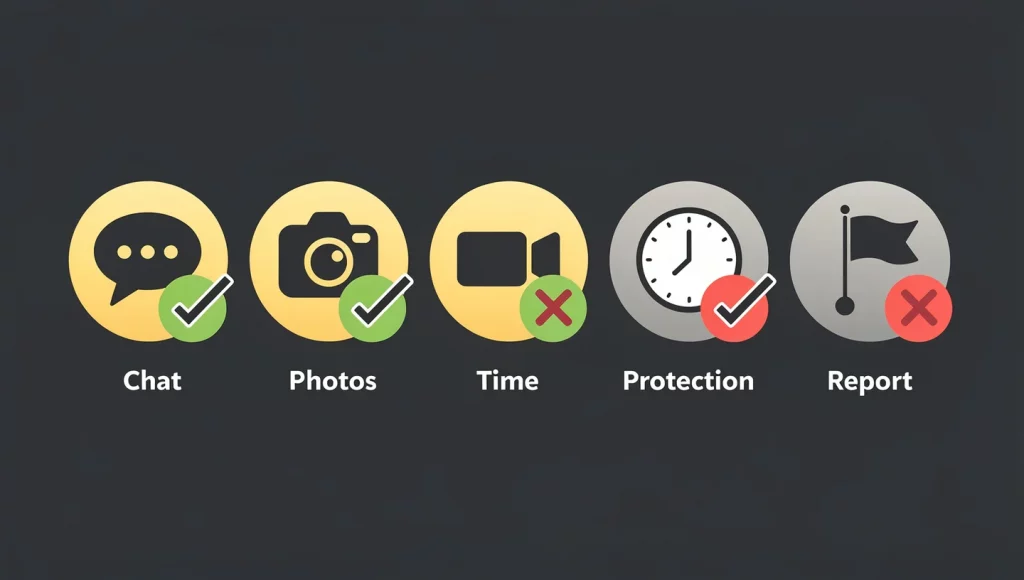
Bumble’s Safety Features: What Each One Actually Protects Against
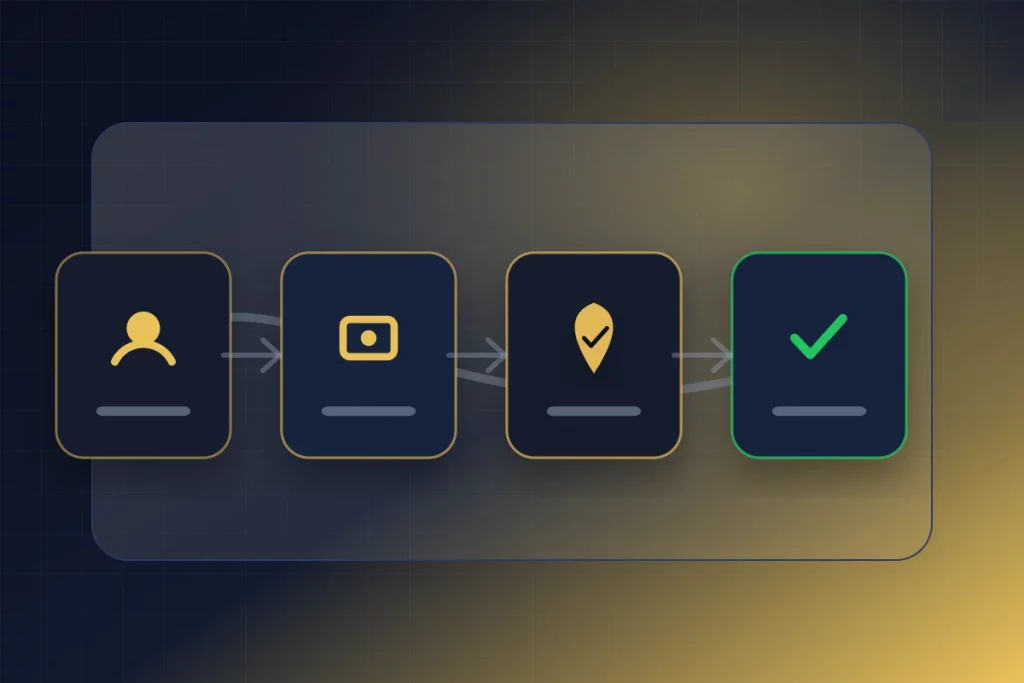
A critical part of evaluating is Bumble safe is understanding what each safety feature protects against — and what it doesn’t. Most users overestimate the scope of each feature because its name implies broader protection than it delivers.
| Bumble Safety Feature | What It Protects Against | What It Does NOT Protect Against |
|---|---|---|
| Women-first messaging | Unsolicited messages from men to women, spam messages, cold approach harassment | Scam profiles that women choose to message, scam profiles targeting men, any scam behavior after conversation begins |
| Photo verification (gesture) | Basic catfish using entirely stolen photos, non-human accounts (pure bots with no live operator) | Deepfake-verified scam profiles, accomplice-verified accounts, AI-generated identities, identity fabrication beyond photos |
| In-app video/voice calling | The need to share personal phone numbers, basic catfish who refuse video | Deepfake video calls, voice cloning, scammers who agree to brief controlled video calls |
| 24-hour match expiration | Passive match accumulation by inactive scam profiles | Active scam operations that engage within the 24-hour window, any scam behavior within active matches |
| Private Detector (AI image screening) | Unsolicited explicit images before they’re viewed | All non-image-based threats: financial scams, emotional manipulation, identity deception, pig butchering |
| Block and report tools | Continued contact from reported users, profile removal after reports | Prevention of initial contact, scam damage that occurred before the report was filed |
The pattern is clear: every Bumble safety feature addresses a specific, narrow threat while leaving the broader threat landscape — identity fabrication, financial exploitation, emotional manipulation, AI-powered deception — unaddressed. This isn’t a failure specific to Bumble; it’s the state of dating app safety across the industry. But when users ask is Bumble safe, the honest answer requires acknowledging both what these features protect against and what they don’t.
Where Bumble’s Safety Falls Short
The specific gaps in Bumble’s safety — the areas where the answer to is Bumble safe is definitively “not without supplementary measures” — fall into four categories.
Gap 1: No Identity Verification
Bumble’s verification confirms photos, not identity. Legal name, age, career, relationship status, and criminal background are all self-reported with zero cross-referencing. A verified Bumble profile named “Alex, 28, Software Engineer” has confirmed that the person’s face matches their photos — nothing about whether they’re actually named Alex, actually 28, or actually a software engineer. This gap is the most significant safety limitation, and it’s shared with every major dating app.
Gap 2: AI and Deepfake Vulnerability
Bumble’s gesture-based verification was designed before AI-generated photos and deepfake face-swapping became mainstream threats. Current deepfake technology can potentially overlay a synthetic face during the gesture selfie, producing a verification where the AI face matches the AI profile photos while a completely different person sits behind the camera.
Gap 3: No Protection Against Long-Con Scams
Bumble’s safety features focus on the matching and initial contact phases. Once a conversation is active, Bumble provides no meaningful protection against the scam techniques that actually cost people money: gradual emotional manipulation, migration to WhatsApp where no platform monitors the conversation, love-bombing that builds dependency, and financial requests that exploit the trust built over weeks. These scam techniques bypass every feature Bumble offers because they operate within active, consensual conversations.
Gap 4: Verification Doesn’t Transfer Off-Platform
When a Bumble conversation moves to WhatsApp, text, or phone — as naturally happens — Bumble’s verification badge disappears. The person you were chatting with on Bumble becomes an unverified contact on WhatsApp. All of Bumble’s safety infrastructure (women-first messaging, in-app calling, reporting tools) also disappears. For the crucial phases of the relationship — WhatsApp communication, first meetings, emotional deepening — Bumble provides zero ongoing protection. This off-platform gap is a critical factor when evaluating is Bumble safe for the full dating journey, not just the matching phase.
Types of Scams That Succeed on Bumble
Specific scam types succeed on Bumble despite its safety features — understanding them is essential for anyone asking is Bumble safe for their particular situation.
Romance Scams via Women-First Bypass
Scammers create attractive male profiles to receive first messages from women. The women-first model actually benefits these scammers — the women who message are self-selecting as interested, providing the scammer with pre-engaged targets rather than requiring cold approach. Once conversation begins, the standard romance scam playbook — love-bombing, off-platform migration, emotional escalation, and eventual financial requests — proceeds identically to any other platform.
Pig Butchering on Bumble
Pig butchering investment scams are particularly effective on Bumble because the platform’s demographics skew toward educated, professional users — exactly the demographic pig butchering operations target for high-value financial exploitation. A verified Bumble profile claiming to work in finance builds credibility through weeks of genuine-seeming conversation before introducing a fake investment platform. The women-first model, verification badge, and professional-skewing user base all contribute to the trust environment pig butchering requires.
AI-Enhanced Catfishing
AI-generated profile photos + AI chatbot conversations create fully synthetic identities on Bumble that produce no detectable red flags through traditional screening. The profile looks real (AI-generated face), passes verification (deepfake gesture matching), and converses naturally (AI chatbot). Without independent verification through GuyID’s safety tools, these profiles are functionally undetectable through Bumble’s built-in features alone.
Married/Relationship-Status Fraud
On Bumble — which positions itself as relationship-focused — this deception is particularly impactful because users are investing emotional energy toward serious relationships. No Bumble feature verifies relationship status, and no planned feature addresses this gap. Asking is Bumble safe for finding an honest, single partner requires acknowledging that the platform cannot confirm this most fundamental claim.
Bumble Safety vs Tinder Safety vs Hinge Safety
A comparative perspective helps calibrate the answer to is Bumble safe relative to the alternatives.
| Safety Dimension | Bumble | Tinder | Hinge |
|---|---|---|---|
| Messaging control | Women-first (structural protection) | Open messaging (no structural protection) | Like + comment before messaging |
| Verification strength | Gesture selfie (medium) | Pose selfie (basic) | Video selfie (strongest) |
| In-app video calling | Available across regions | Limited availability | Not built-in |
| Identity verification | None (photo only) | None (photo only) | None (photo only) |
| Off-platform protection | None | None | None |
Bumble leads in messaging control (women-first) and in-app calling availability. Tinder trails in most safety dimensions while leading in scam activity volume. All three platforms share the same critical failures: no identity verification, no background checks, and no off-platform protection.
Is Bumble safe compared to competitors? Safer than Tinder on most dimensions. Comparable to Hinge with different strengths (Bumble has better messaging control and in-app calling; Hinge has stronger verification and behavioral impact). Insufficient on its own for any platform — the identity verification gap is universal.
How to Actually Stay Safe on Bumble: The Complete Protocol
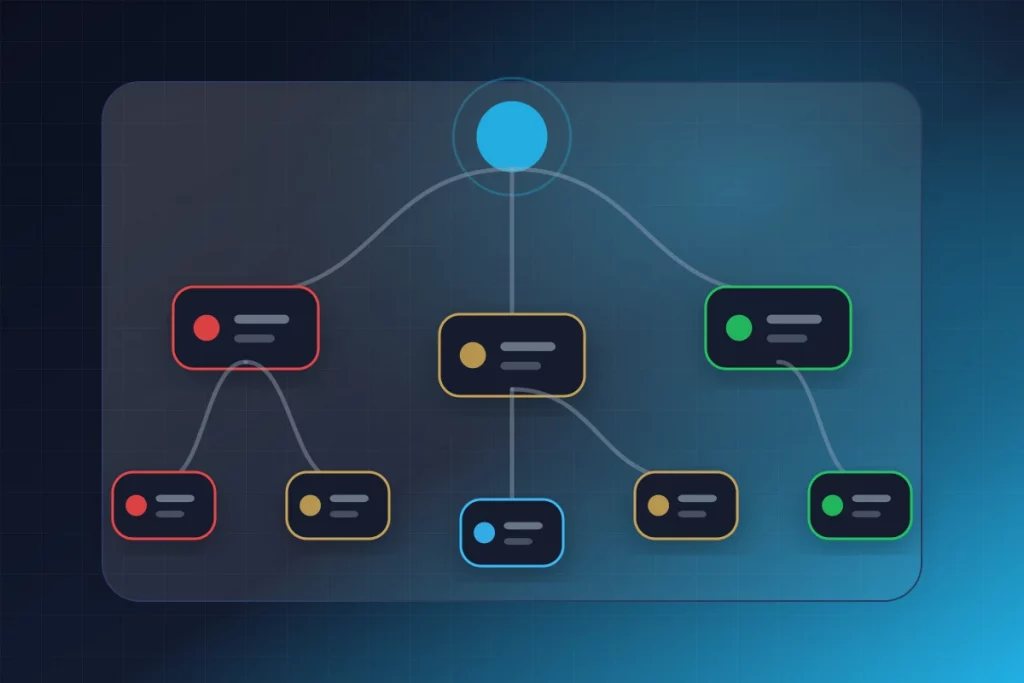
The answer to is Bumble safe becomes “yes” when Bumble’s genuine safety advantages are combined with supplementary verification that closes the gaps the platform leaves open. Here’s the complete protocol.
Step 1: Optimize Your Bumble Settings
- Get verified. Complete Bumble’s gesture verification — it takes under 60 seconds and provides matching advantages plus basic trust signaling.
- Enable all safety features. Turn on Private Detector for image screening. Familiarize yourself with block-and-report tools so you can use them quickly if needed.
- Link your social accounts. Connecting Instagram and Spotify provides additional identity signals to your matches — and you should look for the same from matches as a positive signal.
Step 2: Verify Every Match with GuyID’s Free Tools
- Reverse image search every match’s photos before messaging or engaging in conversation. 30 seconds catches stolen photos and reused AI-generated faces that Bumble’s verification doesn’t detect.
- Catfish probability detector for an objective holistic assessment. Particularly valuable when attraction biases your judgment.
- Bio red flag detector on their profile text. Catches scam language patterns, suspicious career claims, and vagueness indicators.
Step 3: Use Bumble’s In-App Video Calling Early
Bumble’s built-in video calling is its most underused safety feature. Request a video call within the first week — no phone number exchange needed. Apply active deepfake detection: full head turns, hand movements across face, room changes. Most catfish refuse video calls — the refusal itself is diagnostic. Those who agree and pass active testing are significantly more likely to be genuine.
Step 4: Request Verified Identity Before Meeting
Before any in-person meeting, ask for a verified GuyID Trust Profile. This is the step that transforms the answer to is Bumble safe from “somewhat” to “yes.” A GuyID Trust Profile confirms government ID (legal identity), social vouching (character), and Trust Tier (sustained trustworthiness) — everything Bumble’s badge doesn’t cover. Women check for free, always.
Step 5: Maintain Safety Off-Platform
When the conversation moves from Bumble to WhatsApp or text — where all Bumble safety features disappear — GuyID’s portable Trust Profile maintains verified trust. The Date Mode link you checked on Bumble continues confirming identity on WhatsApp, phone, and every subsequent channel. Additionally: never send money to anyone you met on Bumble regardless of their story, share first-date plans with a friend, meet in public places, and maintain the proactive dating safety mindset throughout.
The Complete Bumble Safety Checklist
Here’s your actionable checklist for making Bumble as safe as possible — combining Bumble’s features with the supplementary verification that closes the gaps.
🟢 Before Using Bumble
☐ Complete gesture verification (60 seconds)
☐ Create a GuyID Trust Profile and add Date Mode link to bio
☐ Enable Private Detector and familiarize with reporting tools
☐ Link Instagram and Spotify for additional identity signals
🟡 For Every Match
☐ Reverse image search all photos (30 seconds)
☐ Catfish probability check (10 seconds)
☐ Bio red flag check (10 seconds)
☐ Request video call via Bumble’s in-app feature within first week
🔵 Before Meeting in Person
☐ Ask for their GuyID Trust Profile link (free to check)
☐ Cross-reference career claims on LinkedIn
☐ Share date plans with a trusted friend
☐ Meet in a public, well-lit location
☐ Arrange your own transportation
🔴 Ongoing Safety Rules
☐ Never send money to anyone met on Bumble — ever
☐ Monitor for financial escalation patterns
☐ Watch for WhatsApp migration pressure
☐ Trust your instincts — if something feels off, investigate
Summary: Is Bumble Safe Enough?
Is Bumble safe? Bumble is one of the safest mainstream dating apps — with women-first messaging, gesture-based verification, in-app video calling, match expiration, and image screening providing genuine structural advantages over many competitors. Bumble has invested more in visible safety features than Tinder and offers better messaging control than Hinge. For the matching phase of the dating experience, Bumble’s safety infrastructure is among the strongest available.
But is Bumble safe enough on its own? No — because the fundamental limitation it shares with every dating app remains: verification confirms photos, not identity. No government ID check. No background screening. No character assessment. No protection once conversations move off-platform. These gaps mean that romance scams, pig butchering operations, AI-generated catfish, and relationship-status fraud all succeed on Bumble despite its safety features — because the features address the matching phase while leaving the trust phase unprotected.
The question isn’t whether Bumble is safe — it’s whether you’re supplementing Bumble’s safety with the verification that closes its gaps. Bumble provides the foundation: women-first messaging, photo verification, in-app calling. GuyID’s free safety tools add the screening: reverse image search, catfish detection, bio analysis. GuyID Trust Profiles add the identity verification: government ID confirmation, social vouching, Trust Tiers. Together, these layers make the answer to is Bumble safe genuinely and comprehensively “yes.”
For the comparable safety evaluation of other platforms, see our guides: Is Tinder Safe 2026, How Does Hinge Verification Work, and the complete dating app verification comparison. For the proactive dating safety framework that makes any platform safe, start with our complete verification guide.
Make Bumble Actually Safe — Not Just Safer
GuyID closes the gaps Bumble can’t: government ID verification, social vouching, Trust Tiers, and 60+ free safety tools. Supplement Bumble’s photo verification with real identity confirmation. Women check for free.
Try Free Safety Tools
Get Verified on GuyID
Frequently Asked Questions
Is Bumble safe to use in 2026?
Can you get scammed on Bumble?
Does Bumble verification mean someone is safe?
How do I stay safe on Bumble?
Does Bumble’s women-first messaging prevent scams?
Is Bumble safe for meeting people in person?
Should I use Bumble or another dating app?
Related Reading
Evidence note
The FTC reported 64,003 romance-scam reports in 2023, with $1.14 billion in reported losses and a $2,000 median reported loss (Federal Trade Commission, 2024).