

Reader Briefing
Reader Briefing
Start here if you need a practical read on is love bombing a red flag? 7 tests: who should use verification, what signals to check, and what to do before moving from online interest to an in-person plan.
Who this is for
- People meeting someone from a dating app or social platform.
- Readers preparing for a first in-person date.
- Anyone checking identity, profile consistency, and trust signals.
- People trying to avoid romance scams, fake profiles, or pressure tactics.
You’ll learn
- How to evaluate identity signals without treating any single check as certainty.
- Which trust signals matter and how to weigh them together.
- How to spot inconsistencies, pressure, or behavior patterns that deserve caution.
- How to move from online conversation to a safer first meeting.
- Where GuyID tools fit into a quick pre-date screening workflow.
- How to compare options using practical safety and trust criteria.
Bottom line
Verification reduces uncertainty; it does not guarantee future behavior. Use a layered approach: confirm identity signals, compare profile consistency, ask for a short video call, keep early plans public, and slow down when someone pressures you to skip normal safety steps.
Key takeaways
- Identity verification improves confidence, not certainty.
- Patterns matter more than isolated incidents.
- Verify before meeting privately or sharing sensitive details.
- A short video call can reveal many inconsistencies.
- Pressure to skip reasonable safety steps is useful information.
Free Tools
Catfish Probability Detector
Check whether a dating profile has suspicious identity or photo signals.
Dating Bio Red Flag Detector
Review a bio for scam, pressure, or trust-warning language.
Dating Safety Checklist
Use free GuyID tools before moving from chat to a real date.
Next step
Create your GuyID trust profile
Share consent-based trust signals before a date without turning the conversation into an interrogation.
Is love bombing a red flag — or just someone who’s genuinely excited about you? This is the question that keeps people trapped in the early stages of manipulative relationships, because the answer requires distinguishing between authentic enthusiasm and manufactured intensity when both feel identical from the inside. The short answer: yes, love bombing is a red flag — one of the most reliable predictors of narcissistic, controlling, or emotionally abusive relationship dynamics. But the nuance matters: not every enthusiastic person is a love bomber, and not every love bomber is a narcissist. This guide provides the specific diagnostic criteria that separate genuine romantic excitement from strategic manipulation, explains what love bombing reliably predicts about the relationship’s future, and gives you the tools to evaluate the intensity you’re experiencing right now.
NavigateTable of Contents22 sections
Is Love Bombing a Red Flag? The Direct Answer
Yes. Is love bombing a red flag? The clinical and research consensus is unambiguous: love bombing is a recognized component of narcissistic and emotionally abusive relationship patterns. The American Psychological Association identifies love bombing as a manipulation tactic associated with narcissistic personality traits, and research from the National Library of Medicine links love bombing to the idealization-devaluation cycle that characterizes narcissistic abuse.
However, “red flag” doesn’t mean “automatic dealbreaker.” It means “warning signal that warrants investigation.” A single red flag in isolation — intense early texting, for example, or a particularly enthusiastic first message — might have a perfectly innocent explanation rooted in genuine excitement rather than manipulation. Multiple concurrent love bombing behaviors that collectively match the documented manipulation pattern warrant serious concern and active verification. The important question isn’t whether love bombing is technically a red flag in the abstract (the research is clear that it is) but whether the specific behaviors you’re experiencing constitute love bombing or genuine enthusiasm. That distinction is precisely what this guide helps you make through structured, evidence-based evaluation.
The reason this question matters so much: love bombing is the opening move of a predictable cycle. The 15 documented love bombing examples aren’t random acts of affection — they’re the idealization phase that precedes devaluation, control, or abandonment. Recognizing love bombing as a red flag gives you the advance warning to evaluate the situation before emotional investment makes clear thinking difficult.
What Love Bombing Predicts
When you ask “is love bombing a red flag,” you’re really asking: “What happens next if this IS love bombing?” The documented trajectories:
Narcissistic abuse cycle. Love bombing may be followed by devaluation (criticism, emotional withdrawal, gaslighting), discard (abandonment), and hoovering (a return of intense attention). This pattern is discussed in our love bombing and narcissism guide. Narcissistic personality traits can increase concern about this progression, but the trajectory and timing vary by person and context.
Love bombing then ghosting. Intense idealization followed by sudden, complete disappearance — no explanation, no closure, no gradual cooling off. The love bombing then ghosting pattern creates disproportionate pain because the emotional investment manufactured during the love bombing phase makes the abandonment feel like a much larger loss than the relationship’s actual duration warrants.
Control establishment. Intense early attention can create emotional dependency that later becomes leverage for control. A controlling partner may gradually introduce phone monitoring, friendship restrictions, unilateral decisions, or punishment for setting boundaries. By the time you recognize the manipulation, leaving may feel extremely difficult because a trauma bond can tie emotional relief to the same person causing harm.
Codependent enmeshment. Not all love bombing leads to narcissistic abuse or deliberate control. Some love bombers are driven by anxious attachment or codependency — their intensity reflects desperate need for connection rather than strategic manipulation. The trajectory here is enmeshment rather than abuse: your identities merge, boundaries dissolve, individual interests and friendships atrophy, and both people gradually lose themselves in a dynamic that feels like intense devotion but functions as mutual codependency. Less deliberately harmful than narcissistic abuse, but still psychologically damaging because it prevents both partners from developing the independent identity that healthy, sustainable love requires.
The idealization is difficult to sustain when it does not reflect the person’s steady capacity for care. Whether a shift manifests as abuse, ghosting, control, or enmeshment depends on the person’s behavior and circumstances. Recognizing concerning patterns early gives you more room to slow down, seek perspective, and protect your boundaries.
Love Bombing vs. Genuine Enthusiasm: The 7 Tests
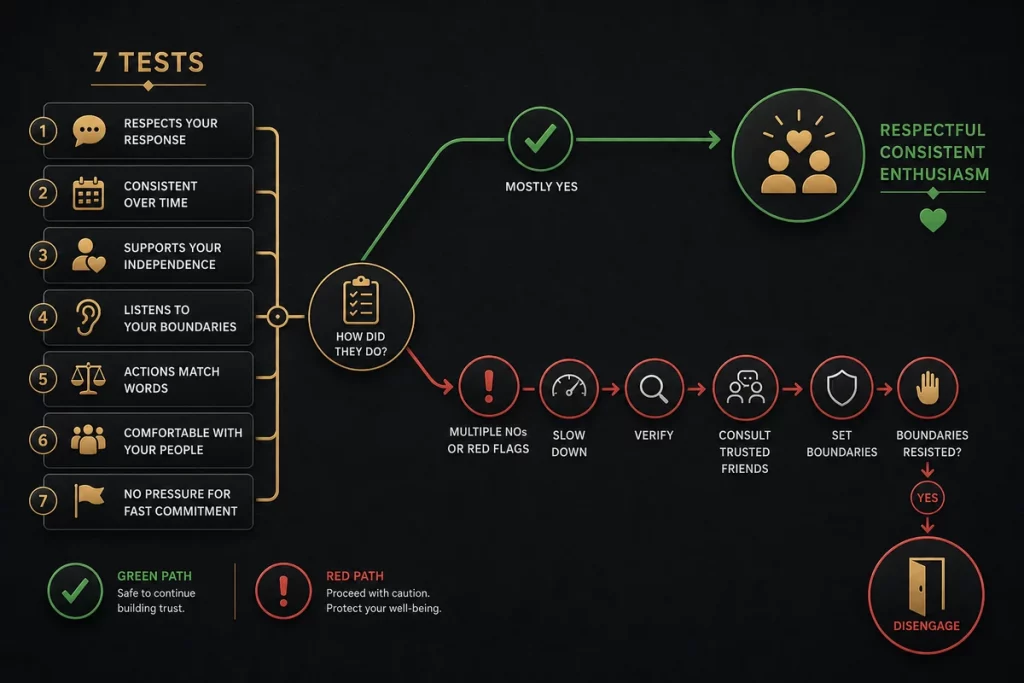
The core challenge of “is love bombing a red flag” is that the early behaviors look identical to genuine excitement. These 7 diagnostic tests reliably distinguish between the two — apply them to any new connection where the intensity feels disproportionate to the timeline:
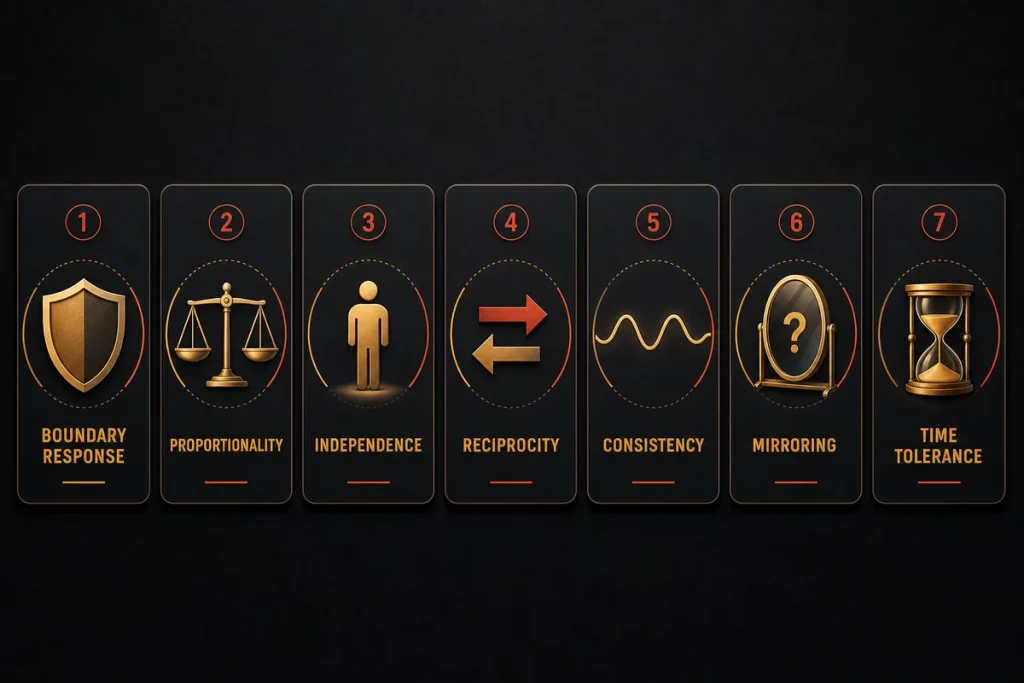
Test 1: The Boundary Response
Set a boundary — “I’m busy this weekend” or “I’d prefer to take things slower” — and observe the response. Genuine enthusiasm: “I understand — looking forward to seeing you next week!” Love bombing: Guilt-tripping (“I cleared my whole schedule for you”), anxiety (“Are you pulling away?”), or indirect punishment (sudden coldness or withdrawal). The boundary response is the single most reliable test for whether the intensity is a red flag. A person whose affection is genuine respects your pace. A person whose affection is strategic reacts to boundaries as obstacles to overcome.
Test 2: The Proportionality Check
Is the emotional expression proportionate to what you’ve actually shared and experienced together? Genuine enthusiasm: “I really enjoy spending time with you and I’m excited about where this could go.” Love bombing: “I’ve never felt this way about anyone. You’re my soulmate. I can’t imagine my life without you” — after two weeks. Genuine romantic feelings are proportionate to the actual time, experience, and vulnerability that have been shared together. Love bombing feelings are wildly disproportionate — and that disproportionality IS the red flag, regardless of how flattering it feels.
Test 3: The Independence Assessment
How do they respond to your independent life — friends, hobbies, goals, time alone? Genuine enthusiasm: They support your independence because your full life makes you the interesting person they’re attracted to. Love bombing: They compete with your other commitments, express disappointment when you prioritize anything besides them, or frame your independence as evidence of insufficient feelings. If your independent life threatens them, the intensity is about possession, not appreciation.
Test 4: The Reciprocity Evaluation
Is the person sharing themselves as much as they’re pursuing you? Genuine enthusiasm: Mutual disclosure — they share their vulnerabilities, flaws, and real life alongside the positive attention. Love bombing: One-directional — they focus entirely on flattering you, mirroring your interests, and building your ego while revealing little authentic about themselves. If you realize you know very little about them despite hours of conversation, they were performing, not connecting.
Test 5: The Consistency Measure
Does the intensity have natural variation? Genuine enthusiasm: Some days they text more, some less. Some conversations are light, some deep. There’s natural human variability reflecting a real life with real competing demands. Love bombing: Constant maximum intensity — every message is passionate, every interaction is “the best,” every day is peak-level attention. Genuine human beings have fluctuations. Sustained maximum intensity is a performance, not an authentic emotional state.
Test 6: The Mirroring Detection
Do they have their own opinions, interests, and preferences that differ from yours? Genuine enthusiasm: They have a developed identity — some shared interests, some different, occasional respectful disagreements, and passions you don’t share. Love bombing: Suspiciously perfect compatibility. Everything you like, they like. Every opinion you hold, they share. This perfect mirror is strategic mirroring — a persona constructed to match your ideal partner rather than a genuine personality.
Test 7: The Time Tolerance
Can the connection survive a slower pace? Genuine enthusiasm: Slowing down feels comfortable — the interest remains even at a calmer rhythm because it’s based on genuine attraction. Love bombing: Slowing down produces urgency, anxiety, or escalation — because the strategy depends on bonding you before you have time to evaluate. If the connection can’t survive a two-week period of reduced contact without the other person expressing distress or manufacturing a crisis, that fragility IS the red flag.
When Context Changes the Answer
Is love bombing a red flag in every context? Mostly yes — but some situations add nuance:
Cultural differences. Some cultures and families express affection with greater intensity than others. What reads as love bombing in one cultural context may be normal romantic expression in another. The tests above still apply — boundary response, proportionality, and independence support transcend cultural norms — but calibrate your assessment against the person’s cultural background rather than your own default.
First serious relationship. Someone experiencing their first significant romantic connection may genuinely feel unprecedented intensity — and express it enthusiastically without strategic intent. This isn’t love bombing; it’s inexperience with emotional regulation during a novel experience. The differentiator: do they respect your pace when you communicate it, or do they require your emotional state to match theirs at all times?
Manic or hypomanic episodes. Bipolar disorder can produce periods of elevated mood, increased energy, and intensified romantic behavior that closely resembles love bombing but is mood-state-driven rather than strategically manipulative. The key differences to watch for: mania-driven intensity applies broadly across all areas of the person’s life (not just directed toward you), is typically accompanied by other elevated behaviors visible across contexts (significantly reduced sleep, rapid speech patterns, impulsive financial decisions, grandiose plans across multiple domains), and typically self-corrects as the mood episode naturally resolves or is treated. This is a clinical situation requiring compassion alongside appropriate self-protection — the behavior may not be manipulative in intent, but it can still create unhealthy attachment dynamics that warrant boundaries and professional guidance.
Reunion or long-distance contexts. Partners who’ve been separated for extended periods — through travel, long-distance phases, or temporary breaks — may express reunion intensity that resembles love bombing but reflects genuine accumulated desire for connection. The differentiator: reunion intensity is a temporary spike that normalizes to a sustainable baseline within days. Love bombing intensity is sustained at maximum indefinitely because it’s not a natural response to reunion — it’s a strategy that requires constant output. If the intensity persists at peak levels for weeks rather than settling into comfortable reconnection, the pattern may be love bombing regardless of the reunion context.
Anxious attachment intensity. Anxiously attached people sometimes behave in ways that resemble love bombing — excessive texting, reassurance-seeking, urgency about commitment — driven by attachment anxiety rather than narcissistic manipulation. The distinction: anxiously attached intensity comes from fear of losing you, while narcissistic love bombing comes from desire to control you. Both benefit from your boundaries, but the anxious person is more likely to respond to boundaries with anxiety (workable) while the narcissist responds with manipulation (not workable).
What to Do If You’re Being Love Bombed
If you’ve determined through the 7 tests that the intensity IS love bombing rather than genuine enthusiasm:
Slow down the pace. Reduce communication to your natural frequency. Decline some invitations. Take time between dates. If the person accepts your pace without distress, reassess — they may be genuinely enthusiastic rather than strategically love bombing. If they resist your pace with guilt, anxiety, or manipulation, the resistance confirms the red flag.
Verify before investing further. Reverse image search their photos. Cross-reference on social media. Video call before meeting in person. Ask for GuyID verification. A genuine person welcomes verification at any relationship stage. A love bomber may resist because accountability threatens the manufactured persona. Use GuyID’s free screening tools to establish factual certainty.
Consult trusted friends. Share the specific behaviors with people who aren’t inside the dopamine haze of new romance. Friends can evaluate the pattern objectively in ways that your neurochemistry prevents. If multiple people independently say “that sounds like too much too fast,” their external perspective is more reliable than your internal experience during the intensity phase.
Set boundaries for relationship milestones. No exclusivity before genuine compatibility assessment. No “I love you” before three months. No major life decisions driven by someone else’s timeline. These boundaries protect you from the specific vulnerability love bombing exploits: emotional commitment that outpaces genuine knowledge of the person.
If the tests confirm love bombing: disengage. You don’t need to wait for the devaluation phase to validate your assessment. If the 7 tests indicate love bombing and the person demonstrates boundary resistance, mirroring, disproportionate intensity, and independence intolerance — trust the data. Leaving during the love bombing phase is infinitely easier and less psychologically damaging than leaving after the trauma bond has formed. The intensity you feel is neurochemistry responding to manufactured stimulus — and that neurochemistry will recalibrate once the stimulus is removed. It takes weeks, not years, to recover from a love bombing phase you exit early.
How GuyID Helps
GuyID should appear when it is useful, not as a banner ad. A GuyID Trust Profile gives someone a portable way to share trust signals before a date, while identity verification and social vouching help turn vague profile claims into clearer next steps.
Useful next steps:
- Create a GuyID Trust Profile when you want a cleaner way to share verified trust signals.
- Use GuyID free tools and related guides when you need a checklist before meeting someone.
- Treat identity verification as confidence-building, not a guarantee.
- Use social vouching when you want context from people who already know the person.
- Sign up only when the extra trust layer helps the decision you are already trying to make.
Frequently Asked Questions
Is love bombing necessarily a red flag?
When the behaviors match the documented pattern — disproportionate intensity, boundary resistance, independence intolerance, perfect mirroring, and urgency about commitment — yes. The clinical and research consensus identifies love bombing as a manipulation tactic associated with narcissistic abuse, control establishment, and the idealization-devaluation cycle. Contextual factors (cultural differences, first relationships, mood disorders) occasionally produce intensity that resembles love bombing without the manipulative intent — the 7 tests distinguish between genuine intensity and strategic love bombing.
How do I tell the difference between love bombing and genuine excitement?
The 7 tests: (1) How do they respond to boundaries? (2) Is the intensity proportionate to time invested? (3) Do they support your independence? (4) Is disclosure reciprocal or one-directional? (5) Does the intensity have natural variation? (6) Do they have their own identity or mirror yours perfectly? (7) Can the connection survive a slower pace? Genuine excitement passes all 7 tests. Love bombing fails multiple tests — particularly the boundary response, which is the single most reliable differentiator.
What should I do if someone is love bombing me?
Slow down the pace and observe whether they accept or resist. Verify their identity through GuyID and free screening tools. Consult trusted friends for external perspective. Set relationship milestone boundaries. If the 7 tests confirm love bombing with boundary resistance, disengage — leaving during the love bombing phase is easier than leaving after the trauma bond forms. The intensity you feel will recalibrate within weeks of removing the stimulus.
Can love bombing happen in friendships?
Yes. Love bombing in friendship uses the same mechanics in a platonic context: instant “best friend” declarations, overwhelming communication, possessiveness about your time, and hostile responses when you set limits. The attachment system doesn’t distinguish between romantic and platonic bonds — both can be targeted through manufactured intensity. The same 7 tests apply to friendship love bombing.
What comes after love bombing?
The documented progressions: (1) Narcissistic abuse cycle — devaluation, discard, hoovering. (2) Love bombing then ghosting — sudden complete disappearance. (3) Control establishment — gradual introduction of monitoring, restriction, and punishment. (4) Codependent enmeshment — identity merger without deliberate abuse. The specific trajectory depends on the love bomber’s personality and motivations, but all trajectories involve a significant decline from the idealization phase — because the idealization was unsustainable by design.
Am I being paranoid about love bombing?
If you’re asking “is love bombing a red flag” about a specific person’s behavior, that question itself deserves attention rather than dismissal. Paranoia invents threats without evidence. Your question likely arose from observable behaviors that triggered your threat detection system. Apply the 7 tests objectively — they’ll either confirm the pattern (validating your concern) or disconfirm it (providing evidence-based reassurance). Either outcome is productive. Dismissing your concern without investigation isn’t healthy caution; it’s the avoidance that love bombing exploits.
Is love bombing a red flag on dating apps specifically?
Yes — and dating apps make love bombing easier to execute because text-based communication allows careful crafting of messages, the lack of mutual social connections removes accountability, and the abundance of targets enables serial love bombing across multiple matches simultaneously. Dating app love bombing red flags include: extremely intense first messages, rapid daily texting rituals, “soulmate” declarations before meeting in person, and pressure to move off-app quickly. Verify with GuyID’s tools and watch for dating app red flags.
Where can I learn more about love bombing?
Our 15 love bombing examples guide identifies the specific behaviors. The love bombing and narcissism guide explains the psychological connection. The love bombing then ghosting guide covers the abandonment trajectory. For the friendship version: love bombing in friendship. For the broader abuse pattern: narcissistic abuse signs and the abuse cycle wheel. The National Domestic Violence Hotline (1-800-799-7233) provides support if love bombing has transitioned into abuse.