

Reader Briefing
Reader Briefing
Start here if you need a practical read on love bombing in friendship: 8 signs: who should use verification, what signals to check, and what to do before moving from online interest to an in-person plan.
Who this is for
- People meeting someone from a dating app or social platform.
- Readers preparing for a first in-person date.
- Anyone checking identity, profile consistency, and trust signals.
- People trying to avoid romance scams, fake profiles, or pressure tactics.
You’ll learn
- How to evaluate identity signals without treating any single check as certainty.
- Which trust signals matter and how to weigh them together.
- How to spot inconsistencies, pressure, or behavior patterns that deserve caution.
- How to move from online conversation to a safer first meeting.
- Where GuyID tools fit into a quick pre-date screening workflow.
- When to slow down, ask for more context, or walk away.
Bottom line
Verification reduces uncertainty; it does not guarantee future behavior. Use a layered approach: confirm identity signals, compare profile consistency, ask for a short video call, keep early plans public, and slow down when someone pressures you to skip normal safety steps.
Key takeaways
- Identity verification improves confidence, not certainty.
- Patterns matter more than isolated incidents.
- Verify before meeting privately or sharing sensitive details.
- A short video call can reveal many inconsistencies.
- Pressure to skip reasonable safety steps is useful information.
Free Tools
Catfish Probability Detector
Check whether a dating profile has suspicious identity or photo signals.
Dating Bio Red Flag Detector
Review a bio for scam, pressure, or trust-warning language.
Dating Safety Checklist
Use free GuyID tools before moving from chat to a real date.
Next step
Create your GuyID trust profile
Share consent-based trust signals before a date without turning the conversation into an interrogation.
Love bombing isn’t limited to romantic relationships — it happens in friendships too, and it’s just as manipulative. A new friend who immediately becomes your “best friend,” showers you with compliments, demands all your time, and creates an intense bond within days isn’t demonstrating genuine friendship — they’re deploying the same manufactured intensity that romantic love bombers use, adapted for a platonic context. Love bombing in friendship is harder to recognize because the cultural narrative around friendships doesn’t include the same warning vocabulary we’ve developed for dating. This guide identifies 8 specific signs, explains why friendship love bombing happens, and provides strategies for distinguishing genuine warmth from manipulative intensity.
NavigateTable of Contents23 sections
What Is Friendship Love Bombing?
Love bombing in friendship follows the same psychological mechanics as narcissistic love bombing in romantic contexts: overwhelming a target with attention, flattery, gifts, and intensity to create rapid emotional bonding before the real dynamic — control, exploitation, or abandonment — reveals itself. The friendship version uses the same tools but in a platonic frame: constant texting, extravagant generosity, declarations of “you’re my best friend” within days, possessiveness about your time, and an intensity that feels flattering but unsettling.
Research from the National Library of Medicine on manipulation in non-romantic relationships confirms that narcissistic and exploitative behavioral patterns operate across all relationship types — not just romantic ones. The human attachment system that love bombing targets doesn’t meaningfully distinguish between romantic and platonic bonds; both produce oxytocin bonding responses, both create significant emotional dependency, and both can be effectively weaponized through the same intermittent reinforcement patterns.
What makes love bombing in friendship particularly insidious is the cultural blind spot around it. We have language for romantic manipulation — “love bombing,” “gaslighting,” “narcissistic abuse” — but equivalent vocabulary and cultural awareness for friendship manipulation is significantly less developed. When a new romantic partner is overwhelming, friends might warn “that’s love bombing.” When a new friend is overwhelming, the same behavior is often praised: “How wonderful that you’ve found such a close friend so quickly!” This cultural validation and lack of warning vocabulary makes friendship love bombing considerably harder to identify and harder to justify leaving.
8 Signs of Love Bombing in Friendship
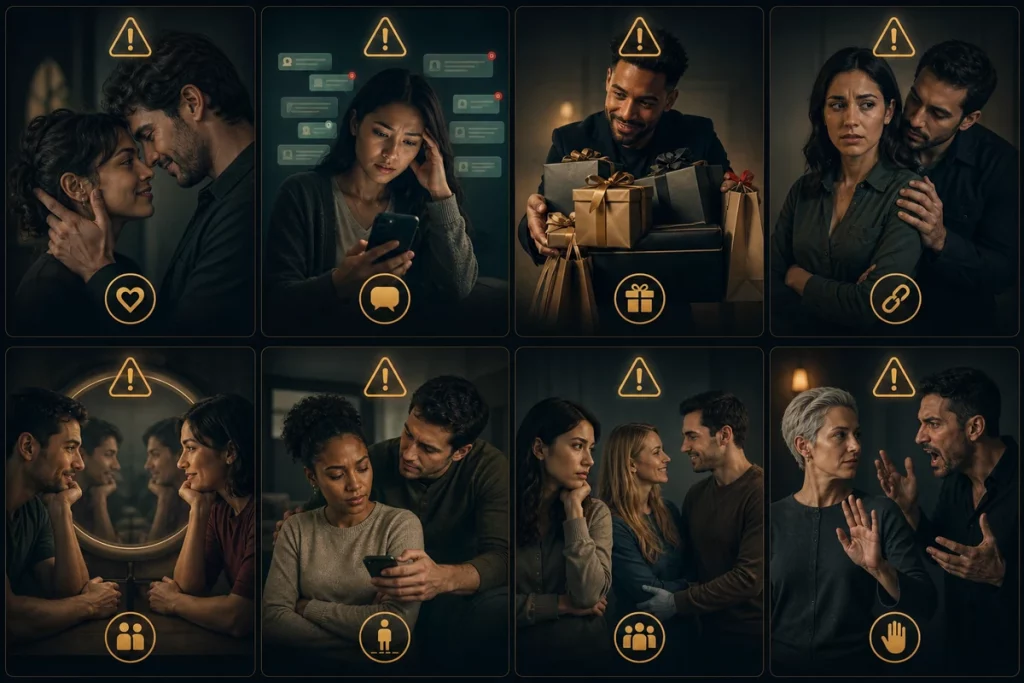
1. Instant “Best Friend” Declarations
“You’re literally my favorite person.” “I’ve never had a friend like you.” “Where have you been all my life?” — within the first week of knowing you. Genuine deep friendship develops over months and years of shared experience. A person who declares best-friend status immediately is either incapable of understanding healthy friendship progression or deliberately manufacturing intensity for a purpose. This is the friendship equivalent of “I love you” on the third date — and it deserves the same skepticism.
2. Constant, Overwhelming Communication
Texting throughout the day, every day. Reacting to every social media post. Sending long messages analyzing your friendship. The volume of communication is flattering initially but quickly becomes an expectation — if you don’t respond promptly, they express hurt or anxiety. Love bombing in friendship often manifests through communication that feels more like romantic pursuit than platonic connection: “I miss you,” “I was thinking about you all day,” “You’re the only person who gets me.” The intensity demands reciprocation and creates guilt when you can’t match it.
3. Extravagant Gifts and Gestures
Expensive presents, elaborate surprise plans, paying for everything despite your protests. Generosity in friendship is wonderful — but disproportionate gift-giving early in a friendship creates implicit emotional debt. You feel obligated to reciprocate with loyalty, time, and the kind of emotional availability that the gift-giver will eventually demand. This is the same mechanism that romantic love bombing examples describe with gifts — creating obligation that’s later leveraged for control.
4. Possessiveness About Your Time and Other Friendships
“Why didn’t you invite me?” “I thought we were going to hang out tonight.” “You spend so much time with [other friend] — do they even appreciate you like I do?” Jealousy about your other relationships — friends, family, romantic partner — is one of the clearest signs of love bombing in friendship because it reveals the underlying goal: monopolizing your social world. A genuine friend is happy you have a rich social life. A friendship love bomber sees your other connections as competition for the supply your attention provides.
5. Mirroring Your Personality Perfectly
Everything you like, they like. Every opinion you hold, they share. Every experience you describe, they’ve had a similar one. This suspiciously perfect compatibility — identical to the romantic mirroring tactic — creates the illusion of a soul-level connection when it’s actually strategic persona construction. Ask yourself: do they ever disagree with you? Do they have strong opinions that differ from yours? Do they have interests you don’t share? A real person has their own fully formed identity with preferences, opinions, and experiences that exist independently of yours. A friendship love bomber reflects yours back at you like a mirror designed to make you feel uniquely understood.
6. Boundary Violations Disguised as Closeness
Showing up uninvited. Reading your messages over your shoulder. Sharing your private information with others because “best friends tell each other everything.” Going through your phone because “we have no secrets.” Love bombing in friendship normalizes boundary violations by framing them as evidence of closeness — the closer you are, the fewer boundaries should exist. In reality, the healthiest friendships maintain clear boundaries because respect doesn’t diminish with intimacy.
7. Triangulation and Drama Creation
They create conflict between you and other friends — through gossip, selective information sharing, or “I heard [friend] said something about you” revelations that may be fabricated or exaggerated. Triangulation isolates you from other relationships while positioning the love bomber as your most loyal ally: “I would NEVER say those things about you.” This manipulation technique, documented by therapists treating narcissistic abuse, operates identically in friendship and romantic contexts — the goal is isolation through manufactured distrust of everyone except the manipulator.
8. They Become Hostile or Punishing When You Set Limits
You can’t hang out this weekend, and they respond with the silent treatment. You want to spend time with another friend, and they guilt-trip you. You express a boundary, and they accuse you of “not valuing the friendship.” The response to limits is the definitive test — genuine friends respect your boundaries even when they’d prefer more access. Friendship love bombers treat your boundaries as betrayal because the boundary threatens the control dynamic the love bombing was designed to establish.
Why People Love Bomb Friends
The motivations behind love bombing in friendship parallel the romantic versions but with friendship-specific expressions:
Narcissistic supply through adoration. Some people need a devoted audience — someone who validates their superiority, listens to their monologues, and provides unconditional positive regard. A friendship love bomber selects targets who are empathetic, accommodating, and likely to provide this supply without demanding reciprocity. The American Psychological Association documents that narcissistic supply-seeking operates across all relationship types, not exclusively romantic ones. In friendship contexts, the supply takes the form of admiration, availability, loyalty, and the validation of being the “chosen” best friend — all of which feed the narcissist’s self-image without requiring the vulnerability that genuine friendship demands.
Codependent attachment seeking. People with codependent patterns may friendship love bomb not from a place of calculated manipulation but from genuine desperation for connection — their self-worth requires a close relationship to organize around, and the intensity reflects their urgent need to secure that anchor before it disappears. The impact on the recipient is similar (overwhelming, possessive, boundary-violating) even when the motivation is need-driven rather than control-driven. Codependent friendship love bombers often aren’t aware of what they’re doing — they experience their intensity as genuine care rather than recognizing it as a pattern that consistently overwhelms the people they’re trying to connect with.
MLM and financial exploitation. This is the friendship-specific motivation without a direct romantic parallel: building trust through manufactured friendship to later exploit financially. MLM recruiters, “networking” scammers, and financial predators use friendship love bombing on platforms like Bumble BFF and in community spaces to establish the trust relationship that makes their eventual pitch harder to refuse. The FTC has documented increasing complaints about friendship-based financial exploitation through social platforms and community groups, with MLM recruitment being the most commonly reported variant.
Social isolation strategy. Some friendship love bombers deliberately isolate their target from other relationships — not for supply, but for control. By monopolizing your social world and creating distrust of other connections through gossip, triangulation, and loyalty tests, they create a dynamic where you depend on them exclusively for social connection. This mirrors the isolation phase of emotional manipulation in romantic abuse and serves the same purpose: a target without external perspectives is easier to manipulate, exploit, and control long-term because there’s no one outside the dynamic to say “this isn’t normal.”
Friendship Love Bombing vs. Genuine Enthusiasm
Not every enthusiastic new friend is love bombing. Here’s how to distinguish:
| Love Bombing in Friendship | Genuine Friendship Enthusiasm |
|---|---|
| Intensity is at maximum from day one — no natural buildup | Warmth builds naturally over shared experiences and time |
| They become upset, possessive, or punishing when you set limits | They respect your boundaries even when they’d prefer more time |
| Your other relationships feel threatened by the friendship | Your other relationships continue comfortably alongside the new one |
| They mirror everything — suspiciously few disagreements | They have their own identity, opinions, and interests that differ from yours |
| The friendship feels consuming — your life reorganizes around them | The friendship feels enhancing — adding to your life without replacing parts of it |
| Generosity creates obligation rather than mutual joy | Generosity feels natural, reciprocal, and never leveraged |
The single best test: set a boundary and observe the response. “I can’t hang out this weekend — I have other plans.” A genuine enthusiastic friend says “No problem, let’s do next week!” A friendship love bomber reacts with hurt, guilt-tripping, questioning who you’re spending time with, or emotional punishment. The boundary response is the most reliable diagnostic for love bombing in friendship, just as it is for romantic love bombing.
What to Do If You’re Being Friendship Love Bombed
Trust the discomfort. If the friendship’s intensity makes you feel uncomfortable, obligated, guilty, or trapped — even though you “should” feel grateful for such devoted attention — trust that signal. Discomfort in the face of overwhelming attention is your nervous system registering that the dynamic isn’t healthy, even when your rational mind is still categorizing it as “a really good friendship.” The gap between how the friendship looks from the outside (“Wow, they’re such a devoted friend!”) and how it feels from the inside (suffocating, obligating, anxiety-producing) is itself diagnostic. Healthy friendships feel good from both the outside AND the inside.
Set boundaries and observe. Reduce communication frequency to your natural level — not the artificially elevated level the love bomber has established as the norm. Decline invitations without elaborate explanations or apologies. Maintain your other friendships without guilt or justification. The love bomber’s response to your boundaries reveals everything about their intentions: genuine friends adjust to your pace with grace and understanding; love bombers escalate their demands, apply guilt pressure, create drama, or punish you through emotional withdrawal designed to make you chase the connection back to their preferred intensity level.
Maintain your independent social network. Don’t let any single friendship — no matter how intense or flattering — replace your broader social world. The isolation that friendship love bombing creates is both its method and its ultimate goal. Keep investing in multiple friendships, family connections, professional relationships, and independent activities — even when (especially when) the love bomber frames your independence as disloyalty to the friendship. A friend who requires you to abandon other relationships to prove your loyalty is not demonstrating closeness; they’re constructing a cage and calling it love.
Recognize that leaving is an option. Friendships are voluntary. You don’t owe anyone unlimited access to your time, energy, or emotional resources simply because they’ve provided attention and gifts. If the friendship consistently feels draining, obligating, or anxiety-producing despite your boundary-setting efforts, ending or significantly reducing the friendship is a valid and healthy choice. The guilt you feel about pulling away is the love bombing’s residual effect — the implicit debt created by the intensity phase. That guilt is not evidence that you owe them more; it’s evidence that the manipulation worked as designed.
Name the pattern if safe to do so. If the friendship is salvageable and the love bomber isn’t exhibiting narcissistic or deliberately manipulative traits, direct communication may help: “I value our friendship, but the intensity feels overwhelming to me. I’d like us to have a sustainable pace where we both have space for our full lives.” If the person responds with genuine receptivity and behavioral adjustment, the friendship may evolve into something healthier. If they respond with defensiveness, guilt-tripping, or escalation, the dynamic confirms the love bombing assessment and disengagement becomes the appropriate response.
Apply the same verification mindset as dating. For new friendships formed through apps like Bumble BFF, apply verification habits: cross-reference on social media, meet in public, and watch for red flag behaviors regardless of the relational framing. Use GuyID’s free screening tools for profile verification. A friend who’s going to manipulate you won’t survive the same scrutiny that catches dating app catfish — because manufactured personas are fragile regardless of the context they’re deployed in.

How GuyID Helps
GuyID should appear when it is useful, not as a banner ad. A GuyID Trust Profile gives someone a portable way to share trust signals before a date, while identity verification and social vouching help turn vague profile claims into clearer next steps.
Useful next steps:
- Create a GuyID Trust Profile when you want a cleaner way to share verified trust signals.
- Use GuyID free tools and related guides when you need a checklist before meeting someone.
- Treat identity verification as confidence-building, not a guarantee.
- Use social vouching when you want context from people who already know the person.
- Sign up only when the extra trust layer helps the decision you are already trying to make.
Frequently Asked Questions
Can love bombing happen in friendships?
Yes. Love bombing in friendship uses the same mechanics as romantic love bombing — manufactured intensity, overwhelming attention, premature declarations of deep connection, and possessiveness about your time — but in a platonic frame. The attachment system doesn’t distinguish between romantic and platonic bonds, making both equally susceptible to manipulation through excessive attention followed by control or abandonment.
How do I know if a new friend is love bombing me?
The strongest indicators: “best friend” declarations within days, possessiveness about your time and other friendships, communication that feels more romantic than platonic in intensity, extravagant gifts that create obligation. Perfect mirroring of your personality, and hostile or punishing responses when you set boundaries. The boundary test is definitive — set one and observe whether they respect it or react with manipulation.
Is friendship love bombing always intentional?
Not always. Some people love bomb friends out of genuine loneliness, codependent patterns, or anxious attachment in friendships rather than deliberate manipulation. The impact on you is the same regardless of intent — overwhelming intensity that creates obligation and reduces your autonomy. Whether the motivation is narcissistic supply-seeking or desperate loneliness, the protective response (boundaries, pace maintenance, independent social network) is identical.
What happens after friendship love bombing?
The same cycle as romantic love bombing: idealization → devaluation → discard/control. After the love bombing phase, the “friend” may become critical, demanding, manipulative, or withdrawn. The person who adored you becomes the person who criticizes, controls, or abandons you — just as the love bombing then ghosting pattern operates in dating. Or they may maintain the friendship but shift from adoration to exploitation — your loyalty, time, or money become the payment for the attention they initially provided for free.
How do I end a friendship with a love bomber?
Gradually reduce contact rather than a dramatic confrontation — friendship love bombers often respond to direct endings with escalation, guilt campaigns, or social manipulation (turning mutual friends against you). Decrease response frequency, decline invitations more often, and allow the friendship to naturally diminish. If they confront you, be honest but brief: “I need more space in my friendships than this dynamic allows.” Don’t JADE (Justify, Argue, Defend, Explain) — state your position and maintain it.
Is love bombing in friendship common on Bumble BFF?
Friend-finding apps like Bumble BFF can facilitate friendship love bombing because they connect strangers without the social context that would normally moderate intensity. MLM recruiters, narcissistic supply-seekers, and genuinely lonely people with unhealthy attachment patterns all use BFF apps. Apply the same verification and boundary practices to app-based friendships that you would to dating: verify profiles through GuyID’s tools, meet in public first, and watch for the 8 signs described in this guide.
Can a friendship love bomber change?
If the love bombing stems from codependency or anxious attachment (rather than narcissism), change is possible with self-awareness and therapeutic support. If the love bombing stems from narcissistic personality traits, change is unlikely without sustained, self-motivated professional intervention. The diagnostic response: when you name the pattern, do they acknowledge it with genuine accountability or defend it with manipulation? Acknowledgment suggests capacity for growth. Defense suggests the pattern serves a need they’re unwilling to relinquish.
Where can I learn more about manipulation in friendships?
Our love bombing examples guide covers the foundational patterns. The narcissistic abuse signs guide explains the personality dynamics behind love bombing. The anxious attachment in friendships guide covers attachment patterns that make you more susceptible. For boundaries: our boundary-setting guide applies to friendship contexts. A therapist experienced in narcissistic dynamics can provide personalized support for navigating or exiting a manipulative friendship.