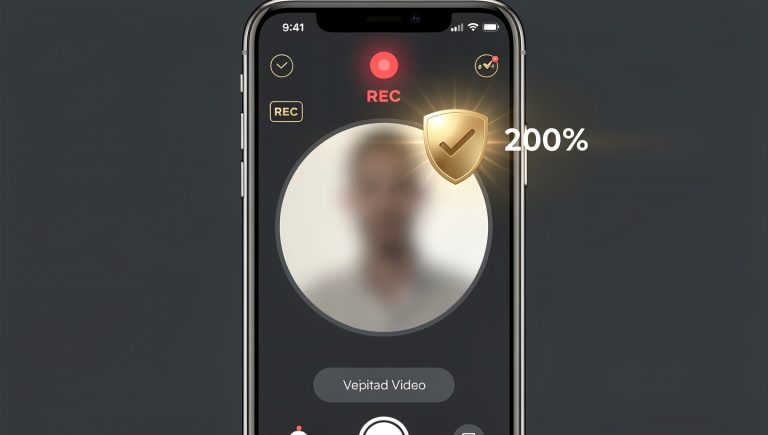
How to Vouch for Someone on GuyID: The 2-Minute Guide (2026)
Someone you know just sent you a vouch request on GuyID. They’re building a verified trust profile for dating, and they’ve asked you — a friend, colleague, or someone who knows them personally — to confirm their identity and vouch for their character. You probably have questions: What exactly am I confirming? What does my name get attached to? Who sees this? How long does it take? And is this actually worth doing? This guide answers every question about how to vouch for someone on GuyID — what it means, what it involves, why it matters for dating safety, and why the 2 minutes you invest helps protect the people your friend dates from the $1.3 billion romance scam crisis (FTC, 2026) and the trust gap that 80 million dating app users navigate.
Whether you just received a request and want to understand it before responding, or you’re curious about the vouching system in general, this guide covers the complete process — from understanding what your vouch means to completing it in 2 minutes.
What You’re Being Asked to Do (And What You’re Not)
Understanding how to vouch for someone on GuyID starts with clarity about what the vouch is — and isn’t.
What You ARE Being Asked to Do
- Confirm you know this person: You’re confirming that the person who sent you the request is someone you know personally — not a stranger, not someone you’ve only interacted with online.
- Confirm their identity: You’re confirming that this person is who they claim to be — that their name, face, and general presentation match the real person you know.
- Attest to their character: You’re saying: “Based on my personal experience with this person, I consider them trustworthy enough to publicly associate my name with theirs.”
What You Are NOT Being Asked to Do
- Not guaranteeing they’re a perfect partner: Your vouch confirms character as you’ve observed it — not that they’ll be flawless in every future relationship. No one can guarantee another person’s romantic perfection.
- Not taking legal responsibility: Your vouch is a personal character attestation, not a legal guarantee. You’re not liable for their actions. You’re sharing your honest assessment of their trustworthiness.
- Not endorsing their dating decisions: You’re vouching for their character — not for who they date, how they date, or whether their dating choices are wise.
- Not committing to ongoing obligations: The vouch is a one-time action. No recurring tasks, check-ins, or updates required.
- Not sharing your personal information publicly: Your vouch contributes to their Trust Profile — the specific details of your identity visible on their profile are determined by GuyID’s privacy settings.
Your friend is building a verified dating profile. They’ve asked you to be the digital equivalent of what you’d do naturally in person: tell someone who’s considering dating them, “Yeah, I know [name]. They’re a good person. You can trust them.” That’s what a vouch is. It’s the introduction you’d give in person — made available digitally to every potential match.
What Your Vouch Actually Means in the System
Within GuyID’s Trust Tiers, your vouch serves a specific function in the person’s trust assessment.
How Your Vouch Contributes
GuyID’s dating trust score is built on three pillars: identity (government ID verification), character (social vouching), and consistency (sustained behavior over time). Your vouch is the character pillar — the human judgment that confirms: “This person isn’t just a verified identity. They’re a trustworthy human being as assessed by real people who know them.”
Social vouches, combined with government ID verification, contribute to the person reaching TRUSTED tier — the meaningful safety threshold where their Trust Profile communicates both confirmed identity AND vouched character. Without vouches, their profile says “identity verified but character unassessed.” With your vouch (and others’), it says “identity verified AND real people confirm their character.” That’s a meaningfully different trust signal for the people evaluating whether to meet your friend.
The Accountability Your Vouch Carries
Your name is associated with the vouch. This is intentional — accountability is what makes vouching meaningful. Anonymous endorsements carry zero weight because there’s no cost to being wrong. Named vouches carry real weight because your reputation is attached. If someone checks your friend’s Trust Profile and sees real vouches from real people, the accountability chain is what makes them trust the signal: “These people put their names behind this person. That means something.”
This accountability also means you should only vouch for people you genuinely trust — see the “When to Say No” section below.
Who Sees Your Vouch
Understanding the visibility of your vouch helps you make an informed decision about vouching for someone on GuyID.
What’s Visible
When someone checks the person’s Date Mode Trust Profile, they see that social vouches exist — confirming that real people have vouched for this person’s identity and character. The vouch count and general indicators of social trust are visible, providing the signal that the person has a real network of people who trust them.
Who Checks the Trust Profile
The people who check your friend’s Trust Profile are primarily potential dating matches — women and men evaluating whether someone is trustworthy before engaging, meeting, or deepening a connection. These are people making safety decisions about real-life interactions. Your vouch helps them make those decisions with better information than a dating app badge alone provides.
What’s NOT Visible
Your vouch does not expose: your dating activity (you’re not on a dating profile), your personal information beyond what’s associated with the vouch, or any other GuyID data unrelated to the specific vouch. Vouching for someone doesn’t create a dating profile for you, doesn’t expose you to dating matches, and doesn’t sign you up for anything beyond the vouch itself.
How to Complete the Vouch: The 2-Minute Process
Here’s the step-by-step for how to vouch for someone on GuyID.
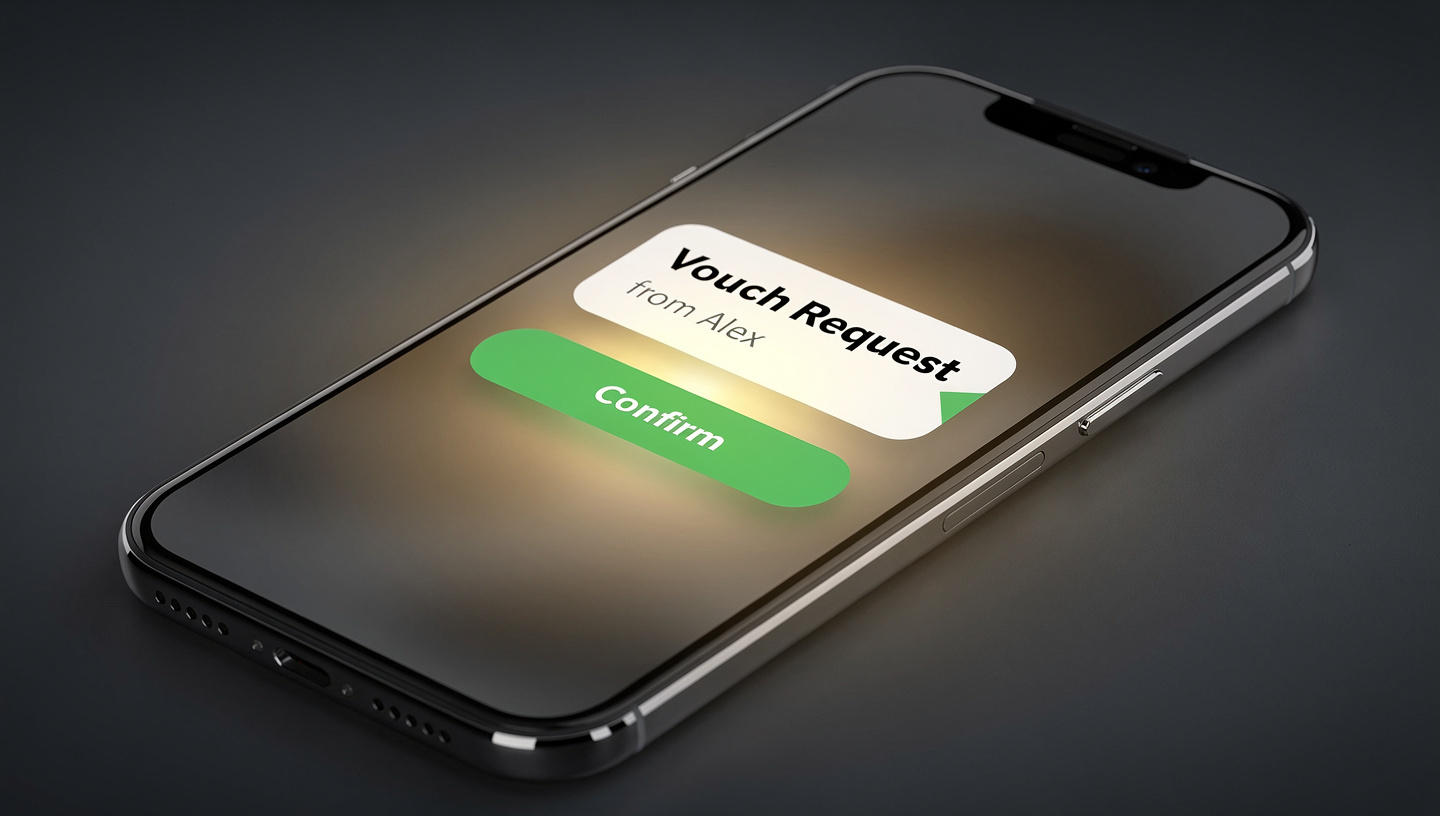
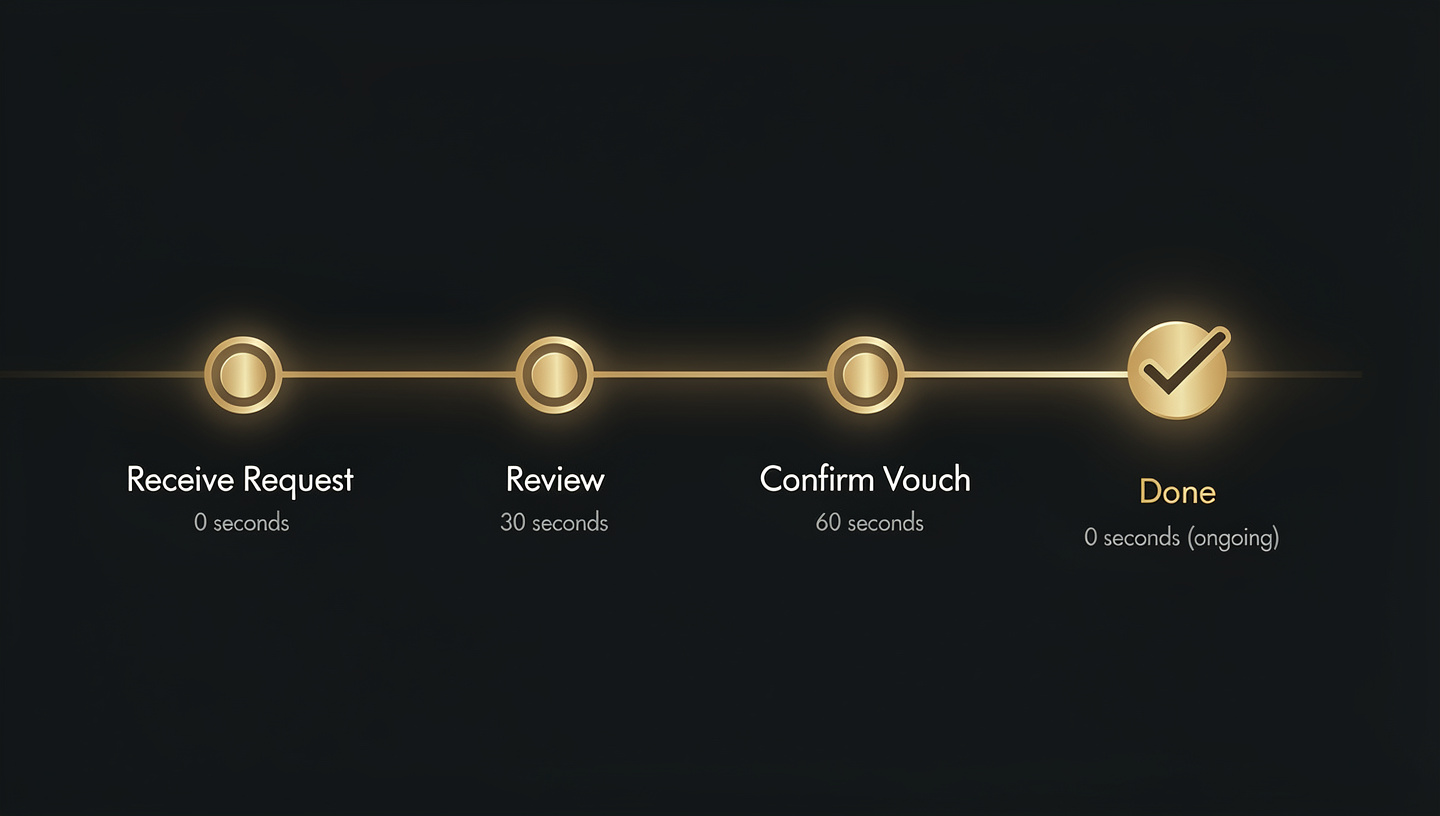
You’ll receive a vouch request — either through GuyID’s system notification (email or link) or through a personal message from the person asking, followed by the system request. Your friend may have given you a heads-up via text or WhatsApp before the system notification arrives.
Open the request. Confirm: Is this someone you actually know personally? Do you trust them enough to vouch? If yes to both, proceed. If you have doubts about either, see “When to Say No” below.
Follow the prompts to confirm: you know this person, you confirm their identity, and you vouch for their character. The process is guided — each step is clear and requires minimal input.
Your vouch is recorded. It appears on the person’s Trust Profile. No further action needed. No recurring commitment. If you ever want to withdraw your vouch in the future, you can.
Total time: ~2 minutes. No payment required. No account subscription. No ongoing obligation. One action, permanent contribution to your friend’s dating safety profile.
When to Say Yes: Vouch With Confidence
Say yes to vouching when all of the following are true:
- You know this person in real life: Not just online. You’ve spent time with them in person — as a friend, colleague, community member, or family member. Real-life knowledge is what gives your vouch its weight.
- You trust their character: Based on your personal experience, you consider them honest, reliable, and trustworthy. You wouldn’t hesitate to introduce them to someone you care about.
- You’d give a positive character reference in another context: If an employer or landlord asked “Would you recommend this person?”, you’d say yes without reservation. The vouch is the same assessment applied to dating.
- You’re comfortable with your name being associated: You’d be comfortable if the people evaluating your friend’s Trust Profile saw your vouch — because you genuinely believe in the person you’re vouching for.
If all four are true: vouch confidently. Your vouch is honest, informed, and contributes meaningfully to dating safety. Your friend benefits. Their future matches benefit. And the broader ecosystem — where verified trust replaces blind hope — benefits.
When to Say No: Declining Is Always Okay
Saying no to a vouch request is always acceptable and should never affect your relationship with the person who asked. Here are legitimate reasons to decline.
Decline If You Don’t Know Them Well Enough
If you’re an acquaintance rather than a genuine friend or colleague — someone you’ve met a few times but don’t really know — your vouch wouldn’t be honest. A vouch says “I know this person and trust them.” If you can’t honestly say that, declining is the right call. “I don’t think I know you well enough to vouch, but I appreciate you asking” is a perfectly respectful response.
Decline If You Have Character Reservations
If you know things about this person that would make you hesitant to vouch — dishonesty you’ve observed, behavior patterns that concern you, treatment of others that you wouldn’t endorse — don’t vouch. Your vouch is a character attestation. If your honest assessment includes significant reservations, the vouch would be dishonest. Declining quietly is the right choice. You don’t need to explain your reservations unless you choose to.
Decline If You’ve Only Known Them Online
If your entire relationship with this person exists online — messaging, gaming, social media — you don’t have the in-person knowledge that makes vouching meaningful. Online interaction reveals communication style but not the full character picture that real-life interaction provides. “I feel like I’d need to know you better in person before vouching” is honest and appropriate.
Decline If You’re Uncomfortable for Any Reason
You don’t need a specific reason. If the request makes you uncomfortable — for reasons you can articulate or can’t — declining is always your right. No explanation required. “I’m not comfortable with that, but no hard feelings” is complete. The voluntary nature of vouching is what makes it meaningful. Pressured vouches would undermine the entire system.
How to Decline Gracefully
- “Thanks for thinking of me, but I don’t think I know you well enough to vouch properly.”
- “I appreciate the ask, but I’m going to pass on this one — no offense meant.”
- “I’m not super comfortable with vouching platforms, but I hope you find people who can help.”
Brief, respectful, no justification required. The relationship should continue unaffected.

Why Your Vouch Matters More Than You Think
The 2 minutes you spend vouching has impact beyond helping your friend’s dating profile.
You’re Protecting Real People from Real Threats
When someone checks your friend’s GuyID Trust Profile and sees social vouches, they’re making a safety decision with better information. That person might be a woman deciding whether it’s safe to meet your friend in person. In a world where 92% of women report dating safety concerns and $1.3 billion is lost annually to romance scams, your vouch provides the character confirmation that helps real people make safer decisions. Your 2 minutes doesn’t just help your friend — it helps every person who evaluates their trust profile.
You’re Strengthening the Trust Ecosystem
Every vouch on GuyID strengthens the broader system. When more people vouch, more Trust Profiles reach TRUSTED tier. When more profiles are TRUSTED, checking Trust Profiles becomes more normalized. When checking becomes normalized, fake profiles and scam operations face a market where unverified profiles are treated with increasing scrutiny. Your individual vouch contributes to a systemic shift where verified trust becomes the dating standard — making dating safer for everyone, including people you’ll never meet.
You Might Want Vouches Yourself Someday
If you’re single or may be in the future, building your own Trust Profile starts with understanding the system from the voucher side. Vouching for a friend today means you understand the process when you ask friends to vouch for you tomorrow. And the person you vouch for today is likely to reciprocate when you ask.
Summary: 2 Minutes That Protect Real People
Someone you know has asked you to vouch for them on GuyID. Here’s what that means in the simplest terms: you’re confirming that you know this person, they are who they claim to be, and you trust them — the digital equivalent of introducing them to someone and saying “they’re good.” It takes about 2 minutes. It costs nothing. It creates a permanent character signal on their Trust Profile that helps every future match make a safer dating decision.
Say yes if you know them personally, trust their character, and are comfortable with your name being associated. Say no if you don’t know them well enough, have character reservations, or are uncomfortable for any reason — no explanation needed, no relationship damage.
Your vouch matters because it provides the character reference that dating has been missing — the human assessment that no badge, no background check, and no algorithm can replicate. The person who checks your friend’s Trust Profile and decides it’s safe to meet them is making that decision partly on your word. That’s the trust power of a vouch — and it’s why the 2 minutes matters.
Vouching on GuyID: confirm you know them, confirm their identity, vouch for their character. 2 minutes. Free. Permanent contribution to their dating safety profile. And if you’re single too — build your own Trust Profile and ask them to return the favor.
Frequently Asked Questions: How to Vouch for Someone on GuyID
What does vouching for someone on GuyID mean?
How long does it take to vouch?
Does vouching create a dating profile for me?
Who sees my vouch?
Am I legally responsible if the person I vouch for does something bad?
Can I withdraw my vouch later?
Should I vouch for someone I only know online?
What if I’m asked to vouch for someone I have reservations about?
Can vouching for someone help me build my own Trust Profile?

Founder, GuyID · Dating Safety Researcher · 13+ Years in Data Analytics
Ravishankar Jayasankar is the founder of GuyID, a consent-based dating trust verification platform. With 13+ years in data analytics and a deep focus on consumer trust, Ravi built GuyID to close the safety gap in digital dating. His research found that 92% of women report dating safety concerns — validating GuyID’s mission to make online dating safer through proactive, consent-based verification. GuyID offers government ID verification, social vouching, a Trust Tiers system, and 60+ free interactive safety tools.