Reader Briefing
Reader Briefing
Start here if you need a practical read on quiz: are you ready for a relationship? 24-question self-assessment: who should use verification, what signals to check, and what to do before moving from online interest to an in-person plan.
Who this is for
- People meeting someone from a dating app or social platform.
- Readers preparing for a first in-person date.
- Anyone checking identity, profile consistency, and trust signals.
- People trying to avoid romance scams, fake profiles, or pressure tactics.
You’ll learn
- How to evaluate identity signals without treating any single check as certainty.
- Which trust signals matter and how to weigh them together.
- How to spot inconsistencies, pressure, or behavior patterns that deserve caution.
- How to move from online conversation to a safer first meeting.
- Where GuyID tools fit into a quick pre-date screening workflow.
- When to slow down, ask for more context, or walk away.
Bottom line
Verification reduces uncertainty; it does not guarantee future behavior. Use a layered approach: confirm identity signals, compare profile consistency, ask for a short video call, keep early plans public, and slow down when someone pressures you to skip normal safety steps.
Key takeaways
- Identity verification improves confidence, not certainty.
- Patterns matter more than isolated incidents.
- Verify before meeting privately or sharing sensitive details.
- A short video call can reveal many inconsistencies.
- Pressure to skip reasonable safety steps is useful information.
Free Tools
Catfish Probability Detector
Check whether a dating profile has suspicious identity or photo signals.
Dating Bio Red Flag Detector
Review a bio for scam, pressure, or trust-warning language.
Dating Safety Checklist
Use free GuyID tools before moving from chat to a real date.
Next step
Create your GuyID trust profile
Share consent-based trust signals before a date without turning the conversation into an interrogation.
NavigateTable of Contents24 sections
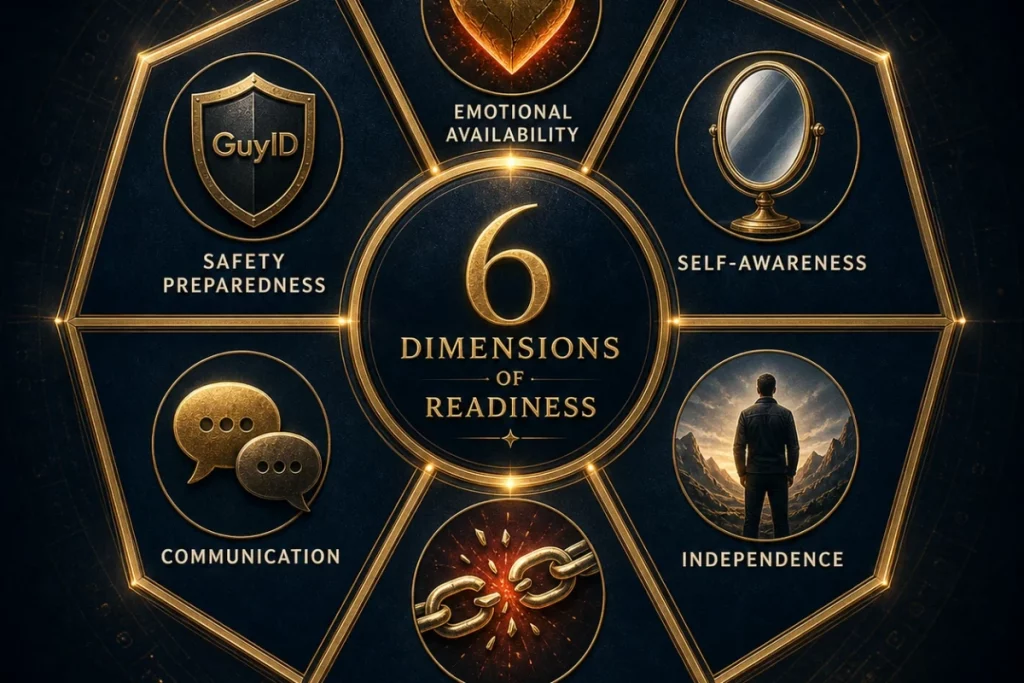
Before asking “Is this person right for me?” there’s a question most people skip: “Am I ready for a relationship right now?” Not ready in the abstract — everyone wants love eventually. Ready in the practical, emotional, and behavioral sense that determines whether a new relationship will thrive or repeat the patterns of the last one. This relationship readiness quiz evaluates where you actually stand across six dimensions that research links to relationship success: emotional availability, self-awareness, independence, past processing, communication readiness, and safety preparedness. Not to gatekeep dating — you don’t need a perfect score to start swiping — but to identify the specific areas where preparation now prevents heartbreak later.
The quiz below takes 5 minutes. The results include specific guidance for each dimension: what your score means, what to work on, and how to enter dating from a position of genuine readiness rather than reactive urgency.
Why Relationship Readiness Matters Before You Start Dating
Millions of Americans use dating apps. Some return to dating reactively — after a breakup they haven’t processed, during a period of loneliness they’re trying to solve externally, or without the communication skills, independence, or safety awareness that healthy relationships require. The result: patterns repeat, connections fail for the same reasons the last ones did, and the conclusion is “dating apps don’t work” when the actual issue is “I wasn’t ready.”
A relationship readiness quiz doesn’t tell you whether you’re “allowed” to date. It identifies the specific dimensions where preparation improves outcomes — so you can work on them before or during your dating experience rather than discovering them through another failed connection.
The 6 Dimensions of Relationship Readiness
| Dimension | What It Measures | Why It Matters |
|---|---|---|
| 1. Emotional Availability | Capacity to invest emotionally in someone new | Dating while emotionally unavailable wastes both people’s time |
| 2. Self-Awareness | Understanding of your own needs, patterns, and triggers | Without self-awareness, you repeat the same relationship mistakes |
| 3. Independence | Ability to function as a complete person without a partner | Dependency creates unhealthy dynamics from the start |
| 4. Past Processing | Degree to which previous relationships are emotionally resolved | Unprocessed past contaminates present connections |
| 5. Communication Readiness | Ability to express needs, set boundaries, and handle conflict | Communication is the skill that determines relationship survival |
| 6. Safety Preparedness | Knowledge and tools for safe online dating | Entering dating without safety literacy is entering vulnerable |
The Quiz: 24 Questions Across 6 Dimensions
For each question, answer honestly: Yes (2 points), Somewhat (1 point), or No (0 points). Track your score per dimension.
Dimension 1: Emotional Availability (8 points max)
Q1. Do you have emotional energy to invest in getting to know someone new — genuinely curious about their life, not just filling a void?
Q2. Can you be happy for a close friend’s relationship success without it triggering envy or sadness about your own situation?
Q3. Are you dating because you WANT a relationship — not because you’re lonely, bored, or trying to prove something to yourself or others?
Q4. Could you walk away from a match that isn’t right without feeling devastated — because your emotional stability doesn’t depend on any single dating outcome?
Dimension 2: Self-Awareness (8 points max)
Q5. Can you articulate what you’re looking for in a partner — specific qualities, not just “someone nice” or “someone who gets me”?
Q6. Do you understand the patterns in your past relationships — what went wrong, what your role was, and what you’d do differently?
Q7. Can you identify your own relationship red flags — the behaviors you’re drawn to that historically lead to unhealthy dynamics?
Q8. Do you know your attachment style — and how it affects your behavior in relationships (anxious pursuit, avoidant withdrawal, secure communication)?
Dimension 3: Independence (8 points max)
Q9. Do you have a life you enjoy OUTSIDE of dating — friends, hobbies, goals, routines — that would continue unchanged if you stayed single for another year?
Q10. Can you spend a weekend alone — no partner, no dates, no romantic texting — and feel content rather than anxious or incomplete?
Q11. Is your self-worth internally generated — based on who you are and what you’ve built — rather than dependent on external validation from a partner?
Q12. Are your finances, living situation, and daily life stable enough that a partner would be an addition to a functioning life — not a rescue from a struggling one?
Dimension 4: Past Processing (8 points max)
Q13. Can you think about your most recent ex without strong emotional charge — neither intense anger nor lingering longing?
Q14. Have you stopped checking your ex’s social media, comparing new matches to your ex, or using dating as a way to “get over” them?
Q15. Could you genuinely tell a new match about your past relationships with balance — acknowledging your own role rather than exclusively blaming your ex?
Q16. If your ex contacted you tomorrow wanting to reconcile, would you have clarity about your response — rather than being thrown into emotional confusion?
Dimension 5: Communication Readiness (8 points max)
Q17. Can you express what you need from a partner directly — without hinting, testing, or expecting them to “just know”?
Q18. Can you set and maintain boundaries — saying no to things that violate your values, even when it risks the other person’s displeasure?
Q19. Can you disagree with someone you care about without either shutting down, escalating to anger, or abandoning your position to keep the peace?
Q20. Can you receive feedback or criticism from a partner without becoming defensive — taking the useful parts and addressing legitimate concerns?
Dimension 6: Safety Preparedness (8 points max)
Q21. Do you know how to identify a fake dating profile — and do you screen every match before investing conversation time?
Q22. Do you have a first date safety protocol — public venue, friend informed, time boundary, separate transportation?
Q23. Do you know the warning signs of romance scams and emotional manipulation patterns?
Q24. Do you use verification tools — GuyID screening, Trust Profile checks, video calls — as standard practice before meeting anyone from an app?
Scoring and Interpreting Your Results
Per-Dimension Scores (0-8 each)
| Score | Assessment | What It Means |
|---|---|---|
| 7-8 | Strong — this dimension is ready | This area is a strength you’ll bring into dating. Maintain it. |
| 5-6 | Good — minor growth areas | Solid foundation with room for continued development. Date with awareness of the gap. |
| 3-4 | Developing — this area needs active attention | This dimension may create challenges in dating. Active work recommended — before or alongside dating. |
| 0-2 | Not yet ready in this dimension | This area is likely to undermine new relationships. Consider focused development before investing in dating. |
Total Score (0-48)
| Total | Overall Readiness | Guidance |
|---|---|---|
| 40-48 | Highly ready | You’re entering dating from a strong foundation. Focus on the 1-2 dimensions below 7 while dating actively. |
| 30-39 | Generally ready with growth areas | Ready to date with awareness. Identify your weakest 2 dimensions and work on them actively. They’re your relationship risk areas. |
| 20-29 | Some preparation needed | Consider focused work on your lowest-scoring dimensions before heavy dating investment. Date casually while building readiness. |
| 0-19 | Significant preparation recommended | Multiple dimensions need development. Dating now risks repeating patterns. Invest in the lowest-scoring areas first — therapy, self-development, safety education — then re-assess. |
💡
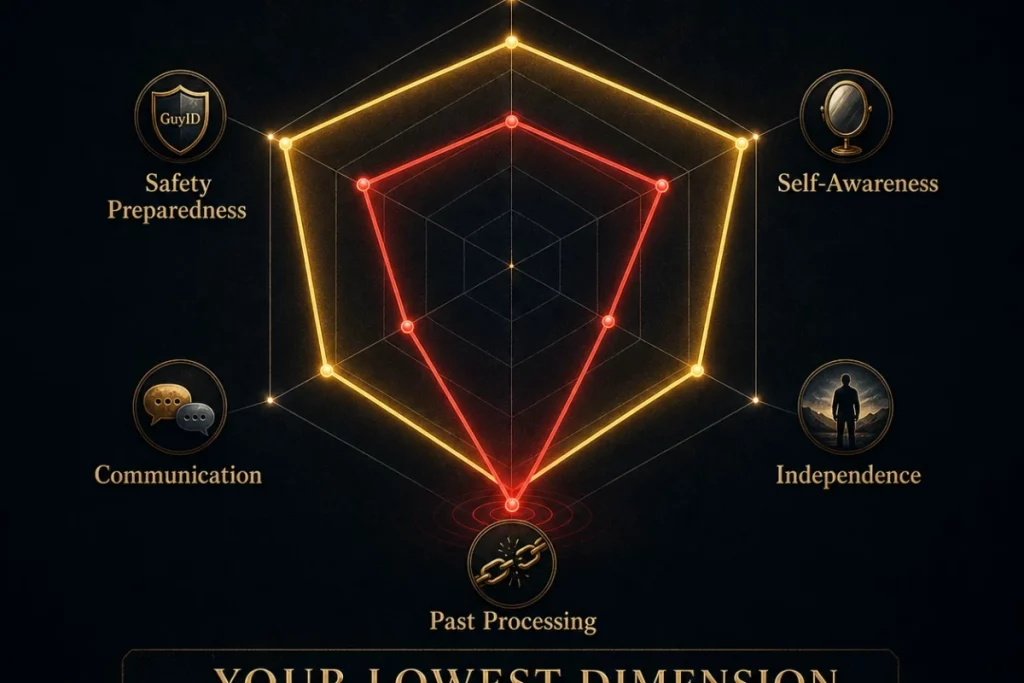
The Dimension That Matters Most Your lowest-scoring dimension — not your total — predicts your biggest dating challenge. A total of 38 with a 2 in Past Processing means you’ll bring unresolved history into every new connection. A total of 35 with a 1 in Safety Preparedness means you’re emotionally ready but physically/financially vulnerable. Address your lowest dimension first — it’s the weakest link in your readiness chain.
Inline visual 1
Dimension-by-Dimension Guide: What Each Score Means
If Emotional Availability Is Low (0-4)
You may be dating to fill a void rather than to build a connection. Common causes: recent loss (breakup, grief, life change), depression or emotional exhaustion, or using dating as distraction from other life challenges. Before investing: identify what you’re actually seeking. If it’s companionship to address loneliness rather than genuine interest in knowing another person, the relationships you form will be built on need rather than connection — and that foundation doesn’t hold.
If Self-Awareness Is Low (0-4)
You’re likely to repeat relationship patterns without understanding why. Common gap: not having examined what went wrong in past relationships or what draws you to certain types. Before investing: journal about your last 2-3 relationships — what attracted you, what went wrong, and what your contribution was. If the narrative is “they were all terrible” with zero self-reflection, the common denominator (you) hasn’t been examined. Consider therapy focused on relationship patterns.
If Independence Is Low (0-4)
You may enter dating seeking completion rather than companionship. Dependency at the start creates unhealthy dynamics: the partner becomes responsible for your happiness, your emotional regulation, and your sense of worth. Before investing: build the life that makes you whole independent of a partner — friendships, hobbies, goals, routines, and self-worth that exist regardless of relationship status. A partner should add to a full life, not fill an empty one.
If Past Processing Is Low (0-4)
Unresolved past will contaminate every new connection. Signs: still emotionally activated by your ex (anger, longing, obsessive checking), comparing every match to your ex, or dating to “win” the breakup rather than because you’re genuinely ready. Before investing: complete the emotional processing. This might require time, therapy, or honest conversations with trusted friends. The benchmark isn’t “I’m over them” — it’s “I can think about them with neutral reflection rather than emotional charge.” See the post-divorce dating readiness guide for a deeper framework.
If Communication Readiness Is Low (0-4)
Relationships live or die on communication. If you can’t express needs directly, set boundaries, handle disagreement constructively, or receive feedback without defensiveness — every relationship will struggle with the same friction regardless of partner quality. Before investing: practice communication skills in non-romantic contexts. Therapy, communication workshops, or even books on nonviolent communication build the muscles that relationship survival requires.
If Safety Preparedness Is Low (0-4)
You are entering an environment where fake profiles and romance scams are documented risks — without the screening skills, red flag recognition, or verification tools that protect you. This is the most fixable readiness dimension — because safety literacy is learnable in hours, not months. Start with: the proactive safety framework, GuyID’s free screening tools (learn them in 5 minutes), and the first date safety protocol. Build your GuyID Trust Profile (20 minutes) to establish both your own verification and the screening mindset.
How to Improve Before You Start (Or While You’re Dating)
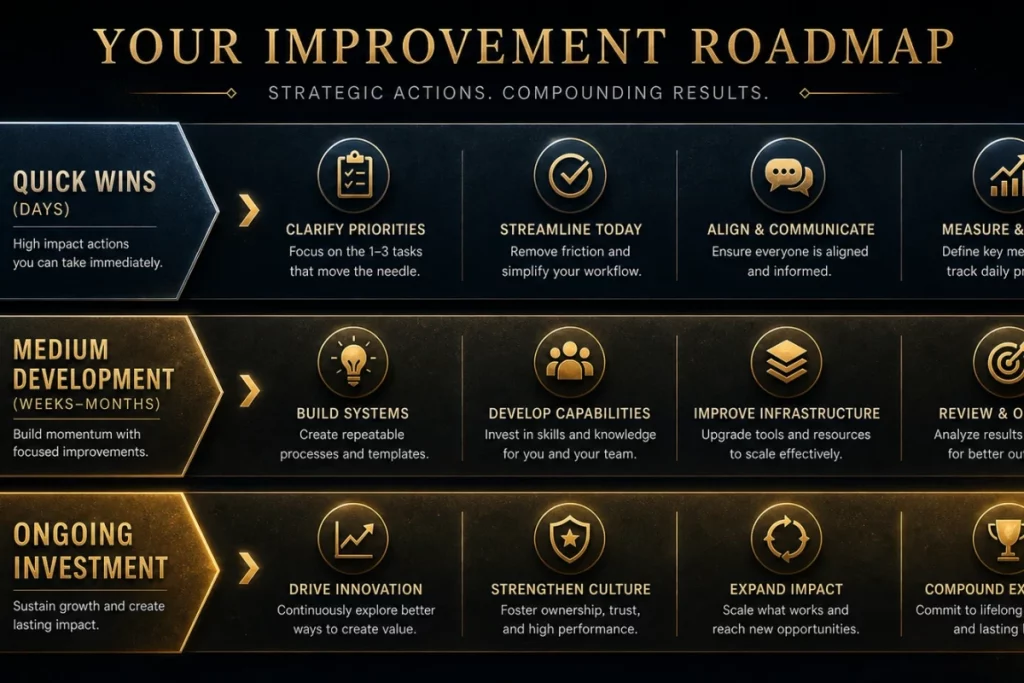
Quick Wins (Fixable in Days)
☐ Safety preparedness: learn GuyID free tools (5 min), read the first date safety guide (10 min), build your Trust Profile (20 min)
☐ Self-awareness: write down what you want in a partner (specific qualities, not abstractions)
☐ Communication: practice stating one need directly this week in any context — work, friendship, family
Medium-Term Development (Weeks to Months)
☐ Past processing: journal about your last relationship — your role, the patterns, what you’d change
☐ Independence: build one new routine or friendship that’s entirely yours
☐ Emotional availability: assess honestly whether you’re dating from desire or from need — and address the need independently
Ongoing Investment
☐ Therapy or counseling focused on relationship patterns (if dimensions 1-5 are below 4)
☐ Continued safety education as threats evolve — AI scams, deepfakes, new manipulation techniques
☐ Regular self-reassessment: retake this quiz every 3-6 months to track development
Inline visual 2
Summary: Ready Isn’t Perfect — Ready Is Prepared
The relationship readiness quiz doesn’t produce a binary answer — “ready” or “not ready.” It maps your preparedness across six dimensions, identifies your strengths and gaps, and provides specific guidance for closing the gaps before or during dating. Nobody scores 48/48. Everyone has growth areas. The value isn’t achieving perfect readiness — it’s knowing WHERE you’re prepared and where you’re vulnerable, so you can date with awareness rather than blind hope.
Your lowest-scoring dimension is your highest-priority development area — because it’s the dimension most likely to undermine a new relationship regardless of your other strengths. Address it directly: through self-work, therapy, safety education, or the specific guidance above. And re-assess periodically — readiness is dynamic, not static. Where you are today isn’t where you’ll be in six months.
For safety preparedness specifically — the fastest-fixable dimension: GuyID’s free tools (learn in 5 minutes), the proactive safety framework (read in 10 minutes), and your GuyID Trust Profile (build in 20 minutes). In under 30 minutes, one of your six dimensions can move from “not ready” to “strong.” Start there.
Frequently Asked Questions
How do I know if I’m ready for a relationship?
Do I need a perfect score to start dating?
What if I scored low on safety preparedness?
How long after a breakup should I wait to date?
Why is safety preparedness a relationship readiness dimension?
Should I retake this quiz periodically?
Evidence Note
The FTC explains that romance scammers use fake dating profiles and eventually ask for money. That makes basic scam awareness a relevant part of readiness for online dating.