Free Tools
Catfish Probability Detector
Check whether a dating profile has suspicious identity or photo signals.
Dating Bio Red Flag Detector
Review a bio for scam, pressure, or trust-warning language.
Dating Safety Checklist
Use free GuyID tools before moving from chat to a real date.
Next step
Create your GuyID trust profile
Share consent-based trust signals before a date without turning the conversation into an interrogation.
Romance scams extract $1.3 billion annually from Americans (FTC, 2026). Deepfakes defeat selfie verification. AI chatbots manage 60+ emotionally intelligent messages per 12 hours. Every technological defense the dating industry deploys, scammers find a technological counter. But there’s one defense mechanism that romance scam operations structurally cannot defeat: social vouching. A scammer can generate a fake face. A scammer can write a fake bio. A scammer can deepfake a video call. A scammer cannot manufacture a network of real humans who publicly vouch for a fictional person’s character. Understanding how social vouching prevents romance scams reveals why this human trust layer is the structural barrier that breaks the romance scam business model at its foundation.
This guide maps the specific mechanisms through which social vouching disrupts romance scam operations — at the identity layer, the character layer, the scalability layer, and the temporal layer — and explains why each mechanism targets a specific vulnerability in the scam playbook that technological defenses alone cannot reach.
NavigateTable of Contents21 sections
⚡ Key Takeaways
Every tech defense has a tech counter — vouching doesn’t
Stolen photos → AI-generated photos. Selfie verification → deepfakes. Grammar tells → AI chatbots. Each tech defense is neutralized by tech advancement. Social vouching requires real humans — a requirement no technology can automate or counterfeit.
Vouching breaks the romance scam business model at four points
Can’t automate real humans. Can’t eliminate accomplice risk. Can’t manufacture diverse networks quickly. Can’t invest months in vouching while executing weeks-long scams. Each barrier targets a specific operational limitation.
The cost of faking vouches exceeds the return of most scam operations
Recruiting real accomplices, maintaining their cooperation, and building convincing networks costs more and takes longer than the scam’s extraction window allows — making fake vouching economically unviable for most operations.
Combined with government ID, vouching creates a double lock scammers can’t pick
Government ID blocks fake identities. Social vouching blocks verified identities with bad character. Neither alone is sufficient — together, they catch every scam vector from basic catfish to sophisticated pig butchering.
Why Technological Defenses Alone Keep Failing Against Romance Scams
Before examining how social vouching prevents romance scams, understanding why every technological defense deployed so far has been countered explains why the human layer is necessary.
| Tech Defense | What It Does | Tech Counter | Result |
|---|---|---|---|
| Reverse image search | Finds stolen photos | AI-generated photos (originals, no source) | Detection neutralized for AI photos |
| Selfie verification badges | Matches face to photos | Deepfake face-swapping | Badge granted to fake identity |
| AI message scanning | Detects scam-pattern messages | AI chatbots writing unique, non-templated messages | Messages pass pattern detection |
| Behavioral AI | Flags suspicious user behavior | Manual operation mimicking genuine user behavior | Scam behavior indistinguishable from genuine |
| Device fingerprinting | Links multiple accounts to same device | Virtual machines, device spoofing | Fingerprint detection evaded |
| Government ID verification | Confirms legal identity | ❌ No tech counter exists (AI can’t generate gov docs) | ✅ Identity confirmed — but character unassessed |
| Social vouching | Confirms character via real humans | ❌ No tech counter exists (can’t automate real humans) | ✅ Character confirmed — scam model broken |
Five of seven defenses have been technologically countered. Two remain structurally immune: government ID (because AI can’t generate physical documents) and social vouching (because technology can’t manufacture real humans). These two form the dating trust score foundation — the double barrier that addresses the limitations of every other defense.

The Four Ways Social Vouching Breaks the Romance Scam Business Model
Social vouching prevents romance scams by targeting four specific operational vulnerabilities that every romance scam operation shares — regardless of technique, target demographic, or geographical origin.
Barrier 1: Real Humans Can’t Be Automated
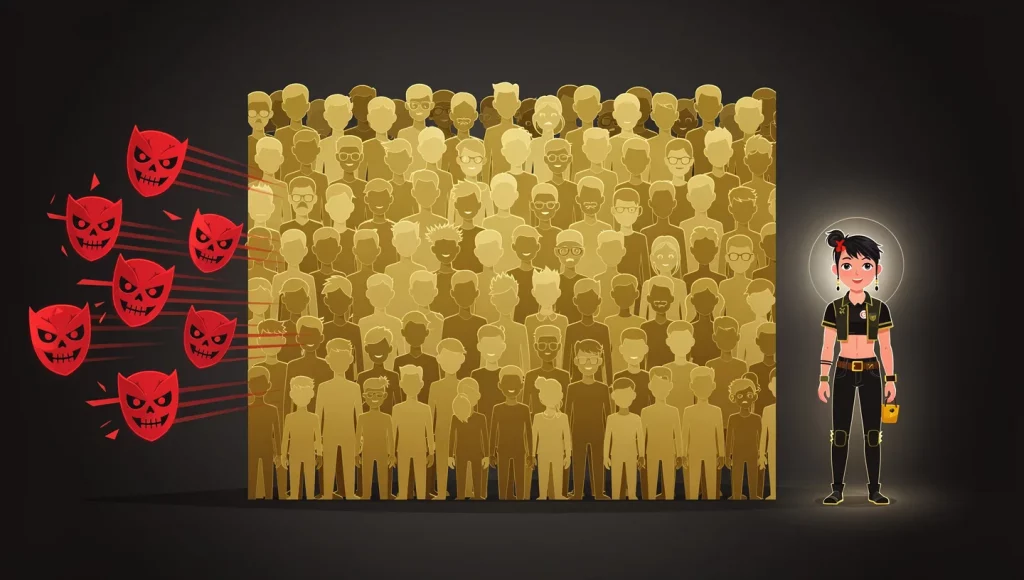
Creating fake profiles is automated. Convincing real humans to vouch is not. The human requirement is the scalability ceiling that breaks the volume-dependent scam model.
Barrier 2: Accountability Creates Personal Risk
Each voucher attaches their real identity to the vouch. Accomplices face reputational and legal exposure. The personal cost of vouching for a scammer deters all but the most committed co-conspirators.
Barrier 3: Diverse Networks Can’t Be Manufactured Quickly
A meaningful vouching network — friends, colleagues, community connections — reflects years of real relationships. Scam operations measure timelines in weeks. The temporal mismatch is unbridgeable.
Barrier 4: Vouching Investment Conflicts with Scam Timelines
Building a convincing vouching network requires sustained, consistent investment. Operating a scam requires rapid deployment and extraction. You can’t do both simultaneously.
Barrier 1: Real Humans Can’t Be Automated
The romance scam industry’s core advantage is automation and scale. A single operator manages dozens of fake profiles simultaneously — AI-generated photos, chatbot conversations, and templated escalation scripts across multiple targets. The marginal cost of each additional fake profile approaches zero. This scalability is what makes romance scams a billion-dollar industry.
Social vouching breaks this scalability. Each vouch requires a real human — a person with their own identity, their own life, their own social connections, and their own willingness to participate. You can’t generate real humans with AI. You can’t script real humans to vouch with chatbots. You can’t create real humans in bulk with automation. The human requirement imposes a cost ceiling on fake identity creation that technology cannot remove.
The Economics
Creating 100 fake dating profiles with AI: minutes, effectively free. Getting 100 fake dating profiles vouched for by real humans: impossible at scale, prohibitively expensive even for a few. The cost structure of genuine vouching (free, because real friends vouch willingly) versus fake vouching (expensive, because accomplices must be recruited and compensated) creates an asymmetry that favors genuine users.
Barrier 2: Accountability Creates Personal Risk for Accomplices
Every vouch on GuyID is identity-attached — the voucher’s real name is associated with the vouch, visible on the Trust Profile. This accountability chain creates personal risk for anyone who vouches for a scammer.
What Happens to Vouchers of Scammers
If a scammer is identified and reported, every person who vouched for them is also identified — their names are attached to a confirmed fraud profile. This creates multiple risk dimensions for would-be accomplice vouchers:
- Reputational damage: Being publicly associated with a confirmed scammer damages the voucher’s own trustworthiness — on GuyID and beyond.
- Pattern flagging: A person whose vouches are repeatedly associated with reported scam profiles is flagged — their future vouches carry reduced or negative trust value.
- Potential legal exposure: Knowingly vouching for a fraudulent identity could constitute aiding fraud — particularly if the scam operation is under law enforcement investigation.
These risks make casual accomplice vouching unattractive. A scammer asking an acquaintance to vouch is asking them to attach their real identity to a fraud operation with personal, reputational, and potentially legal consequences. Most people — even those sympathetic to the scammer personally — decline when the risk is made clear. The accountability chain is the natural deterrent that makes fake vouching prohibitively risky.
Barrier 3: Diverse Networks Can’t Be Manufactured Quickly

A strong vouching network on GuyID includes vouches from diverse life contexts — friends, colleagues, community connections — each representing a different relationship and a different character assessment context. This diversity is what makes the network credible and what the vouching strategy guide emphasizes.
Why Diversity Defeats Scammers
A genuine person asking five friends from three life contexts to vouch: easy, natural, accomplished in a day. A scam operation trying to replicate this: five accomplices from apparently different life contexts, each with their own established identities and social presence, all willing to participate in fraud. The genuine version happens naturally. The fake version requires casting, coordination, and maintenance — resembling a theatrical production more than a simple ask.
Thin Networks vs Authentic Networks
Even if a scammer recruits 2-3 accomplices, the resulting vouching network is thin: a small number of vouchers, all from one context (the scammer’s personal circle), possibly with recently created or sparse profiles themselves. An authentic network has breadth (multiple contexts), depth (established voucher identities), and organic growth (new vouches added over time). The structural difference between a manufactured thin network and an authentic broad network is detectable through network analysis — and intuitively apparent to any viewer evaluating the Trust Profile.
Barrier 4: Vouching Investment Conflicts with Scam Timelines
Romance scam operations are optimized for speed: create a profile, match with targets, build emotional dependency over days to weeks, extract money, abandon the identity, repeat. The typical scam cycle runs 2-8 weeks from initial contact to extraction. Pig butchering operations extend this to months — but even these have finite timelines driven by the need to extract before the target’s suspicion grows.
The Temporal Conflict
Building a meaningful vouching network — one that would convince a cautious match — requires sustained investment over time: cultivating relationships, maintaining consistency, earning vouches from people who know you across contexts. This investment timeline conflicts directly with the scam operational timeline. A scammer who invests months building a convincing vouching network for one identity is spending months of operational capacity on one profile — when the same months could be spent operating dozens of unverified profiles on platforms without vouching requirements.
The math doesn’t work for scammers: invest months to build a convincing vouching network for one verified scam identity (high cost, one target), or operate dozens of unverified identities simultaneously (low cost, many targets). The economically rational choice for scam operations is to avoid vouching-required platforms entirely — which is precisely the deterrent effect that social vouching creates.
Why This Matters for Dating Safety
When asking for Trust Profiles before meeting becomes normalized — when women routinely check for TRUSTED tier before engaging — scam operations face a market where unverified profiles receive increased scrutiny and verified profiles require investment scammers can’t efficiently make. The marketplace shifts: operating without vouches becomes harder (targets are cautious), and operating with fake vouches becomes uneconomical (the cost exceeds the return). Both paths lead scam operations away from vouching-enabled platforms.
How Social Vouching Disrupts Each Major Romance Scam Type
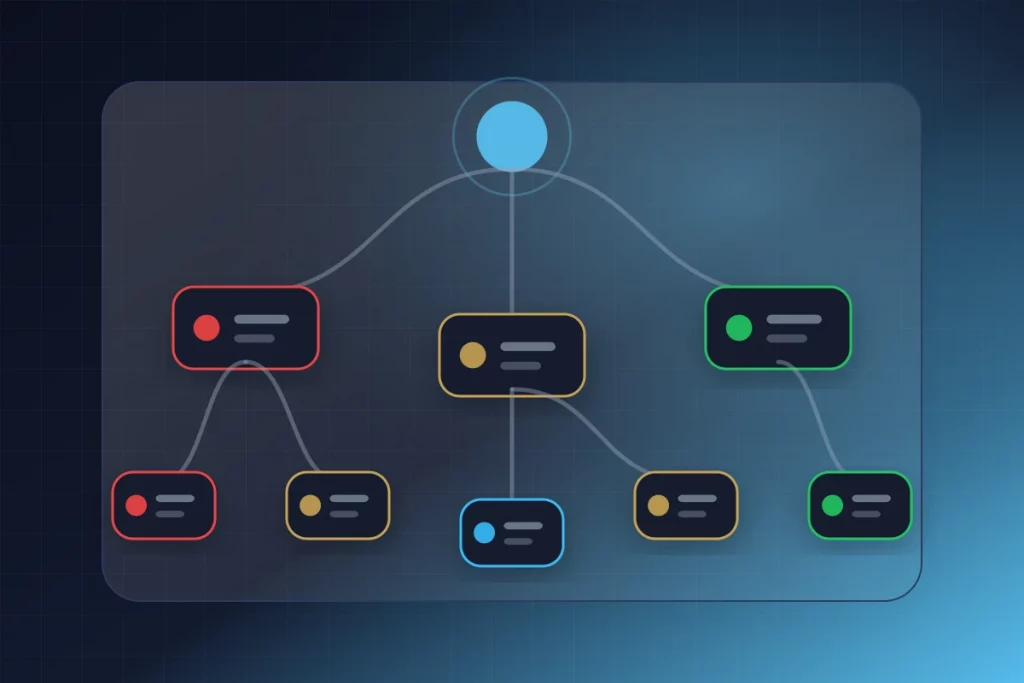
Different scam types face different vouching barriers. Here’s how social vouching prevents each major romance scam category.
| Scam Type | How It Currently Operates | How Vouching Disrupts It |
|---|---|---|
| Catfishing | Stolen/AI photos + fake identity + emotional manipulation | No real humans to vouch for a fictional person. Zero vouches = zero character confirmation. Target sees unvouched profile and applies maximum scrutiny |
| Romance scam (financial extraction) | Fake identity → emotional dependency → money requests | Can’t build vouching network for disposable identity. The identity is abandoned after extraction — vouching investment is wasted. Targets checking Trust Profiles filter out unvouched matches |
| Pig butchering | Longer relationship → fake investment platform → high-value extraction | Even with extended timelines, building diverse vouching networks for each fake identity is operationally prohibitive. The per-identity investment conflicts with the syndicate model of managing many identities |
| AI-generated identity scams | AI photos + chatbot conversation + deepfake video | AI generates everything digital. AI cannot generate real humans to vouch. The one dimension AI can’t replicate is the one vouching requires |
| Data harvesting | Fake profile → conversation → extract personal info | Unvouched profile triggers scrutiny from safety-aware targets. Privacy-conscious users check Trust Profiles before sharing personal information |
Across every scam type, the disruption mechanism is consistent: vouching requires real humans that scam operations can’t produce, and the absence of vouches signals risk to safety-aware targets. The more normalized Trust Profile checking becomes, the less viable unvouched scam profiles become.
The Verification Stack: Why Vouching + Government ID + Tiers Is the Complete Defense
Social vouching is most powerful not in isolation but as part of GuyID’s three-pillar verification stack — each pillar catching what the others miss.
Pillar 1: Government ID — Catches Fake Identities
Government ID verification eliminates every fake identity — stolen photos, AI-generated personas, catfish. No legitimate government document exists for a fictional person. But: ID verification doesn’t assess character. A real person with a verified identity can still be dishonest, unfaithful, or manipulative.
Pillar 2: Social Vouching — Catches Bad Character
Social vouching assesses character through the judgment of real people who know the person. It catches what ID verification misses: verified identities with untrustworthy behavior, dishonest people whose documents are legitimate, and manipulators who pass every technical check but fail the human assessment. But: vouching depends on honest vouchers and is most meaningful when paired with confirmed identity.
Pillar 3: Progressive Tiers — Catches Hit-and-Run Operations
Trust Tiers track sustained trustworthiness over time. They catch what point-in-time checks miss: disposable identities used for weeks then abandoned, recently created scam accounts, and behavior changes that occur after initial verification. But: tiers need ID and vouches as the foundation — temporal consistency without identity and character confirmation is meaningless.
The Triple Lock
Together, the three pillars create a triple lock that no romance scam operation can pick:
- Fake identity? → Government ID catches it (no legitimate document for fictional person)
- Real identity, bad character? → Social vouching catches it (real people won’t vouch for someone they don’t trust)
- Real identity, vouched, but disposable? → Progressive tiers catch it (can’t advance through tiers while operating a short-term scam)
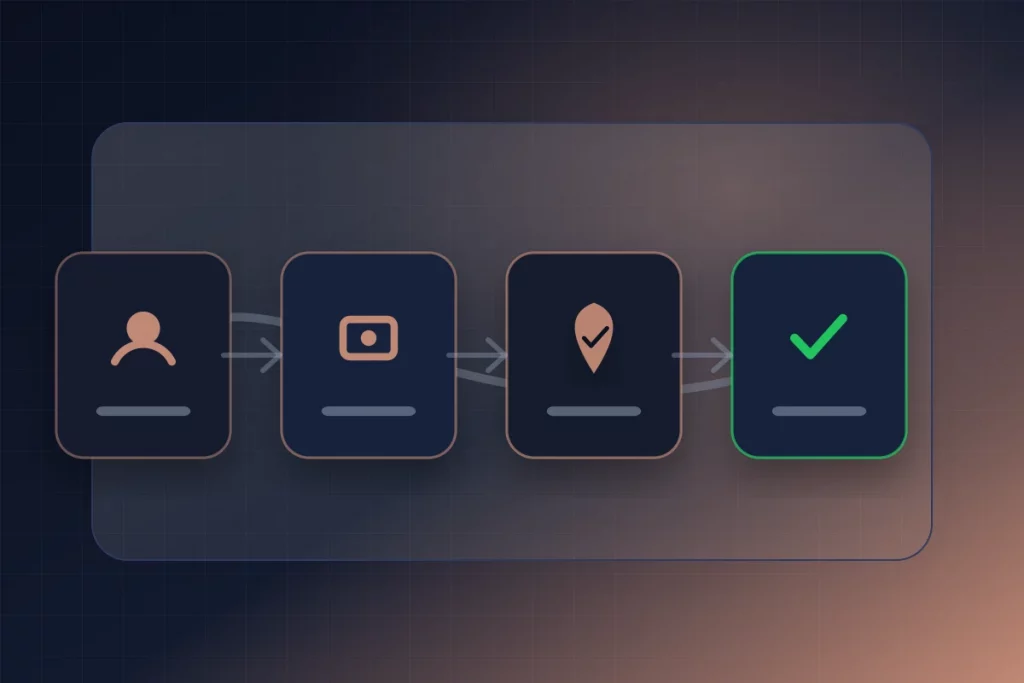
A scammer must simultaneously defeat all three pillars to achieve a meaningful Trust Tier on GuyID. Each pillar is independently difficult to defeat. The combination is structurally impossible at scale — while being naturally achievable for every genuine person.

Summary: The Human Barrier Scammers Can’t Cross
Every technological defense in dating — reverse image search, selfie verification, AI message scanning, behavioral analysis, device fingerprinting — has been countered by advancing technology. The arms race between detection and evasion produces continuous escalation without resolution. But social vouching operates outside this arms race because it requires the one thing technology cannot produce: real humans who publicly confirm a real person’s character.
Social vouching prevents romance scams through four structural barriers: real humans can’t be automated (scalability ceiling), accountability creates personal risk for accomplices (deterrent effect), diverse networks can’t be manufactured quickly (quality ceiling), and vouching investment conflicts with scam timelines (temporal mismatch). Each barrier targets a specific operational vulnerability in the romance scam model. Together, they make meaningful vouching structurally impossible for fraud operations — while remaining naturally easy for genuine people.
Combined with government ID verification (catching fake identities) and progressive Trust Tiers (catching disposable operations), social vouching forms the character layer of a triple-lock defense that addresses every known romance scam vector. The trust gap in online dating persists because platforms deploy only technological defenses that the scam industry has learned to counter. Social vouching adds the human defense that the scam industry cannot counter — today, and in every future AI era, because the requirement for real humans is permanent.
Build your vouching network. Ask the people who trust you to say so. Check your matches’ Trust Profiles for vouches before meeting. And report every scam you encounter — because every report trains the system that protects the next person. The human barrier is the one scammers can’t cross. Every vouch strengthens it.
Tech Defenses Get Countered. Human Trust Doesn’t.
Social vouching on GuyID: real people confirming real character. The human trust layer that AI can’t generate, automation can’t fake, and scam operations can’t replicate at scale. Combined with government ID and Trust Tiers. Women check for free.
Build Your Vouched Trust Profile
Try Free Safety Tools
Frequently Asked Questions
How does social vouching prevent romance scams?
Can scammers fake social vouches?
Why can’t AI defeat social vouching like it defeats other defenses?
Is social vouching alone enough to prevent scams?
How should I use vouching information when evaluating a match?
Does social vouching help against pig butchering scams specifically?
How do I build my vouching network to signal I’m not a scammer?
Evidence note
NIST Digital Identity Guidelines distinguish identity proofing, authentication, and federation as separate parts of digital identity risk management (NIST, 2025).