Free Tools
Catfish Probability Detector
Check whether a dating profile has suspicious identity or photo signals.
Dating Bio Red Flag Detector
Review a bio for scam, pressure, or trust-warning language.
Dating Safety Checklist
Use free GuyID tools before moving from chat to a real date.
Next step
Create your GuyID trust profile
Share consent-based trust signals before a date without turning the conversation into an interrogation.
Your passport works in every country. Your driver’s license works in every state. Your credit score follows you to every bank. But your dating app verification badge? It works on exactly one platform — and vanishes the moment you step outside it. Cross-platform dating verification — trust that travels with the person, not the platform — isn’t a feature request. It’s the structural requirement that the $1.3 billion romance scam crisis (FTC, 2026) proves is overdue.
This guide makes the case for why cross-platform dating verification is necessary, why dating apps haven’t built it themselves, how platform-locked badges create the safety gaps that scammers exploit, and how GuyID implements the cross-platform model that the industry needs but no single platform will build.
NavigateTable of Contents28 sections
⚡ Key Takeaways
People date across platforms — verification should too
The average person uses 2-3 dating apps simultaneously and moves conversations through 3-5 channels before meeting. Verification locked to one app covers a fraction of the dating journey.
Platform-locked badges create the gap scammers exploit
Scammers push conversations to WhatsApp specifically because dating app safety features don’t follow.
No dating app will build cross-platform verification
Competitive dynamics prevent it. Tinder won’t build verification that helps Bumble users. Bumble won’t build trust infrastructure that works on Hinge. Cross-platform verification requires an independent layer — which is what GuyID provides.
Identity is personal, not platform-specific
Your identity doesn’t change when you switch apps. Your trustworthiness doesn’t reset at each transition. Cross-platform dating verification reflects this reality — attaching trust to the person, not the product.
The Multi-Platform Reality of Modern Dating
The argument for cross-platform dating verification starts with how people actually date in 2026 — not how dating app marketing imagines they do.
People Use Multiple Apps Simultaneously
The average active dater doesn’t commit exclusively to one platform. They maintain profiles on 2-3 apps — perhaps Hinge for serious dating, Bumble for its women-first model, and Tinder for the largest user base. They may also use Facebook Dating, OkCupid, or niche platforms depending on their demographics and preferences. Each platform sees only its own slice of the person’s dating activity. No platform sees the full picture.
Conversations Cross 3-5 Channels Before Meeting
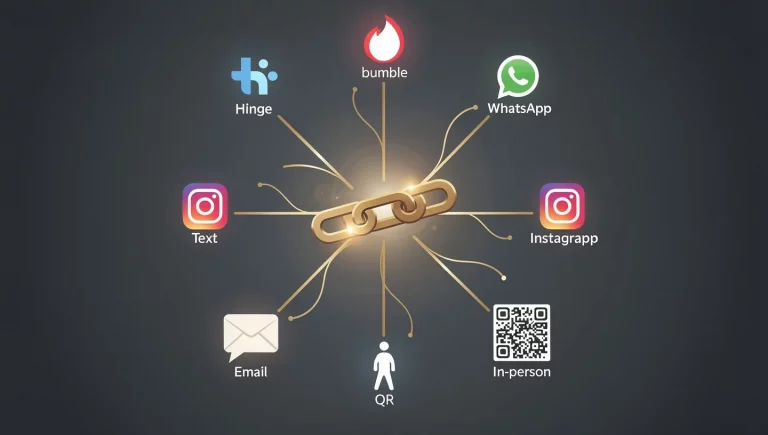
A typical dating interaction flows through multiple channels: match on Hinge → message on Hinge → exchange numbers → text → WhatsApp → phone call → Instagram follow → first date in person. Each channel transition represents a moment where the relationship deepens — and where platform-specific safety features may change or disappear entirely. By the time two people meet in person, they’ve typically communicated across 3-5 different channels — only one of which (the original dating app) had any verification infrastructure.
Trust Decisions Happen Off-Platform
The most consequential trust decisions in dating — sharing personal information, agreeing to meet in person, deepening emotional investment, considering financial trust — overwhelmingly happen off the dating app. They happen on WhatsApp, over phone calls, via text, at the coffee shop, and in the developing relationship. These are the moments where verification matters most — and they’re the moments where platform-locked badges are absent.
Why Platform-Locked Verification Is a Design Failure
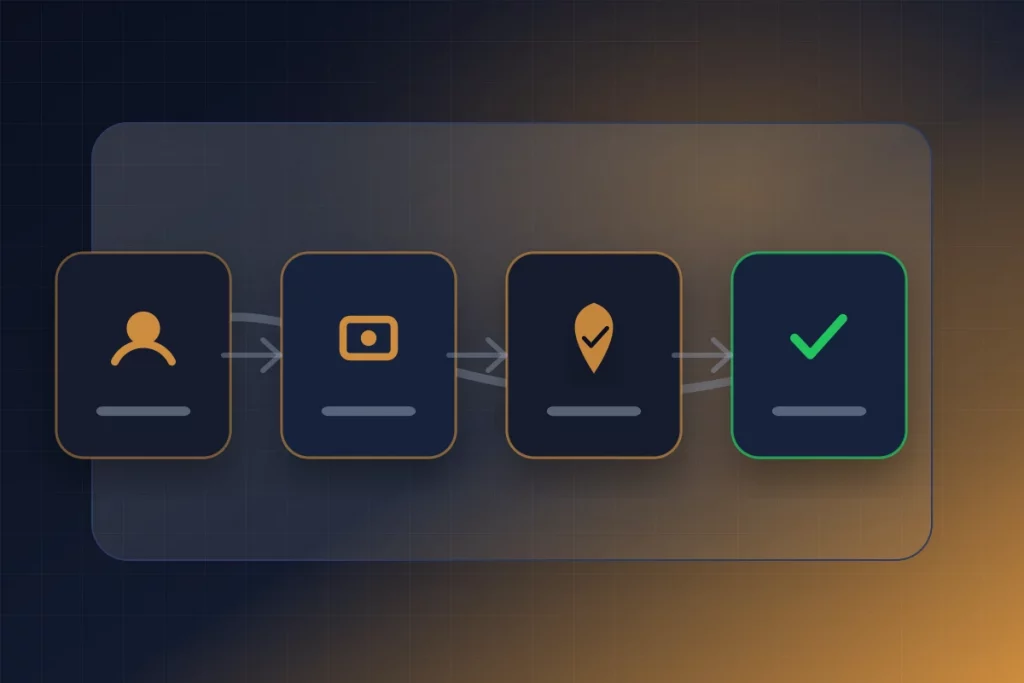
Platform-locked verification — badges that exist only within the issuing dating app — isn’t just limited. It’s a design failure that actively undermines the safety it claims to provide.
Failure 1: Verification Expires at the Worst Possible Moment
The dating app phase is the lowest-risk phase of any dating interaction. You’re in a monitored environment with reporting tools, messaging controls, and AI moderation protecting you. The off-platform phase — WhatsApp, phone, in-person — is the highest-risk phase, where scam extraction, identity deception, and physical safety threats primarily occur. Platform-locked verification protects you during the lowest-risk phase and abandons you during the highest-risk phase. A safety feature that disappears when danger increases is a design failure.
Failure 2: Verification Doesn’t Transfer Between Apps
A person who passes Hinge’s video verification and Bumble’s gesture verification has demonstrated their identity through two separate systems. But their Hinge badge isn’t visible on Bumble, and their Bumble badge isn’t visible on Hinge. A person you match with on Tinder who claims to also be verified on Bumble can’t prove it — because badges don’t transfer. The verification investment is duplicated across platforms but not shared — creating redundant effort with no cumulative benefit.
Failure 3: It Creates a False Sense of Continuous Safety
Users who see a verification badge on a dating app may unconsciously extend that trust to all subsequent interactions with the person — including off-platform channels where the badge doesn’t exist. “They were verified on Bumble” becomes a mental shortcut for “they’re verified” — even though the badge provides zero protection on WhatsApp, phone, or in person. The badge’s presence within the app creates a false perception of ongoing safety that the badge’s absence outside the app contradicts.
Failure 4: It Enables the Off-Platform Exploitation Model
The scam playbook specifically exploits the platform-lock: build initial trust on a dating app where the badge is visible and reporting tools exist, then migrate the target to WhatsApp where the badge disappears and no platform monitors the conversation. The trust built under the badge’s implied safety carries over to the unmonitored channel — where the scammer can operate freely. Platform-locked verification doesn’t just fail to prevent off-platform scams — it facilitates them by building trust in a controlled environment that the scammer then moves to an uncontrolled one.
The Scammer’s Platform Strategy
- Dating app (initial contact): The scammer creates a profile, possibly obtains a verification badge through deepfake or accomplice, and matches with targets. The dating app’s monitoring and moderation are active — limiting what the scammer can do.
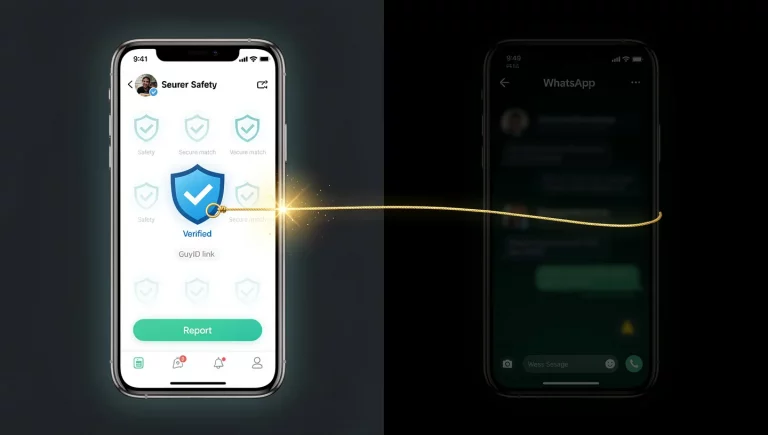
- WhatsApp migration (escape monitoring): Within days, the scammer pushes to move the conversation off-platform. “I’m rarely on the app — let’s talk on WhatsApp.” The target agrees because the transition feels natural. The scammer has now moved outside the dating app’s entire safety infrastructure.
- WhatsApp/phone (unmonitored exploitation): On WhatsApp, there are no dating-specific safety features, no AI scanning for romance scam patterns, no verification badges, and no reporting mechanism connected to the dating platform. This is where love-bombing escalates, emotional dependency deepens, and financial requests are eventually introduced.
- Financial extraction: The money request — whether for an “emergency,” an “investment opportunity,” or “customs fees” — happens on WhatsApp or phone, invisible to the dating platform that facilitated the initial connection.
The off-platform gap is the operational environment where virtually all romance scam financial extraction occurs. Platform-locked verification creates this gap. Cross-platform dating verification closes it.
The Math
The vast majority of this damage occurs on channels where dating app verification badges don’t exist. If verification followed the conversation instead of staying locked to the app, the scammer’s ability to operate in an unverified environment would be structurally eliminated.
Why Dating Apps Won’t Build Cross-Platform Verification Themselves
If cross-platform dating verification is so obviously needed, why hasn’t Tinder, Bumble, or Hinge built it? The answer is structural — rooted in competitive dynamics that prevent any single platform from solving the problem.
Reason 1: Competitive Moats
Verification badges are competitive features. If Hinge’s verification worked on Bumble, the competitive advantage disappears — users could verify once and benefit everywhere, reducing platform switching costs and weakening Hinge’s retention. No platform has an incentive to make its verification portable to competitors.
Reason 2: Data Walls
Each dating app’s verification is built on proprietary systems — Hinge’s video analysis, Bumble’s gesture matching, Tinder’s pose detection. These systems don’t interoperate because they weren’t designed to. Building interoperability would require data sharing agreements, technical standardization, and trust between competitors — none of which exist in the dating app market. Each platform’s verification is a walled garden by design.
Reason 3: No Off-Platform Incentive
Dating apps have no business incentive to protect users off-platform. Once a conversation moves to WhatsApp, the dating app can no longer monetize the interaction (no ad impressions, no premium feature usage, no engagement metrics). Investing in safety infrastructure for channels that generate zero revenue contradicts the business model. The off-platform gap persists not because platforms can’t address it but because there’s no business case for doing so.
Reason 4: First-Mover Disadvantage
The first platform to create portable verification that works on competitors’ platforms effectively subsidizes competitor safety — investing development resources to make competitor users safer. In a competitive market, this generosity is punished, not rewarded. The first mover bears the cost while competitors benefit for free.
Why an Independent Solution Is Necessary
The solution must come from an independent entity that isn’t competing with dating apps for users — one that works alongside all platforms, benefits all users, and is incentivized by trust rather than engagement metrics. This is the structural role that GuyID fills.
 How Cross-Platform Verification Should Work
The ideal cross-platform dating verification system has five essential properties — each addressing a specific limitation of platform-locked badges.
| Property | What It Means | Why It Matters |
|---|---|---|
| Platform-independent | Not hosted by or dependent on any dating app | Works across all platforms without competitive conflicts |
| Person-attached | Verification is linked to the person’s identity, not an app account | Follows the person through every channel transition |
| Identity-based | Confirms legal identity through government ID, not just photo matching | Provides the trust level that photo badges can’t |
| Progressive | Graduated trust levels rather than binary verified/not | Matches how trust actually develops in real relationships |
| Universally accessible | Checkable by anyone on any device without special apps or accounts | Removes barriers to trust verification at every stage |
Each property addresses a specific platform-lock limitation: independence solves the competitive conflict, person-attachment solves the transition gap, identity-basis solves the photo-only limitation, progression solves the binary problem, and universal access solves the friction barrier.
The GuyID Model: Cross-Platform Verification That Exists Today
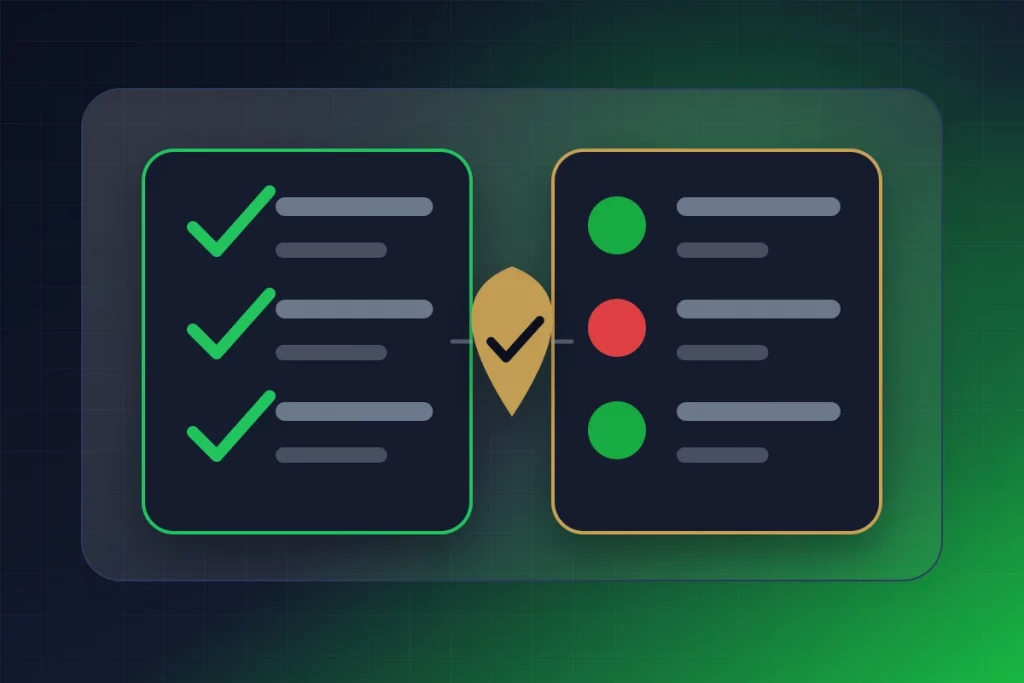
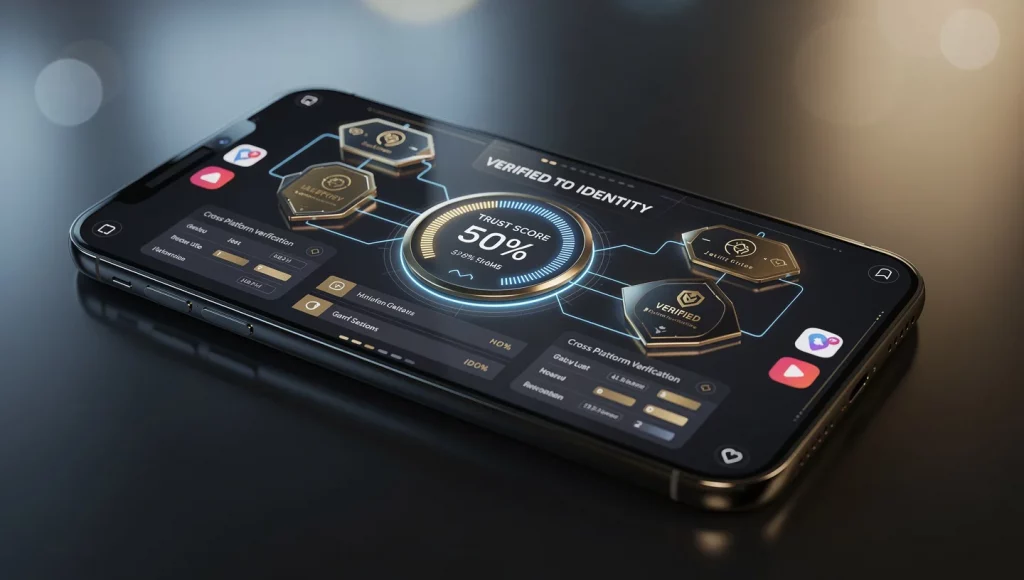
GuyID implements cross-platform dating verification through its Date Mode link — a shareable Trust Profile that works everywhere dating happens.
How It Satisfies Each Requirement
- Platform-independent: GuyID is not owned by or affiliated with any dating app. It works alongside Tinder, Bumble, Hinge, POF, Facebook Dating, and every other platform — without competitive conflicts.
- Person-attached: The Trust Profile is linked to your government-verified identity — not to any app account. It travels with you across every channel because it’s attached to you, not a platform.
- Identity-based: Government ID biometric matching confirms legal identity — the verification level used in banking, not the selfie-matching used in dating apps. AI-proof because government documents can’t be AI-generated.
- Progressive: Six Trust Tiers (GHOST → LEGEND) provide graduated trust assessment — not binary verified/not. Each tier communicates proportionally different trust information.
- Universally accessible: Click a URL, see the Trust Profile. No app download, no account creation, no login required.
The Coverage Comparison
A dating app badge works on 1 platform. GuyID’s Date Mode link works on every platform, every messaging app, every communication channel, and in person — 11 of 11 channels versus 1 of 11. The difference isn’t marginal.
What the Future Looks Like When Verification Is Portable
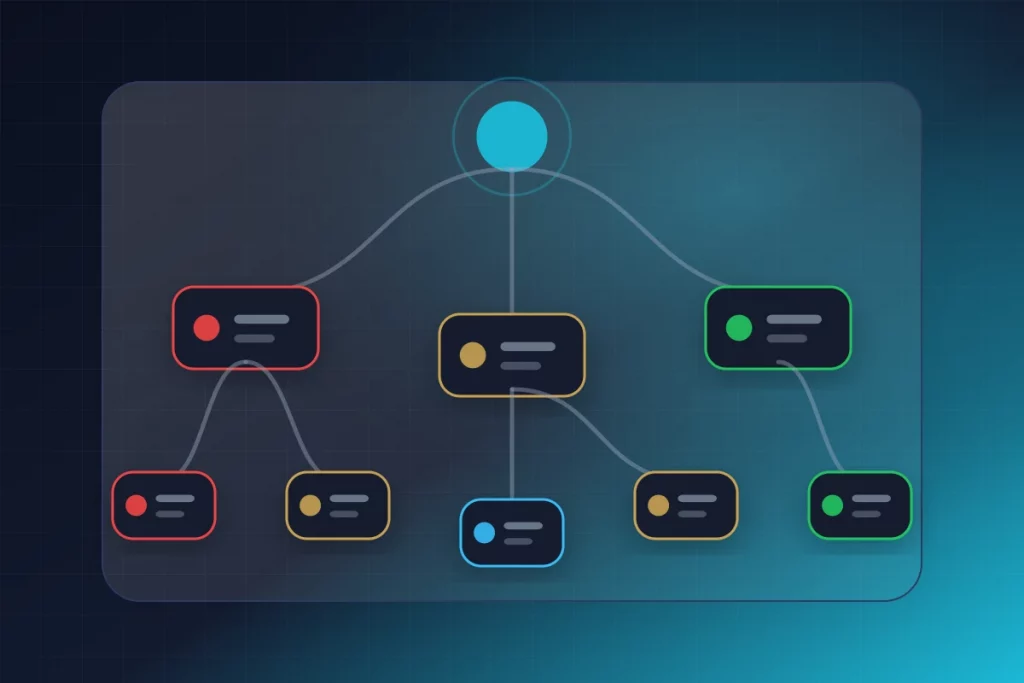
When cross-platform dating verification becomes normalized — when sharing a Trust Profile link is as standard as sharing a phone number — the dating ecosystem transforms.
For Users: Verified Trust at Every Moment
No more trusting a badge that vanishes on WhatsApp. No more wondering if the person you’re meeting is who they claimed on the app. No more relying on conversation chemistry as a proxy for identity verification. At every stage — matching, messaging, transitioning, meeting, and deepening — verified trust is accessible, checkable, and persistent. The trust gap closes because trust information follows the relationship rather than staying behind on the app.
For the Industry: A Universal Trust Layer
Dating apps can focus on what they do best — matching algorithms, user experience, and community features — while the trust verification layer is handled by an independent system that all platforms benefit from equally. No platform needs to build cross-platform verification itself. No platform subsidizes competitor safety. Every platform’s users are safer because an independent trust layer supplements what platform-specific features provide. The competitive dynamics that prevent platforms from solving the problem individually are bypassed entirely.
For Scammers: Structural Impossibility
When verified identity is the norm — when matches expect to see a Trust Tier before engaging — disposable anonymous identities become structurally unviable. Scam operations that depend on creating and abandoning fake identities across platforms face a market where unverified profiles are treated with the scrutiny they deserve. The business model of romance fraud — which depends on anonymous operation across unverified channels — breaks when cross-platform verification removes the anonymity.
The anxiety that accompanies every dating interaction — “Is this person who they claim?” — has a definitive answer available at every stage, on every channel, free to check.
Summary: Verification Should Follow People, Not Platforms
The case for cross-platform dating verification is simple: people date across platforms, but verification is locked to one. Relationships develop through 3-5 channels, but safety features cover one. The highest-risk moments (off-platform transitions, in-person meetings) receive zero verification coverage from platform-locked badges.
Dating apps won’t build cross-platform verification themselves — competitive moats, data walls, no off-platform incentive, and first-mover disadvantage prevent it structurally. The solution must come from an independent trust layer that works alongside all platforms and benefits all users equally.
GuyID is that layer. Platform-independent. Person-attached. Identity-based (government ID). Progressive (six Trust Tiers). Universally accessible (click a link, see the profile, free for women). Working today on every platform, every channel, and at every stage of every relationship.
Your identity doesn’t reset when you switch from Hinge to WhatsApp. Your trustworthiness doesn’t vanish when you leave the dating app. Your verification shouldn’t either. Cross-platform dating verification is the structural solution to the structural problem. Build your portable Trust Profile. Share it everywhere. And join the future where verification follows people, not platforms.
Your Identity Doesn’t Change Between Apps. Your Verification Shouldn’t Either.
GuyID is the independent trust layer that works across every dating app, every messaging channel, and every relationship stage. Government ID + social vouching + Trust Tiers + one shareable link. Women check for free.
Build Your Cross-Platform Trust Profile
Try Free Safety Tools
Frequently Asked Questions
Why doesn’t my dating app verification work on WhatsApp?
Will dating apps ever share verification across platforms?
Is cross-platform verification the future of dating safety?
What should a portable verification link reveal?
Related Reading
Evidence note
NIST Digital Identity Guidelines distinguish identity proofing, authentication, and federation as separate parts of digital identity risk management (NIST, 2025).