Free Tools
Catfish Probability Detector
Check whether a dating profile has suspicious identity or photo signals.
Dating Bio Red Flag Detector
Review a bio for scam, pressure, or trust-warning language.
Dating Safety Checklist
Use free GuyID tools before moving from chat to a real date.
Next step
Create your GuyID trust profile
Share consent-based trust signals before a date without turning the conversation into an interrogation.
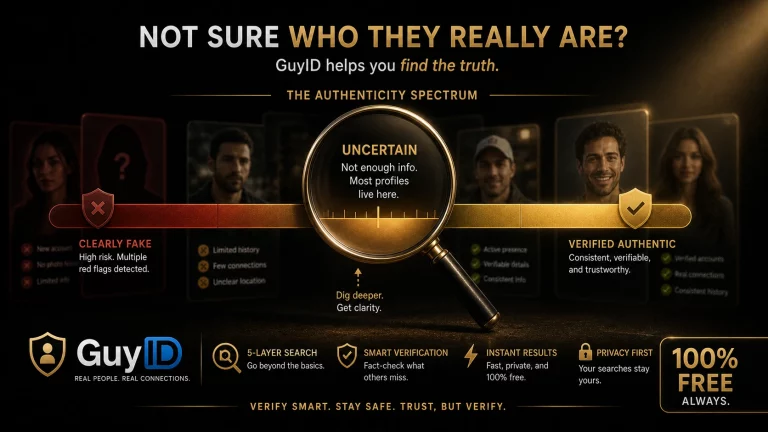
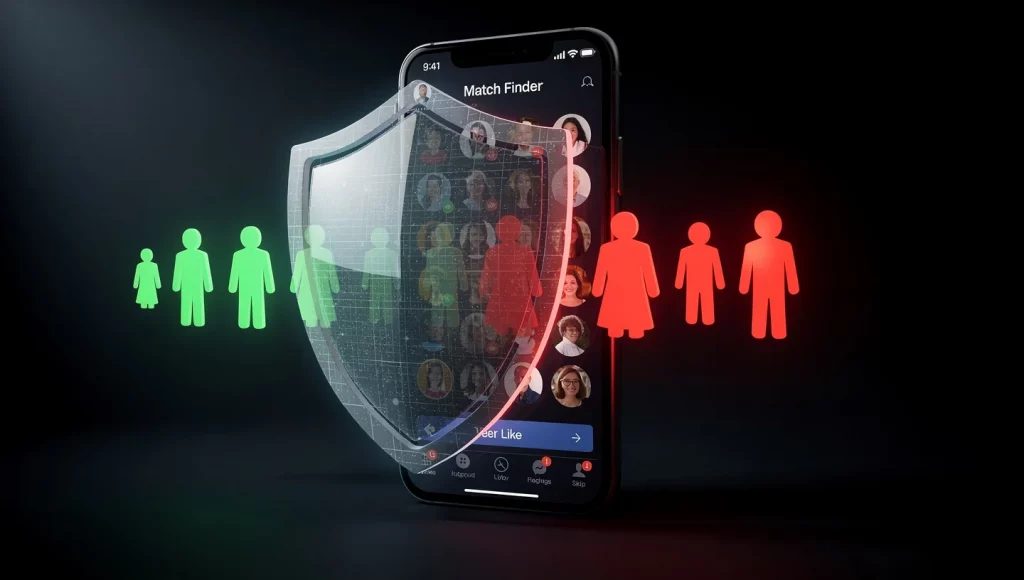
Dating apps spend millions on fake profile detection — AI moderation systems, machine learning classifiers, human review teams, and behavioral analysis algorithms running 24/7 across billions of interactions. Understanding how dating apps detect fake profiles — the methods they use, the limitations they face, and the gaps that persist despite their investment — explains why platform-side detection alone isn’t enough and why user-side verification through tools like GuyID fills the role that platforms structurally cannot.
This guide takes you behind the scenes of dating app fraud detection: the technologies platforms deploy, the signals they monitor, why detection rates remain insufficient despite significant investment, and what this means for your personal safety practices.
NavigateTable of Contents32 sections
⚡ Key Takeaways
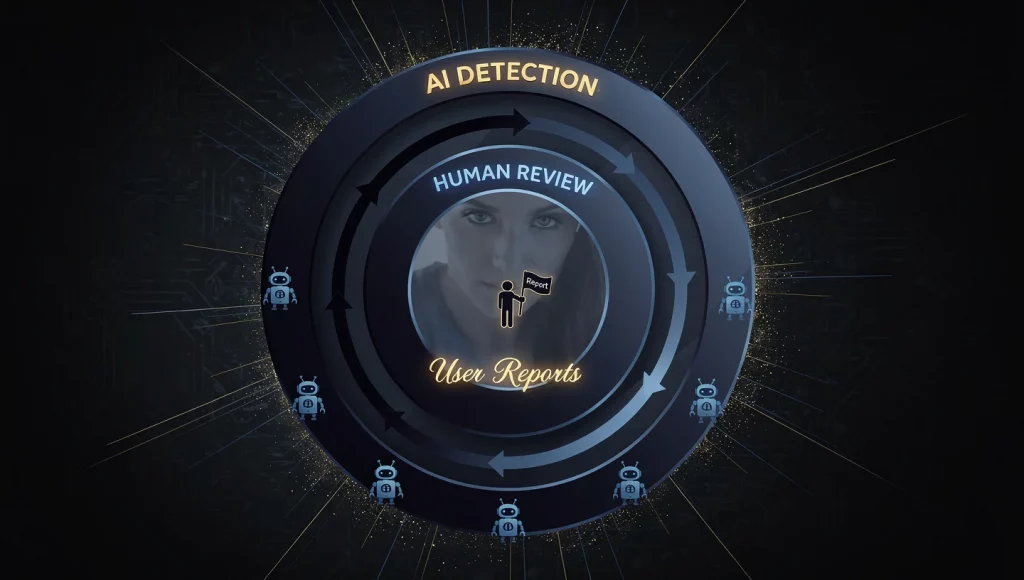
Dating apps use three detection layers: AI, human review, and user reports
Automated AI classifiers scan for patterns at scale, human moderators review flagged content, and user reports provide the ground-truth signal that trains both systems. Each layer has strengths and critical blind spots.
Platform detection catches crude fakes but misses sophisticated ones
Mass-created bot accounts, obvious spam profiles, and stolen stock photos are caught quickly. AI-generated identities, well-constructed long-con profiles, and deepfake-verified accounts evade detection for weeks or months.
Platforms face a fundamental incentive conflict
Aggressive fake removal risks banning legitimate users (false positives). Conservative detection lets fakes through (false negatives). Platforms optimize for user retention — which means tolerating some fake activity rather than losing real users to overzealous filtering.
Your safety cannot depend on platform detection alone
Even the best platform detection systems let fakes through — which is why user-side screening through GuyID’s free tools and identity verification through Trust Profiles provide the supplementary layers that platform systems can’t.
The Three Layers of Platform-Side Fake Profile Detection
Understanding how dating apps detect fake profiles starts with the three-layer architecture that every major platform employs — each layer serving a different function with different strengths and limitations.
| Layer | How It Works | Speed | Primary Strength | Primary Weakness |
|---|---|---|---|---|
| AI/ML Detection | Automated classifiers scan profiles and behavior patterns at scale | Real-time to minutes | Scale — can evaluate millions of profiles simultaneously | Misses novel patterns not in training data |
| Human Moderation | Human reviewers evaluate flagged profiles and reported content | Hours to days | Judgment — can evaluate context and nuance that AI misses | Scale — cannot review millions of profiles manually |
The three layers are interconnected: user reports train the AI models (reported fakes become training data), AI flags content for human review (automated triage), and human decisions refine the AI models (feedback loop). In theory, this creates an improving system. In practice, the system’s effectiveness is limited by the weakest layer — and each layer has significant blind spots.
AI and Machine Learning Detection: How Algorithms Hunt Fakes
The first layer of how dating apps detect fake profiles is automated — AI and machine learning systems that scan every profile and interaction on the platform, looking for patterns associated with fraudulent activity.
What AI Detection Monitors
- Photo analysis: AI scans uploaded photos for known fake indicators — stock photo database matches, known scam image fingerprints, and increasingly AI-generated photo characteristics (though this is an ongoing arms race). Photos flagged as potentially fake are routed for additional review.
- Registration patterns: New account creation velocity, device fingerprinting (same device creating multiple accounts), IP address patterns (known VPN/proxy usage, geolocation inconsistent with claimed location), and registration data that matches previously banned accounts.
- Messaging patterns: Copy-pasted messages sent to multiple users (template detection), messaging velocity that exceeds human capacity, keyword patterns associated with scams (money requests, investment terminology, external link sharing), and off-platform migration urgency language.
- Behavioral signals: Swiping patterns (mass-right-swiping suggesting fake/bot), engagement patterns (matching many but messaging few, or messaging all matches identically), and session patterns inconsistent with genuine dating behavior (24/7 activity with no downtime).
- Network analysis: Connections between accounts that suggest coordinated scam operations — shared device fingerprints, shared IP addresses, shared photo sets, or synchronized behavioral patterns across multiple accounts.
What AI Detection Catches Well
- Mass-created bot accounts: Hundreds of profiles created from the same device/IP with similar photos and identical messaging templates. The coordination signals are detectable at scale.
- Known scam images: Photos that appear in databases of previously reported scam profiles. The fingerprint-matching is reliable for recycled images.
- Obvious spam patterns: External links in bios, escort/adult service language, and cryptocurrency scam keywords are keyword-detectable with high accuracy.
- Post-report pattern matching: Once a scam technique is reported and added to the training data, similar techniques across other accounts can be detected retroactively.
What AI Detection Misses
- AI-generated photos: Original images that don’t match any database. Platform AI trained to detect stolen photos may not catch generated photos — because the detection models were trained on different data.
- Low-volume, high-touch scams: A pig butchering operator managing 5-10 targets with personalized, non-templated messages looks indistinguishable from a genuine user to behavioral AI — because the behavior pattern (few matches, deep conversations, gradual escalation) mimics genuine relationship development.
- Novel techniques: AI detects patterns in its training data. A scam technique that hasn’t been reported and added to training data is invisible until someone reports it — by which point victims have already been harmed.
- Deepfake-verified accounts: Profiles that pass the platform’s own verification system (using deepfake to match the selfie check) are treated as verified by the AI — receiving the trust premium rather than scrutiny.
Human Moderation Teams: The Judgment Layer
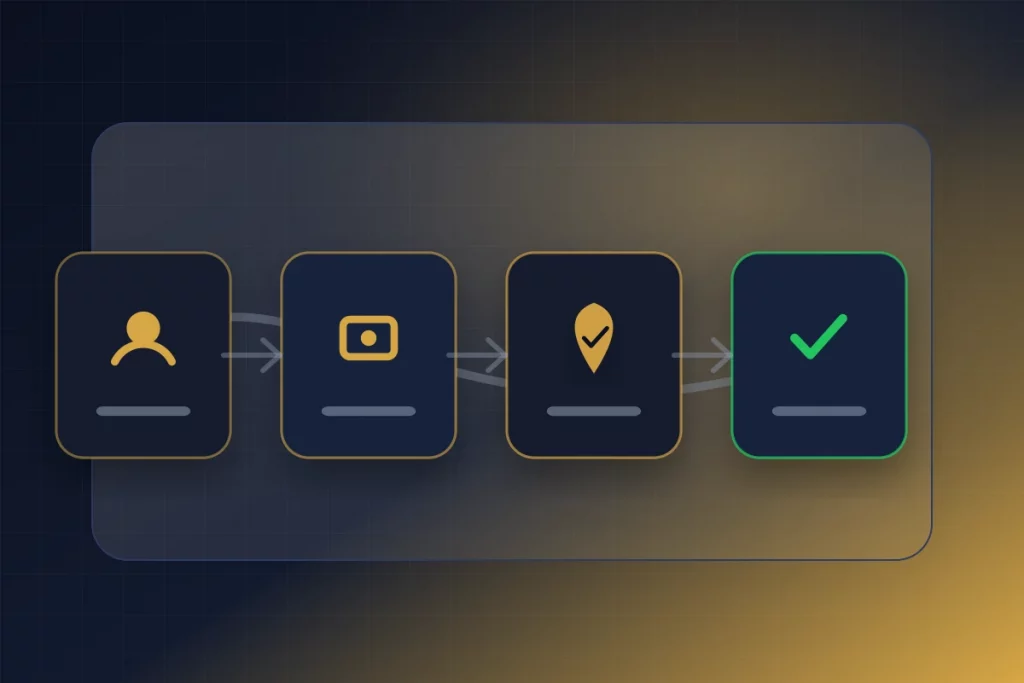
The second layer of how dating apps detect fake profiles uses human moderators — real people reviewing profiles and conversations that have been flagged by AI or reported by users.
What Human Moderators Do
Human moderators review flagged content and make judgment calls that AI can’t: Is this bio genuinely suspicious or just poorly written? Is this messaging pattern a scam or an awkward but genuine person? Does this reported profile warrant removal, warning, or no action? Human judgment handles the gray areas that binary AI classification struggles with.
The Scale Problem
Tinder has 75+ million monthly active users. Bumble has tens of millions. Across all major platforms, hundreds of millions of profiles and billions of messages exist. No human moderation team — regardless of size — can manually review more than a tiny fraction of this content. Human moderators review only what AI flags or users report. Everything else passes unreviewed.
This means human moderation is reactive, not proactive. It responds to signals from the other two layers but cannot independently scan the full user base. The vast majority of profiles on any dating platform have never been individually reviewed by a human — they’ve only been scanned by automated systems.
Moderator Limitations
- Review time pressure: Moderators handling hundreds of reports per shift have limited time per case — seconds to minutes, not thorough investigation. Borderline cases may receive quick judgments that miss subtle deception.
- Training gaps: Moderators may not be trained on the latest scam techniques, AI-generated content recognition, or pig butchering patterns. The scam landscape evolves faster than training programs update.
- Cultural and language barriers: Scams targeting users in specific languages or cultural contexts may be reviewed by moderators who don’t speak the language or understand the cultural signals — reducing detection accuracy.
User Reporting: The Ground-Truth Layer
The third layer — and in many ways the most important — is user reporting. Understanding how dating apps detect fake profiles requires acknowledging that user reports are the primary source of ground-truth data about what’s actually happening on the platform.
Why User Reports Matter So Much
User reports are the training data that improves AI detection: when you report a fake profile, that profile becomes a data point that teaches the AI system what fake profiles look like. User reports also trigger human review of specific profiles that AI didn’t flag. And aggregate report patterns reveal scam networks that individual account analysis can’t detect — multiple users reporting the same phone number, external link, or behavioral pattern across different accounts.
The 55% Problem
This means more than half of successful scam interactions generate zero data for the detection system. The AI doesn’t learn from them. Human moderators never see them. The scam technique continues working on other targets because the system never received the signal that it exists.
This is why your individual report matters disproportionately — each report potentially trains the AI to catch similar scams across thousands of other accounts. The reporting guide explains exactly how to file the most actionable report for maximum impact.
What Platform Detection Catches: The Wins
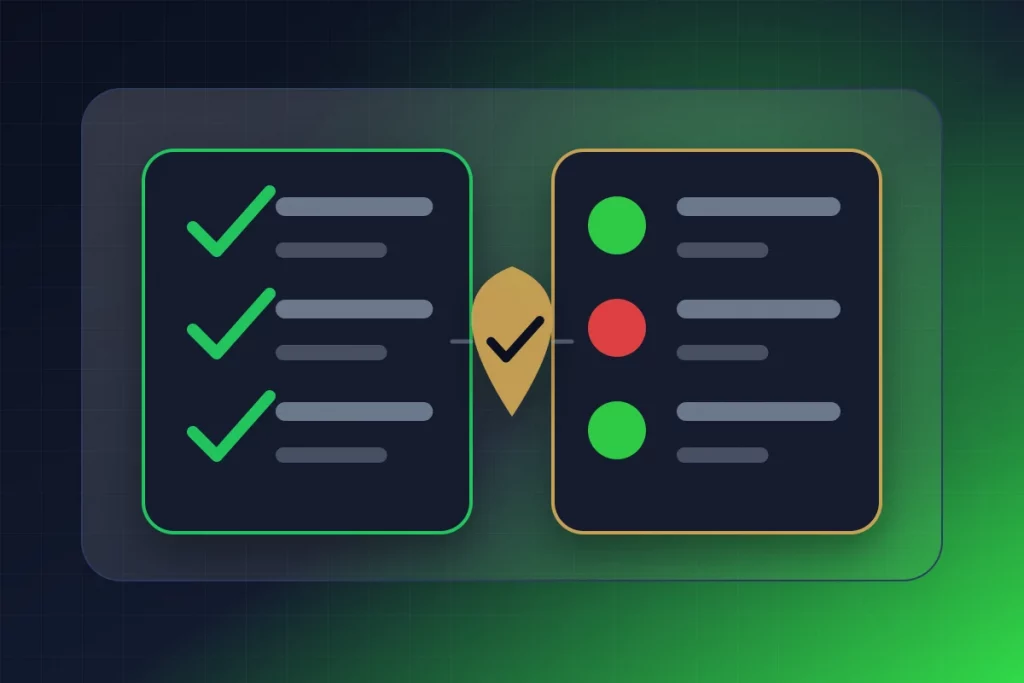
Platform detection systems do catch significant volumes of fake profiles — the systems aren’t useless. Here’s what dating app fake profile detection handles effectively.
- Mass bot networks: Coordinated bot operations creating hundreds or thousands of accounts from shared infrastructure. Network analysis catches the coordination signals — shared devices, IPs, photo sets, and behavioral patterns.
- Known scam images: Photos that appear in scam databases from previous reports. Once an image is flagged, every future use of that image across the platform is catchable.
- Obvious spam/solicitation: External links in bios, escort service language, cryptocurrency keywords, and adult content distribution. Keyword and pattern detection catches these reliably.
- Repeated offenders: Users who create new accounts after being banned. Device fingerprinting, phone number matching, and behavioral similarity detection catch many re-registrations.
- Underage accounts: AI age estimation and age-related behavioral patterns flag potentially underage users for review — this is the highest-priority detection category across all platforms.
These catches are meaningful — preventing millions of scam interactions annually. But they represent the lower-sophistication end of the threat spectrum. The question isn’t whether platforms catch some fakes. It’s whether they catch enough.
What Platform Detection Misses: The Critical Gaps
Gap 1: Sophisticated Single-Operator Profiles
A skilled scammer creating one carefully crafted profile — using unique (or AI-generated) photos, writing a personalized bio, and engaging in individualized conversations — produces a profile that is behaviorally indistinguishable from a genuine user. The profile doesn’t trigger bot-detection (it’s not a bot), doesn’t trigger template-detection (messages aren’t templated), and doesn’t trigger network analysis (it’s a single account).
Gap 2: AI-Generated Content
AI-generated photos don’t match any database because they’re original creations. Platform AI trained on stolen-photo patterns may not catch generated-photo patterns — different training data, different detection models. As AI generation quality improves, the gap between what platforms can detect and what scammers can generate widens.
Gap 3: Deepfake-Verified Accounts
An account that passes the platform’s own verification system using deepfake technology is classified as “verified” by the AI — receiving trust privileges rather than scrutiny. The platform’s detection system gives the fake a badge that makes it harder to detect, not easier. The verification system designed to identify real users is weaponized to protect fake ones.
Gap 4: Long-Con Scams That Mimic Genuine Behavior
Pig butchering and long-con romance scams operate over weeks or months — building genuine-seeming relationships with individualized conversation. The behavioral pattern (match, talk, deepen, meet) is identical to genuine relationship development. AI trained to detect scam behavior can’t distinguish “scammer building trust before extraction” from “genuine person building trust before meeting” because the observable behaviors are identical until the financial request — which may happen on WhatsApp, not on the dating platform, making it invisible to platform detection entirely.
Gap 5: Off-Platform Scam Execution
Smart scammers use dating apps only for initial contact and trust-building. The financial extraction happens on WhatsApp, Telegram, or phone — channels where the dating app has zero visibility. Platform detection can only monitor activity within the platform. The moment a scam migrates off-platform, the dating app’s entire detection infrastructure becomes irrelevant to the ongoing fraud.
Why Detection Rates Remain Insufficient: The Structural Challenges
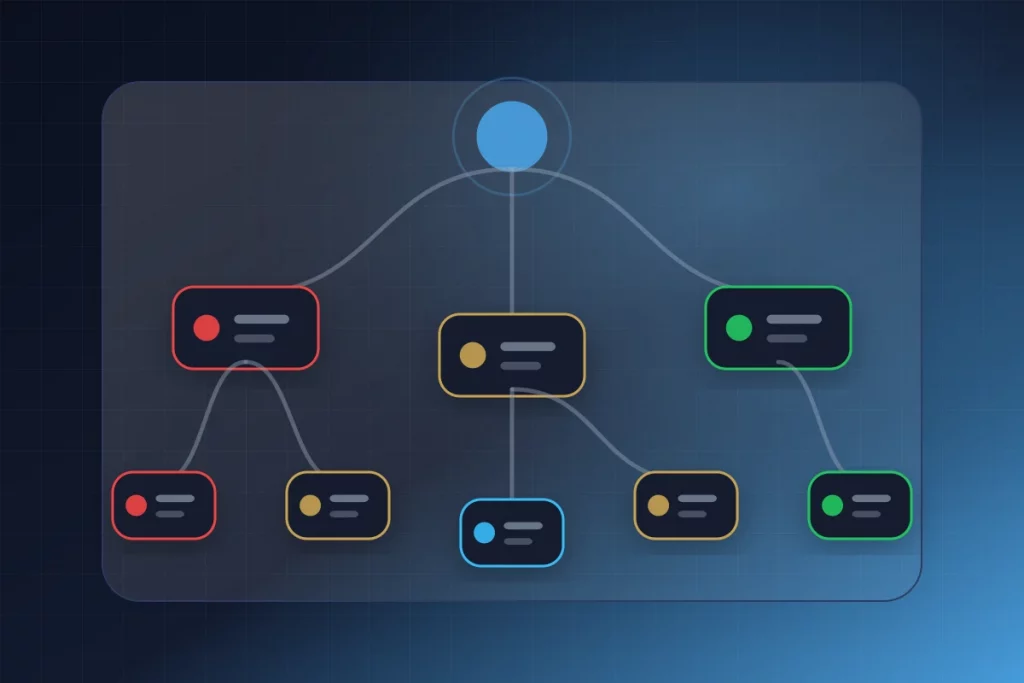
The gaps in how dating apps detect fake profiles persist despite investment because of structural challenges that technology alone can’t solve.
The False Positive Problem
Aggressive detection risks banning real users. A genuine user who happens to travel frequently (location changes), use professional photos (high-quality images), or send similar opening messages to multiple matches (because it’s a good opener) can trigger the same signals as a scam profile. Every false positive — a real user banned unfairly — is a lost customer, a support ticket, negative reviews, and potential media coverage. Platforms calibrate detection to minimize false positives, which mathematically means accepting more false negatives (fakes that pass through).
The Incentive Conflict
Dating apps are businesses measured by user growth, engagement, and revenue. Fake profiles inflate user counts — making the platform appear larger and more active. Aggressive fake removal reduces the apparent user base. While platforms genuinely want to reduce harmful fakes (scammers, harassers), the business incentive to maintain large, active-appearing user counts creates tension with aggressive removal policies. This incentive conflict is structural — it exists regardless of any individual platform’s safety intentions.
The Asymmetric Arms Race
Platform detection teams update their models periodically — quarterly, monthly, or in response to new threats. Scammers adapt continuously — testing techniques against live detection, observing what gets flagged, and iterating daily. The scammer’s adaptation cycle is faster than the platform’s detection update cycle. Each time a platform deploys a new detection method, scammers encounter it within days and begin developing workarounds. The platform then needs to detect the workaround — starting the cycle again. The attacker’s advantage in an asymmetric arms race is speed of adaptation.
The AI Generation Paradox
Platforms use AI to detect fakes. Scammers use AI to create fakes. Both sides deploy the same underlying technology. As detection AI improves, generation AI improves at the same rate — because they’re built on the same research, the same models, and the same capabilities. The platform’s AI detector and the scammer’s AI generator are two applications of the same technology in an endless escalation.

The Arms Race: How Scammers Adapt to Detection
Understanding how dating apps detect fake profiles requires understanding how scammers continuously evolve to evade detection — because the organized operators (FTC) treat detection evasion as a core business competency.
| Platform Detection Advance | Scammer Adaptation | Result |
|---|---|---|
| Stolen photo detection (reverse image matching) | Switch to AI-generated photos (no source to match) | Detection neutralized for AI photos |
| Template message detection | AI chatbots generate unique, personalized messages for each target | Template detection bypassed |
| Selfie verification | Deepfake face-swapping during verification selfie | Verification system grants badge to fake profile |
| Device fingerprinting | Virtual machines, device spoofing, purchased pre-fingerprinted devices | Fingerprint detection evaded |
| IP/location tracking | VPN rotation, residential proxies, geo-spoofing | Location-based detection evaded |
| Behavioral pattern analysis | Manual operation mimicking genuine user behavior (low volume, personalized engagement) | Behavioral detection bypassed for sophisticated operators |
Every row shows an escalation-counter-escalation cycle. This is why, despite continuous platform investment, the fake profile statistics remain stubbornly high. The platforms aren’t failing to invest — they’re fighting an adversary that adapts as fast as they do.
What This Means for Your Safety: Why You Can’t Outsource Detection to Platforms
The complete picture of how dating apps detect fake profiles leads to one practical conclusion: platform detection is a necessary first layer but an insufficient-by-itself protection. Your safety requires user-side verification that supplements what platforms provide.
What Platforms Provide (Accept Gratefully)
Platform detection catches the bottom tier of fakes — mass bots, known scam images, obvious spam, and repeated offenders. This removes millions of harmful interactions annually. Platforms also provide the reporting infrastructure that trains better detection over time. These contributions are real and valuable.
What You Must Provide (Accept Responsibility)
Catching the sophisticated fakes — AI-generated profiles, well-crafted single-operator scams, deepfake-verified accounts, and long-con operators mimicking genuine behavior — requires user-side detection that platforms can’t provide at scale.
Your Detection Layer (Supplements Platform Detection)
☐ Reverse image search via GuyID — catches stolen photos platforms missed (30 sec)
☐ Catfish probability detector — holistic risk when platform shows no warnings (10 sec)
☐ Bio red flag detector — catches scam language patterns (10 sec)
☐ AI photo detection — catches AI-generated images platforms don’t flag
☐ Video call with active deepfake testing — catches deepfake-verified accounts
☐ Red flag monitoring — catches behavioral patterns platforms can’t see in text
☐ Report every fake you find — your reports train platform AI to catch similar fakes
Your Verification Layer (Eliminates the Detection Problem Entirely)
☐ Request GuyID Trust Profile before meeting — government ID + social vouching
☐ TRUSTED tier = confirmed identity through government documents + real human vouches
☐ This eliminates every type of fake regardless of sophistication
☐ Platform detection asks: “Is this profile probably fake?”
☐ Identity verification asks: “Is this person confirmed real?”
☐ The second question is the one that actually matters for your safety
The Two-System Model
The optimal safety model combines both systems: platform detection removes the bottom tier (you never see the millions of bots and spam accounts it catches), and user-side screening + identity verification catches the top tier (the sophisticated fakes that platform detection misses). Neither system alone is sufficient. Together, they provide comprehensive protection.
This is why the 60-second check through GuyID’s free tools isn’t duplicating what platforms already do — it’s covering the gaps that platform detection structurally cannot close. The reverse image search that catches a stolen photo the platform AI missed. The catfish probability detector that flags risk the platform shows no warning about. The GuyID Trust Profile that confirms identity through government documents when the platform’s selfie badge confirms nothing beyond photo matching.
Understanding how dating apps detect fake profiles isn’t about losing trust in platforms — it’s about calibrating your expectations accurately. Platforms catch millions of fakes. Your screening catches what they miss. Your verification eliminates the uncertainty entirely. Platform detection + your tools + identity verification = the complete safety stack.
Platforms Catch Some. You Catch the Rest.
GuyID’s free tools catch the sophisticated fakes that platform detection misses: reverse image search, catfish detection, bio analysis. Plus Trust Profiles (gov ID + social vouching) that eliminate every type of fake regardless of sophistication. Women check for free.
Catch What Platforms Miss
The Verification That Eliminates Doubt
Frequently Asked Questions
How do dating apps detect fake profiles?
Can dating app AI detect AI-generated fake profiles?
Can I rely on dating app detection to keep me safe?
How do scammers evade dating app detection?
What can I do that dating apps can’t?
Related Reading
Evidence note
NIST Digital Identity Guidelines distinguish identity proofing, authentication, and federation as separate parts of digital identity risk management (NIST, 2025).