Free Tools
Catfish Probability Detector
Check whether a dating profile has suspicious identity or photo signals.
Dating Bio Red Flag Detector
Review a bio for scam, pressure, or trust-warning language.
Dating Safety Checklist
Use free GuyID tools before moving from chat to a real date.
Next step
Create your GuyID trust profile
Share consent-based trust signals before a date without turning the conversation into an interrogation.
Quick Answer
Dating with a disability is dating: meeting people, assessing compatibility, managing vulnerability, and deciding what kind of relationship you want. Disability may add practical questions about access, energy, communication, assistance, transportation, disclosure, or safety, but it does not make one person the project and the other the helper.
A useful approach is to ask instead of assume, plan access without making it the whole date, respect privacy, and keep both people’s preferences visible. The green flag is not flawless accommodation knowledge. It is a willingness to listen, adapt, repair mistakes, and treat each other as equal adults.
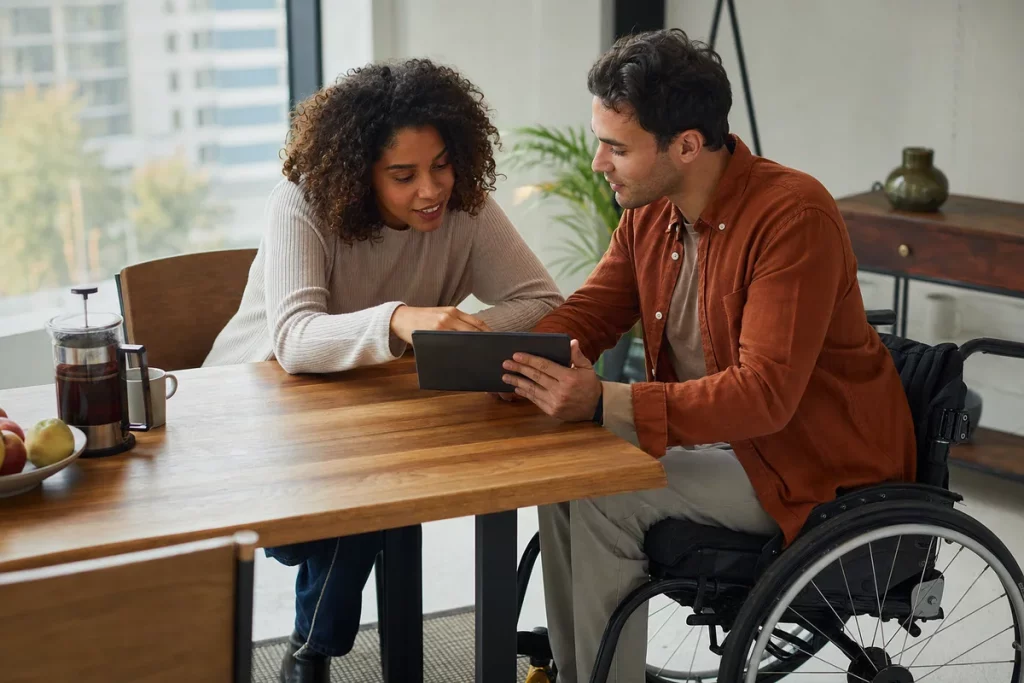
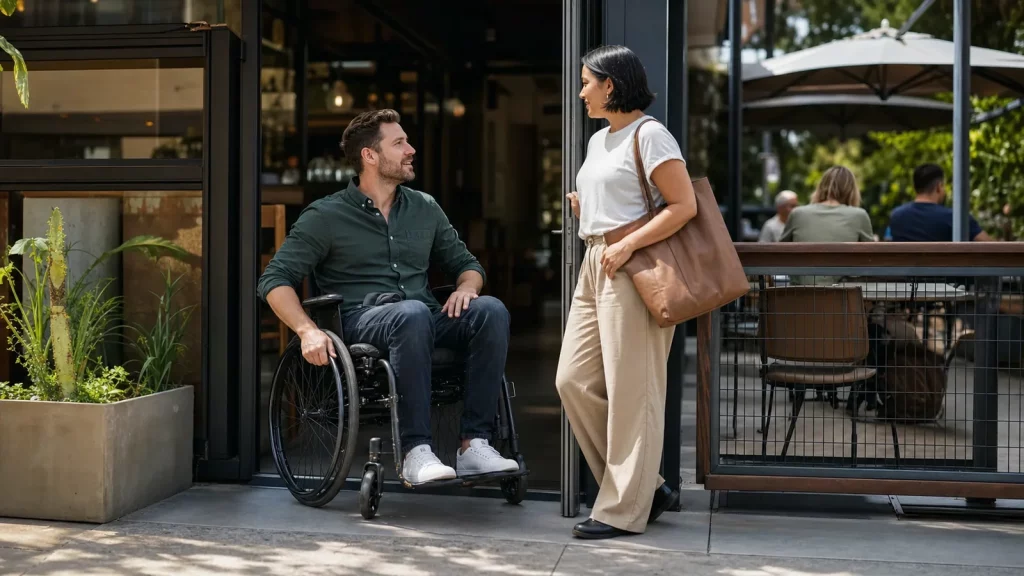
Access planning works best as collaboration, not as a favor one person must earn.
NavigateTable of Contents18 sections
Start With Autonomy, Not Assumptions
Disabled adults are not a single dating population. A wheelchair user, a Deaf person, someone with chronic pain, an autistic adult, and someone with an intellectual disability may have entirely different access needs, identities, and preferences. Two people with the same diagnosis may also want different kinds of help.
A qualitative study of adults with intellectual and developmental disabilities found that participants valued romantic relationships while reporting barriers that included limited opportunities to meet people and incomplete relationship education. The study focused on one supported-living context, so it should not be generalized to every disabled person. It does reinforce a basic point: companionship and romantic agency belong to disabled adults, while support should expand choice rather than replace it.
The most useful starting assumptions are:
- the person knows their body and routine better than you do;
- assistance should be offered, not imposed;
- disability does not tell you someone’s relationship goals or sexual interests;
- independence can include chosen interdependence;
- access needs may change from day to day;
- a partner is not automatically a caregiver.
Speak to the person directly. Do not redirect questions to a companion, interpreter, or support worker unless the person asks you to.
Choose Accessible Dates Without Turning Access Into an Interview
An accessible date is one both people can enter, use, enjoy, and leave with reasonable comfort. Accessibility might involve:
- step-free entry and an accessible washroom;
- nearby transit or parking;
- seating with back support;
- a quieter time or lower sensory load;
- captions, good lighting, or a place where faces are visible;
- space for a mobility device or service animal;
- predictable duration and the option to change plans;
- food that fits allergy or dietary needs.
The ADA’s effective-communication guidance says communication should account for the nature, length, complexity, and context of the exchange as well as the person’s usual communication method. (See the ADA guidance.) That rule governs covered organizations in the United States, not private dates. As a planning principle, however, it is useful: ask what makes communication work rather than choosing a method for someone.
Try:
“I was thinking about the gallery on King Street. Is that space workable for you, or would another plan be better?”
Avoid:
“Can you even do a gallery?”
Check the venue yourself, but recognize that a website’s “accessible” label may omit details. Call when necessary. Let the person make the final call about whether the setup works.

A good accessible date leaves room for the actual point of the evening: learning about each other.
Decide When and How to Disclose
There is no universal moment when someone must disclose a disability. The decision may depend on whether it is visible, whether the date needs advance planning, what medical information feels private, and whether disclosure could expose the person to stigma or intrusive questions.
You can disclose in layers:
“I use a wheelchair, so I check step-free access before confirming a venue.”
“I have a fluctuating condition. I may need to shorten the evening, and I’ll tell you directly if that happens.”
“I communicate best when I can see your face. Could we choose somewhere well lit?”
Practical information is often enough. A date does not automatically need a diagnosis history, prognosis, medication list, benefit status, or explanation of every symptom.
If someone discloses to you, respond to what they actually said:
“Thanks for telling me. Is there anything useful for me to know when we plan?”
Do not demand proof, offer a cure, compare them to someone else, or make the disclosure about how “inspiring” you find them.
Ask Useful Questions
Good questions create options:
- “Would you like help, or have you got it?”
- “What kind of venue tends to work well?”
- “Do you want me to call ahead, or would you rather handle that?”
- “Is there a communication preference I should know?”
- “Would a fixed end time make planning easier?”
- “If the plan stops working, what is the easiest way to adjust?”
Ask once, accept the answer, and pay attention over time. If someone declines help, do not grab a mobility device, move an aid, push a wheelchair, touch a service animal, or disclose health information to others.
Notice Ableism and Genuine Incompatibility
A survey study found that people without disabilities often anticipated stigma and caregiving burden when considering a partner with a physical disability, illustrating how assumptions can become dating barriers. The study measured attitudes in a South African sample; it does not describe every culture or predict any one person’s behavior.
Ableism may look like:
- treating a date as brave for leaving home;
- assuming a disabled person cannot consent, parent, work, travel, or have sex;
- asking invasive medical questions before ordinary getting-to-know-you questions;
- hiding the relationship because of anticipated social judgment;
- treating access as an unreasonable inconvenience;
- expecting gratitude for basic respect;
- fetishizing disability or mobility equipment.
Not every mismatch is ableism. You may have incompatible schedules, energy needs, locations, relationship goals, communication styles, finances, or desired activities. Name the actual mismatch. “I want a partner who can travel without planning” may reveal both a lifestyle preference and an unwillingness to plan; it is more honest than pretending disability itself is a character flaw.
Keep Safety and Assistance Separate
Disability can affect logistics without changing the core first-date safety principles:
- meet in a public, usable location;
- keep independent access to transportation, money, communication, medication, and essential equipment;
- tell a trusted person the plan if you want;
- verify identity proportionately before meeting;
- do not let a new date control an aid, device, benefits account, or care arrangement;
- leave when boundaries are ignored.
Assistance does not buy intimacy. Paying for accessible transportation, helping with a coat, or carrying an item does not create a debt of affection, sex, disclosure, or another date.
Support a Partner Without Becoming Their Manager
In an ongoing relationship, support should be negotiated. One partner might help with driving, appointment logistics, meals, or physical tasks. The other may contribute in different ways. Equality does not require identical tasks; it requires that both people retain dignity, influence, and room to revise the arrangement.
Use check-ins:
- “Is this still helpful?”
- “Are we both getting enough rest and independent time?”
- “Is there outside support we should add instead of asking the relationship to carry everything?”
- “Am I taking over decisions that are yours?”
- “Are you having to manage my discomfort about disability?”
The boundaries guide helps distinguish a request from control. A partner can care deeply without becoming the only source of transportation, personal assistance, advocacy, or emotional support.
Use the ACCESS Check Before a Date
GuyID’s ACCESS check turns a vague intention to “be inclusive” into six practical questions:
- Agency: Did each person choose the plan and the help they want?
- Communication: Can both people communicate in their preferred way?
- Context: Does the venue work physically, sensorily, and socially?
- Energy: Is the duration realistic, with permission to change it?
- Safety: Can each person arrive, leave, and keep essential items independently?
- Specificity: Did you ask the individual instead of relying on a stereotype?
Use a GuyID Trust Profile when a portable set of trust signals would make moving from an app to an in-person date easier. Verification can support identity confidence; it cannot assess accessibility, consent, compatibility, or character.
How GuyID Helps
GuyID should appear when it is useful, not as a banner ad. A GuyID Trust Profile gives someone a portable way to share trust signals before a date, while identity verification and social vouching help turn vague profile claims into clearer next steps.
Useful next steps:
- Create a GuyID Trust Profile when you want a cleaner way to share verified trust signals.
- Use GuyID free tools and related guides when you need a checklist before meeting someone.
- Treat identity verification as confidence-building, not a guarantee.
- Use social vouching when you want context from people who already know the person.
- Sign up only when the extra trust layer helps the decision you are already trying to make.
Frequently Asked Questions
Should I mention my disability on a dating profile?
Only if you want to. A profile can make disclosure efficient and filter out some prejudiced matches, but privacy and safety are valid reasons to wait. Share what helps you find compatible people without treating medical detail as an admission requirement.
How do I ask a disabled person what help they need?
Ask directly and neutrally: “Would any help be useful?” or “What would make this plan work well?” Accept “no,” do not touch equipment without permission, and let the person specify the kind of assistance.
Is it rude to ask about a disability?
Context matters. A practical access question is different from requesting a medical history on a first date. Build ordinary rapport, ask permission before a personal question, and accept that some information remains private.
Can a nondisabled person and a disabled person have an equal relationship?
Yes. Equality means equal dignity, meaningful choice, reciprocal care, and shared influence. Contributions need not be identical. The relevant question is whether both people can express needs, set boundaries, and shape the relationship.
Are disability-specific dating apps better?
They may reduce disclosure friction or improve community relevance for some people. Mainstream apps may offer a larger pool. Evaluate accessibility, privacy, moderation, identity controls, and actual user fit rather than treating a disability label as proof of safety or inclusion.
Related Reading
- Intentional dating
- First-date ideas
- Online dating safety tips
- How to set boundaries in a relationship
- Consent in dating
- Green flags in dating
Conclusion
Dating with a disability works best when access is ordinary, autonomy is protected, and neither person is reduced to a diagnosis or a caregiving role. Ask, listen, adapt, and judge the connection by the same durable evidence that matters in any relationship: respect, reciprocity, reliability, attraction, and room for both people to choose.
For the next date, make one practical improvement rather than trying to master every possible access need. Confirm the venue in the way the person prefers, build in time or rest where useful, and keep a backup that preserves the spirit of the plan. Afterward, ask what worked without turning the debrief into an evaluation of the disabled person. Access knowledge will grow through ordinary communication. The relationship should still contain flirtation, humour, shared interests, disagreement, privacy, and surprise—the full range of adult connection beyond logistics.