

Reader Briefing
Reader Briefing
Start here if you need a practical read on do i have stockholm syndrome quiz: understanding trauma bonds in relationships: who should use verification, what signals to check, and what to do before moving from online interest to an in-person plan.
Who this is for
- Readers preparing for a first in-person date.
- Anyone checking identity, profile consistency, and trust signals.
- Online daters improving conversations, profiles, or match screening.
You’ll learn
- How to evaluate identity signals without treating any single check as certainty.
- Which trust signals matter and how to weigh them together.
- How to move from online conversation to a safer first meeting.
- Where GuyID tools fit into a quick pre-date screening workflow.
- When to slow down, ask for more context, or walk away.
- How to turn the article’s advice into a concrete next step.
Bottom line
Verification reduces uncertainty; it does not guarantee future behavior. Use a layered approach: confirm identity signals, compare profile consistency, ask for a short video call, keep early plans public, and slow down when someone pressures you to skip normal safety steps.
Key takeaways
- Identity verification improves confidence, not certainty.
- Verify before meeting privately or sharing sensitive details.
- A short video call can reveal many inconsistencies.
- Pressure to skip reasonable safety steps is useful information.
- Use GuyID tools to turn vague concerns into specific checks.
Free Tools
Catfish Probability Detector
Check whether a dating profile has suspicious identity or photo signals.
Dating Bio Red Flag Detector
Review a bio for scam, pressure, or trust-warning language.
Dating Safety Checklist
Use free GuyID tools before moving from chat to a real date.
Next step
Create your GuyID trust profile
Share consent-based trust signals before a date without turning the conversation into an interrogation.
You know the relationship is harmful. Your friends tell you. Your family tells you. The evidence is overwhelming. And yet you can’t leave — or you leave and go back, leave and go back, in a cycle that makes you feel broken. If you’re searching for a do I have Stockholm syndrome quiz, you’re trying to understand why your emotional attachment to someone who hurts you feels stronger than your rational understanding that the relationship is damaging. This assessment helps you evaluate whether your attachment to a harmful partner reflects Stockholm syndrome patterns — the psychological phenomenon where captives develop bonds with their captors — and provides the framework for understanding what’s happening neurologically so you can begin addressing it with the right support.
NavigateTable of Contents26 sections
What Stockholm Syndrome Looks Like in Romantic Relationships
Stockholm syndrome in relationships — more accurately called a trauma bond — develops when a person forms a strong emotional attachment to someone who intermittently harms and nurtures them. According to the American Psychological Association, the core mechanism is the same whether it occurs between hostage and captor or between romantic partners: the person in the less powerful position develops loyalty, affection, and protective feelings toward the person causing harm — not despite the harm but BECAUSE the alternation between cruelty and kindness creates the most powerful attachment bond human psychology can produce.
In romantic contexts, Stockholm syndrome patterns don’t require physical captivity. The “captivity” is emotional: isolation from support systems, financial dependency, erosion of self-worth, and the belief (installed by the abusive partner) that the relationship is the best you can do, that leaving would be worse, or that the harm is your fault. Research from the National Library of Medicine on trauma bonding in intimate relationships confirms that the same neurological mechanisms that produce Stockholm syndrome in kidnapping victims operate in emotionally and physically abusive partnerships — producing attachment that feels like love but functions as addiction.
This do I have Stockholm syndrome quiz evaluates the specific indicators that distinguish trauma-bonded attachment from healthy love — because the person experiencing it often can’t tell the difference from inside the dynamic. The bond feels genuine because it IS genuine neurologically; the question isn’t whether you love them (you do) but whether the love is operating as a survival adaptation that’s keeping you attached to the source of your harm rather than as the freely chosen connection that healthy love represents.
Do I Have Stockholm Syndrome Quiz: 15-Question Assessment
Rate each statement: 0 = Never, 1 = Rarely, 2 = Sometimes, 3 = Often, 4 = Almost Always
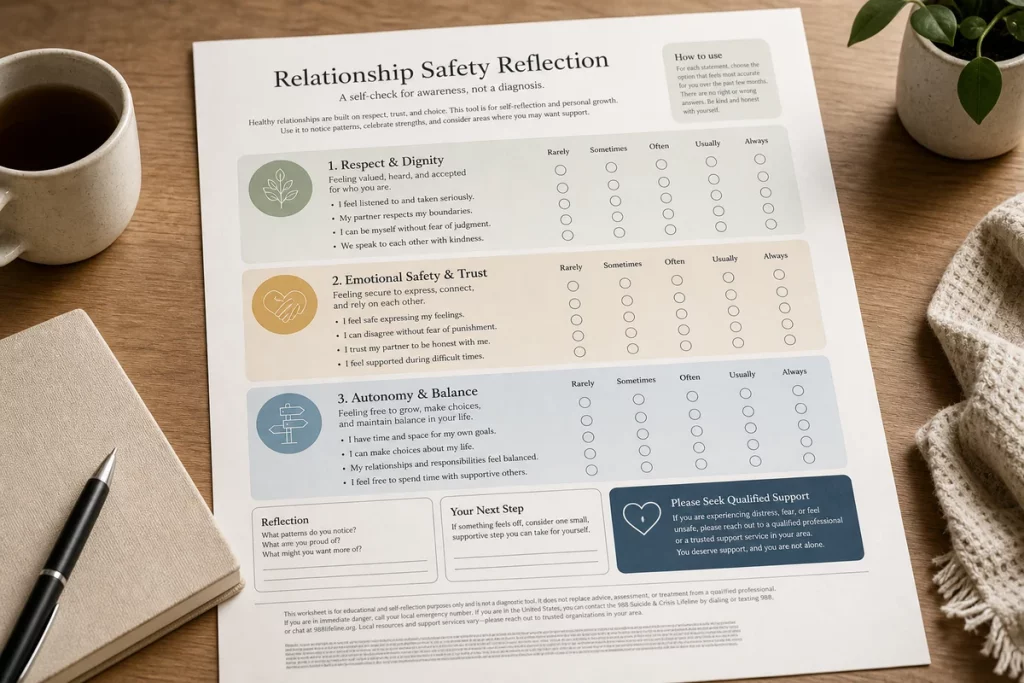
1. I defend my partner’s harmful behavior to others.
“They didn’t mean it that way.” “You don’t see the good side.” “It’s complicated.” If you consistently protect your partner’s reputation by minimizing or rationalizing their harmful behavior to the people who express concern, the defense pattern may reflect the loyalty component of Stockholm syndrome rather than an objective assessment of the situation.
2. I blame myself for their harmful behavior.
“If I hadn’t said that, they wouldn’t have…” “I provoked them.” “I should have known better.” Accepting responsibility for someone else’s harmful behavior is one of the most reliable indicators in any do I have Stockholm syndrome quiz — because the self-blame transfers accountability from the person causing harm to the person receiving it, which is precisely the cognitive distortion that trauma bonds install.
3. I feel grateful when they’re kind — more grateful than the kindness warrants.
After a period of cruelty, neglect, or stonewalling, any return of warmth produces disproportionate relief and gratitude. A normal “I love you” feels miraculous. A peaceful evening feels like a gift. The gratitude is disproportionate because the baseline has been lowered so far by the harmful behavior that basic decency registers as generosity — which is the distorted calibration that Stockholm syndrome produces.
4. I’ve become isolated from friends and family since this relationship began.
Whether through your partner’s direct discouragement, through the relationship consuming all available time and energy, or through your own withdrawal from people who express concern — isolation is both a cause and effect of trauma bonding. The fewer outside perspectives you access, the more your partner’s version of reality becomes your only reality. The emotional manipulation guide identifies isolation as one of the earliest and most deliberate control tactics.
5. I believe I can’t survive without this person.
The belief that leaving would be worse than staying — financially, emotionally, practically — even when the staying involves documented harm. This dependency belief is the “captivity” component of relational Stockholm syndrome: you don’t need physical chains when the psychological belief that escape is impossible serves the same containment function.
6. I feel intense anxiety when I imagine leaving.
Not the normal sadness of contemplating a breakup — but panic-level anxiety that feels disproportionate to the actual practical challenges of leaving. This anxiety reflects the attachment system’s alarm response: it has been conditioned to equate the partner’s presence with survival (because the intermittent reinforcement pattern taught it that the partner is the source of both pain AND relief), so contemplating the partner’s absence registers as life-threatening.
7. I make excuses for their behavior that I wouldn’t accept from anyone else.
If a friend described the same behavior in THEIR relationship, you’d tell them to leave. But when it’s YOUR relationship, the same behavior is “different” — because of the context, because of their childhood, because of the stress they’re under, because they’re “trying.” The double standard between what you’d advise others and what you accept for yourself is a hallmark of the distorted perception that this do I have Stockholm syndrome quiz evaluates.
8. The “good times” feel extraordinarily good — almost addictively so.
When the harmful phase subsides and the loving phase returns, the relief is so intense that it creates an almost euphoric experience — a neurochemical high that’s more intense than anything a consistently healthy relationship could produce. This isn’t evidence that the relationship is worth the pain; it’s evidence that the pain is creating the neurological conditions (stress followed by relief) that produce the most addictive bonding pattern in human psychology. The love bombing guide describes this cycle in its dating-context form.
9. I feel responsible for my partner’s emotional wellbeing.
Not mutual care (which is healthy) — but the belief that their emotional state is YOUR responsibility to manage. “If I just do/say/be the right thing, they’ll be happy and the harm will stop.” This responsibility assumption keeps you focused on managing THEIR experience rather than evaluating YOUR experience — which is exactly the attentional redirection that maintains the bond.
10. I’ve lost sight of what I want, need, and feel independently.
Your preferences have been replaced by their preferences. Your emotional responses have been suppressed to manage their volatility. Your identity has contracted to fit the shape the relationship requires. The emotional abuse symptoms guide identifies this identity erosion as one of the most significant indicators of systematic psychological harm — and it’s a core component of the captivity dynamic that Stockholm syndrome requires.
11. When they show remorse after harmful behavior, I feel closer to them than before the incident.
The apology-reconciliation phase produces MORE intimacy than periods of consistent peace — because the relief of conflict resolution combined with the neurochemical bonding of emotional intensity creates a false sense of deepened connection. This post-conflict intimacy inflation is the intermittent reinforcement cycle operating at peak efficiency: harm → remorse → relief → intensified bond → repeat.
12. I’ve left and gone back multiple times.
The leave-return cycle is one of the most diagnostic indicators in any do I have Stockholm syndrome quiz. Research indicates that survivors of abusive relationships leave an average of 7 times before leaving permanently — not because they lack intelligence, strength, or resources, but because the trauma bond produces a physiological pull back toward the attachment figure that withdrawal from the relationship activates with the same urgency as withdrawal from an addictive substance.
13. I hide the worst aspects of my relationship from everyone.
Secrecy about the harmful dynamics isn’t privacy — it’s protection of the system. If you’re hiding what happens because you know others would be alarmed, the secrecy itself is data: you KNOW the behavior is alarming, and the hiding protects the relationship rather than yourself.
14. I feel anger toward people who try to help me leave.
Friends and family who express concern are perceived as threats rather than allies — producing defensive anger that protects the relationship from the very help it needs. This defensive reaction is one of the most confusing aspects of Stockholm syndrome for outsiders: the people trying to help are treated as enemies while the person causing harm is treated as the one who truly understands.
15. I recognize everything in this quiz but still feel unable to leave.
The awareness-action gap is itself diagnostic. Knowing the relationship is harmful while feeling unable to act on that knowledge isn’t a personal failing — it’s the defining feature of a trauma bond strong enough to override rational decision-making. If your intellectual understanding says “leave” and your emotional-physiological system says “stay” — you’re experiencing exactly the Stockholm syndrome dynamic this quiz evaluates.
Scoring Your Do I Have Stockholm Syndrome Quiz
| Score Range | Assessment | Recommended Action |
|---|---|---|
| 0-15 | Minimal Indicators — Normal relationship attachment without trauma-bond characteristics | Continue maintaining green flags and healthy communication |
| 16-30 | Some Indicators Present — Patterns worth examining with professional support | Individual therapy recommended to evaluate the dynamics |
| 31-45 | Significant Trauma Bond Indicators — Multiple Stockholm syndrome patterns active | Individual therapy with a trauma-bonding specialist strongly recommended |
| 46-60 | Severe Trauma Bond — The attachment is functioning as a trauma bond rather than healthy love | Safety planning + individual therapy. Contact the National Domestic Violence Hotline at 1-800-799-7233 |
Why This Happens: The Neuroscience of Trauma Bonds
Intermittent reinforcement creates the strongest bonds. Behavioral psychology has established that unpredictable reward schedules (sometimes positive, sometimes negative, with no predictable pattern) produce more persistent attachment than consistent reward. This is why slot machines are more addictive than predictable paycheck deposits — and why relationships that alternate between cruelty and kindness produce stronger bonds than consistently kind relationships. Your nervous system doesn’t bond most strongly to the person who treats you best; it bonds most strongly to the person whose treatment is most unpredictable — because the unpredictability keeps the attachment system in a state of constant alert that, paradoxically, registers as intense connection.
Cortisol-oxytocin cycling. During the harmful phase, your body floods with cortisol (stress hormone). During the loving phase, your body floods with oxytocin (bonding hormone). This cortisol-then-oxytocin cycle creates the most powerful neurochemical bond available in human physiology — because the relief of the oxytocin feels exponentially more intense when it follows the stress of the cortisol. This is why the “good times” in an abusive relationship feel better than good times in a healthy relationship — not because the good times are actually better, but because the contrast with the bad times amplifies the neurochemical reward response beyond anything that consistent kindness can produce.
Identity fusion with the captor/abuser. When your survival depends on predicting and managing another person’s behavior (which it does when that person’s unpredictable behavior is the primary determinant of your daily emotional experience), your identity gradually reorganizes around THEM rather than around yourself. Their needs become your priorities. Their moods become your emotional weather. Their version of reality becomes your reference frame. This identity fusion isn’t love — it’s a survival adaptation that served you in the dangerous environment and now needs to be consciously dismantled in a safe one.
Breaking the Stockholm Syndrome Bond
Individual therapy with a trauma-bond specialist. Not couples therapy — individual therapy specifically focused on trauma bonding and its neurological mechanisms. Understanding the NEUROSCIENCE of what’s happening (it’s a biochemical addiction, not a character flaw) reduces the shame that keeps many people trapped. A trauma-informed therapist provides the external reality-testing that the bond has compromised internally, and the strategic support for the leaving process that willpower alone can’t sustain against a physiological pull.
Rebuild your support system. The isolation that trauma bonds require is the first thing that needs to be reversed. Reconnect with the friends and family the relationship separated you from — even if the conversations are awkward, even if you fear judgment, even if you’ve pushed them away before. Most people in your support system have been waiting for exactly this reconnection, and their outside perspective provides the reality-check that the trauma bond has prevented you from accessing internally. Our platonic love guide covers why non-romantic support is essential during this specific recovery chapter.
No contact is the detox. Just as recovery from substance addiction requires abstinence from the substance, recovery from a trauma bond requires abstinence from the person. Every contact — even a brief text, even a “just checking in” — reactivates the attachment circuitry that the no-contact period is allowing to gradually deactivate. The withdrawal is real and painful: anxiety, preoccupation, physical symptoms, and the overwhelming urge to make contact. This is the trauma bond’s neurochemistry operating — not evidence that you should go back. The breakup recovery guide provides the framework for surviving the withdrawal period that follows any significant relational detachment.
Document the reality. During the withdrawal period, your memory will selectively amplify the good times and minimize the harm — because the brain’s reward system is biased toward the oxytocin-producing memories and suppresses the cortisol-producing ones. Combat this selective memory with documentation: a journal of specific harmful incidents, screenshots of harmful messages, a written timeline of the cycle. When the urge to return intensifies, read your own documentation rather than trusting the edited version your brain is presenting. The gaslighting guide and narcissistic abuse examples guide provide additional reference frameworks for identifying the patterns your documentation will confirm.
For future connections: The awareness this do I have Stockholm syndrome quiz builds becomes your screening framework for every future relationship. The early warning signs of a partner who will produce a trauma bond are visible in the first months: love bombing intensity, isolation requests, intermittent availability, and the early boundary violations that predict escalating control. Verify identity through GuyID’s free screening tools before investing emotionally, share your Date Mode link through GuyID, and watch for the green flags that characterize genuinely safe connections — consistency, transparency, boundary respect, and the absence of the intermittent reinforcement patterns that this quiz evaluates. Because the best protection against future trauma bonds is the pattern recognition that your recovery has built — combined with the verified trust that ensures your next connection is built on transparency rather than the captivity that Stockholm syndrome requires.

How GuyID Helps
GuyID should appear when it is useful, not as a banner ad. A GuyID Trust Profile gives someone a portable way to share trust signals before a date, while identity verification and social vouching help turn vague profile claims into clearer next steps.
Useful next steps:
- Create a GuyID Trust Profile when you want a cleaner way to share verified trust signals.
- Use GuyID free tools and related guides when you need a checklist before meeting someone.
- Treat identity verification as confidence-building, not a guarantee.
- Use social vouching when you want context from people who already know the person.
- Sign up only when the extra trust layer helps the decision you are already trying to make.
Frequently Asked Questions
What is Stockholm syndrome in relationships?
Stockholm syndrome in relationships (more accurately called a trauma bond) is the psychological phenomenon where a person develops strong emotional attachment, loyalty, and protective feelings toward a partner who intermittently harms and nurtures them. The attachment develops not despite the harm but because the alternation between cruelty and kindness creates the most powerful neurochemical bond human psychology can produce — making the relationship feel like intense love while functioning as biochemical addiction.
Is Stockholm syndrome the same as trauma bonding?
They describe the same neurological mechanism in different contexts. Stockholm syndrome typically refers to hostage-captor dynamics, while trauma bonding describes the same attachment pattern in intimate relationships. Both involve: a power imbalance, intermittent harm and kindness, isolation from outside support, and the development of loyalty and affection toward the person causing harm. For relationship contexts, “trauma bond” is the more accurate and less stigmatizing term — but the underlying psychology is identical.
Can you break a Stockholm syndrome bond?
Yes — but it requires professional support because the bond operates at a neurological level that willpower alone typically can’t override. The process involves: individual therapy with a trauma-bonding specialist, no-contact with the abusive partner (to allow the neurochemical addiction to deactivate), rebuilding your support system, and documenting reality to combat the selective memory that amplifies good times and minimizes harm. Recovery is possible — but it’s a process that takes months to years depending on the bond’s duration and intensity.
Why can’t I leave even though I know the relationship is harmful?
Because the trauma bond operates at a neurological level that overrides rational decision-making — the same way an addiction overrides a person’s rational understanding that the substance is harmful. Your intellectual brain knows you should leave; your emotional-physiological system is addicted to the intermittent reinforcement cycle and experiences the thought of leaving as life-threatening. This isn’t weakness — it’s neuroscience. Breaking the bond requires professional support, no-contact (the “detox”), and time for the neurochemical dependency to deactivate. The National Domestic Violence Hotline (1-800-799-7233) provides confidential guidance for exactly this situation.