

Reader Briefing
Reader Briefing
Start here if you need a practical read on emotional abuse quotes: words that name what you’re experiencing: who should use verification, what signals to check, and what to do before moving from online interest to an in-person plan.
Who this is for
- Readers preparing for a first in-person date.
- Anyone checking identity, profile consistency, and trust signals.
- People trying to avoid romance scams, fake profiles, or pressure tactics.
- Online daters improving conversations, profiles, or match screening.
You’ll learn
- How to evaluate identity signals without treating any single check as certainty.
- Which trust signals matter and how to weigh them together.
- How to spot inconsistencies, pressure, or behavior patterns that deserve caution.
- How to move from online conversation to a safer first meeting.
- Where GuyID tools fit into a quick pre-date screening workflow.
- When to slow down, ask for more context, or walk away.
Bottom line
Verification reduces uncertainty; it does not guarantee future behavior. Use a layered approach: confirm identity signals, compare profile consistency, ask for a short video call, keep early plans public, and slow down when someone pressures you to skip normal safety steps.
Key takeaways
- Identity verification improves confidence, not certainty.
- Patterns matter more than isolated incidents.
- Verify before meeting privately or sharing sensitive details.
- A short video call can reveal many inconsistencies.
- Pressure to skip reasonable safety steps is useful information.
Free Tools
Catfish Probability Detector
Check whether a dating profile has suspicious identity or photo signals.
Dating Bio Red Flag Detector
Review a bio for scam, pressure, or trust-warning language.
Dating Safety Checklist
Use free GuyID tools before moving from chat to a real date.
Next step
Create your GuyID trust profile
Share consent-based trust signals before a date without turning the conversation into an interrogation.
Sometimes someone else’s words capture what you’ve been unable to articulate — and that moment of recognition is the crack through which clarity enters. People search for emotional abuse quotes not because they want inspirational platitudes but because they’re looking for validation: someone, somewhere, who has described the specific confusion, pain, and self-doubt they’re experiencing in a way that confirms “this is real — and it’s not your fault.” This guide provides emotional abuse quotes organized by the specific experience they address — with context explaining why each resonates so deeply for people in or recovering from emotionally abusive relationships, and practical guidance that transforms the recognition these words provide into action that changes your situation.
NavigateTable of Contents27 sections
Emotional Abuse Quotes About Recognizing What’s Happening
The hardest part of emotional abuse isn’t the pain — it’s the confusion about whether the pain is justified. According to the American Psychological Association, the defining feature of emotional abuse is its systematic erosion of the target’s ability to trust their own perception — which means the person most affected is the person least equipped to name what’s happening. These emotional abuse quotes address that specific confusion, providing the language that gaslighting has stolen:
“The worst part wasn’t the abuse itself. It was the way it made me question my own reality.”
This quote captures the most disorienting feature of emotional abuse: the damage isn’t just to your wellbeing but to your capacity to assess your own wellbeing. When someone systematically tells you that your perception is wrong — that what happened didn’t happen, that your feelings are disproportionate, that your memory is unreliable — the resulting self-doubt is more destructive than the individual abusive incidents because it removes the very tool you need to protect yourself: trust in your own judgment. Our emotional abuse symptoms guide describes this self-doubt as the earliest and most diagnostic symptom of emotionally abusive dynamics.
“Emotional abuse is the only crime where the victim is made to feel like the perpetrator.”
The reversal of accountability is among the most psychologically devastating narcissistic abuse patterns. Through deflection, blame-shifting, and victim-playing, the emotionally abusive partner ensures that the target ends up apologizing for having been hurt — transforming their valid pain into their supposed offense. This role reversal is why emotional abuse survivors often describe feeling “guilty for feeling bad” — because the abuse has installed a framework where their emotional responses are the problem rather than the behavior that triggered them.
“They didn’t change. They just got better at hiding it.”
One of the most important emotional abuse quotes for anyone considering returning to an abusive partner after a period of apparent improvement. The love bombing that follows confrontation or separation isn’t transformation — it’s recalibration. The abuser hasn’t developed empathy or accountability; they’ve developed more sophisticated concealment of the same patterns. The narcissistic abuse examples guide describes the idealize-devalue-discard cycle that makes these “improvement” periods predictable rather than genuine.
“Emotional abuse is like brain washing in that it systematically wears away at the victim’s self-confidence, sense of self-worth, trust in their own perceptions, and self-concept.”
This clinical description by psychologist Andrew Vachss precisely identifies what makes emotional abuse distinct from simply having a bad relationship. The “systematically” is key: emotional abuse isn’t occasional cruelty; it’s a pattern that operates consistently over time, producing cumulative damage that individual incidents can’t produce alone. The emotionally abusive test provides the structured assessment framework for evaluating whether the pattern described in this quote matches your experience.
Emotional Abuse Quotes About Gaslighting and Reality Distortion
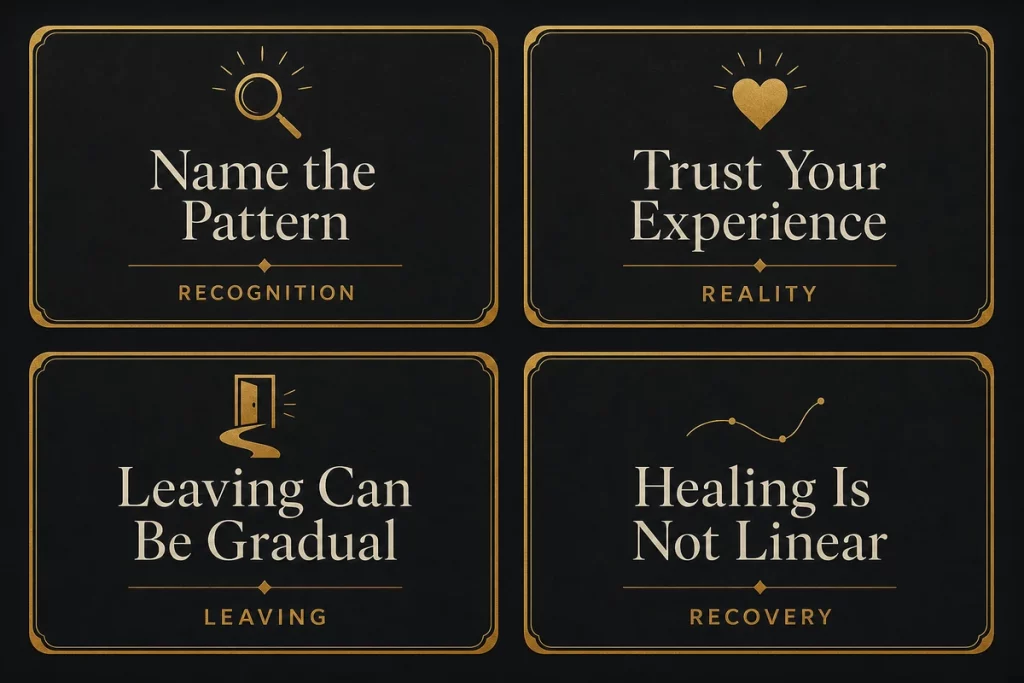
“The most dangerous thing about gaslighting is that it makes you doubt your ability to recognize gaslighting.”
This circular trap is the genius of gaslighting as an abuse mechanism: it disables the very faculty you need to identify it. If your partner has convinced you that your perception is unreliable, how can you trust your perception that your perception is being undermined? The escape from this trap requires EXTERNAL validation — a therapist, a trusted friend, or a resource like this one that describes the pattern in terms specific enough to bypass the self-doubt the gaslighting has installed. Research from the National Library of Medicine on gaslighting effects confirms that external reality-checking is the primary mechanism by which targets begin to recover their self-trust.
“I didn’t realize I was being abused because I was too busy defending myself.”
The constant defensive posture that emotional abuse requires — explaining your behavior, justifying your emotions, providing evidence for your memories — consumes so much cognitive and emotional energy that there’s nothing left for the meta-awareness that would allow you to step back and see the pattern. You’re so focused on winning individual arguments that you can’t see you’ve already lost the larger war for your self-trust. This is why moments of quiet reflection (or searches for emotional abuse quotes at 2 AM) often produce the breakthrough recognition that active engagement with the abuser prevents.
“Before you diagnose yourself with depression, make sure you’re not just surrounded by people who treat you badly.”
Relationship stress can contribute to depression, anxiety, and low self-esteem, but those symptoms can have multiple interacting causes. Improvement after setting boundaries or leaving a harmful environment does not prove that a condition was purely situational. Do not stop medication or treatment based on a quote; discuss symptoms, safety, and relationship context with a qualified clinician.
“They will deny the abuse, then justify it, then say it wasn’t that bad, then blame you for it — and they’ll do all four in the same conversation.”
This quote describes the DARVO pattern (Deny, Attack, Reverse Victim and Offender) with perfect precision. The pattern is so reliable that recognizing it becomes diagnostic: if raising a concern about your partner’s behavior produces denial → justification → minimization → blame reversal within a single conversation, you’re not having a disagreement; you’re experiencing an abuse pattern operating at full function. The deflection guide provides the complete framework for recognizing and responding to DARVO tactics without being drawn into the defensive spiral they’re designed to produce.
Emotional Abuse Quotes About Leaving and the Courage It Requires
“Leaving an abusive relationship isn’t weakness. Staying when you know you should leave is the survival instinct — not weakness either. The courage is in the leaving.”
This quote addresses the shame many emotional abuse survivors carry about having “stayed too long.” The staying isn’t pathological — it’s the predictable result of trauma bonding, isolation, eroded self-trust, and the practical barriers that abusive dynamics create. The courage required to leave — against the neurochemical pull of the trauma bond, the fear of the unknown, the practical complications, and the loss of the relationship’s intermittent good moments — is extraordinary. If you’re not ready to leave, that’s not failure. If you’ve left, the courage that required is real and deserves acknowledgment.
“You don’t need anyone’s permission to protect yourself.”
Among the most empowering emotional abuse quotes because it addresses a core dynamic: the abuser has established themselves as the authority on what’s reasonable, what’s acceptable, and what you’re “allowed” to feel. This quote returns the authority to its rightful owner — you. Protecting yourself through boundaries, distance, therapy, or leaving doesn’t require the abuser’s agreement, understanding, or approval. The National Domestic Violence Hotline (1-800-799-7233) provides the confidential support that helps you exercise this self-protection regardless of the abuser’s position.
“The hardest part of walking away is knowing they’ll never understand why.”
Emotional abusers rarely achieve the self-awareness that would allow them to understand your departure — because the same lack of accountability that produced the abuse prevents the introspection that comprehending its impact requires. Waiting for them to “get it” before you leave is waiting for a transformation that the personality structure producing the abuse actively prevents. Leaving without their understanding is not cruel; it’s necessary — because your healing cannot be held hostage to their capacity for insight.
“The first step in getting out of an abusive relationship is admitting you’re in one.”
Simple but profound — because the gaslighting, minimization, and self-doubt that emotional abuse installs make this first step genuinely difficult. Naming the dynamic as abuse (not “a rough patch,” not “communication problems,” not “we both have issues”) is the act of reclaiming the perception that the abuse was designed to compromise. Our emotionally abusive test provides the structured assessment that supports this naming — because sometimes the clarity you need comes from answering 25 specific questions rather than sitting with vague unease.
Emotional Abuse Quotes About Reclaiming Your Identity
“Recovery isn’t about forgetting — it’s about remembering who you were before someone convinced you that you were nothing.”
This quote frames recovery as a reclamation project rather than a clean-slate rebuild — because the person you were before the abuse still exists beneath the layers of doubt, shame, and diminished self-concept the abuse installed. Recovery involves excavation: uncovering the preferences, strengths, opinions, and identity that were suppressed to survive the abusive environment. The bad breakup recovery guide provides the framework for this identity reclamation process, and the platonic love guide covers rebuilding the support system that the abuse dismantled.
“Rebuilding lets you test old labels against your lived reality.”
Recovery can create distance from demeaning labels such as inadequate, unstable, unlovable, or impossible to please. Each boundary, reconnection, and act of self-trust offers new evidence about your abilities and needs. Healing does not require proving what another person intended; it involves building a self-concept that is not controlled by their characterization.
“Healing doesn’t mean the damage never existed. It means the damage no longer controls your life.”
Healing does not require pretending the experience had a purpose. Memories or triggers may persist, change, or lessen over time, and recovery differs across people. Progress can mean those echoes have less control over choices, relationships, and self-concept while the green flags of healthy partnership become easier to recognize.
“The best revenge is not becoming like them.”
Emotional abuse survivors sometimes fear becoming abusers themselves — either through learned behavior or through the anger and distrust that unprocessed abuse produces. This quote reframes recovery as both self-healing and ethical commitment: the choice to process the pain rather than transmit it, to develop the self-awareness the abuser lacked, and to build relationships characterized by the transparency and care the abusive relationship withheld. The fact that you’re concerned about replicating the pattern is itself evidence of the empathy and self-awareness that distinguish you from the person who harmed you.
How to Use Emotional Abuse Quotes for Actual Recovery
Emotional abuse quotes provide recognition — but recognition alone doesn’t produce change. Translating the clarity these words provide into practical action is what transforms recognition into recovery. The gap between “I see what’s happening” and “I’m doing something about it” is where most people get stuck — not because they lack courage but because the abuse has eroded the self-trust required to take decisive action. These strategies bridge the gap between recognition and response:
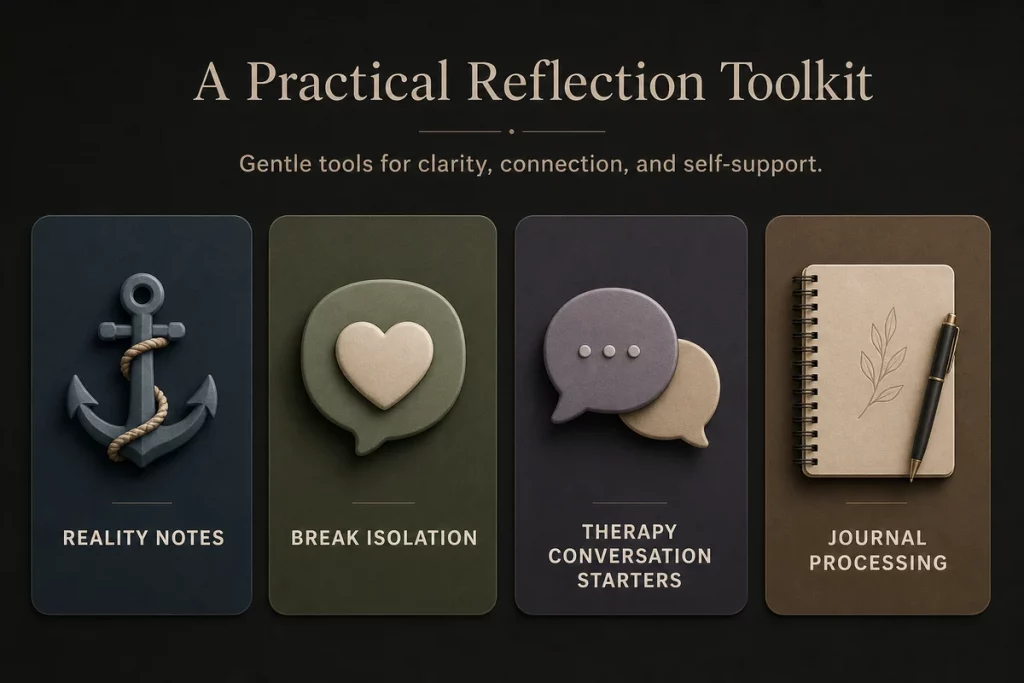
Use quotes as reality anchors. When gaslighting has undermined your self-trust, specific quotes that describe your experience precisely can serve as external reality checks: “This IS what’s happening — this quote describes exactly what I’m going through.” Screenshot the quotes that resonate most and return to them when the self-doubt creeps back. They’re not affirmations; they’re evidence that your experience is real, recognized, and shared by others who’ve survived the same patterns. The power of a reality anchor is that it provides fixed ground when the gaslighting makes everything feel unstable — a reference point your partner can’t move because it exists outside their sphere of influence.
Share them to break isolation. Sending a specific emotional abuse quote to a trusted friend — “this describes what’s happening in my relationship” — can open a conversation that feels too difficult to start from scratch. The quote does the naming; you provide the confirmation. This indirect disclosure is sometimes easier than direct description because it externalizes the experience in a way that feels less vulnerable than saying “my partner is emotionally abusing me” in your own words for the first time. Once the conversation is open, the friend’s response — their concern, their validation, their willingness to listen — provides the external support that isolation has prevented. Our platonic love guide covers why your non-romantic support system is essential during this specific life chapter.
Use them as therapy entry points. Bring specific quotes to therapy sessions as discussion starters: “This quote describes something I experience regularly — can we explore what that means?” Quotes provide concise, specific starting points that are more productive than the vague “something feels wrong” that many abuse survivors struggle to move past in early therapy sessions. A skilled therapist will use the quote as a doorway into the deeper pattern exploration that produces lasting change — transforming the recognition the quote provides into the comprehensive understanding that genuine recovery requires.
Journal with them. Write the emotional abuse quotes that resonate most at the top of a journal page, then write your own experience underneath — what happened, how it felt, what you told yourself about it, and what you now understand about it. The journaling process transforms passive recognition into active processing, and the written record provides the documentation that memory (especially gaslighting-compromised memory) can’t reliably provide. Over time, the journal becomes both therapeutic tool and evidence of the pattern — evidence that counters the “it wasn’t that bad” minimization that the abuser has conditioned you to apply.
Use recognition as motivation for verification in future connections. The clarity these emotional abuse quotes provide about past dynamics becomes the screening framework for future relationships. The patterns you’ve learned to recognize become your early-warning system — and pairing that recognition with practical verification tools creates the comprehensive protection that prevents history from repeating. Use GuyID’s free screening tools for identity verification in every new connection. Share your Date Mode link through GuyID to establish the transparency that emotional abuse depends on eliminating. Apply the red flag quiz, the narcissistic abuse patterns checklist, and the green flags framework to every new connection — because the hard-won recognition these quotes represent is the foundation of the discernment that protects you going forward.
How GuyID Helps
GuyID should appear when it is useful, not as a banner ad. A GuyID Trust Profile gives someone a portable way to share trust signals before a date, while identity verification and social vouching help turn vague profile claims into clearer next steps.
Useful next steps:
- Create a GuyID Trust Profile when you want a cleaner way to share verified trust signals.
- Use GuyID free tools and related guides when you need a checklist before meeting someone.
- Treat identity verification as confidence-building, not a guarantee.
- Use social vouching when you want context from people who already know the person.
- Sign up only when the extra trust layer helps the decision you are already trying to make.
Frequently Asked Questions
Why do emotional abuse quotes resonate so deeply?
Because emotional abuse systematically erodes your ability to name your own experience — and someone else’s precise description of what you’re going through provides the external validation that gaslighting has prevented you from giving yourself. The recognition isn’t just intellectual (“that’s what’s happening”); it’s emotional (“someone else understands”). That combination of cognitive clarity and emotional validation is the first crack in the isolation that emotional abuse depends on maintaining.
Can reading quotes actually help with emotional abuse recovery?
Quotes alone don’t produce recovery — but they provide the RECOGNITION that is recovery’s prerequisite. You can’t heal from something you haven’t identified. Emotional abuse quotes help with identification, validation, and the language to describe experiences that the abuse has made difficult to articulate. The recovery itself requires professional support (therapy), community (support systems), and practical action (boundaries, safety planning). Quotes open the door; you still have to walk through it.
Should I share emotional abuse quotes with my abuser?
Generally no — sharing awareness materials with an emotionally abusive partner typically produces defensiveness, denial, and the accusation that YOU are the abusive one for “diagnosing” them. The quotes are for YOUR clarity, not for their reformation. If confrontation is part of your plan, do it with therapeutic support and safety planning rather than through quote-sharing that gives the abuser advance warning of your awareness. The National Domestic Violence Hotline (1-800-799-7233) can help you develop a communication strategy appropriate to your specific situation.
Where can I find more support beyond emotional abuse quotes?
Professional resources: the National Domestic Violence Hotline (1-800-799-7233), individual therapy with a practitioner specializing in emotional abuse or narcissistic abuse recovery, and local domestic violence organizations. Self-assessment tools: the emotionally abusive test, the red flag quiz, and the psychological abuse quiz. Educational resources: the narcissistic abuse signs guide, the emotional abuse symptoms guide, and the trauma bonding guide.