
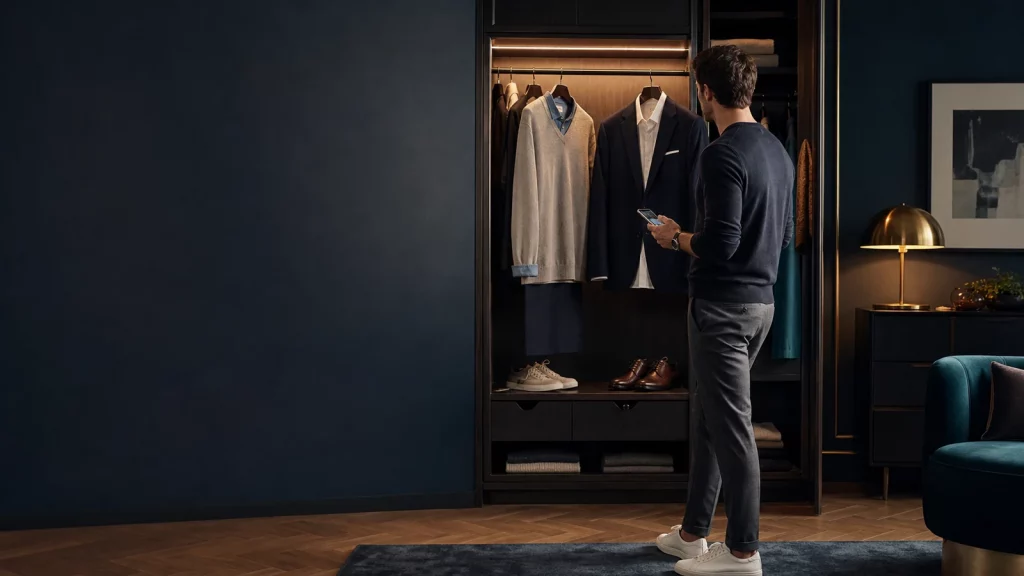
Reader Briefing
Reader Briefing
Start here if you need a practical read on what to wear on a first date: the context-first outfit guide: who should use verification, what signals to check, and what to do before moving from online interest to an in-person plan.
Who this is for
- Readers preparing for a first in-person date.
- Anyone checking identity, profile consistency, and trust signals.
- People trying to avoid romance scams, fake profiles, or pressure tactics.
- Online daters improving conversations, profiles, or match screening.
You’ll learn
- How to evaluate identity signals without treating any single check as certainty.
- Which trust signals matter and how to weigh them together.
- How to spot inconsistencies, pressure, or behavior patterns that deserve caution.
- How to move from online conversation to a safer first meeting.
- Where GuyID tools fit into a quick pre-date screening workflow.
- When to slow down, ask for more context, or walk away.
Bottom line
Verification reduces uncertainty; it does not guarantee future behavior. Use a layered approach: confirm identity signals, compare profile consistency, ask for a short video call, keep early plans public, and slow down when someone pressures you to skip normal safety steps.
Key takeaways
- Identity verification improves confidence, not certainty.
- Patterns matter more than isolated incidents.
- Verify before meeting privately or sharing sensitive details.
- A short video call can reveal many inconsistencies.
- Pressure to skip reasonable safety steps is useful information.
Free Tools
Catfish Probability Detector
Check whether a dating profile has suspicious identity or photo signals.
Dating Bio Red Flag Detector
Review a bio for scam, pressure, or trust-warning language.
Dating Safety Checklist
Use free GuyID tools before moving from chat to a real date.
Next step
Create your GuyID trust profile
Share consent-based trust signals before a date without turning the conversation into an interrogation.
Quick Answer
The best first-date outfit is one step more polished than what the venue normally requires, comfortable enough that you can forget about it, and recognizably yours. Start with the date activity, weather, and walking time. Choose one reliable base outfit, check that it fits while sitting and moving, then add one detail that shows personality. Clean shoes, intentional grooming, and clothes that suit the actual plan matter more than labels or trends.
If you are deciding between two outfits, wear the one you will adjust less. A first date already creates enough self-monitoring; your clothes should remove friction, not add another performance.
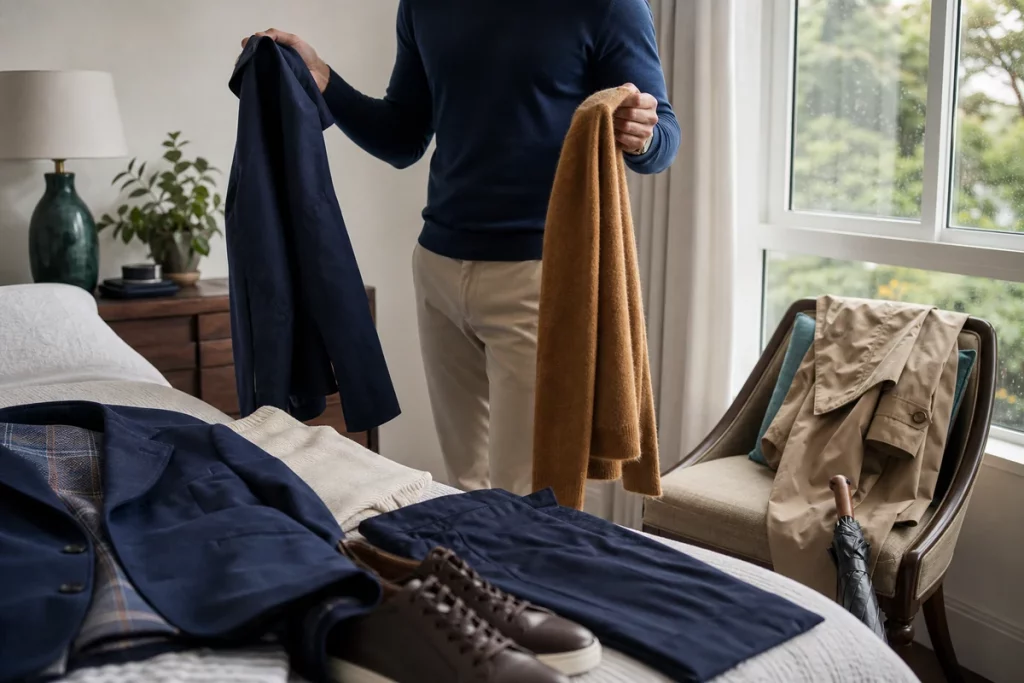
Start with the date context, then choose the outfit.
NavigateTable of Contents49 sections
The Three-Part First-Date Outfit Rule
Most first-date clothing advice begins with a shopping list. That is backward. The useful question is not “Which shirt gets the best reaction?” It is “What lets me arrive appropriate, comfortable, and fully present?”
Use three filters, in this order.
1. Match the real setting
A coffee walk, cocktail bar, climbing gym, gallery opening, and dinner reservation ask different things from your clothes. Look up the venue, including recent customer photos, but do not copy the most dressed-up person in the feed. Aim for the center of the venue’s normal range, then polish it slightly.
“Slightly” matters. Turning up in formal wear to a neighborhood café can feel as disconnected as wearing gym shorts to a reservation-only restaurant. Context reads as social awareness.
2. Remove physical distractions
Sit down in the outfit. Walk up and down stairs. Reach forward. Put your phone, wallet, keys, and any medication where they will actually go. If a waistband pinches, a neckline needs constant checking, a new shoe rubs, or a fabric traps heat, change it now.
Comfort does not mean careless. It means your attention can stay with the person across from you. Clothing researchers describe dress as one element of person perception, but they also caution that clothing judgments depend on the observer and the situation. The practical lesson is not to chase a universal “attractive” uniform. It is to choose clothes that make sense for this meeting and allow your behavior to carry the impression. See the open-access review, “Dress Is a Fundamental Component of Person Perception”.
3. Keep one signal of personality
Once the foundation works, include one detail you genuinely like: a textured overshirt, unusual earrings, a favorite watch, a strong color, a vintage jacket, polished boots, or a print that gives the other person an easy conversation opening.
The goal is not to look generic. It is to keep every item from competing for attention at once.
What to Wear by Date Type
| Date plan | Reliable starting point | Upgrade | Avoid |
|---|---|---|---|
| Coffee or casual lunch | Clean jeans or trousers, simple top, practical shoes | Structured layer or one accessory | Looking ready for the gym or the nightclub |
| Walk, market, or park | Weather-ready layers and shoes you can walk in | Good outerwear and a purposeful bag | New shoes, fragile fabrics, no rain plan |
| Drinks | Dark jeans or trousers, polished top, clean leather or minimal sneakers | Jacket, jewelry, or richer texture | Clothing that only works while standing still |
| Dinner | Trousers, dark denim where appropriate, dress or coordinated separates | Better fabric, sharper shoe, considered outer layer | Ignoring the restaurant’s actual dress level |
| Activity date | Clothes made for movement and the activity | Coordinated color and clean equipment | Wearing restrictive fashion pieces for sport |
| Gallery or event | Smart-casual base with one expressive element | Statement layer or accessory | Treating “creative” as costume |
| After-work date | Work outfit with a deliberate transition | Change shoes, top, or outer layer; freshen grooming | Arriving with no place for laptop or work bag |
Coffee, brunch, or a daytime walk
Daytime dates reward ease. A dependable formula is straight or relaxed jeans, chinos, or a casual skirt with a knit, fitted T-shirt, button-down, or clean blouse. Add a jacket if it gives the silhouette some structure. Wear shoes that can handle the walk the plan may turn into.
For a coffee date, “casual” still benefits from evidence that you prepared: clean footwear, a top without accidental wrinkles, and grooming that looks deliberate. You do not need to erase your normal style. You need to remove the signs that you did not think about the meeting at all.
Drinks or a casual evening
Evening light supports deeper colors and richer textures: dark denim, charcoal or navy trousers, suede, leather, a substantial knit, or a simple dress with a layer. The room may be warm while the trip home is not, so use a coat or jacket you are happy to keep with you.
Before leaving, sit on a low chair. Bar seating exposes outfit problems that a bedroom mirror does not.
Dinner
Check the venue rather than assuming every dinner is formal. For a polished restaurant, trousers with a knit or collared shirt, a simple dress, a skirt with an intentional top, or a coordinated jacket-and-trouser combination are safer than either extreme.
If you are unsure, ask plainly: “I’m thinking smart casual—does that fit what you had in mind?” Coordination is not insecurity. It prevents one person from feeling underdressed beside the other.
Outdoor and activity dates
The activity is the dress code. For a hike, skate, bike ride, bowling night, or climbing session, choose clothing that safely supports the movement. Bring the layer, socks, sun protection, or rain shell the conditions require. Trying to look effortless while physically unprepared usually produces the opposite effect.
An activity date is not a test of who can tolerate discomfort. If the proposed plan creates an accessibility problem, suggest an alternative before the date.
A Practical Outfit Formula for Men
For many men asking what to wear on a first date, the strongest answer is a small set of components that fit well and can move up or down in formality.
The reliable base for men
- Dark straight-leg jeans, chinos, or tailored trousers
- A heavyweight plain T-shirt, knit polo, Oxford shirt, or fine-gauge sweater
- Clean minimal sneakers, loafers, or boots that match the venue
- An overshirt, chore jacket, bomber, unstructured blazer, or clean coat
Fit should look intentional without restricting movement. A shoulder seam near the shoulder, a trouser length that does not collapse over the shoe, and sleeves that do not swallow the hands usually matter more than brand.
Adjusting the men’s formula by context
For coffee, combine dark jeans, a quality T-shirt or knit, and an overshirt. For drinks, use trousers or dark denim with a collared knit or button-down and a sharper jacket. For dinner, replace sneakers with a more polished shoe when the venue calls for it.
Do not wear a suit simply because it is “your best clothing” unless the date setting supports a suit. The message should be that you understand the plan, not that you own formalwear.
Grooming is part of the outfit
Trim or intentionally style facial hair, check nails, and use fragrance lightly. A scent should be discovered at conversational distance, not announce you across the room. If you are coming from work, a small kit with deodorant, floss, and a clean top can do more than an expensive purchase.
A Practical Outfit Formula for Women
There is no obligation to dress more revealingly, more femininely, or more formally than feels like you. The useful formula is a base that stays comfortable through the date plus one element that makes the outfit feel chosen.
The reliable base for women
- Straight-leg denim, trousers, a skirt, a jumpsuit, or a dress you already trust
- A knit, fitted tee, blouse, button-down, or coordinated top
- Flats, boots, loafers, clean sneakers, or heels you can genuinely walk in
- A practical layer and a bag that closes securely
The seated test is essential. Check the neckline, hem, waistband, and how the fabric behaves when you reach for something. Fashion tape can solve a specific issue, but an outfit that needs continuous surveillance is not doing its job.
Adjusting the women’s formula by context
For daytime, use lighter layers and shoes that support walking. For drinks or dinner, deepen the color, add texture, or use one stronger accessory rather than changing your entire identity. If a heel changes your posture because it hurts, a polished flat or boot will make the better impression.
You do not owe the date a particular presentation
Choose clothing based on your identity, comfort, and the plan—not a rule that assigns colors, cuts, or modesty levels by gender. The best outfit lets the other person meet you without making you feel exposed or disguised.
Weather, Accessibility, and Comfort
An attractive outfit that fails in the real conditions is a bad outfit.
Build from the forecast
Check the temperature at the end of the date, not only at the start. Add wind, rain, humidity, and transit time. A coat is part of the outfit if you will wear it for half the meeting. In winter, plan for where wet boots and a heavy layer will go. In summer, favor breathable fabric and darker colors only if you know they will not trap heat.
Plan for your body
Bring what you need without apology: mobility aid, medication, glucose, hearing support, sensory-friendly layer, backup footwear, or a bag large enough to carry them. If a garment conflicts with an aid or creates sensory strain, it is not the right garment for this date.
Make the outfit size-inclusive
“Flattering” is often used as code for hiding. A more useful standard is fit: the garment sits where it is designed to sit, allows movement, and creates the shape you want. Tailoring a familiar item or choosing a retailer with reliable sizing may serve you better than buying a new “date outfit” from a brand you have never worn.
What Different Clothing Choices Communicate
Clothes influence impressions, but the effect is contextual and vulnerable to bias. In nine experiments, researchers found that subtle status cues in clothing affected perceived competence even when observers were told to ignore the clothes. That finding describes a bias; it does not prove that expensive clothing makes someone more capable or more desirable. Read the Nature Human Behaviour study.
Use that distinction to avoid two traps:
- Do not mistake polish for character. A well-dressed date has prepared well. It does not establish honesty, kindness, compatibility, or safety.
- Do not mistake a style mismatch for disrespect. Cultural norms, disability, gender expression, income, work, and comfort all influence dress.
Your own outfit can communicate three grounded things:
- Context awareness: you understood the plan.
- Self-respect: your clothing is cared for and chosen.
- Authenticity: the person on the date resembles the person in the profile.
That third point is especially useful in app dating. If every profile photo shows a very different era or aesthetic, a brief video call before meeting can reduce uncertainty for both people. It is not a beauty inspection; it is a mutual continuity check.
Common First-Date Outfit Mistakes
Buying a complete new outfit
New clothes introduce unknown fit, fabric, and footwear behavior. If you buy something, combine it with pieces you already trust and wear it for at least an hour before the date.
Dressing for an imaginary second venue
Wear the outfit for the actual plan. If the date continues somewhere else, adapting together is part of the fun. Do not spend two hours uncomfortable because the evening might become more formal later.
Ignoring pockets and belongings
A phone outlined through a trouser pocket, an unsecured bag, or nowhere to put keys becomes a recurring distraction. Test the complete carry setup.
Letting online “rules” override your identity
Advice such as “always wear red,” “men must wear a collared shirt,” or “never wear sneakers” treats every venue and person as identical. Color can be memorable, but confidence is not stored in one pigment. Gendered formulas are options, not obligations.
Using the outfit to manufacture trust
Good presentation is not verification. Scammers can dress well; considerate people can arrive rumpled after an honest transit problem. Evaluate consistency, boundaries, behavior toward staff, and whether the person matches what they represented online.
The 15-Minute Decision Process
Step 1: Write down the constraints
Venue, activity, weather, walking time, transit, and anything you need to carry.
Step 2: Choose the shoe first
The shoe determines how long you can comfortably move and often sets the outfit’s formality. Select a proven pair.
Step 3: Add the base
Choose one bottom or one-piece outfit that works with the shoe, then one top or layer.
Step 4: Add one point of interest
Color, jewelry, texture, jacket, bag, or watch. One is enough.
Step 5: Run the movement test
Sit, walk, bend, reach, and put on the outerwear. Photograph the outfit in ordinary light rather than judging only in a mirror.
Step 6: Prepare the recovery item
Depending on the plan: umbrella, stain wipe, blister bandage, lint roller, deodorant, hair tie, or spare top.
Step 7: Stop editing
Once the outfit passes context, comfort, and identity, leave it alone. More changes rarely improve the date.
Safety and Identity Checks Before Meeting
Clothing preparation should not crowd out meeting preparation. For a first in-person date with someone from an app:
- Choose a public, populated setting.
- Control your own transportation.
- Tell someone where you are going and when you expect to check in.
- Avoid displaying your home address, workplace badge, or other unnecessary identifying details.
- Verify that the person is consistent across profile, conversation, and—when appropriate—a brief video call or consent-based trust profile.
RAINN’s current safer dating guidance recommends meeting publicly, sharing plans with a trusted person, and maintaining control of transportation. These steps improve information and preserve options.
GuyID can support that preparation by giving people a portable place to share identity and trust signals before moving from an app to a date. Treat those signals as useful evidence, not a substitute for boundaries or judgment.
How GuyID Helps
GuyID should appear when it is useful, not as a banner ad. A GuyID Trust Profile gives someone a portable way to share trust signals before a date, while identity verification and social vouching help turn vague profile claims into clearer next steps.
Useful next steps:
- Create a GuyID Trust Profile when you want a cleaner way to share verified trust signals.
- Use GuyID free tools and related guides when you need a checklist before meeting someone.
- Treat identity verification as confidence-building, not a guarantee.
- Use social vouching when you want context from people who already know the person.
- Sign up only when the extra trust layer helps the decision you are already trying to make.
Frequently Asked Questions
What should I wear on a casual first date?
Wear clean, well-fitting everyday clothes that are slightly more polished than your normal errand outfit. Dark or tidy denim, chinos, trousers, a skirt, dress, or jumpsuit can all work with a considered top and practical footwear. Add one structured layer or accessory so the outfit looks chosen rather than accidental.
What should a man wear on a first date?
A reliable formula is dark jeans or chinos, a quality T-shirt, knit polo, Oxford shirt, or sweater, clean shoes, and an optional jacket. Match the venue before increasing formality. Good fit, clean footwear, grooming, and comfort usually matter more than wearing a suit or buying a trend-driven outfit.
What color is best for a first date?
There is no universally best first-date color. Use a color that suits your wardrobe, the setting, and the way you want to feel. If you enjoy a strong color, make it the focal point and keep the rest quieter. If you prefer neutrals, add texture or one accessory so the outfit still feels intentional.
Is it okay to wear jeans on a first date?
Yes, when the venue permits them. Choose a clean pair with a deliberate fit and combine it with a polished top, layer, and shoes. Jeans are a poor choice only when they conflict with the activity, restaurant dress level, weather, or your comfort.
Should I buy a new outfit for a first date?
Usually not. Familiar clothes reduce fit surprises and help you look like yourself. If a new item makes the plan more comfortable or fills a real wardrobe gap, wear-test it and combine it with trusted pieces. Avoid debuting new shoes on a walking date.
What if I do not know how formal the date will be?
Look at the venue’s recent photos and ask your date if needed: “I’m thinking smart casual—does that match your plan?” A coordinated expectation is better than guessing. Layers also let you adjust without carrying an entirely separate outfit.
Should my first-date outfit match my profile photos?
Your first-date outfit should feel continuous with your profile photos, but it need not reproduce one photo. Current photos and a recognizable personal style reduce unnecessary uncertainty. If your appearance has changed substantially, update the profile before meeting so both people arrive with accurate expectations.
Key Takeaways
- Dress for the actual plan, then raise the polish by one step.
- Choose comfort that frees your attention, not comfort that ignores the venue.
- Wear tested shoes and do a seated movement check.
- Use one personal detail instead of constructing a costume.
- Treat clothing as context, not evidence of character or safety.
- Prepare your meeting plan with the same care as your outfit.
Conclusion
The best answer to what to wear on a first date is not a universal shirt, dress, color, or price point. It is a decision system: context first, comfort second, personality third. When the clothes fit the plan and feel like you, they become background support for the parts of the date that matter—curiosity, conversation, respect, and whether both people want to meet again.
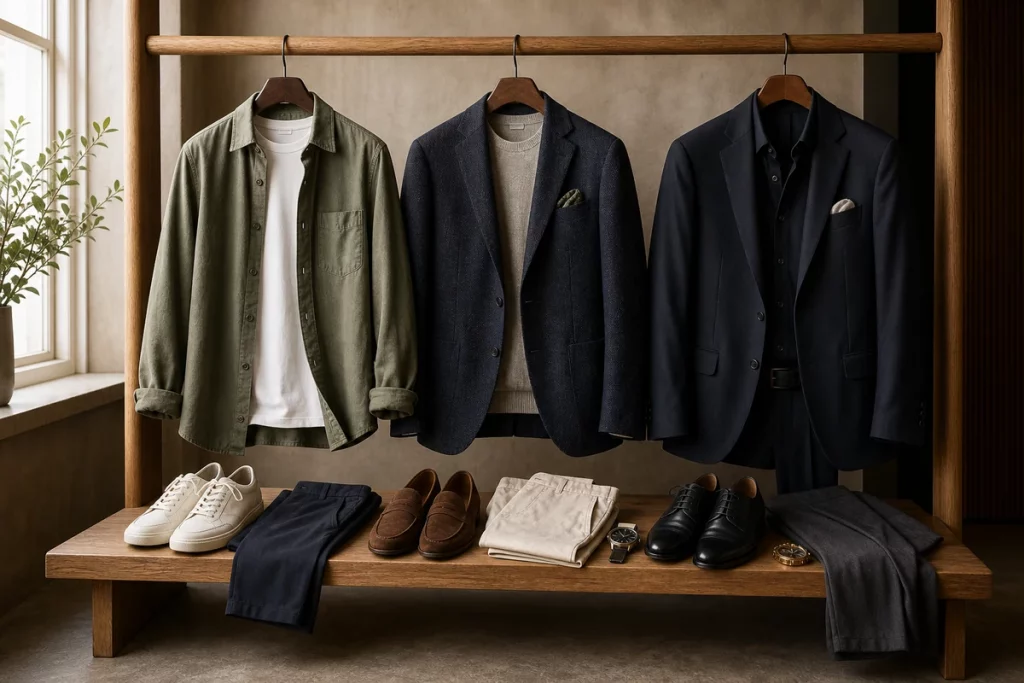
Change one or two elements as the venue becomes more formal.
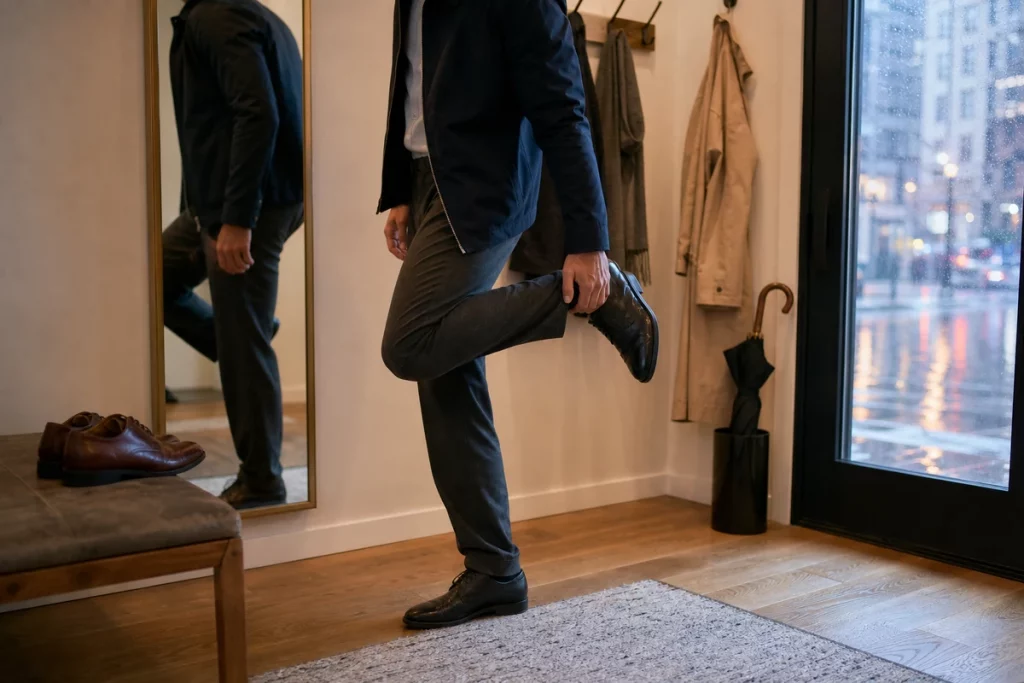
A useful outfit should survive the real date, not just the mirror.