

Reader Briefing
Reader Briefing
Start here if you need a practical read on dating as an introvert: more connection, less performance: who should use verification, what signals to check, and what to do before moving from online interest to an in-person plan.
Who this is for
- People meeting someone from a dating app or social platform.
- Readers preparing for a first in-person date.
- Anyone checking identity, profile consistency, and trust signals.
- Online daters improving conversations, profiles, or match screening.
You’ll learn
- How to evaluate identity signals without treating any single check as certainty.
- Which trust signals matter and how to weigh them together.
- How to move from online conversation to a safer first meeting.
- Where GuyID tools fit into a quick pre-date screening workflow.
- How to compare options using practical safety and trust criteria.
- When to slow down, ask for more context, or walk away.
Bottom line
Verification reduces uncertainty; it does not guarantee future behavior. Use a layered approach: confirm identity signals, compare profile consistency, ask for a short video call, keep early plans public, and slow down when someone pressures you to skip normal safety steps.
Key takeaways
- Identity verification improves confidence, not certainty.
- Verify before meeting privately or sharing sensitive details.
- A short video call can reveal many inconsistencies.
- Pressure to skip reasonable safety steps is useful information.
- Use GuyID tools to turn vague concerns into specific checks.
Free Tools
Catfish Probability Detector
Check whether a dating profile has suspicious identity or photo signals.
Dating Bio Red Flag Detector
Review a bio for scam, pressure, or trust-warning language.
Dating Safety Checklist
Use free GuyID tools before moving from chat to a real date.
Next step
Create your GuyID trust profile
Share consent-based trust signals before a date without turning the conversation into an interrogation.
Quick Answer
Dating as an introvert works better when you design for depth instead of trying to imitate a high-energy social style. Choose quieter dates, limit the duration, build recovery time into your schedule, and use direct questions so you do not spend the whole interaction performing.
Introversion is not the same as disliking people or being unable to date. It also is not the same as social anxiety. If fear of judgment causes intense distress, prolonged avoidance, or interference with daily life, consider qualified mental-health support rather than treating it as a personality flaw.
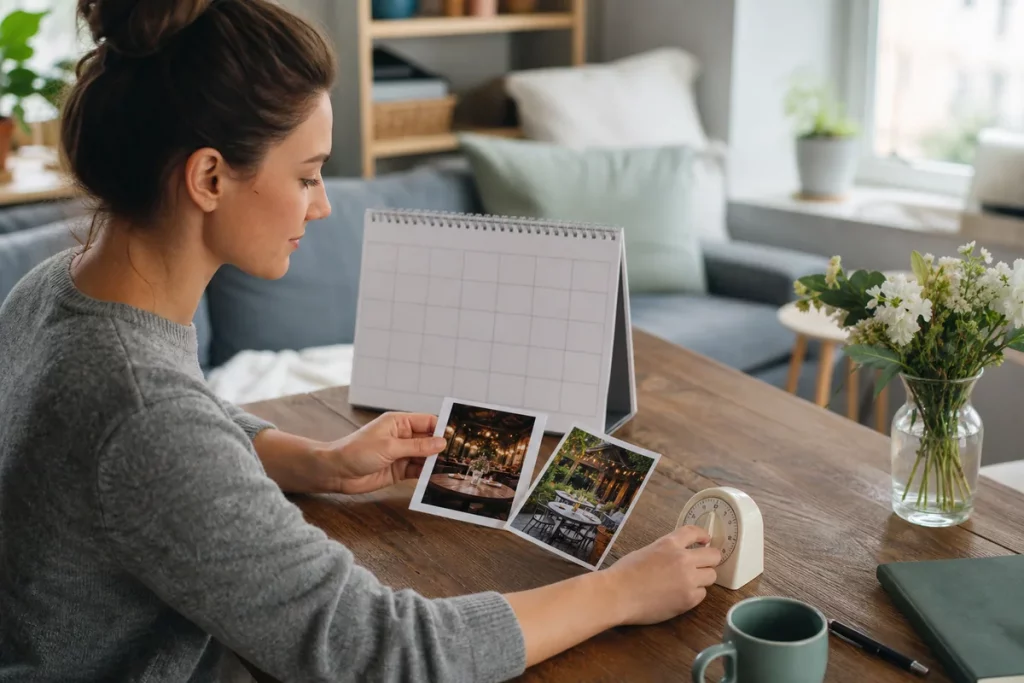
A good date plan protects enough energy for you to be curious, present, and yourself.
NavigateTable of Contents34 sections
What Introversion Means for Dating
Introversion is often reduced to shyness, silence, or avoidance. A more useful everyday description is a preference for lower-stimulation environments, more selective social engagement, or time alone to recover after interaction. People vary widely. An introvert may be warm, funny, socially skilled, and confident.
Research with adolescents found that introversion and social engagement were distinct dimensions rather than automatic opposites. The study of introversion and engagement used a student sample, so it should not be generalized into a dating rule. It does support a practical distinction: being introverted does not require being socially disengaged.
The dating problem is often design, not personality. Common high-stimulation defaults include:
- crowded bars;
- loud group events;
- long dinners with no natural break;
- multiple dates in one weekend;
- constant app notifications;
- rapid-fire conversation;
- pressure to be visibly charismatic.
If those settings drain you, change the setting before deciding you are bad at dating.
Introversion Versus Social Anxiety
An introvert may prefer a quiet evening and still feel comfortable meeting someone new. A person with social anxiety may want connection but experience persistent fear of scrutiny, humiliation, or rejection.
Social anxiety disorder involves persistent fear of scrutiny or judgment that interferes with daily life, which is different from simply preferring lower-stimulation social settings. The National Institute of Mental Health notes that social anxiety can affect meeting new people and dating, may lead to avoidance, and can be treated.
Ask:
| Preference | Possible anxiety signal |
|---|---|
| “I prefer one date a week” | “I cancel every date because I expect humiliation” |
| “I like quieter venues” | “I cannot enter a venue because people may judge me” |
| “I need time to think before answering” | “My mind goes blank and fear controls the interaction” |
| “I recharge alone afterward” | “I replay every sentence for days and avoid trying again” |
This table is not a diagnostic tool. Occasional nerves are common. Seek professional help when distress is persistent, severe, or limiting the life you want.
The existing GuyID guide to anxiety in dating offers additional practical grounding without assuming every quiet dater has an anxiety disorder.
Build a Dating Rhythm That Fits Your Energy
Set a realistic frequency
Do not schedule from fear that every match will disappear. Decide how many active conversations and dates you can hold while remaining respectful.
For example:
- two short app sessions on selected days;
- no more than a few active conversations;
- one first date in a week;
- a free evening after a socially demanding date;
- permission to pause matching while following up with someone promising.
This is not playing hard to get. It is managing attention so people receive genuine engagement.
Use honest expectations
You can say:
“I enjoy getting to know someone one-on-one, and I’m usually slower with messaging during workdays.”
Or:
“Crowded bars are not my best setting. Would you be open to coffee and a walk?”
You do not need to apologize for a preference. You do need to communicate it so silence is not mistaken for disinterest.
Protect transition time
Arrive early enough to settle. Avoid stacking a date immediately after a draining work meeting. Plan your way home and a simple recovery routine.
Preparation should reduce friction, not become hours of rehearsal. Choose clothes, route, and one or two conversation threads—then stop.

Lower stimulation can make room for the deeper conversation many introverts enjoy.
Choose First Dates That Make Conversation Easier
A multimethod study linked both the frequency and the depth of everyday social interactions with well-being, while exploratory results suggested deeper conversations may be especially connecting for introverts. The social interaction study was not a dating intervention, so use it as context rather than proof that one date style is superior.
Good options include:
- a quiet café with an easy exit;
- a museum or gallery with conversation prompts;
- a daytime walk in a populated public place;
- a bookstore browse;
- a small food market outside peak hours;
- a casual activity with natural pauses.
Use the collection of first-date ideas to choose something public, accessible, and adjustable.
Set an initial duration:
“Would you like to meet for coffee from two to three?”
You can extend a good date. A defined endpoint reduces the feeling of an open-ended performance.
For conversation, move between observation, story, and preference:
- “What made you choose that?”
- “How did you get interested in it?”
- “What does an ideal weekend feel like to you?”
Use the first-date questions guide for ideas, but follow the answer instead of finishing a list.
Use Dating Apps Without Creating a Second Job
Make your profile filter for fit
Show what connection with you looks like:
- “Happiest over a long breakfast and a bookstore wander.”
- “Social battery: selective. Curiosity: high.”
- “Looking for someone who enjoys both plans and quiet.”
Avoid defining yourself only through what you dislike. “No clubs, no parties, no extroverts” sounds rigid and may exclude compatible people.
Move toward a manageable meeting
Weeks of messaging can create pressure and imagined intimacy. After enough conversation to assess basic interest and safety, suggest a public meeting:
“I’m enjoying this. Would you like to continue over coffee this weekend?”
If a video call lowers uncertainty, keep it short and scheduled. The point is not to perform a full date through the phone.
Limit exposure to app feedback
Turn off nonessential notifications. Do not use match counts as a daily measure of worth. Verification or social-vouching signals can reduce some identity uncertainty, but GuyID cannot predict chemistry or compatibility. Continue to use independent judgment and public-date safety practices.
See online dating safety tips before moving from chat to a meeting.
How to Date an Introvert
Do not assume your partner needs to be rescued, spoken for, or constantly encouraged to “come out of their shell.”
Instead:
- invite without demanding;
- provide some notice for social plans;
- ask whether they prefer one-on-one or group settings;
- do not interpret every quiet moment as anger;
- respect alone time without using it to avoid relationship responsibilities;
- discuss messaging expectations;
- alternate higher- and lower-energy dates;
- let them answer in their own cadence.
An introvert still has responsibility to communicate, initiate, repair, and participate. Personality is context, not an exemption from reciprocity.
If one person loves large gatherings and the other avoids them, negotiate specifics:
- Which events matter most?
- How long will you stay?
- Can you arrive or leave separately?
- Does each person attend some events alone?
- How will you reconnect afterward?
Compatible couples do not need identical energy. They need respect and a workable system.
When to Stretch Your Comfort Zone
Comfort and avoidance are not the same. Growth may mean:
- initiating one conversation;
- accepting a small group invitation;
- suggesting the date instead of waiting;
- staying through the first wave of ordinary nerves;
- naming that you need a moment to think;
- practicing a skill with support.
Choose a step that is challenging but tolerable. Repeatedly forcing yourself into overwhelming situations can make dating feel like punishment.

A useful stretch is specific and chosen—not an order to become a different personality.
If fear is severe, a licensed clinician can help distinguish temperament, learned avoidance, and an anxiety condition. Online advice cannot make that assessment.
A Practical Introvert Dating Playbook
A sustainable dating system makes the next action small and clear. It should protect recovery time without turning every uncertain moment into a reason to avoid connection.
Write a profile that filters for fit
Show how you like to connect instead of apologizing for being quiet. “I like used bookstores, long walks, and dinners where everyone can hear each other” gives a potential match something concrete to respond to.
Avoid making introversion your entire identity. Include interests, values, humor, and the kind of relationship you want. “Homebody” can mean contentment, isolation, or simply a preference for smaller plans; examples communicate more.
State one social preference positively: “I am at my best one-on-one” works better than “I hate parties and crowds.”
Open with one observable detail
You do not need a dazzling line. Choose something from the profile and ask a question with more than one possible answer:
- “You mentioned weekend cooking projects. What is one that was worth the effort?”
- “That trail photo looks peaceful. What kind of walk do you actually enjoy?”
- “You listed live music and quiet Sundays. Which one recharges you?”
One thoughtful message is enough. Do not draft ten versions or research a stranger across platforms to avoid the discomfort of sending.
Move from messaging to a date
Endless chat can feel safe because it provides time to edit. It can also build an imagined relationship that makes the first meeting harder.
After enough conversation to establish basic interest and safety, suggest a specific, modest plan: “Would you like coffee at the public café on Saturday at 2? I can stay about an hour.”
A brief live video call can reduce uncertainty if both people want one. Keep it scheduled and bounded. It is a check for comfort and identity, not a demand to perform an entire date before meeting.
Design the first date
Choose a public place where you can hear each other, leave independently, and use the surroundings when conversation pauses. Good options include a quiet café, small gallery, bookstore, daytime market, accessible park route, or casual lunch outside peak hours.
Limit variables. Know the route, accessibility, cost, approximate duration, and how you will get home. Familiarity preserves attention for the person rather than spending it all on logistics.
An end time is not a rejection. “I have to leave by four” creates a natural structure. If the date is going well, leaving while you still have energy can make a second date more appealing.
Handle a conversational pause
Silence is not proof that a date failed. Take a sip, notice the environment, or return to the last answer.
Useful follow-ups include:
- “What did you like about that?”
- “How did you get interested in it?”
- “Would you do it again?”
- “What is the part people misunderstand?”
If your mind goes blank, say something ordinary: “I am enjoying this; I just need a second to think.” A calm pause often feels much shorter to the other person than it does internally.
Share that you need recovery time
You do not have to introduce yourself with a warning. When scheduling matters, be direct: “I like seeing you, and I need a quiet evening after a busy workday. Could we meet Thursday instead?”
This communicates interest and a practical alternative. Repeatedly disappearing without context is not an introvert need; it leaves the other person to guess.
If a partner wants more contact, discuss frequency, duration, and mode. A short check-in may be easier than a long spontaneous call. A planned evening together may feel better than three uncertain invitations.
Date when your week is already full
Do not place every social obligation beside a first date. Look at the whole week: work meetings, caregiving, commuting, exercise, family events, and existing friendships all use social energy.
When capacity is low, reduce app activity rather than collecting conversations you cannot sustain. Tell an active match: “This week is packed, but I am interested. Could we plan for next Tuesday?” Then follow through.
Scarcity of energy is not permission to keep people on indefinite standby. A clear no or pause is kinder than vague future interest.
Go to group events without getting trapped
Arrive independently, choose a short window, and give yourself a role: greet the host, speak to two people, or help with one task. Stand near a quieter edge rather than forcing yourself into the loudest cluster.
You can leave without inventing an emergency: “Thank you, I am glad I came. I am heading out.” If a date attends with you, agree in advance whether you will leave together or separately.
Stretching works when the action serves a value. Staying until exhaustion to prove you are fun teaches the wrong lesson.
Evaluate the date after your nervous system settles
Immediately after a stimulating event, fatigue may sound like “I never want to see anyone again.” Rest, eat, and wait before making a decision unless there was a safety or boundary concern.
Then ask:
- Was I curious about this person?
- Did I feel respected?
- Could I speak in my natural cadence?
- Did they show reciprocal interest?
- Was the venue the problem, or the connection?
- Would a different second-date format reveal something useful?
Do not demand certainty about a future relationship. Decide only whether another safe, honest interaction is wanted.
A Low-Pressure Dating Plan
Before the week begins:
- Choose two short app windows.
- Keep only conversations you can answer thoughtfully.
- Suggest one public, low-stimulation date.
- Set a start and approximate end time.
- Arrange independent transportation.
- Prepare two open questions.
- Leave recovery time afterward.
- Send a clear follow-up rather than analyzing every cue.
The intentional dating guide can help you choose a sustainable pace without drifting.
How GuyID Helps
GuyID should appear when it is useful, not as a banner ad. A GuyID Trust Profile gives someone a portable way to share trust signals before a date, while identity verification and social vouching help turn vague profile claims into clearer next steps.
Useful next steps:
- Create a GuyID Trust Profile when you want a cleaner way to share verified trust signals.
- Use GuyID free tools and related guides when you need a checklist before meeting someone.
- Treat identity verification as confidence-building, not a guarantee.
- Use social vouching when you want context from people who already know the person.
- Sign up only when the extra trust layer helps the decision you are already trying to make.
Frequently Asked Questions
Is dating harder for introverts?
Some common dating environments are more draining for introverts, but that does not make connection less available. Quieter venues, fewer simultaneous conversations, and direct communication can improve fit.
What are good first dates for introverts?
Choose public settings with moderate stimulation and natural conversation material: a quiet café, bookstore, gallery, daytime walk, small market, or another place where leaving is easy.
How often should an introvert text?
There is no introvert rule for texting frequency. Set expectations based on actual availability, energy, and interest. Reliable communication matters more than constant messaging throughout the day.
Are dating apps good for introverts?
They can provide time to think and filter, but they can also create notification fatigue and prolonged imaginary connection. Use limited sessions and move toward a safe meeting when appropriate.
Is introversion social anxiety?
No. Introversion is a personality tendency or preference. Social anxiety involves fear of judgment that may cause distress and impairment. A person can experience either or both.
Can an introvert and extrovert relationship work?
Yes. Discuss social frequency, alone time, communication, important events, and recovery. Compatibility depends on whether both people can respect the differences, negotiate practical plans, and remain reciprocal.
Conclusion
Dating as an introvert does not require becoming louder, faster, or constantly available. It requires enough structure that your attention can reach the person in front of you.
Build dates around curiosity, depth, manageable stimulation, and honest pacing. Stretch when the step serves your values. Rest when you need to. The aim is not to perform sociability—it is to make connection possible.