

Free Tools
Catfish Probability Detector
Check whether a dating profile has suspicious identity or photo signals.
Dating Bio Red Flag Detector
Review a bio for scam, pressure, or trust-warning language.
Dating Safety Checklist
Use free GuyID tools before moving from chat to a real date.
Next step
Create your GuyID trust profile
Share consent-based trust signals before a date without turning the conversation into an interrogation.
A bad breakup is different from a regular breakup. A regular breakup hurts because you lost someone you cared about. A bad breakup hurts because the loss came wrapped in betrayal, cruelty, deception, or the devastating realization that the relationship was never what you believed it was. Knowing how to get over a bad breakup requires different strategies than recovering from an amicable separation — because bad breakups damage not just your heart but your trust, your self-perception, and your ability to feel safe in future connections. This guide provides the specific recovery framework for breakups involving infidelity, emotional abuse, narcissistic patterns, sudden abandonment, or other forms of relationship damage that standard “give it time” advice doesn’t address.
NavigateTable of Contents13 sections
What Makes a Breakup “Bad”
Understanding how to get over a bad breakup starts with identifying what category of “bad” you’re dealing with — because different types of damage require different recovery approaches:
Betrayal breakups. Infidelity, discovering a hidden relationship, financial deception, or learning that fundamental aspects of your partner’s identity or history were fabricated. These breakups damage trust at its foundation: not just trust in your ex, but trust in your own ability to judge character. According to the American Psychological Association, betrayal-related breakups produce more complex grief than non-betrayal endings because the person is simultaneously grieving the relationship AND processing the revelation that the relationship wasn’t what they understood it to be.
Abuse breakups. Leaving (or being discarded by) a partner who gaslit, manipulated, stonewalled, or otherwise emotionally or physically abused you. These breakups are complicated by trauma bonding — the neurological attachment to an abusive partner that makes the loss feel unbearable despite the relationship being harmful. Understanding how to get over a bad breakup involving abuse means understanding that you’re recovering from trauma, not just heartbreak — and the recovery tools differ accordingly.
Sudden abandonment. Your partner leaves without warning, explanation, or closure — ghosting at the relationship level. One day you’re planning a future together; the next, they’re gone. These breakups produce acute psychological distress because the human brain is wired to require narrative coherence: we need to understand WHY things happen, and sudden abandonment denies that understanding entirely, leaving the brain in a persistent state of confused searching that delays recovery until some form of meaning can be constructed.
Public or humiliating breakups. Breakups that involve public disclosure (social media announcements, finding out through mutual friends, being replaced visibly and immediately) add shame to the grief — and shame is the emotion most resistant to natural recovery. Learning how to get over a bad breakup that included public humiliation requires specifically addressing the shame component, which standard breakup advice rarely covers.
The First 30 Days: Triage and Stabilization
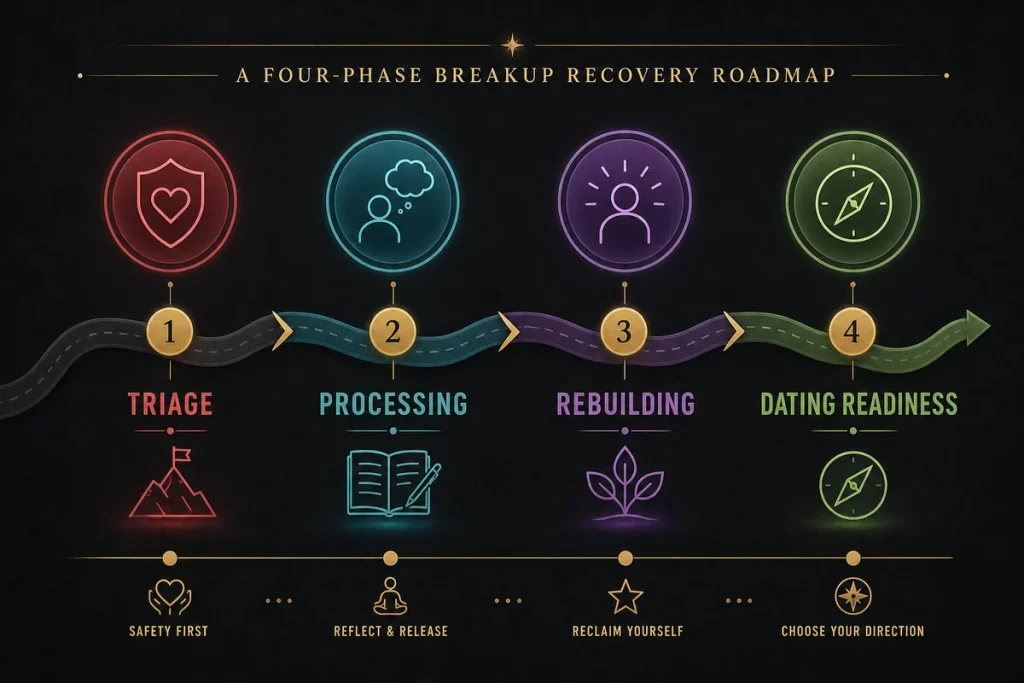
The first month after a bad breakup isn’t about “getting over it” — it’s about stabilizing enough to function while your nervous system processes the acute shock. Here’s the triage protocol:
Implement immediate no-contact. Block, mute, or remove the ex from all communication channels and social media platforms. Not because you hate them (though you might), but because every contact reactivates the attachment system that needs to begin deactivating for recovery to start. If you share children or legal obligations that require contact, use a communication tool (email only, scheduled check-ins) and restrict all contact to logistical matters. Research from the National Library of Medicine consistently confirms that no-contact periods accelerate breakup recovery by 2-3x compared to maintained contact.
Tell someone what happened. Isolation amplifies post-breakup distress. Tell at least one trusted person the full truth of what happened — not the sanitized version, the real version. This serves dual purposes: it prevents the isolation that shame creates (bad breakups produce shame; shame produces isolation; isolation prevents recovery), and it provides a reality-check anchor when your brain starts revising the narrative (“maybe it wasn’t that bad,” “maybe I’m overreacting”). The trusted person who heard the truth in real time can gently remind you of it when nostalgia or self-doubt sets in.
Maintain survival routines. Sleep, food, movement, hygiene. These aren’t optional — they’re the biological foundation on which all psychological recovery builds. Set alarms for meals if you can’t remember to eat. Walk for 20 minutes daily even if you don’t feel like it. Maintain a consistent sleep schedule even if sleep quality is poor. These routines don’t feel like recovery — they feel like going through the motions — but they prevent the physical deterioration that compounds emotional distress and extends recovery timelines.
Allow the grief without drowning in it. “Containment” is the therapeutic technique for early-stage bad breakup recovery: designate a specific time each day (30-60 minutes) for active grief — crying, journaling, processing memories, feeling the loss fully. Outside that window, gently redirect yourself to present-moment activities. This technique prevents two opposite extremes: suppressing grief entirely (which delays recovery) and being consumed by grief constantly (which impairs functioning and deepens depression). Containment validates the grief while preventing it from monopolizing every waking moment.
Remove physical triggers from your immediate environment. Photos, gifts, shared objects, their leftover belongings — these items function as attachment reactivation devices during the acute phase. You don’t have to throw them away permanently — box them up and store them somewhere you won’t encounter them during daily life. The goal isn’t erasing the relationship from existence; it’s removing the environmental cues that trigger grief responses during the stabilization period when your nervous system needs consistency, not constant reactivation. Once you’ve reached the integration stage of recovery, you can decide what to keep, what to return, and what to discard from a position of clarity rather than acute pain.
Processing the Damage
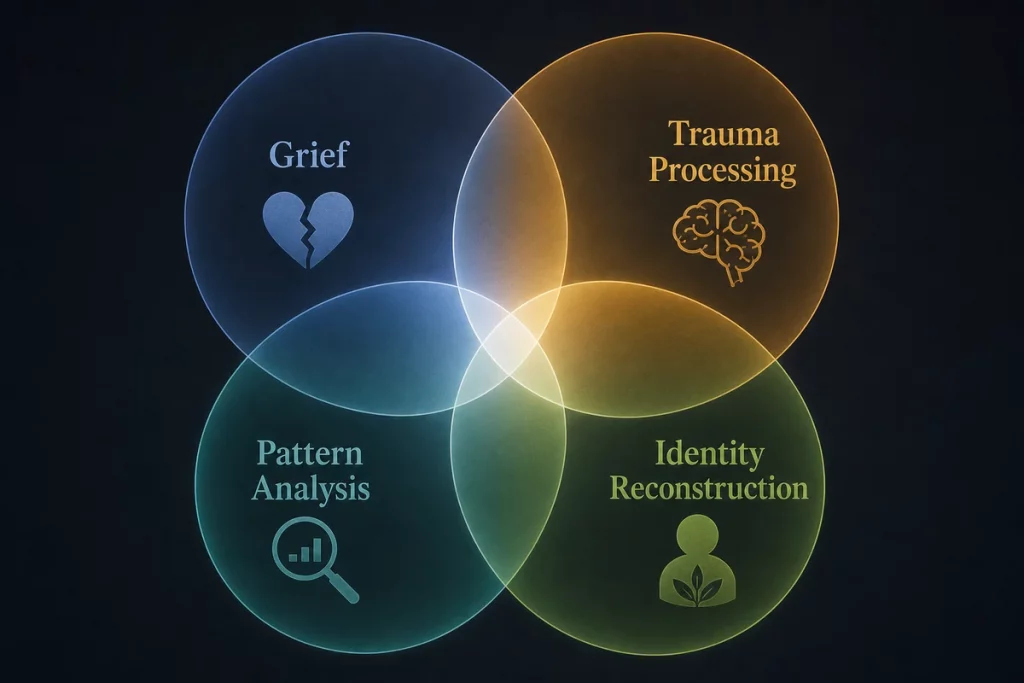
After the first month’s stabilization, the deeper processing work begins. Understanding how to get over a bad breakup means recognizing that you’re processing multiple layers of damage simultaneously:
Layer 1: Grief for what you lost. Even bad relationships contained genuine moments of connection, hope, and love. Grieving those moments — while acknowledging that they existed alongside harm — is necessary and valid. The grief doesn’t mean you should go back; it means you’re human and you attached to someone who turned out to be harmful. Allow the grief without letting it erase the reasons you left (or the reasons they left that revealed who they really were).
Layer 2: Anger at what was done to you. If the breakup involved betrayal, abuse, or deception, anger is not just normal — it’s necessary. Anger serves a protective function: it reinforces the boundary between what’s acceptable and what isn’t, preventing the return to a harmful situation that grief (with its softening, nostalgic quality) might otherwise enable. The goal isn’t to live in anger permanently — it’s to let anger do its protective work and then gradually release it as you rebuild safety in your own life. The National Domestic Violence Hotline (1-800-799-7233) provides support specifically calibrated for processing post-abuse anger in healthy, constructive ways.
Layer 3: Trust reconstruction. Bad breakups damage trust on multiple levels: trust in the ex, trust in potential future partners, and — most damagingly — trust in your own judgment. “How did I not see the signs?” “Why did I ignore the red flags?” These questions reflect the trust-in-self damage that bad breakups inflict. Rebuilding self-trust requires honest but compassionate self-assessment: examining what you missed without converting the examination into self-blame. Many love bombing and narcissistic patterns are specifically designed to be undetectable in early stages — you’re not stupid for not seeing what was engineered to be invisible.
Layer 4: Identity reconstruction. If the relationship involved control, enmeshment, or emotional manipulation, your identity may have been shaped or distorted by the dynamics. Recovering your authentic identity — your genuine preferences, values, opinions, and aspirations, separate from what the relationship required you to be — is its own recovery process. Therapy, journaling, reconnecting with pre-relationship friends, and deliberately exploring activities the relationship didn’t allow all contribute to identity reconstruction.
Rebuilding What Was Broken
Self-worth. Bad breakups — particularly those involving gaslighting or chronic criticism — erode self-worth through repeated messaging that you’re inadequate, too much, not enough, or fundamentally flawed. Rebuilding self-worth requires consciously replacing those internalized messages with evidence-based self-assessment. What do the people who genuinely care about you (friends, family, therapist) reflect back? That reflection is more accurate than the reflection from someone who had a vested interest in keeping your self-worth low.
Capacity for vulnerability. After a bad breakup, vulnerability feels dangerous because the last time you were vulnerable, you got hurt. The protective wall that goes up after betrayal or abuse is a survival mechanism — but if it stays up permanently, it prevents the very connection you need in future relationships. Rebuilding vulnerability capacity is gradual: start with low-stakes vulnerability (sharing opinions, expressing preferences) and slowly increase as you develop trust in new connections. Healthy boundaries make vulnerability safe by establishing what you’ll accept and what you won’t — vulnerability with boundaries isn’t reckless; it’s courageous.
Future orientation. Bad breakups can trap you in a backward-facing orientation — constantly processing what happened, why it happened, and what you could have done differently. At some point, the orientation needs to shift forward: what do you want? What have you learned? What will you do differently? What kind of partner and relationship do you want next? This forward shift doesn’t mean the processing is complete — it means the processing has yielded enough understanding to inform future choices. Our guide on genuine interest signs can help recalibrate what healthy attention looks like after experiencing unhealthy patterns.
Common Mistakes: How to Get Over a Bad Breakup Without Getting Stuck
Seeking closure from the person who hurt you. The expectation that your ex will provide the explanation, apology, or acknowledgment that would enable you to heal is the single most common obstacle to bad breakup recovery. Closure doesn’t come from outside — it comes from YOUR processing, YOUR narrative construction, YOUR understanding of what happened. Waiting for your ex to give you permission to heal gives them power over your recovery that they don’t deserve and won’t use responsibly.
Revenge or “winning the breakup.” The desire to make your ex jealous, regretful, or aware of what they lost is natural — but acting on it extends your recovery by keeping you oriented toward them rather than toward your own healing. Every social media post designed for their eyes, every “accidental” encounter engineered for their benefit, every success measured by whether it makes them jealous — all of it tethers your emotional state to their reaction, which is the opposite of the independence that recovery requires.
Comparing recovery timelines. “My friend got over their breakup in two months — what’s wrong with me?” Nothing. Bad breakups take longer than regular breakups. Breakups involving abuse or trauma bonding take longer than breakups involving simple incompatibility. Your timeline reflects your specific experience, not your strength or weakness. The breakup recovery timeline guide explains the factors that determine your specific duration.
Rushing into friendship with your ex. “Let’s stay friends” can be premature when the breakup is still raw, especially if one person caused significant harm or holds more power in the post-breakup dynamic. Friendship requires enough emotional distance for both people to choose it freely rather than use it to avoid grief, guilt, or separation. You do not owe an ex immediate access to you. Friendship may become possible later, but recovery may first require a period of distance and clear boundaries.
Self-medicating with substances, screens, or serial dating. Alcohol numbs the pain temporarily but disrupts sleep, deepens depression, and impairs the cognitive processing that recovery requires. Endless scrolling creates the illusion of distraction while keeping you in a passive, dissociative state that delays active processing. Serial dating uses new connections as emotional painkillers — each new person provides a temporary dopamine hit that masks the grief without addressing it. None of these are recovery — they’re avoidance strategies that extend the timeline by preventing the confrontation with pain that produces genuine healing.
Making permanent decisions during acute grief. Quitting your job, moving cities, changing your appearance dramatically, or making major financial decisions during the first 1-3 months after a bad breakup often produces regret once the acute grief passes. The urgency to “change everything” reflects the brain’s desire to escape pain by escaping context — but pain travels with you, and the environmental changes that felt urgent during acute grief may feel premature once stability returns. The guideline: no irreversible decisions for 90 days after a bad breakup unless safety requires immediate action.
Dating After a Bad Breakup
Learning how to get over a bad breakup includes learning when and how to re-enter dating without replicating the patterns that produced the bad relationship:
Readiness indicators. You’re ready to date when: you can describe your ex’s behavior accurately without emotional flooding; you’ve identified the patterns you need to watch for without projecting them onto everyone; you feel drawn to someone because of their specific qualities rather than because they fill the void; and you can maintain your independent identity, boundaries, and support system while dating — not abandoning them in the rush of new connection.
Verification first, vulnerability second. After a bad breakup — especially one involving deception — starting with verification protects your recovery. Use GuyID’s free screening tools for identity verification before investing emotionally. Share your Date Mode link through GuyID to establish transparency from the first interaction. Building trust incrementally — through consistent behavior verified by concrete actions rather than words alone — protects you from repeating the patterns that created the bad breakup while still allowing genuine connection to develop. Watch for the green flags that indicate healthy partnership potential and the player warning signs that your experience has taught you to recognize.
Pace matters more than timing. The specific month you start dating matters less than the pace at which you develop new connections. After a bad breakup, healthy pacing means: not abandoning your independent routines for a new person, maintaining your support system alongside the new relationship, observing the new person’s behavior over weeks and months rather than making character assessments based on early-stage charm, and checking in with yourself regularly about whether you’re genuinely interested in this specific person or primarily seeking relief from loneliness and grief. If the new connection requires you to abandon the recovery infrastructure that got you here — the therapy, the friendships, the independent identity — it’s moving too fast regardless of how good it feels in the moment. The boundaries guide provides the framework for maintaining healthy pacing while still being open to genuine connection. Your Trust Score on GuyID helps prospective partners see that you take transparency seriously — which attracts the kind of communicative, honest people who make bad breakups a thing of the past.
How GuyID Helps
GuyID should appear when it is useful, not as a banner ad. A GuyID Trust Profile gives someone a portable way to share trust signals before a date, while identity verification and social vouching help turn vague profile claims into clearer next steps.
Useful next steps:
- Create a GuyID Trust Profile when you want a cleaner way to share verified trust signals.
- Use GuyID free tools and related guides when you need a checklist before meeting someone.
- Treat identity verification as confidence-building, not a guarantee.
- Use social vouching when you want context from people who already know the person.
- Sign up only when the extra trust layer helps the decision you are already trying to make.
Frequently Asked Questions
How long does it take to get over a bad breakup?
Longer than a regular breakup — typically 6-18 months for the acute recovery, with continued processing that may extend further for breakups involving abuse, betrayal, or trauma bonding. The timeline depends on relationship length, type and severity of damage, support system quality, and whether you actively engage in recovery work or simply wait for time to pass. See our complete recovery timeline guide for factors that determine your specific duration.
Why do I miss someone who was bad for me?
Because attachment and quality are separate systems. Your attachment system bonded to this person through shared experiences, intimacy, and neurochemical reward pathways — and that bond doesn’t dissolve just because the relationship was harmful. In relationships involving intermittent reinforcement (love bombing followed by withdrawal), the attachment is actually STRONGER than in healthy relationships — because variable reward schedules produce the strongest neurological bonds. Missing them doesn’t mean you should go back; it means your attachment system hasn’t finished deactivating yet.
Should I get therapy after a bad breakup?
If the breakup involved abuse, betrayal, deception, or trauma bonding — yes, strongly recommended. Standard breakup recovery tools (time, support, self-care) address the grief component but may not address the trust damage, identity distortion, or trauma responses that bad breakups produce. A therapist trained in relational trauma provides the specialized support these deeper wounds require. If cost is a barrier, the National Domestic Violence Hotline provides referrals including low-cost and sliding-scale options.
How do I trust again after a bad breakup?
Gradually, through verified experience. Start by rebuilding trust in yourself — your perceptions, your judgment, your boundaries. Then extend trust to new people incrementally based on demonstrated behavior, not words or promises. Use GuyID’s free screening tools for identity verification so that trust begins on a foundation of confirmed facts. Trust that’s rebuilt after a bad breakup is actually stronger than naive trust — because it’s informed by experience, protected by boundaries, and earned through evidence rather than assumed through hope.
Is it normal to feel relieved after a bad breakup?
Completely normal — and actually a healthy sign. Relief after leaving a bad relationship indicates that your nervous system recognizes the improvement in your safety and wellbeing, even while grief processes the loss simultaneously. Relief and grief coexist after bad breakups: you can simultaneously miss the person AND feel relieved the relationship is over. The relief doesn’t invalidate the grief, and the grief doesn’t invalidate the relief — both are accurate emotional responses to a complex situation.