Reader Briefing
Reader Briefing
Start here if you need a practical read on blind date safety: plan the meeting, keep your options: who should use verification, what signals to check, and what to do before moving from online interest to an in-person plan.
Who this is for
- People meeting someone from a dating app or social platform.
- Readers preparing for a first in-person date.
- Anyone checking identity, profile consistency, and trust signals.
- People trying to avoid romance scams, fake profiles, or pressure tactics.
You’ll learn
- How to evaluate identity signals without treating any single check as certainty.
- Which trust signals matter and how to weigh them together.
- How to spot inconsistencies, pressure, or behavior patterns that deserve caution.
- How to move from online conversation to a safer first meeting.
- Where GuyID tools fit into a quick pre-date screening workflow.
- When to slow down, ask for more context, or walk away.
Bottom line
Verification reduces uncertainty; it does not guarantee future behavior. Use a layered approach: confirm identity signals, compare profile consistency, ask for a short video call, keep early plans public, and slow down when someone pressures you to skip normal safety steps.
Key takeaways
- Identity verification improves confidence, not certainty.
- Patterns matter more than isolated incidents.
- Verify before meeting privately or sharing sensitive details.
- A short video call can reveal many inconsistencies.
- Pressure to skip reasonable safety steps is useful information.
Free Tools
Catfish Probability Detector
Check whether a dating profile has suspicious identity or photo signals.
Dating Bio Red Flag Detector
Review a bio for scam, pressure, or trust-warning language.
Dating Safety Checklist
Use free GuyID tools before moving from chat to a real date.
Next step
Create your GuyID trust profile
Share consent-based trust signals before a date without turning the conversation into an interrogation.
Quick Answer
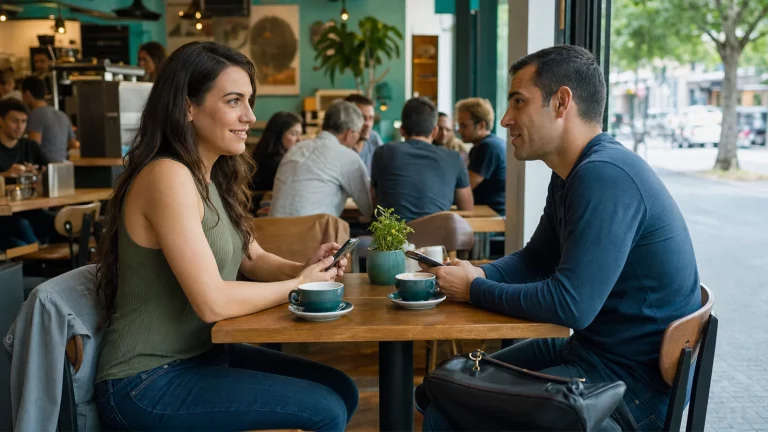
A safer blind date begins before either person arrives. Confirm enough identity to reduce obvious deception, meet in a busy public place, control your own transportation, send the plan to a trusted person, and decide how you will leave. Keep the first meeting short enough that extending it is a choice rather than an obligation.
The person who arranged the introduction—whether a friend, app, or family member—is not proof of safety. Treat a blind date as a meeting with someone you do not yet know, while leaving room for it to be enjoyable.
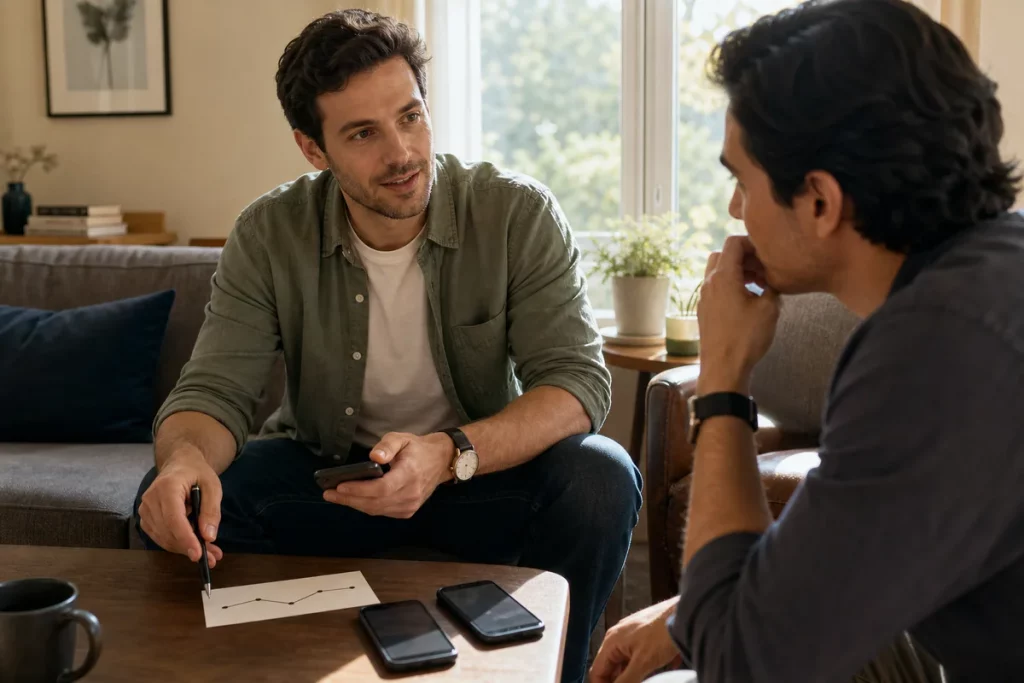
Independent arrival, a public venue, and a planned end time make it easier to stay because you want to—not because you feel stuck.
NavigateTable of Contents20 sections
Confirm the Basics Before Meeting
Blind should mean “not previously acquainted,” not “deprived of every useful detail.” Ask the introducer or match directly for:
- the name they use;
- a recent, representative photo;
- age;
- how the introduction came about;
- what kind of date or relationship they seek;
- any detail essential to consent or accessibility.
A short video or voice call can confirm that you can communicate comfortably and that the profile broadly matches the person. It is optional evidence, not proof of character.
If a friend set you up, ask what they know firsthand:
“How do you know them, when did you last see them, and have you seen how they handle a no?”
“They seem nice” is an endorsement, not verification. A well-meaning friend may know the person only at work or through another acquaintance.
Search and verification should be proportionate. You do not need a full investigation into a stranger’s life, and they do not owe you invasive documents. Look for consistency and enough context to decide whether a public meeting is reasonable. See how to verify someone you met online.
The FTC warns that romance scammers often create fake profiles, move conversations away from the original platform, avoid meeting, and eventually ask for money. Its romance-scam guidance is particularly relevant when the “date” keeps turning into a remote relationship and financial requests.
Choose a Venue That Supports an Exit
The ideal first venue is:
- public and populated;
- familiar or easy to navigate;
- staffed;
- reachable by more than one transportation option;
- quiet enough for conversation;
- accessible for both people;
- not dependent on one person’s membership, home, workplace, or private invitation.
Good formats include coffee, a casual meal, a daytime market, or a short museum visit. A remote hike, isolated beach, private home, long drive, or event requiring one shared vehicle creates more dependence than a first meeting needs.
Set an approximate duration:
“Let’s meet at 6:30 for a drink. I’ll need to leave by 8.”
The end time gives both people a graceful exit. If the date is going well, you can mutually extend it.
Avoid letting the venue drift without agreement. If the other person says, “This place is boring; get in my car,” you can stay, offer another public location reachable independently, or end the date.
Make a Real Check-In Plan
“My friend knows where I am” is useful only if the friend has current details and knows what to do.
Send:
- the date’s name, profile, and phone number if available;
- venue and expected time;
- your transportation plan;
- the planned check-in;
- a code phrase;
- instructions for a missed check-in.
RAINN recommends sharing plans with a trusted person, meeting in a public populated place, controlling your own transportation, and leaving when a boundary is crossed. Review its safer dating guidance before the meeting.
Create two signals:
- Call me: a normal-looking phrase that asks the friend to call and provide an exit.
- Get help: a distinct phrase or missed-check-in protocol for a situation where you cannot speak freely.

The check-in person needs the plan before the date—not a vague promise to text sometime.
Do not post the live location publicly. Share it privately with a person you trust if you choose.
If the plan changes, update the check-in person before moving. A message after arriving at a new private location does not restore the same options.
Preserve Evidence Before It Disappears
The eSafety Commissioner recommends preserving profile and conversation evidence before meeting because an unmatched or blocked profile may later become unavailable. Its online-dating safety guide also covers blocking, reporting, and image-based abuse.
Before meeting, save:
- the profile;
- recent messages;
- username and platform;
- phone number or email used;
- agreed venue and time.
Store the copies somewhere you can access even if your phone is lost. Do not collect private data unrelated to safety or share the material casually.
If the interaction is ordinary, the record can simply expire under your personal retention practice. If there is harassment, fraud, stalking, assault, or threats, preserving accurate dates and statements may help platform, workplace, legal, medical, or support responses.
Keep Transport, Money, and Substances Under Your Control
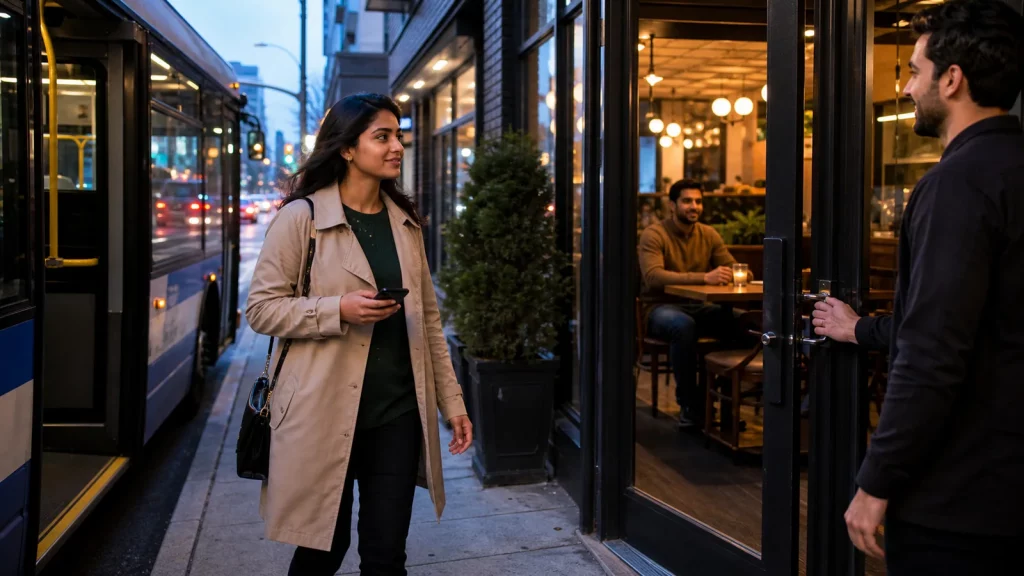
Independent transportation is one of the strongest simple protections. Drive yourself, use public transit, arrange a ride, or have a trusted person handle transport. Avoid relying on a date to take you home.
Keep:
- phone charged;
- payment method accessible;
- address private early;
- keys and belongings with you;
- enough awareness to make your own decisions.
If alcohol or other substances are part of the date, decide your limit beforehand. Do not accept pressure to catch up, prove trust, or consume something you did not see prepared. Keep drinks within your control.
Money boundaries matter too:
- agree to split or pay only what you freely choose;
- do not let a payment dispute trap you;
- do not send money for a person to attend;
- avoid revealing account balances or financial hardship;
- do not accept a first-date investment pitch.
You can say:
“I’ll pay my part at the counter and head out.”
The cost of a meal does not create a debt of affection, transport, another venue, or sex.
Notice Boundary Tests During the Date
Early behavior predicts more than an impressive profile. Notice what happens when you make a small choice.
Green flags:
- they accept the public venue;
- they arrive close to the agreed time or communicate;
- questions are reciprocal rather than investigative;
- they respond normally to “no”;
- they do not pressure you to reveal your address;
- they accept the planned end;
- they ask before touch;
- their basic story remains consistent.
Boundary tests:
- repeated attempts to isolate you;
- touching after you move away;
- mocking your safety plan;
- trying to inspect your phone;
- pushing alcohol or substances;
- sexual comments after you redirect;
- demanding proof of interest;
- anger about independent transport;
- changing the destination without agreement.
A single awkward moment may be repairable. Name it once if you want:
“I said I don’t want to leave this venue. Stop asking.”
The response matters. An apology followed by changed behavior is different from minimization or retaliation.
Use questions to ask on a first date for compatibility, but do not interrogate while ignoring how the person treats staff, limits, and uncertainty.
Leave Without Negotiating
You may leave because:
- you feel unsafe;
- a boundary was crossed;
- details do not match;
- the person is intoxicated;
- the interaction is uncomfortable;
- you are simply not enjoying it.
You do not need to prove danger.
Short exits work:
- “I’m leaving now.”
- “This isn’t working for me. Goodnight.”
- “Do not follow me.”
- “I need staff assistance.”
Move toward staff or other people. Contact your check-in person. Use transportation the date cannot cancel or control. If followed, do not lead the person to your home; go to a staffed public or appropriate safe location and seek local help.
If direct speech feels unsafe, use the bathroom, speak to staff, or activate the code phrase. Courtesy is secondary to getting out.
Learn how to say no to a date, but remember that a polished explanation is optional.
Follow Up Without Oversharing
After a good date, excitement can accelerate disclosure. Keep the same gradual process.
Before sharing a home address, intimate image, financial detail, or workplace routine, ask:
- What has this person done consistently?
- How did they respond to a boundary?
- Have we met in more than one context?
- Can I verify the relevant claim without exposing more than necessary?
- Would I be comfortable if this information were retained?
A GuyID Trust Profile may add verified identity and social context. It does not establish compatibility, consent, or safety. A real identity is not the same as good intentions.
If you do not want another date:
“Thank you for meeting. I don’t feel the match I’m looking for, so I won’t continue. Take care.”
Block if the person argues, insults, or repeatedly contacts you. You are not required to litigate chemistry.
If you do want another date, suggest one specific public plan. Continue to keep transport independent until relying on one another is a freely chosen step supported by evidence.
Use the READY Plan
Use READY before leaving home:
- Record: Save the profile, messages, and meeting details.
- Exit: Control transport, money, phone, and end time.
- Alert: Send the plan and response instructions to a trusted person.
- Destination: Choose a populated, staffed, accessible place.
- Your choice: Extend, move, touch, disclose, or leave only because you choose to.
If one element is missing, adjust the plan before the meeting.
Practical Action Plan
Twenty minutes before leaving, complete this final check:
- Save the available profile, messages, and agreed meeting details.
- Send the trusted contact the date’s name, venue, start time, planned end, and missed-check-in instructions.
- Confirm the return route and keep a backup transportation option.
- Charge the phone, keep payment accessible, and avoid carrying unnecessary sensitive documents.
- Rehearse one plain exit sentence: “I’m leaving now. Goodnight.”
- Decide which changes—another venue, a ride, more alcohol, or a private location—will require a fresh choice rather than automatic agreement.
- Check in after leaving, not only after arriving.
If the plan changes, update the trusted contact before moving. If a boundary is crossed, use the exit rather than staying to prove that your concern is reasonable.
How GuyID Helps
GuyID should appear when it is useful, not as a banner ad. A GuyID Trust Profile gives someone a portable way to share trust signals before a date, while identity verification and social vouching help turn vague profile claims into clearer next steps.
Useful next steps:
- Create a GuyID Trust Profile when you want a cleaner way to share verified trust signals.
- Use GuyID free tools and related guides when you need a checklist before meeting someone.
- Treat identity verification as confidence-building, not a guarantee.
- Use social vouching when you want context from people who already know the person.
- Sign up only when the extra trust layer helps the decision you are already trying to make.
Frequently Asked Questions
Should I let a friend arrange a blind date?
Yes, if you want to. Ask what the friend knows firsthand and still use ordinary first-meeting safety. Their introduction supplies context, not proof of how the date will behave.
Is a video call required before a blind date?
No. It is a useful option for communication and broad identity consistency. It does not prove behavior or eliminate the need for a public meeting.
How long should a first blind date last?
An hour to ninety minutes is often enough for an initial meeting, but there is no rule. Set a clear initial end time and extend only by mutual choice.
Is it rude to leave if I feel uncomfortable?
No. You may leave any date when you feel uncomfortable or simply want to stop. You do not need a courtroom-level reason, a polished explanation, or the other person’s agreement.
What if my friend is offended that I did not like the person?
Thank them for the introduction and state that the match was not right for you. A responsible introducer will respect your judgment and will not demand romantic interest as repayment.
Related Reading
Continue with first-date safety tips, first-date ideas, and video calls before a first date.
Conclusion
A blind date does not need to feel like a threat assessment. A few preparations can create enough structure for curiosity to take over.
Confirm the basics, save the available evidence, choose a public venue, control transportation, and give a trusted person an actionable check-in plan. During the date, watch how the person responds to small limits.
The best safety plan does not predict every problem. It keeps your options alive: the option to stay, extend, decline, call someone, or leave without the other person’s permission.