Reader Briefing
Reader Briefing
Start here if you need a practical read on dating safety for seniors: connection without financial pressure: who should use verification, what signals to check, and what to do before moving from online interest to an in-person plan.
Who this is for
- People meeting someone from a dating app or social platform.
- Readers preparing for a first in-person date.
- Anyone checking identity, profile consistency, and trust signals.
- People trying to avoid romance scams, fake profiles, or pressure tactics.
You’ll learn
- How to evaluate identity signals without treating any single check as certainty.
- Which trust signals matter and how to weigh them together.
- How to spot inconsistencies, pressure, or behavior patterns that deserve caution.
- How to move from online conversation to a safer first meeting.
- Where GuyID tools fit into a quick pre-date screening workflow.
- When to slow down, ask for more context, or walk away.
Bottom line
Verification reduces uncertainty; it does not guarantee future behavior. Use a layered approach: confirm identity signals, compare profile consistency, ask for a short video call, keep early plans public, and slow down when someone pressures you to skip normal safety steps.
Key takeaways
- Identity verification improves confidence, not certainty.
- Patterns matter more than isolated incidents.
- Verify before meeting privately or sharing sensitive details.
- A short video call can reveal many inconsistencies.
- Pressure to skip reasonable safety steps is useful information.
Free Tools
Catfish Probability Detector
Check whether a dating profile has suspicious identity or photo signals.
Dating Bio Red Flag Detector
Review a bio for scam, pressure, or trust-warning language.
Dating Safety Checklist
Use free GuyID tools before moving from chat to a real date.
Next step
Create your GuyID trust profile
Share consent-based trust signals before a date without turning the conversation into an interrogation.
Quick Answer
Dating safety for seniors combines ordinary first-date precautions with deliberate financial and digital boundaries. Meet in public, control transportation, tell a trusted person the plan, and verify identity proportionately. Keep money, investments, property, passwords, one-time codes, and legal documents outside a new romance until independent evidence and time support deeper trust.
The crucial rule is simple: a genuine relationship does not require you to rescue a new partner financially, keep an investment secret, or act before you can consult someone you trust. Loneliness, bereavement, or inexperience with apps do not make anyone foolish; scammers deliberately create urgency and attachment.
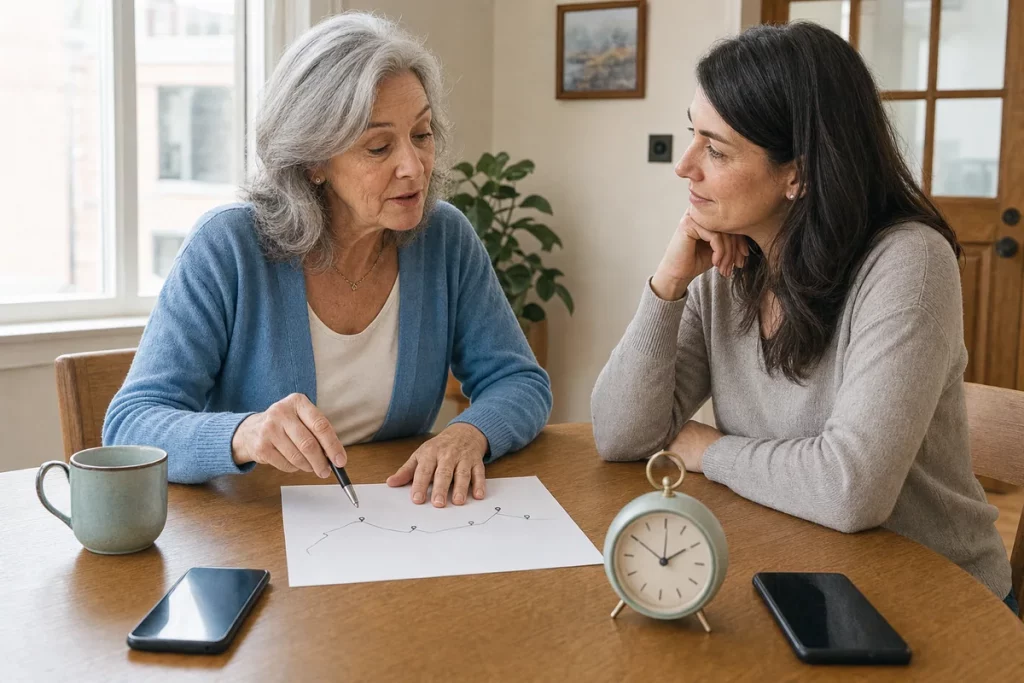
Daytime public meetings and independent transportation preserve options while a connection develops.
NavigateTable of Contents20 sections
Know the Modern Romance-Scam Pattern
Romance scams are not limited to obviously false profiles or clumsy requests. The person may communicate daily, remember personal details, share photographs, discuss a future, and appear emotionally available. The relationship feeling is part of the mechanism.
The FTC describes a common romance-scam progression from moving a conversation off-platform to excuses about meeting and eventual requests for money or investments. Its romance-scam guidance advises never sending money or gifts to a romantic interest you have not met in person.
Common stories include:
- an overseas military, medical, engineering, or contract assignment;
- a frozen account, delayed payment, or customs fee;
- an emergency involving a child or relative;
- travel money needed to finally meet;
- a “safe” cryptocurrency or investment opportunity;
- a package that requires a release payment;
- a request to receive and forward money;
- a need for gift cards, cash, wire transfers, or crypto.
Some scams develop over weeks or months. A video call does not prove the whole story: stolen video, pre-recorded clips, impersonation, and AI manipulation can supplement a false identity. Verification should combine methods and lead toward an ordinary public meeting.
A 2026 AARP survey found that online romantic approaches involving money or cryptocurrency requests affected adults over 50 and that many reported losses were never formally reported. Review the AARP survey findings for the population surveyed and its limitations.
The aim is not suspicion of every new partner. It is a firm division between romantic interest and financial action.
Separate Affection From Financial Access
Create the financial boundary before anyone asks:
“I do not send money, invest through a romantic contact, move funds for another person, or share banking access.”
Apply it to small requests too. A modest gift card can test whether you will act, whether your payment works, and whether embarrassment will keep you silent.
Do not provide:
- bank, pension, brokerage, or tax credentials;
- one-time security codes;
- full identification documents;
- account numbers or card images;
- remote access to a phone or computer;
- cryptocurrency wallet keys;
- signatures on loans, deeds, powers of attorney, or beneficiary changes;
- use of your account to receive or forward someone else’s funds.
A real person can still exploit you. Meeting in person, sharing mutual friends, or having a long courtship does not make financial pressure acceptable.
Use a cooling-off rule:
- Make no financial decision during the request.
- Wait at least a full day—or longer for major decisions.
- Discuss it with a trusted person who is not connected to the requester.
- Contact the bank or institution using a verified number.
- Decline if secrecy, urgency, or anger continues.
There is no reason to prove love by bypassing your own safeguards.
Verify a Person Without Overexposing Yourself
Verification should add evidence while preserving privacy.
Start with:
- a live video conversation;
- a search for consistent names, roles, and public context;
- reverse-image checks where available;
- questions about ordinary daily details;
- an in-person public meeting;
- a platform’s identity-verification feature.
Look for contradictions, but do not turn one typo into a conviction. Ask for clarification and observe whether the answer is coherent.
Use how to verify someone you met online as a layered process. A GuyID Trust Profile can organize identity and social-context signals, but it cannot prove affection, financial honesty, or future conduct.
Protect your side of the exchange:
- do not send a full driver’s licence or passport;
- remove address, birth date, and document numbers when a limited proof will do;
- avoid revealing the exact value of property, savings, insurance, or pension;
- do not answer security questions disguised as nostalgic conversation;
- keep the first meeting away from your home.
Verification must be reciprocal and proportionate. Someone who demands your financial records while offering only stories is not creating trust.
Plan Early Dates With Independent Choices
Choose a populated place during hours when staff and transportation are readily available. Tell a trusted person:
- the date’s name and profile;
- the venue;
- the start and expected end time;
- how you are travelling;
- when to check in;
- what to do if you do not respond.
Arrive and leave independently. A pickup at home reveals your address and makes departure dependent on the date. If mobility support is needed, arrange it through a trusted person or service you control.

A check-in supports independence when it confirms the dater’s own plan rather than taking it over.
During the meeting:
- keep your phone and belongings with you;
- limit alcohol or other substances enough to make decisions;
- do not leave food or drinks unattended;
- avoid bringing sensitive documents;
- do not change to a private venue under pressure;
- leave when uncomfortable.
Read first-date safety tips and adapt the plan for hearing, vision, mobility, medication timing, or caregiver responsibilities. Accessibility and safety should reinforce each other.
Protect Accounts, Devices, and Documents
Many financial losses begin with access rather than a direct transfer.
Secure:
- email, because it can reset other accounts;
- banking and payment apps;
- mobile carrier accounts;
- social media;
- cloud photos and documents;
- government and tax accounts;
- health and insurance portals.
Use unique passwords and multifactor authentication. Do not read a one-time code to someone who contacted you. Keep device software current and review whether an unfamiliar person has installed remote-access tools.
Treat these requests as warning signs:
- “Let me fix your computer.”
- “Share your screen so I can show you the investment.”
- “I need the code that just arrived.”
- “Open an account in your name for us.”
- “Send a photo of your ID so I know you trust me.”
- “Do not tell the bank why you need the money.”
Store wills, property papers, cheques, identification, and account statements where a casual visitor cannot photograph them. A new partner does not need immediate knowledge of assets or beneficiaries.
If a relationship becomes serious, use independent legal and financial advice for cohabitation, estate, beneficiary, lending, or property decisions. Each partner should have space to obtain advice without the other person present.
Involve a Trusted Person Without Giving Up Autonomy
The CFPB recommends long-term fraud planning with a trusted contact or financial institution and provides specific resources for older adults and caregivers. Its older-adult fraud resources can support a plan before a crisis.
A trusted contact can:
- receive date check-ins;
- listen without mocking the relationship;
- review an unusual request;
- help verify an institution’s contact details;
- accompany you to a bank or adviser;
- preserve evidence;
- help respond after a loss.
They should not automatically:
- control whom you date;
- demand passwords;
- impersonate you;
- contact the date behind your back;
- threaten loss of independence;
- treat age as incapacity.
Choose someone who respects both caution and autonomy. You might say:
“If a romantic contact ever asks me for money or an investment, I want us to review it together before I act. I still make the final decision.”
If cognitive, legal, or caregiving circumstances require a more formal plan, obtain qualified advice relevant to your jurisdiction.
Notice Emotional Pressure
Financial pressure often arrives inside an emotional pattern:
- intense affection very early;
- constant messages that create rapid dependency;
- repeated tragedies;
- isolation from skeptical relatives or friends;
- anger when you verify details;
- praise for being the only person who understands;
- secrecy framed as protecting the relationship;
- a crisis timed to defeat reflection.
Do not confuse frequency with evidence. Daily contact can feel intimate while remaining entirely constructed.
Ask:
- Has this person followed through on ordinary meetings?
- Can I say no without punishment?
- Do their claims remain consistent?
- Are they curious about me beyond my resources?
- Has my world widened or narrowed since we began talking?
- Am I hiding requests because I fear others’ reactions?
Read how to spot a romance scammer and remember that one sign is not proof. A cluster plus money pressure is reason to stop and verify.
Respond if Money or Information Was Sent
Shame benefits the scammer. Act quickly:
- Stop further contact and payment.
- Contact the bank, card issuer, wire service, crypto exchange, or gift-card company through an official channel.
- Explain that fraud may be involved and ask about recalls, freezes, or monitoring.
- Change affected passwords from a secure device.
- Preserve messages, receipts, profiles, account details, and dates.
- Report through the dating platform and appropriate local fraud channels.
- Monitor credit and financial accounts as appropriate.
- Tell a trusted person who can help you stay disengaged.
Recovery services can become a second scam. Be cautious with anyone who claims they can recover funds for an upfront fee or says they have secret access to law enforcement.
If you sent intimate images or identification, document threats, lock down accounts, and seek qualified support. Do not pay solely on a promise that copies will be deleted.
Use the PAUSE Check
Before any unusual request, use PAUSE:
- Pressure: Is there urgency, secrecy, guilt, or a loyalty test?
- Access: Does this reveal money, identity, devices, home, or documents?
- Unverified: Which claim relies only on the person’s story?
- Second view: Who independent can review it?
- Exit: Can you decline without retaliation?
If pressure remains after you pause, do not proceed.
Practical Action Plan
Set up the safeguards before the next new connection:
- Tell a trusted person that any romantic money or investment request will receive an independent review.
- Turn on multifactor authentication for email, banking, and mobile-carrier accounts.
- Write a personal rule against sending money, gift cards, cryptocurrency, or account access to a romantic contact.
- Save the profile and arrange a live conversation before making an in-person plan.
- Choose a public venue, independent transportation, and a specific check-in time.
- Keep home address, asset values, legal documents, and full identification private.
- If a request arrives, pause, verify the institution independently, and involve the trusted second view.
Review the plan after each meeting. A respectful date may ask questions, but they will not require secrecy, financial rescue, remote device access, or proof of love through money.
How GuyID Helps
GuyID should appear when it is useful, not as a banner ad. A GuyID Trust Profile gives someone a portable way to share trust signals before a date, while identity verification and social vouching help turn vague profile claims into clearer next steps.
Useful next steps:
- Create a GuyID Trust Profile when you want a cleaner way to share verified trust signals.
- Use GuyID free tools and related guides when you need a checklist before meeting someone.
- Treat identity verification as confidence-building, not a guarantee.
- Use social vouching when you want context from people who already know the person.
- Sign up only when the extra trust layer helps the decision you are already trying to make.
Frequently Asked Questions
Is online dating safe for older adults?
It can be approached more safely with privacy controls, layered verification, public meetings, independent transportation, and firm financial boundaries. No platform or verification method establishes what another person will do.
What if the person needs a small amount to travel and meet me?
Do not send it. A person who cannot arrange an ordinary meeting without your money is not ready to meet. Continue only through methods that require no financial rescue.
Should adult children control a parent’s dating accounts?
Not by default. Support should preserve the older adult’s autonomy. A formal role may be appropriate in specific legal or capacity circumstances, which requires qualified advice.
Is a video call enough to prove someone is real?
No. A video call is one evidence layer. Combine it with consistent identity context, ordinary public meetings, independent verification, and respectful behavior observed over time.
What should I do if I feel embarrassed after sending money?
Tell someone trustworthy and contact the payment provider immediately. Reporting quickly may improve options and helps document patterns. The scammer is responsible for the deception.
Related Reading
Continue with safe dating apps for people over 50, safe online dating after divorce, and romance scam signs on WhatsApp.
Conclusion
Senior dating safety is not a reason to withdraw from connection. It is a way to keep the decisions that matter in your hands.
Let trust grow through ordinary meetings and consistent behavior. Keep financial access, major documents, investments, and legal changes outside the early romance. Use a trusted second view without giving away your autonomy.
A caring partner can tolerate a pause, a public meeting, independent advice, and a firm no to money. Any relationship that survives only through urgency, secrecy, or financial rescue is asking you to surrender the very choice that trust should protect.