Free Tools
Catfish Probability Detector
Check whether a dating profile has suspicious identity or photo signals.
Dating Bio Red Flag Detector
Review a bio for scam, pressure, or trust-warning language.
Dating Safety Checklist
Use free GuyID tools before moving from chat to a real date.
Next step
Create your GuyID trust profile
Share consent-based trust signals before a date without turning the conversation into an interrogation.
You just discovered the person you’ve been talking to isn’t who they claimed to be. The photos are stolen. The name is fake. The life story was fabricated. You’ve been catfished — and right now you’re probably feeling a mix of shock, humiliation, anger, and grief that few people who haven’t experienced it can understand. Professional scam operations create fake identities specifically designed to deceive intelligent, caring people (FTC). You were targeted by professionals. This guide tells you exactly what to do if you’ve been catfished — step by step, starting right now.
This guide covers the immediate actions to take (first 24 hours), the financial recovery process if money was sent, the emotional recovery process, how to report the catfish across every channel, and how to protect yourself going forward so this doesn’t happen again.
NavigateTable of Contents28 sections
⚡ Key Takeaways
Stop all communication immediately — don’t confront
Confronting a catfish or scammer serves no purpose and may provoke them to delete evidence, escalate threats, or target you for secondary scams. Silence + evidence preservation + reporting is the correct response.
Screenshot everything before taking any other action
Profile photos, all messages, phone numbers, email addresses, payment details, links shared — document everything before blocking, reporting, or confronting. Evidence preserved now may be critical later.
If money was sent, contact your bank within 24 hours
Wire recall success rates are highest in the first 24 hours. Credit card chargebacks must be filed within 60 days. Cryptocurrency exchanges may freeze transactions if contacted quickly. Time is the critical factor in financial recovery.
Being catfished is not your fault — professional scammers deliberately design personas to deceive people
You were targeted by trained criminals using sophisticated psychological techniques and increasingly AI-powered tools. Shame is the scammer’s ally. Your recovery is your priority.
First: This Is Not Your Fault
Before any practical steps, this truth needs to be stated clearly: being catfished is not your fault.
The reason: shame. The internal narrative — “How could I fall for this? I’m smarter than this. I should have known.” — is universal among victims, and it’s wrong on every count.
You were targeted by professional scammers trained to overcome ordinary defenses. They study psychology. They use scripted manipulation techniques and may deploy AI tools that generate convincing photos and conversations. They exploit the same human capacity for connection and trust that makes you a good partner, a good friend, and a good person. Being catfished doesn’t mean you’re naive — it means someone deliberately exploited your trust.
The shame you feel is the scammer’s last weapon. It prevents you from reporting (which protects the scammer from consequences), from telling friends (which isolates you from support), and from seeking help (which delays your recovery). Rejecting the shame is the first and most important step in what to do if you’ve been catfished.
Immediate Actions: What to Do in the First 24 Hours
The first 24 hours after discovering you’ve been catfished are critical — especially if money was involved. Here’s the immediate action sequence.
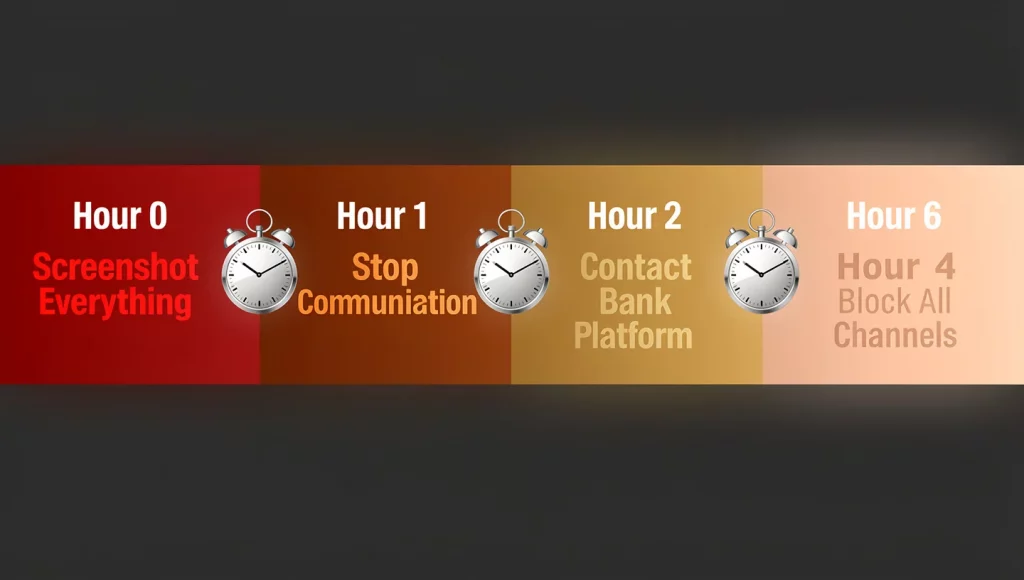
Step 1: Screenshot Everything (Before Anything Else)
Before you block, report, confront, or process emotions — document every piece of evidence. This evidence may be needed for financial recovery, law enforcement investigation, or platform reporting.
- Screenshot every message in the conversation — scroll to the beginning and capture the entire history
- Screenshot their dating profile — all photos, bio text, name as displayed, verification status
- Save any phone numbers, email addresses, or social media handles they shared
- Save any links they sent — investment platforms, websites, external “verification” sites
- Document any financial transactions — amounts, dates, methods, recipient information, wallet addresses, transaction IDs
- Save any photos or videos they sent you privately
- Note the approximate dates: when you matched, when they asked for money (if applicable), and when you discovered the deception
Store everything in a dedicated folder with a cloud backup (Google Drive, iCloud, Dropbox). Physical evidence disappears when accounts are deleted — digital copies are your insurance.
Step 2: Stop All Communication
Do not send another message. Do not confront them. Do not tell them you know they’re fake. Confrontation achieves nothing positive and risks several negatives: the catfish may delete their account (destroying evidence the platform could use for investigation), may become threatening, may attempt to manipulate you into staying (“I can explain — the photos are old but I’m real”), or may target you for secondary scams (fake “recovery services”). Silence is your safest response.
Step 3: If Money Was Sent — Contact Your Bank Immediately
If any money was sent to the catfish — wire transfer, gift cards, cryptocurrency, Zelle, Venmo, or any other method — contact your financial institution within the first 24 hours. This is time-sensitive:
- Wire transfers: Call your bank and request a wire recall immediately. Success rates decrease dramatically after 24-72 hours. Provide the transaction details, recipient information, and a brief explanation that you were defrauded.
- Credit/debit card: Call your card issuer and initiate a chargeback dispute. You have up to 60 days from the statement date, but earlier filing improves outcomes.
- Cryptocurrency: Contact the exchange through which you sent the funds. Provide the receiving wallet address and transaction hash. Some exchanges will freeze accounts associated with reported fraud.
- Gift cards: Contact the issuer: Apple (800-275-2273), Google Play (support.google.com/googleplay), Amazon. Report the cards as fraud. Recovery rates for gift cards are low but not zero.
- Zelle/Venmo/CashApp: Contact the service’s fraud department and your bank simultaneously. Report the transaction as fraud.
Step 4: Report to the Dating Platform
Report the profile on the dating platform where you matched. Select the most appropriate category (fake profile, scam, fraud) and include as much detail as possible — the specific behavior, any financial elements, and identifiers like phone numbers or external links they shared. Report BEFORE blocking to preserve the platform’s access to the conversation evidence.
Step 5: Block on All Channels
After reporting (report first, block second): block the catfish on the dating platform, on WhatsApp (if migrated), on any social media where they contacted you, and on your phone. Comprehensive blocking prevents continued contact, secondary manipulation attempts, and the emotional pull of continued communication.
Financial Recovery: If Money Was Sent
If the catfishing included financial extraction — money, gift cards, cryptocurrency, or financial information shared — here’s the complete recovery process for what to do if you’ve been catfished financially.
Multi-Channel Reporting for Maximum Recovery
| Channel | What to Report | Why It Matters |
|---|---|---|
| Your bank/financial institution | All transactions — amounts, dates, methods, recipients | Wire recall, chargebacks, account protection — time-sensitive |
| FBI IC3 (ic3.gov) | Complete incident details with all evidence | Federal investigation — especially for cross-border scams. IC3 reports feed FBI romance scam task forces |
| FTC (reportfraud.ftc.gov) | Fraud report with financial details | Consumer protection database — contributes to industry-wide enforcement |
| Dating platform | Profile details, messages, scam behavior | Profile removal, pattern detection — protects future users on the same platform |
| Local police | Financial fraud report with all documentation | Local case file — may be needed for financial institution disputes |
File with ALL channels, not just one. Each channel serves a different purpose: your bank attempts financial recovery, IC3 supports federal investigation, FTC builds the enforcement database, the dating platform removes the profile, and local police create the case file that financial institutions may require for dispute resolution. For the complete step-by-step process, see our detailed romance scammer reporting guide.
What NOT to Do for Financial Recovery
- Never pay “recovery services”: If you’re contacted by someone claiming they can recover your money for an upfront fee — this is a secondary scam targeting romance scam victims. Legitimate recovery occurs through your bank and law enforcement, never through fee-based services.
- Never send more money to “unlock” previously sent funds: “Your money is being held and you need to pay a release fee” is a continuation of the original scam. There is no held money. The fee is additional extraction.
- Don’t give up if the first recovery attempt fails: Some financial recovery takes weeks or months. Banks may initially decline a recall or chargeback — escalate through the dispute process. IC3 investigations operate on longer timelines. Persistence matters.
Reporting the Catfish: Every Channel That Matters
Reporting is an act of protection — for yourself (creating the paper trail for financial recovery) and for the next person who would encounter the same fake profile. Here’s the complete reporting framework for what to do if you’ve been catfished.
Report to the Dating Platform
Every major platform has a reporting process — see our complete platform-by-platform reporting guide for Tinder, Bumble, Hinge, POF, and Facebook Dating. Include: the specific deceptive behavior, any financial requests, phone numbers and external links shared, and the evidence of fake identity (reverse image search results showing stolen photos).
Report to Law Enforcement (If Money or Threats Were Involved)
- FBI IC3: ic3.gov — the primary federal channel for internet-based fraud. File even if the amount seems small — IC3 aggregates reports to identify and investigate scam networks.
- FTC: reportfraud.ftc.gov — consumer fraud reporting that feeds into enforcement actions.
- Local police: File a report with your local police department. The case number may be required by financial institutions for dispute processing.
Report to Other Platforms Where They Contacted You
If the catfish migrated to WhatsApp, report the phone number through WhatsApp’s reporting function. If they contacted you on Instagram, report the profile. If they used email, report to the email provider. Comprehensive cross-platform reporting maximizes the chance of the scammer’s entire infrastructure being disrupted.
Emotional Recovery: Processing the Experience

The financial steps are procedural. The emotional recovery is harder — and just as important. Here’s what to expect and how to navigate the aftermath of being catfished.
What You’ll Likely Feel
- Shock and disbelief: “This can’t be real. There must be an explanation.” The brain resists accepting that weeks or months of emotional connection were built on fabrication. This is normal and temporary.
- Shame and embarrassment: “How could I be so stupid?” This is the most harmful emotion because it prevents reaching out for support. Reject it actively: you were targeted by professionals. Intelligence doesn’t prevent victimization — organized operators are trained specifically to overcome intelligent people’s defenses.
- Grief: You’re grieving a relationship that felt real — even though the other person wasn’t. The emotions you invested were genuine. The connection you experienced was real to you. Grieving its loss is appropriate and healthy.
- Anger: At the catfish (justified), at yourself (misdirected — redirect toward productive action), and at the dating platforms that failed to prevent this (valid).
- Distrust: “How can I ever trust anyone online again?” This is the catfish’s longest-lasting damage — the erosion of your willingness to connect. The proactive dating safety approach addresses this directly: when you have tools and verification practices that catch fakes before they get close, trust in the process replaces trust in hope.
Recovery Steps
- Tell someone you trust. Break the isolation that shame creates. A friend, family member, or therapist who knows what happened provides the support network that silence denies you. By telling someone, you’re already ahead of most.
- Don’t rush back to dating. Take the time you need. There’s no deadline. Processing the experience fully before re-entering the dating landscape produces better outcomes than jumping back in while still raw.
- Consider professional support. Romance scam victims experience genuine psychological trauma — betrayal, identity questioning, trust erosion, and sometimes financial devastation. A therapist experienced with fraud victims provides tools for processing that self-help can’t match.
- Connect with other survivors. Online communities of romance scam survivors (Reddit r/Scams, support groups, AARP’s fraud support network) provide the specific understanding that only people who’ve experienced the same thing can offer. You’re not alone — 20+ million Americans have encountered fake profiles.
Support Resources
- AARP Fraud Helpline: 877-908-3360 (free, confidential support for fraud victims)
- National Elder Fraud Hotline: 833-372-8311 (for victims 60+)
- FBI IC3: ic3.gov (federal fraud reporting)
- FTC: reportfraud.ftc.gov (consumer fraud reporting)
Protecting Yourself Going Forward: Preventing It from Happening Again
The final dimension of what to do if you’ve been catfished is ensuring it doesn’t happen again. The experience — painful as it is — provides the motivation to adopt the proactive dating safety practices that would have caught this catfish before they got close.
The 60-Second Check (Every Match, Every Time)
The single most impactful habit: screen every match through GuyID’s free tools before engaging in conversation. Reverse image search (30 sec) + catfish probability detector (10 sec) + bio red flag analyzer (10 sec) = 50 seconds that catches the majority of fakes before you invest a single minute of emotional energy. Making this routine — for every match, not just suspicious ones — catches the sophisticated fakes that don’t look suspicious.
Video Call Within the First Week
Your catfish likely refused video calls with escalating excuses. Going forward, a video call within the first 5-7 days of messaging is non-negotiable. One declined call with a reasonable explanation is acceptable. Two is concerning. Three is definitive — disengage. Apply active deepfake testing during calls: head turns, hand movements, room changes.
Request Verified Identity Before Meeting
Before meeting anyone from a dating app in person, ask for their GuyID Trust Profile. Government ID verification + social vouching confirms they are who they claim to be — the definitive check that would have caught the catfish who deceived you. Women check for free, always. The person’s response to the request is itself diagnostic: genuine people cooperate, fakes deflect.
Follow the Red Flag Framework
Bookmark the fake profile red flags checklist and the dating app red flags guide. Reference them whenever something feels off. The scoring system translates individual observations into cumulative risk assessments — replacing the gut feeling that emotions can override with a systematic framework that emotions can’t.
Absolute Financial Rules
If the catfish involved financial extraction, the rule going forward is absolute and exceptionless: never send money — in any form — to anyone you haven’t verified in person through government ID. No story, no emergency, no opportunity, no exception.
The Complete Recovery Checklist
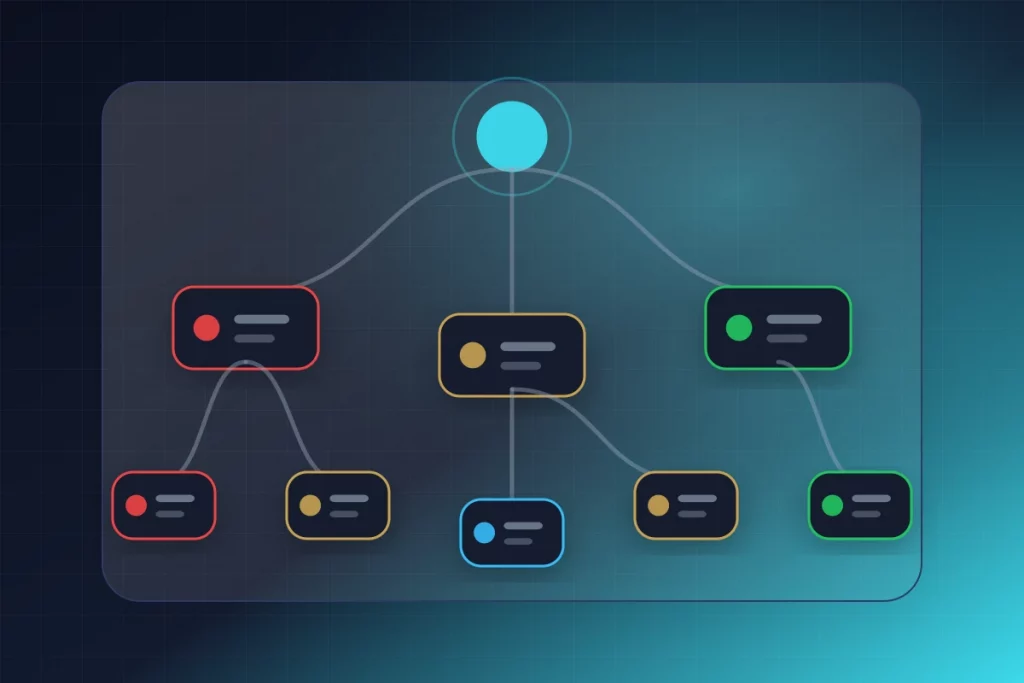
🔴 First 24 Hours (Time-Critical)
☐ Screenshot EVERYTHING — all messages, profile, photos, phone numbers, links, transaction records
☐ Stop all communication — do NOT confront or respond
☐ If money sent: contact bank IMMEDIATELY for wire recall/chargeback
☐ Report to dating platform (before blocking)
☐ Block on all channels — dating app, WhatsApp, phone, social media
🟡 First Week (Reporting & Recovery)
☐ File FBI IC3 report (ic3.gov) if money/threats involved
☐ File FTC report (reportfraud.ftc.gov)
☐ File local police report (get case number for bank disputes)
☐ Report on all platforms where they contacted you (WhatsApp, Instagram, etc.)
☐ Contact gift card issuers if gift cards were purchased
☐ Tell a trusted friend or family member
🟢 Going Forward (Prevention)
☐ Set up GuyID’s free safety tools on your phone
☐ Reverse image search every future match (30 sec)
☐ Demand video call within the first week — non-negotiable
☐ Request GuyID Trust Profile before meeting anyone (free for women)
☐ Bookmark the red flags checklist
☐ NEVER send money to anyone you haven’t verified in person — absolute rule
💙 Emotional Recovery (Your Timeline)
☐ Reject the shame — you were targeted by professionals, not fooled by amateurs
☐ Tell someone you trust — break the isolation
☐ Don’t rush back to dating — process fully first
☐ Consider professional support (therapist experienced with fraud victims)
☐ Connect with survivor communities for specific understanding
☐ AARP Fraud Helpline: 877-908-3360 (free, confidential)
Summary: You Were Targeted. Now You’re Informed. Next Time You’re Protected.
What to do if you’ve been catfished: preserve evidence immediately, stop communication, contact your bank if money was sent (within 24 hours), report across every channel (dating platform, IC3, FTC, local police), block comprehensively, and begin emotional recovery with support.
Going forward, the proactive dating safety approach ensures this experience doesn’t repeat: screen every match with GuyID’s free tools (60 seconds), video call within the first week (catches catfish who can’t appear on camera), request GuyID Trust Profiles before meeting (government ID verified + social vouches — free for women), and maintain absolute financial boundaries. The same experience that caused this pain now provides the motivation to adopt the practices that prevent it.
You are not the first person this happened to — 20+ million Americans have encountered fake profiles. You are not defined by this experience. And with the right tools, the right habits, and the right verification practices, you will never be in this position again. The trust gap that enabled this catfish is closeable — and you now have every tool needed to close it.
Never Again. The Tools Are Free.
GuyID provides every tool that prevents catfishing: reverse image search, catfish detection, bio analysis — plus Trust Profiles (gov ID + social vouching) that confirm real identity before emotional investment. Women check for free. Screen every future match in 60 seconds.
Start Screening Matches Free
Learn About GuyID
Frequently Asked Questions
What should I do immediately after discovering I’ve been catfished?
Should I confront the catfish?
Can I get my money back after being catfished?
How do I prevent being catfished again?
Where do I report a catfish?
How long does emotional recovery from catfishing take?
What if I shared sensitive identity or financial information?
Evidence note
The FTC reported 64,003 romance-scam reports in 2023, with $1.14 billion in reported losses and a $2,000 median reported loss (Federal Trade Commission, 2024).