
Reader Briefing
Reader Briefing
Start here if you need a practical read on friends to lovers: how to date a friend without guesswork: who should use verification, what signals to check, and what to do before moving from online interest to an in-person plan.
Who this is for
- Readers preparing for a first in-person date.
- Anyone checking identity, profile consistency, and trust signals.
- Online daters improving conversations, profiles, or match screening.
You’ll learn
- How to evaluate identity signals without treating any single check as certainty.
- Which trust signals matter and how to weigh them together.
- How to move from online conversation to a safer first meeting.
- Where GuyID tools fit into a quick pre-date screening workflow.
- How to compare options using practical safety and trust criteria.
- When to slow down, ask for more context, or walk away.
Bottom line
Verification reduces uncertainty; it does not guarantee future behavior. Use a layered approach: confirm identity signals, compare profile consistency, ask for a short video call, keep early plans public, and slow down when someone pressures you to skip normal safety steps.
Key takeaways
- Identity verification improves confidence, not certainty.
- Verify before meeting privately or sharing sensitive details.
- A short video call can reveal many inconsistencies.
- Pressure to skip reasonable safety steps is useful information.
- Use GuyID tools to turn vague concerns into specific checks.
Free Tools
Catfish Probability Detector
Check whether a dating profile has suspicious identity or photo signals.
Dating Bio Red Flag Detector
Review a bio for scam, pressure, or trust-warning language.
Dating Safety Checklist
Use free GuyID tools before moving from chat to a real date.
Next step
Create your GuyID trust profile
Share consent-based trust signals before a date without turning the conversation into an interrogation.
Quick Answer
Moving from friends to lovers can work when you name the change directly, protect the other person’s freedom to decline, and accept that the friendship may need adjustment either way. Friendship gives you useful knowledge, but it does not guarantee romantic compatibility or mutual attraction.
Start with one clear conversation rather than a campaign of hints. Say what you feel, propose a low-pressure next step, and make room for an honest no. If the interest is mutual, discuss what dating changes: affection, exclusivity, sex, privacy, mutual friends, and what you would do if the romance ends.

Clarity protects the friendship better than months of tests, hints, or strategic jealousy.
NavigateTable of Contents35 sections
How Common Is Friends-to-Lovers?
Romance does not always begin between strangers. Across seven samples in one friends-first relationship study, about two thirds of participants reported that their current or most recent romance began as a friendship. The study, The Friends-to-Lovers Pathway to Romance, also found that friends-first initiation was often preferred.
That is descriptive, not predictive. The samples do not mean two thirds of friendships should become romantic, that friendship-first couples are automatically happier, or that your friend secretly wants to date you.
The finding is useful for a simpler reason: developing romantic feelings for a friend is not an unusual failure of friendship. It is one possible relationship transition. What matters is how you handle it.
Friendship Is an Advantage, Not a Guarantee
Friendship may give you:
- experience with each other’s ordinary personality;
- shared values, humor, or community;
- evidence about reliability;
- an existing way to repair minor conflict;
- knowledge of each other’s history and routines;
- a foundation of non-romantic care.
It can also create blind spots:
- You may assume emotional closeness means sexual attraction.
- You may know how someone behaves as a friend but not as a partner.
- A familiar dynamic may hide unequal emotional labor.
- Shared friends can raise the social cost of trying and ending.
- One person may value the friendship precisely because it is non-romantic.
- Years of private fantasy may create expectations the other person never agreed to.
Feeling understood, validated, and cared for is central to perceived responsiveness in close relationships. Research on partner responsiveness explains why a good friendship can feel intimate. It does not establish romantic desire.
Use the distinction in GuyID’s guide to platonic relationships: a bond can be emotionally important without needing to become romance.
Signs Worth Discussing Versus Signs You May Be Projecting
No behavior is a reliable substitute for a conversation. Still, some patterns can make a respectful question reasonable.
Worth discussing
- Your friend directly describes attraction or asks whether you have considered dating.
- Affection has become mutual, sustained, and more explicitly romantic.
- You both treat time together like dates and acknowledge that shift.
- Each of you is available for the kind of relationship being discussed.
- There is reciprocal curiosity about what a romantic relationship could look like.
Easy to overread
- frequent texting;
- deep personal disclosure;
- long hugs;
- jealousy you have inferred but never discussed;
- being someone’s plus-one;
- jokes about marrying someday;
- complaints about current dates;
- a strong bond during a difficult period.
Friends often do emotionally close things because they are friends. Do not turn ordinary kindness into evidence your friend must defend.
If you have been acting as a secret partner—providing constant support while hoping it will earn romance—pause. Care is not a deposit that another person must repay with attraction.
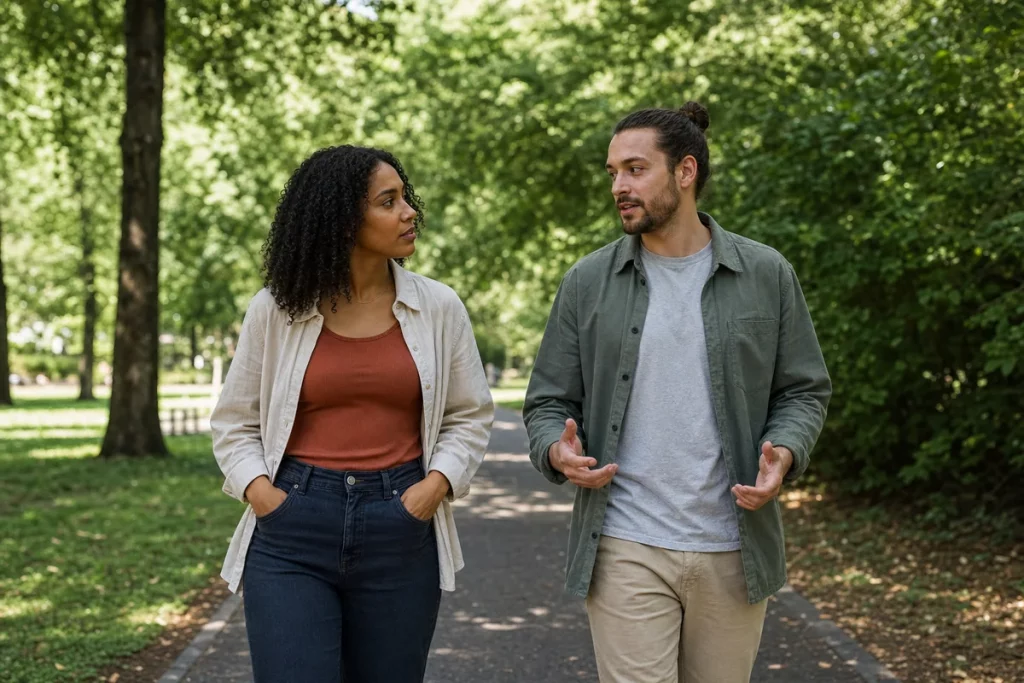
Notice reciprocity, but let a direct question carry more weight than body-language interpretation.
How to Tell a Friend You Like Them
Choose a private but low-pressure setting. Avoid confessions during intoxication, a major emotional crisis, a group trip, or a moment when the person cannot easily leave.
Keep the message proportionate:
“I value our friendship, and I’ve started feeling romantic interest too. Would you be open to going on an actual date? It’s okay if you don’t feel the same.”
This works because it:
- names the feeling;
- proposes one concrete next step;
- does not claim to know their feelings;
- makes refusal possible;
- does not demand a speech about the entire future.
Avoid:
- presenting a long record of everything you have done for them;
- asking mutual friends to apply pressure;
- creating jealousy with another date;
- touching or kissing them to “find out”;
- saying you cannot continue the friendship unless they try dating;
- promising that nothing will change regardless of the answer.
A friendship does not provide automatic consent to romance, touch, or sexual activity; agreement must remain clear, voluntary, and ongoing. RAINN’s consent guidance applies within close friendships just as it does on a first date.
How to Begin Dating Without Skipping Important Conversations
Familiarity can make new partners skip the conversations strangers would have. Do not assume you already know the answers.
Define the first date
Call it a date. Choose an activity that feels different enough to mark the experiment without making it a public declaration. A simple meal, walk, gallery, or coffee gives both people room to notice the new dynamic.
Discuss availability and relationship structure
Are you exclusive? Are either of you dating other people? Is this exploratory or intended to become a committed relationship? The intentional dating guide can help you name direction without pretending certainty.
Reset physical consent
Past hugs, shared beds on trips, playful touch, or private conversations do not answer what either person wants now. Ask:
- “Can I kiss you?”
- “Does this pace feel okay?”
- “Would you rather keep tonight non-physical?”
Protect privacy without creating secrecy
Decide when and how to tell mutual friends. You do not owe a group live updates, but one person should not be forced to hide indefinitely.
Discuss the friendship
Ask what each of you values from the original bond and what you fear losing. Do not promise it will remain unchanged. Promise to communicate honestly and avoid using private history as a weapon.
Date the current person
Your friend may behave differently as a romantic partner. Stay curious. Compatibility in friendship does not settle questions about sex, money, conflict, exclusivity, affection, or long-term plans.
Use green flags in dating as behavioral evidence rather than relying on the friendship’s reputation.
If Your Friend Does Not Feel the Same
Believe the answer. Do not negotiate, request a trial, or ask for a list of deficiencies you can fix.
A respectful response is:
“Thank you for being direct. I may need a little space to reset, but I respect your answer.”
You may feel grief, embarrassment, anger, or relief. Decide what contact is genuinely manageable:
- continuing the friendship with a short adjustment period;
- reducing one-on-one intensity;
- taking a defined break;
- ending the friendship if you cannot participate without resentment.
Space is valid. Punishment is not. Do not expose private information, recruit mutual friends, monitor new dates, or reinterpret the whole friendship as deception.
If the no triggers harsh self-judgment, use the practical approach in the dating rejection guide. Attraction is not a verdict on your worth.

A little distance can help feelings settle without turning the other person’s answer into a conflict.
If the Relationship Ends
Returning to friendship is possible, but it is not automatic. Each person may need different things.
Discuss:
- whether either person wants friendship now;
- what contact feels appropriate;
- how to handle group events;
- what private information remains private;
- whether future partners would experience the friendship as transparent;
- whether sexual or romantic ambiguity has actually ended.
Do not use “we were friends first” to demand access after a breakup. The original friendship changed when both people chose romance. A new friendship, if wanted, needs its own boundaries.
If conflict becomes personal, use the boundary-setting guide rather than asking mutual friends to referee.
How to Handle Complications in a Shared Social World
Dating a friend does not happen in isolation. Mutual friends, established routines, private knowledge, group traditions, and sometimes work or housing connect the old friendship to the new relationship. Planning for those overlaps is not pessimistic. It gives both people more room to choose instead of feeling watched by an audience.
Mutual friends already suspect something
Do not let the group’s teasing become your consent conversation. Friends may notice chemistry, but they cannot know whether attraction is mutual or whether either person wants to act on it.
Speak privately. If the answer is yes, decide together what to share and when. If the answer is no, neither person owes the group a detailed explanation. A simple “We talked and are staying friends” is enough.
Ask mutual friends not to carry messages, create “accidental” romantic situations, report on dates, or pressure either person. The person who was asked out should not have to manage a committee.
You are part of the same close group
Before dating, discuss how you would protect the group if the romance became uncomfortable. This does not mean promising never to feel hurt. It means avoiding predictable collateral damage.
Useful agreements include:
- disagreements stay between the people involved unless support is genuinely needed;
- no one recruits friends to take sides;
- private relationship details remain private;
- both people may attend group events without performing closeness;
- a breakup may require alternating some events temporarily;
- nobody is expelled from the group as punishment.
Choose one or two support people outside the shared group where possible. Independent support reduces the temptation to turn every mutual friend into a witness.
One person knows intimate history from the friendship
Friendship may include disclosures about past partners, trauma, family, health, sex, or money. That knowledge does not become leverage once romance begins.
Do not use old disclosures to claim access: “You told me what happened with your ex, so you should trust me with your password.” Do not compare the new relationship with stories shared in confidence. Ask current questions and accept that consent to disclose once is not permanent permission to revisit the subject.
If important information affects informed decisions—such as current sexual-health risk or an existing relationship agreement—discuss it directly in the present.
You have already behaved like a couple
Daily messages, affectionate touch, holidays together, or being each other’s default companion can make the transition feel obvious. It still needs words.
Try: “We already have a lot of closeness, and I do not want to assume what it means. I am interested in an actual date. Would you want that?”
If the answer is yes, define what changes. Is the first date exploratory? Are you exclusive? Does kissing or sex alter the friendship agreement? What kind of communication is wanted afterward? Naming the transition prevents each person from quietly following a different script.
One person recently ended another relationship
Familiarity can feel especially safe after a breakup. That does not make the interest false, but grief, loneliness, and relief may be influencing the pace.
Avoid becoming the secret emotional partner while the previous relationship is still active. If the breakup is recent, consider a slower first step and ask what recovery or closure remains. A friend should not have to prove devotion by being immediately available for romance.
Watch for comparison. You are building a relationship with this person, not auditioning to be the opposite of their ex.
You work, study, or live together
A refusal may be harder when the friendship overlaps with grades, employment, housing, immigration, transportation, or money. The person with more power carries greater responsibility not to initiate or escalate.
Check policies and conflicts before acting. Make the invitation once, outside the setting where the other person depends on you, and avoid creating secrecy that protects the more powerful person at the other’s expense. If a no could affect someone’s shifts, rent, references, or daily safety, the situation may not allow a genuinely free choice.
Attraction is mutual but the relationship goals differ
Mutual chemistry answers only one question. One friend may want a committed partnership while the other wants casual sex, experimentation, or a brief connection. Friendship can make people minimize that mismatch because losing the possibility feels painful.
State the offer precisely: “I am interested in dating with the hope of a relationship,” or “I feel attraction, but I am not available for commitment.” Do not accept a structure that predictably harms you merely to keep the person close.
You decide not to pursue it
Choosing not to date can be a positive decision, not a failure of courage. You may value the friendship, recognize incompatible goals, or know that the surrounding power or social situation would make a free transition difficult.
If feelings remain strong, reduce behaviors that keep romantic ambiguity alive. That might mean fewer late-night one-on-one calls, less flirtation, or a temporary period of space. Boundaries help the friendship become honest again; they should not be used to make the other person regret their answer.
A Friends-to-Lovers Decision Check
Answer these before raising the subject:
- Do I want this person, or the safety of being known?
- Is my friend available for a relationship?
- What evidence is direct rather than imagined?
- Can I accept a no without retaliation?
- Am I willing to risk changing the friendship?
- What relationship am I actually offering?
- Are power, work, housing, or money making refusal difficult?
- Have I maintained other sources of support?
- If we date, which assumptions need to become explicit?
- If we do not date, what space might I need?
This is not a compatibility score. It is a check that you are prepared to act like a friend while asking for something more.
How GuyID Helps
GuyID should appear when it is useful, not as a banner ad. A GuyID Trust Profile gives someone a portable way to share trust signals before a date, while identity verification and social vouching help turn vague profile claims into clearer next steps.
Useful next steps:
- Create a GuyID Trust Profile when you want a cleaner way to share verified trust signals.
- Use GuyID free tools and related guides when you need a checklist before meeting someone.
- Treat identity verification as confidence-building, not a guarantee.
- Use social vouching when you want context from people who already know the person.
- Sign up only when the extra trust layer helps the decision you are already trying to make.
Frequently Asked Questions
Is dating your best friend a good idea?
Dating your best friend can be a good idea when attraction and relationship goals are mutual. Friendship offers useful knowledge but does not guarantee romantic, sexual, or practical compatibility.
How do you know if a friendship is turning romantic?
Direct expressions of attraction and mutual discussion are clearer than texting frequency, closeness, jealousy, or physical affection. Ask rather than trying to diagnose the friendship.
Should I risk the friendship?
Only you can weigh that risk. Consider whether hiding the feeling is sustainable, whether you can accept a no, and whether your friend has room to choose freely.
What if we kissed but never talked about it?
Discuss what the kiss meant to each person before repeating it. A kiss can indicate attraction without creating an agreement about dating or exclusivity.
Can we go back to being friends after dating?
Sometimes. Returning to friendship requires mutual interest, enough distance for romantic expectations to settle, protected privacy, and clear boundaries that both people and future partners can understand.
Is it unfair to need space after rejection?
No. A respectful, clearly communicated pause can help you reset. Space becomes punitive when it is used to pressure the other person into changing their answer.
Conclusion
The friends-to-lovers path does not promise a happy ending, and it is not a mistake to avoid. Its strongest advantage is that care already exists. Its central risk is assuming that care means the same thing to both people.
Protect what was good about the friendship by being direct, proportionate, and consent-led. Ask one honest question. Let the answer be real. If you date, begin a new relationship instead of treating romance as an automatic upgrade.