Free Tools
Catfish Probability Detector
Check whether a dating profile has suspicious identity or photo signals.
Dating Bio Red Flag Detector
Review a bio for scam, pressure, or trust-warning language.
Dating Safety Checklist
Use free GuyID tools before moving from chat to a real date.
Next step
Create your GuyID trust profile
Share consent-based trust signals before a date without turning the conversation into an interrogation.
If you’ve ever wondered which dating apps have identity verification — real verification that confirms who someone actually is, not just a selfie check — the answer is more complicated and less reassuring than the dating industry wants you to believe. Every major dating app now claims some form of verification. But as we’ve documented in our complete guide to dating profile verification, there is an enormous gap between what “verified” implies and what it actually confirms.
This guide provides a comprehensive, side-by-side comparison of verification features across every major dating platform in 2026: what each app checks, what it doesn’t check, how scammers bypass each system, and how the verification impacts your actual safety. We also cover the emerging third-party verification model that provides the identity confirmation dating apps don’t — and which dating apps it works with (spoiler: all of them).
NavigateTable of Contents39 sections
⚡ Key Takeaways
Every major app has verification — none confirm real identity
Tinder, Bumble, Hinge, and others all offer verification badges. All of them confirm photo matching only. None confirm legal name, age, background, relationship status, or character. Understanding which dating apps have identity verification means understanding this universal limitation.
Hinge verification has the strongest behavioral impact
Verification helps — it just doesn’t confirm what most users think it does.
POF has the weakest verification and the most scams
Its minimal verification makes it the easiest platform for scammers to exploit.
No dating app requires government ID for all users
Some niche apps experiment with ID requirements, but no mainstream platform mandates government ID verification. The business tension between safety and growth prevents this from changing.
GuyID provides the identity verification that works across ALL apps
GuyID — government ID + social vouching + Trust Tiers — is the answer to which dating apps have identity verification that actually confirms who someone is. It works on every platform via a portable link.
The Complete Comparison: Which Dating Apps Have Identity Verification in 2026
Before diving into each platform’s specifics, here’s the complete side-by-side comparison of which dating apps have identity verification — and what each app’s system actually checks. This table is the most comprehensive verification comparison available for 2026.
| Dating App | Verification Type | Photo Match | Government ID | Background Check | Social Vouching | Scam Risk Level |
|---|
| Bumble | Gesture + selfie matching | ✅ | ❌ | ❌ | ❌ | Medium |
| Hinge | Video selfie matching | ✅ | ❌ | ❌ | ❌ | Medium |
| Facebook Dating | Linked Facebook account | Partial | ❌ | ❌ | Indirect (mutual friends) | High (11M 50+ targeted) |
| OkCupid | Selfie matching (optional) | ✅ (when used) | ❌ | ❌ | ❌ | Medium |
| The League | LinkedIn + photo verification | ✅ | ❌ | ❌ | Indirect (LinkedIn) | Lower (but not immune) |
| Match.com | Selfie matching | ✅ | ❌ | ❌ | ❌ | Medium |
| eHarmony | Selfie matching + ID option | ✅ | Optional | ❌ | ❌ | Medium |
| GuyID | Government ID + Social Vouching + Trust Tiers | ✅ | ✅ | ❌ (not a background check service) | ✅ | Very Low (works across ALL apps) |
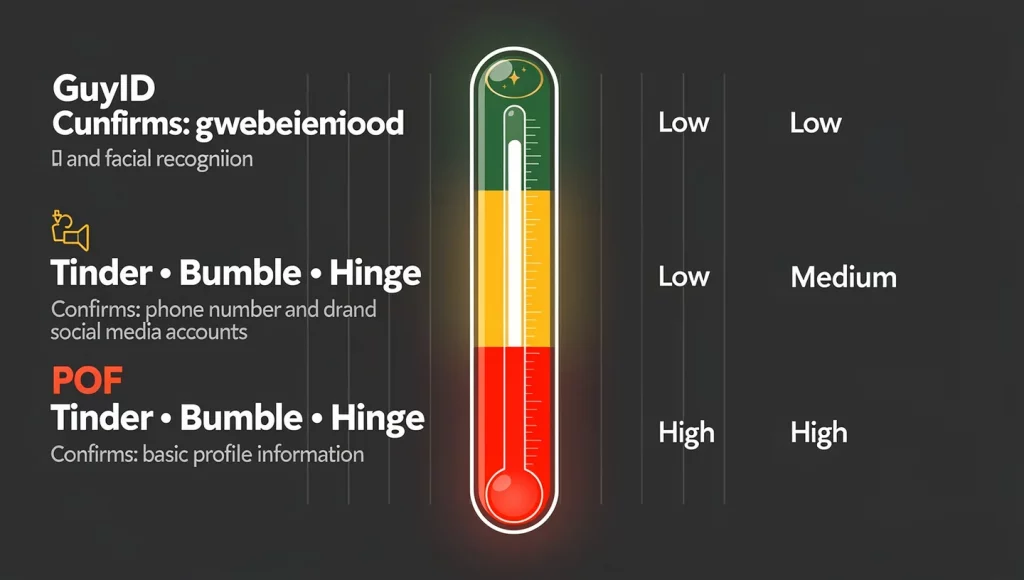
The pattern is clear: when asking which dating apps have identity verification, the honest answer is that no mainstream dating app provides comprehensive identity verification for all users. Every platform offers some form of photo matching, but none require government ID, background screening, or character references. The column that matters most — Government ID — shows ❌ across every major platform except eHarmony’s optional feature and GuyID’s core model.
Tinder Verification: What the Blue Check Actually Proves
Tinder is the world’s most downloaded dating app, and its blue verification checkmark is the most recognized verification badge in online dating. Understanding what Tinder’s system actually does is essential for anyone researching which dating apps have identity verification.
How Tinder Verification Works
Tinder’s Photo Verification asks you to take a live selfie mimicking a specific pose shown on screen. AI facial recognition compares the selfie to your uploaded profile photos, confirming that the same face appears in both. If the match passes the similarity threshold, you receive a blue checkmark visible on your profile.
The process takes under 30 seconds and most users complete it without difficulty. Tinder has stated that photo-verified profiles receive more engagement than unverified ones — confirming that the badge influences user behavior and matching patterns.
What Tinder Verification Confirms
- The person taking the verification selfie has the same face as the profile photos
- The verification was completed by a live person (not a static image held to the camera)
What Tinder Verification Does NOT Confirm
- Real name — the name on the profile is self-reported with no cross-reference
- Real age — age is self-declared with no document check
- Career, education, or location claims — all self-reported
- Relationship status — no mechanism to verify single status
- Criminal background — no screening of any kind
- Whether the profile photos themselves are AI-generated — a deepfake face overlay can potentially match AI-generated photos during a liveness check
Tinder’s Scam Vulnerability
Despite having photo verification, the platform’s massive user base (75+ million monthly active users), swipe-based matching that rewards volume over screening, and the limited scope of photo-only verification create an environment where scammers operate successfully alongside verified genuine users. The blue check catches basic photo theft but does not prevent AI-powered scam operations that generate original fictional identities.
Bumble Verification: The Gesture-Based System
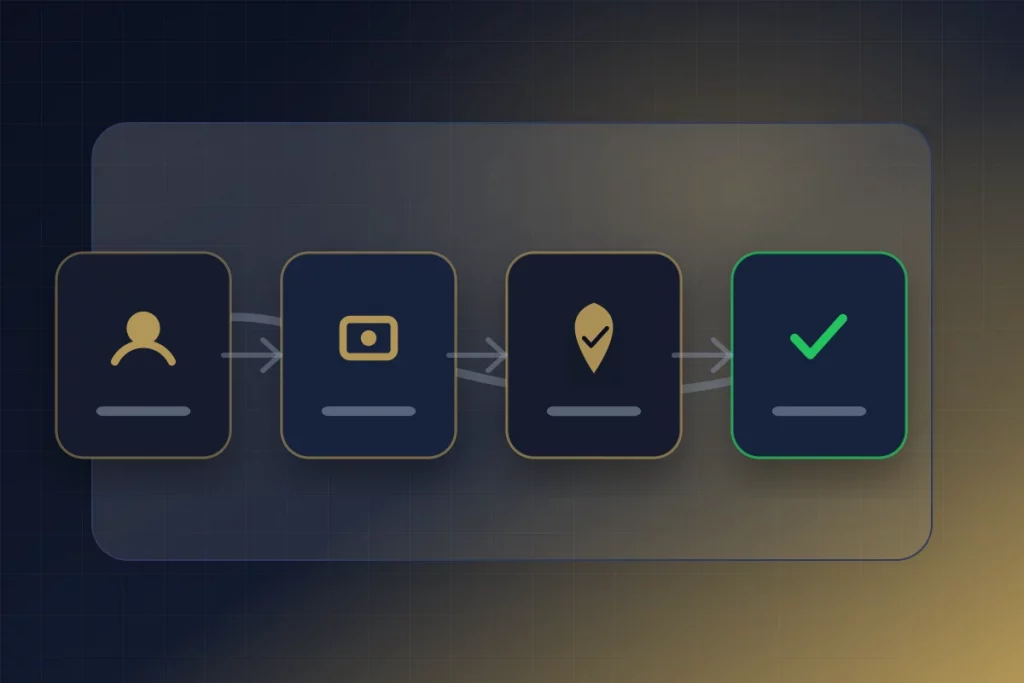
Bumble’s Photo Verification adds one additional layer compared to Tinder — gesture matching — making it marginally more robust against certain types of fraud. For anyone researching which dating apps have identity verification, Bumble’s system represents the current middle ground among mainstream apps.
How Bumble Verification Works
Bumble asks users to take a selfie mimicking a specific gesture or pose displayed in the app. The system compares both the facial features and the gesture completion against the profile photos. The gesture requirement adds a layer of liveness confirmation that’s slightly harder for static images or simple photo manipulation to bypass compared to Tinder’s pose-only matching.
What Makes Bumble Different
Beyond its verification system, Bumble’s women-message-first design creates a structural barrier to some scam tactics — specifically, it prevents scammers from initiating unsolicited contact with women (though scammers creating female profiles to target men face no such barrier). This design choice contributes to a somewhat lower scam density than platforms with unrestricted messaging.
Bumble verified users gain a meaningful engagement advantage, with verified profiles shown more prominently in the matching queue.
Bumble’s Limitations
Despite the gesture addition, Bumble’s verification shares the same fundamental limitation as every other platform: it confirms photos, not identity. The gesture adds friction that deters the laziest fake accounts but doesn’t prevent sophisticated operators using deepfake technology to mimic gestures with a synthetic face overlay. Government ID, legal name, age verification, background screening, and character assessment remain absent from Bumble’s verification — the same gaps present across every major dating app.
Hinge Verification: The Most Behaviorally Impactful Badge
Among mainstream dating apps, Hinge’s verification produces the strongest measurable impact on user behavior — making it a critical platform to understand when researching which dating apps have identity verification.
How Hinge Verification Works
Hinge uses a video selfie for verification rather than a static photo with a pose. The user records a short video, and AI analyzes the video for liveness indicators (natural movement, consistent lighting, real-time facial animation) while comparing the face against profile photos. The video-based approach provides a slightly stronger liveness signal than Tinder or Bumble’s photo-based methods.
The 200% Impact
This isn’t a survey preference — it’s measured dating behavior. Verified Hinge profiles receive more likes, more responses to comments, and more dates than unverified profiles.
This data answers a common question for people researching which dating apps have identity verification: verification on Hinge isn’t just a safety feature — it’s the single most effective dating strategy for getting more dates. The competitive advantage of being verified on Hinge exceeds the advantage of better photos, a better bio, or more strategic swiping.
Hinge’s Design Philosophy
Hinge’s “designed to be deleted” brand positioning creates a user base that’s more relationship-focused than Tinder’s casual-leaning audience. This means Hinge users place higher value on trust signals — making verification more valuable on Hinge than on platforms where the user base is less relationship-oriented. However, this same characteristic makes Hinge users more vulnerable to long-con scams like pig butchering, where the scammer invests weeks building a relationship before introducing financial exploitation.
Hinge’s Limitations
Despite producing the strongest behavioral impact, Hinge’s video verification confirms the same narrow function as every other platform: the person on camera matches the profile photos. Legal identity, background, character, and intentions remain unverified.
Other Dating Apps: Facebook Dating, POF, OkCupid, The League, and More
Beyond the big three (Tinder, Bumble, Hinge), several other platforms offer verification features worth evaluating when researching which dating apps have identity verification.
Plenty of Fish (POF)
POF’s verification is minimal compared to competitors — basic photo matching without the gesture or video enhancements that Bumble and Hinge use. Combined with lower barriers to account creation and a user demographic that skews older (and often less familiar with AI-generated content), POF is objectively the most scam-heavy major dating platform.
If you use POF, knowing which dating apps have identity verification is especially critical — because POF’s own verification provides less protection than almost any competitor. Independent verification through GuyID’s free safety tools and requesting matches’ GuyID Trust Profiles is not a nice-to-have on POF — it’s essential.
Facebook Dating
Facebook Dating is unique because it leverages the existing Facebook profile — providing more identity signals than standalone dating apps. A Facebook Dating profile is connected to a Facebook account with years of history, real friend connections, tagged photos, and organic activity. This depth of social graph data provides indirect identity signals that Tinder and Bumble cannot match.
However, Facebook Dating’s verification advantage comes with its own risks. Hacked Facebook accounts — accounts with years of genuine history that have been taken over by scammers — provide a particularly convincing cover for fraud. The scammer inherits the account’s entire social proof.
OkCupid
OkCupid offers optional selfie verification similar to Tinder’s model. Its distinguishing feature is the extensive question-based matching system, which provides behavioral compatibility data that photo-only platforms don’t capture. While this doesn’t constitute identity verification, the depth of self-reported information provides additional data points for assessing profile authenticity — a profile that answers 200+ compatibility questions with consistent, thoughtful responses is more likely genuine than one that answers the minimum.
The League
The League is the closest mainstream app to requiring identity verification, though it still falls short of comprehensive identity confirmation. The League requires LinkedIn authentication — your profile must be linked to a LinkedIn account — plus photo verification. The LinkedIn requirement adds a professional identity layer: you need a credible LinkedIn profile with real work history and connections to pass screening. This catches casual fakes but doesn’t prevent sophisticated operators with built-up LinkedIn profiles.
The League’s approach represents a step toward what identity verification in dating apps could look like — but it’s limited by its reliance on LinkedIn (itself vulnerable to fake profiles) and its niche positioning that limits its user base primarily to professionals in major cities.
eHarmony
eHarmony has experimented with optional ID verification in some markets — allowing users to submit government ID for enhanced verification status. This is the closest any mainstream dating platform has come to government ID verification. However, the feature is optional (not required), available only in select regions, and the uptake rate is low because the platform doesn’t sufficiently incentivize users to complete the more rigorous process.
Niche and Premium Apps
Several niche dating apps — including The Inner Circle, Coffee Meets Bagel, and some regional platforms — offer various verification enhancements. Some require phone verification, email verification, or linked social media accounts. A few premium services offer optional background checks as an add-on feature. None provide the comprehensive government ID + social vouching + progressive trust model that consent-based verification delivers.
What No Dating App Currently Verifies: The Universal Gaps
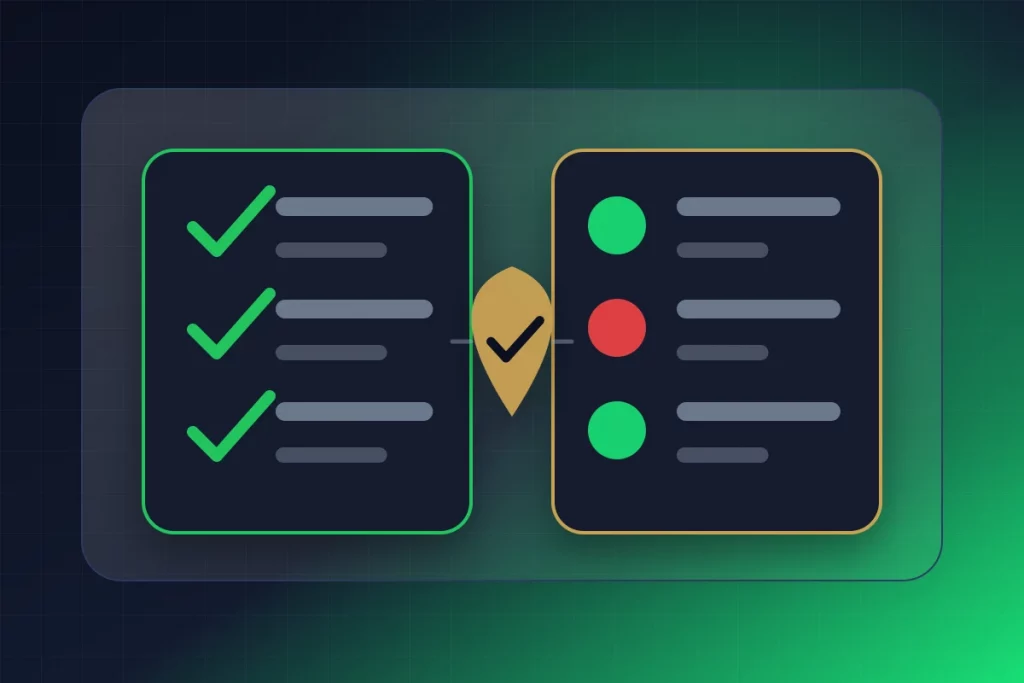
Regardless of which dating apps have identity verification features, certain critical identity dimensions remain unverified across every major platform in 2026. These universal gaps are what the trust gap in online dating is built on.
Legal Name
No mainstream dating app verifies that the name on a profile is the person’s legal name. “John, 34, Investment Banker” could be anyone — the name, age, and career are all self-reported with zero cross-reference against any official document. When users see a profile that says “John” with a verification badge, they assume “John” has been confirmed — but the badge only confirms the photo, not the name attached to it.
Age
Age is self-declared on all major dating platforms. No government document check confirms the claimed age. This enables age-related deception ranging from harmless vanity (claiming to be a few years younger) to seriously misleading misrepresentation (a 50-year-old claiming to be 35). For users with age-based preferences, the lack of age verification means that filtering by age provides a false sense of precision.
Relationship Status
No dating app verifies whether a user is actually single, separated, divorced, or married. Cross-referencing with marriage registries or public records is technically possible but not implemented on any major platform.
Criminal Background
No mainstream dating app performs criminal background checks on users. Some premium services offer optional background check add-ons, but these are self-initiated by the person being checked (creating a self-selection bias where people with clean records opt in and others don’t) and are not integrated into the platform’s verification badge system.
Character and Intentions
Perhaps the most important dimension — and the most impossible for any automated system to verify — is character. Is this person honest? Do they treat partners with respect? Do real people in their life vouch for their integrity? No dating app addresses character verification because no algorithm can assess it. This is precisely the gap that social vouching — as implemented in GuyID’s verification model — is designed to fill. When real friends and colleagues stake their reputation on someone’s character, it provides the human judgment that no AI or algorithm can replicate.
How Scammers Bypass Each Platform’s Verification
For each platform in the which dating apps have identity verification comparison, scammers have developed specific bypass techniques that exploit the unique limitations of each system. Understanding these bypass methods explains why organized scam networks (FTC) continue to operate successfully despite the existence of verification features.
| Platform | Primary Bypass Method | Why It Works |
|---|---|---|
| Tinder | Deepfake overlay during selfie verification | AI-generated face matches AI-generated photos — no real identity needed |
| Bumble | Deepfake with gesture mimicking | Current deepfakes can reproduce simple gestures alongside face-swap |
| Hinge | Deepfake during video selfie recording | Video-based liveness check is stronger but still vulnerable to real-time face-swap |
| Facebook Dating | Hacked accounts with years of real history | Inherited social proof from the real account owner makes fake identity convincing |
| POF | Minimal verification requirements | Weakest verification = lowest barrier to entry for scam profiles |
| The League | Built-up fake LinkedIn profiles | LinkedIn verification adds friction but fake professional profiles can be built over months |
| All platforms | Accomplice-based verification | A real person completes verification, scammer takes over the account afterward |
Every bypass method listed above exploits the same fundamental weakness: photo-based verification confirms appearance, not identity. The person behind the screen can be anyone — as long as the face on camera matches the photos in the profile. This is why knowing which dating apps have identity verification matters less than understanding what each app’s verification actually checks. A blue checkmark from a platform with photo-only verification provides a false confidence signal when the system can be bypassed by sophisticated operations.
The one verification model that addresses all of these bypass methods is consent-based verification through GuyID — because government ID verification requires a physical document that deepfakes can’t generate, social vouching requires real humans who accomplices rarely provide, and Trust Tiers require time that disposable scam accounts don’t have.
The Third-Party Solution: GuyID Works Across Every Dating App
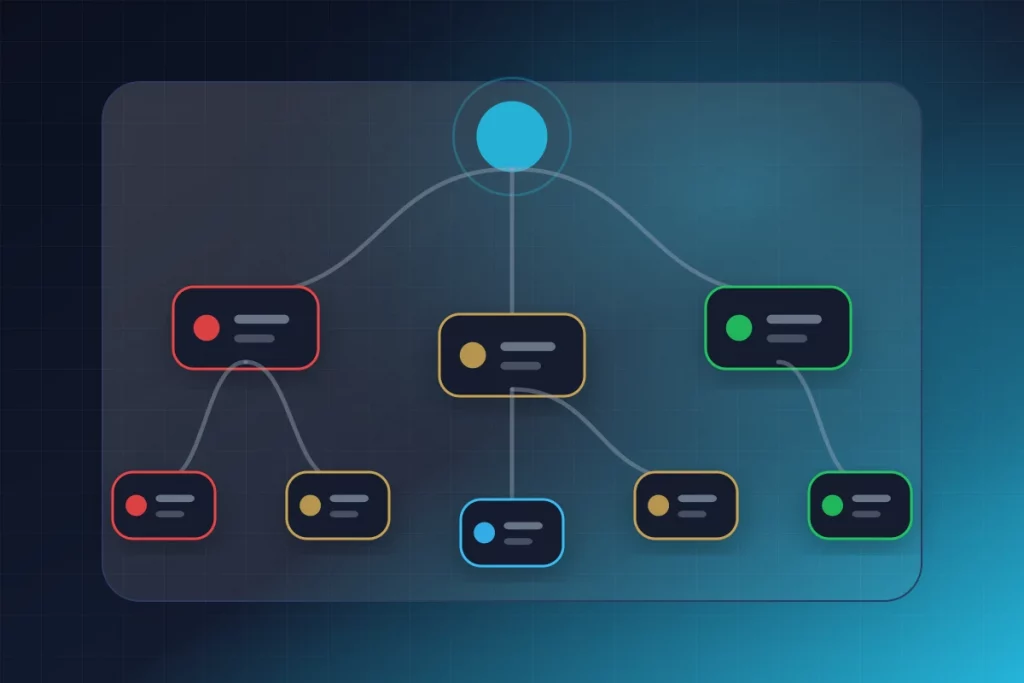
The most practical answer to which dating apps have identity verification is this: none of them provide comprehensive identity verification built-in — but GuyID provides it as an external layer that works across all of them.
How GuyID’s Cross-Platform Model Works
GuyID is not a dating app. It’s a consent-based verification platform that creates a portable trust profile you can share on any dating platform. The verification includes government ID confirmation (biometric matching against official documents), social vouching (real friends and colleagues confirming identity and character), and progressive Trust Tiers (GHOST → STARTER → BUILDER → TRUSTED → ELITE → LEGEND) that track sustained trustworthiness over time.
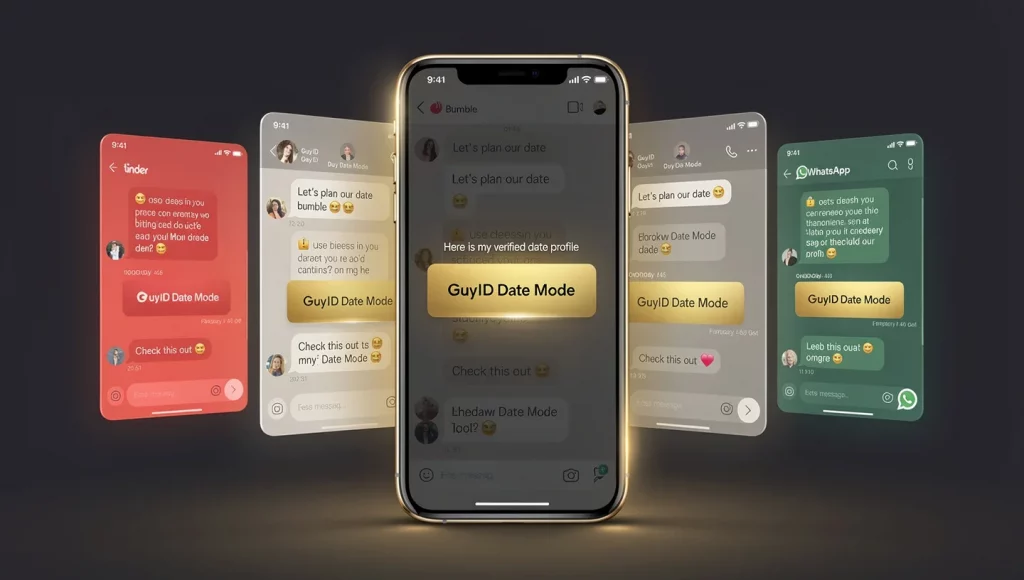
The resulting Trust Profile is shared via a Date Mode link — a URL that works in any context. Paste it in your Tinder bio. Send it in a Bumble conversation. Share it on WhatsApp. Include it in a Hinge message. The person receiving the link checks your verification status for free — no GuyID account required.
Why Cross-Platform Portability Matters
When asking which dating apps have identity verification, the platform-locked nature of existing verification is a critical limitation. Your Tinder blue check means nothing on Bumble. Your Bumble verification doesn’t transfer to Hinge. Your Hinge badge is invisible on WhatsApp. Every time you switch platforms or move a conversation off-app, your verification status resets to zero.
GuyID’s portable verification solves this by creating a single trust identity that follows you everywhere. Whether you met on Tinder, Bumble, Hinge, Facebook Dating, OkCupid, Instagram, LinkedIn, or through a friend, your verified Trust Profile travels with you. This portability means you verify once and benefit across every platform — rather than re-verifying on each app with systems that only confirm photos anyway.
The Verification Gap GuyID Fills
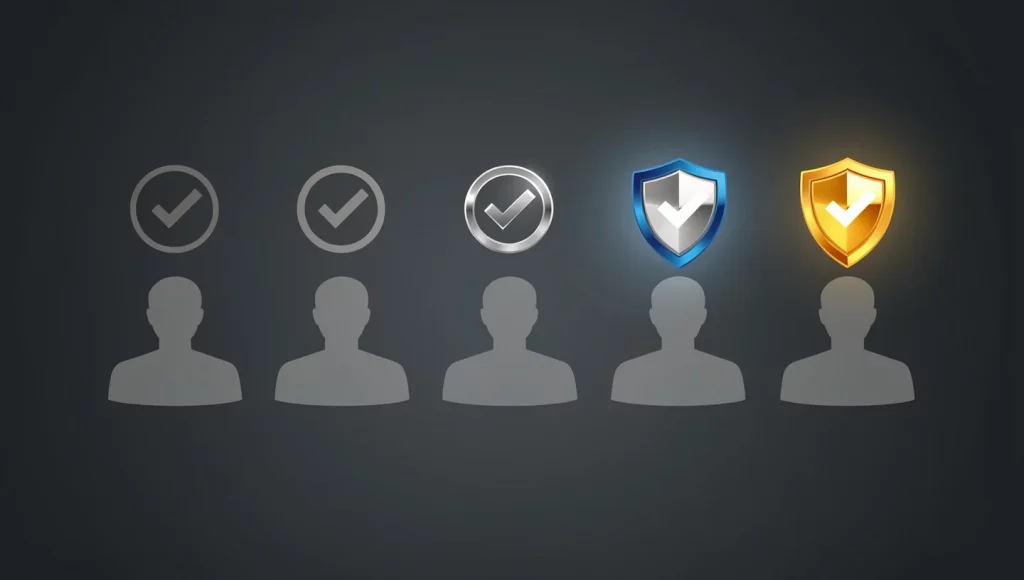
Reviewing the three levels of dating profile verification: Level 1 is photo matching (what dating apps provide), Level 2 is government ID verification, Level 3 is government ID + social vouching + progressive trust. GuyID provides Level 3 — the comprehensive verification that no dating app offers. It fills the universal gaps that every platform leaves open: confirmed legal identity, character vouched by real people, and trust demonstrated over time.
For women checking matches: access is free. Always. The incentives align perfectly — doing the right thing produces the best outcome for everyone.
How to Evaluate Verification Strength on Any Dating Platform
Now that you know which dating apps have identity verification — and what each system actually confirms — here’s a framework for evaluating any platform’s verification strength, including new or niche apps not covered above.
The 5-Question Verification Strength Test
Ask these five questions about any dating app’s verification to determine how much trust the badge deserves:
- Does verification confirm legal identity? If the system only matches a selfie to profile photos (without checking the selfie against any government document), it confirms appearance only — not identity. Most dating apps answer “no” to this question.
- Can AI-generated photos pass the verification? If the system relies on photo or video matching without checking against a government ID database, AI-generated identities can potentially pass. Most current dating app systems are vulnerable.
- Does verification include any character assessment? Photo matching confirms that a human exists — it says nothing about whether that human is trustworthy, honest, or safe. Only systems with social vouching or equivalent mechanisms address character.
- Is the verification portable across platforms? Platform-locked verification (Tinder badge on Tinder only) loses value the moment the conversation moves to WhatsApp, text, or a different dating app. Portable verification maintains trust across every channel.
- Does the verification evolve over time? A static badge (verified/not) provides a one-time signal. A progressive system like Trust Tiers provides ongoing information about sustained trustworthiness — significantly more useful for evaluating long-term relationship potential.
💡
Quick Platform Evaluation
Apply these five questions to any dating app’s verification. If the answer to questions 1-3 is “no” — the verification is Level 1 (photo matching only). If 1 and 3 are “yes” but 2 is “no” — it’s Level 2 (government ID without character assessment). If all five are “yes” — it’s Level 3 (comprehensive verification). Currently, only GuyID answers “yes” to all five. When wondering which dating apps have identity verification that scores well on all five dimensions, the answer points to third-party verification rather than any single platform’s built-in badge.
Summary: Which Dating Apps Actually Keep You Safe?
The question which dating apps have identity verification has a nuanced answer that most articles oversimplify. Here’s the complete truth.
Every major dating app — Tinder, Bumble, Hinge, Match.com, OkCupid, and others — offers some form of verification. Every one of these systems confirms the same narrow thing: a live selfie matches uploaded profile photos. None of them confirm legal identity, age accuracy, career claims, relationship status, criminal background, or character.
The honest answer to which dating apps have identity verification that actually confirms who someone is: none of the mainstream apps. The identity verification that matters — government ID + social vouching + progressive trust tiers — comes from GuyID, which provides Level 3 verification across every dating platform via a portable trust profile link.
The proactive dating safety approach doesn’t wait for dating apps to fix their verification gaps. It uses GuyID’s free safety tools to screen every match, requests verified Trust Profiles before meeting, and combines platform badges with independent verification through the 5-level verification system. The platforms may never provide the verification you need. You can provide it for yourself — starting today.
The Verification Every Dating App Is Missing
GuyID provides Level 3 identity verification — government ID + social vouching + Trust Tiers — that works across Tinder, Bumble, Hinge, and every other platform via a portable link. 60+ free safety tools. Women check for free.
Get Verified on GuyID
Try Free Safety Tools
Frequently Asked Questions
Which dating apps verify your real identity with government ID?
Can scammers get verified on dating apps?
How does GuyID work with dating apps that don’t integrate with it?
What does a dating-app verification badge usually mean?
Evidence note
NIST Digital Identity Guidelines distinguish identity proofing, authentication, and federation as separate parts of digital identity risk management (NIST, 2025).