
Reader Briefing
Reader Briefing
Start here if you need a practical read on how to safely date someone you met online: 7-stage guide: who should use verification, what signals to check, and what to do before moving from online interest to an in-person plan.
Who this is for
- People meeting someone from a dating app or social platform.
- Readers preparing for a first in-person date.
- Anyone checking identity, profile consistency, and trust signals.
- People trying to avoid romance scams, fake profiles, or pressure tactics.
You’ll learn
- How to evaluate identity signals without treating any single check as certainty.
- Which trust signals matter and how to weigh them together.
- How to spot inconsistencies, pressure, or behavior patterns that deserve caution.
- How to move from online conversation to a safer first meeting.
- Where GuyID tools fit into a quick pre-date screening workflow.
- How to compare options using practical safety and trust criteria.
Bottom line
Verification reduces uncertainty; it does not guarantee future behavior. Use a layered approach: confirm identity signals, compare profile consistency, ask for a short video call, keep early plans public, and slow down when someone pressures you to skip normal safety steps.
Key takeaways
- Identity verification improves confidence, not certainty.
- Patterns matter more than isolated incidents.
- Verify before meeting privately or sharing sensitive details.
- A short video call can reveal many inconsistencies.
- Pressure to skip reasonable safety steps is useful information.
Free Tools
Catfish Probability Detector
Check whether a dating profile has suspicious identity or photo signals.
Dating Bio Red Flag Detector
Review a bio for scam, pressure, or trust-warning language.
Dating Safety Checklist
Use free GuyID tools before moving from chat to a real date.
Next step
Create your GuyID trust profile
Share consent-based trust signals before a date without turning the conversation into an interrogation.
You matched with someone. The conversation is going well. They seem genuine, funny, interesting — someone you’d actually like to meet. Not just the first date — the entire journey from “we matched” through “we’re actually dating.” Because safety isn’t a single checkpoint at the first coffee meeting. It’s a continuous practice that evolves as the relationship deepens: verifying identity before emotional investment, maintaining awareness during the getting-to-know-you phase, protecting privacy as information sharing increases, confirming trust before physical and financial vulnerability deepens, and sustaining smart habits even after the relationship feels established. This is the complete guide — every stage, every safety decision, from match to committed relationship.
Whether you’re a first-time online dater or someone who’s been on apps for years, this guide maps the safety decisions at every stage of safely dating someone you met online — with the tools, protocols, and verification methods that keep you protected while you discover whether this person is the genuine connection you’re looking for.
NavigateTable of Contents26 sections
⚡ Key Takeaways
Safety isn’t a first-date checklist — it’s a continuous practice across 7 stages
From matching through committed relationship, each stage has different risks, different verification needs, and different information-sharing thresholds. Safety evolves as the relationship deepens.
Verify before you invest — not after something feels wrong
The proactive approach screens BEFORE emotional investment. Once invested, emotional bias compromises objective evaluation. The 60-second check costs nothing emotionally. Discovering a scam after months costs everything.
Information sharing should be proportional to verified trust
Your home address, workplace, financial details, and family information are shared gradually — matching verified trust, not conversational comfort. Feeling close doesn’t equal being verified.
The off-app transition and the financial trust stage are the two highest-risk moments
When you move to WhatsApp, all platform safety vanishes. When you begin sharing finances, the stakes multiply. Both require specific verification protocols.
Stage 1: The Match — Before You Invest Any Emotion
The moment you match is the moment safety starts — not the moment you meet. Safely dating someone you met online begins with the 60-second investment that prevents weeks of wasted emotional energy.
The 60-Second Screen (Every Match, No Exceptions)
- 0-30 sec: GuyID reverse image search — upload their main photo. Match found under a different name → fake. Stop.
- 30-40 sec: Catfish probability detector — holistic risk score. High risk → don’t engage or escalate to full screening.
- 40-50 sec: Bio red flag detector — scam language patterns, vagueness, suspicious claims.
- 50-60 sec: Quick visual scan — AI photo characteristics? All professional photos with zero casual shots? No friends in any image?
This 60 seconds is the highest-ROI safety investment in all of dating. It catches the majority of fake profiles before you send your first message — before any emotional investment, before any time commitment, before any vulnerability. Make it routine for every match, not just suspicious ones, because the most dangerous fakes don’t look suspicious.
Check for a GuyID Trust Profile
Look in their bio or prompt for a Date Mode link. If present, click it: their Trust Tier, government ID status, and social vouches are visible in 10 seconds. TRUSTED or above = strong positive signal. If not present: not necessarily negative (many genuine people haven’t yet built a Trust Profile), but note the absence — you’ll want to request it before meeting.
Stage 2: The Conversation — Building Interest While Maintaining Awareness
The conversation stage is where chemistry develops — and where awareness must remain active. Safely dating someone you met online during this stage means enjoying the connection while watching for the signals that separate genuine people from fabricated personas.
What to Watch For
- Specificity vs generality: Do their responses reference YOUR specific details (“So the marathon was in the rain?”) or generic validation (“That’s so interesting, tell me more!”)? Specific engagement indicates a real person processing your content. Generic responses indicate a script or chatbot.
- Consistency across conversations: Do biographical details (age, career, hometown, family) remain stable across days of conversation? Fabricated identities produce contradictions when the operator manages multiple targets or improvises across conversations.
- Pacing: Does emotional intensity match the timeline? Genuine connection builds gradually. Love-bombing (“I’ve never felt this connection” in week one) builds artificially fast.
- Reciprocal curiosity: Does the person ask about YOUR life with genuine follow-ups, or do they primarily share their own narrative? Genuine people are curious about their match. Scammers steer conversation toward their fabricated story.
What NOT to Share Yet
During the conversation stage — before any identity verification — keep the following private: full last name, home address, workplace name and location, financial information (income, debts, assets), children’s names/schools/schedules (if applicable), and security question answers (mother’s maiden name, pet’s name, street you grew up on). Share interests, values, experiences, and personality freely. Protect identifying details until trust is verified through tools, not just felt through conversation. See the complete privacy guide.
Stage 3: The Off-App Transition — The Critical Safety Moment
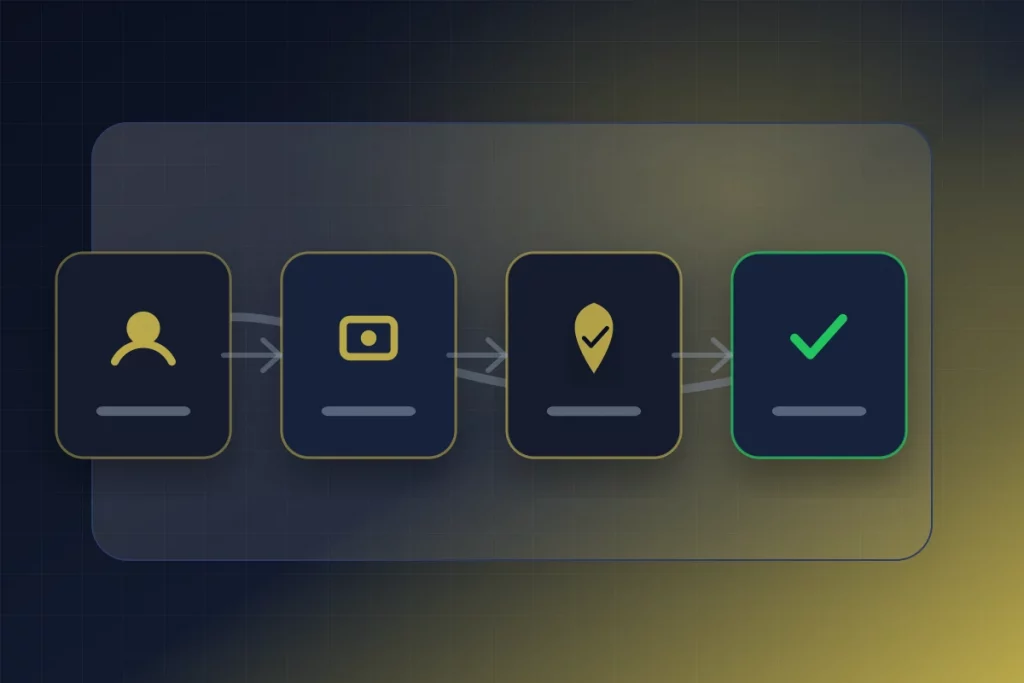
Moving from the dating app to WhatsApp, phone, or text is the highest-risk transition in the dating journey. Every platform safety feature — badges, monitoring, reporting — vanishes. You become two unverified people on an unmonitored channel.
Before Transitioning
- ☐ At least 3-5 days of meaningful in-app conversation
- ☐ Video call completed with active deepfake testing — the person matches their photos live
- ☐ WhatsApp privacy settings configured (Last Seen, Profile Photo, About, Status → “My Contacts”)
- ☐ Consider using a secondary phone number (Google Voice) for dating
At the Transition Moment
“Here’s my number — and here’s my verified identity since we’re leaving the app: [GuyID link].” Share your portable Trust Profile at the exact moment platform safety disappears. Request theirs: “Do you have a GuyID profile too?” This fills the off-platform gap with verified trust — the only trust signal that survives the transition.
Stage 4: The First Meeting — Where Digital Meets Physical Reality
The first in-person meeting is where everything you’ve evaluated digitally meets physical reality. Safely dating someone you met online at this stage means controlled conditions, personal safety planning, and the awareness that months of digital connection don’t override 5 minutes of in-person instinct.
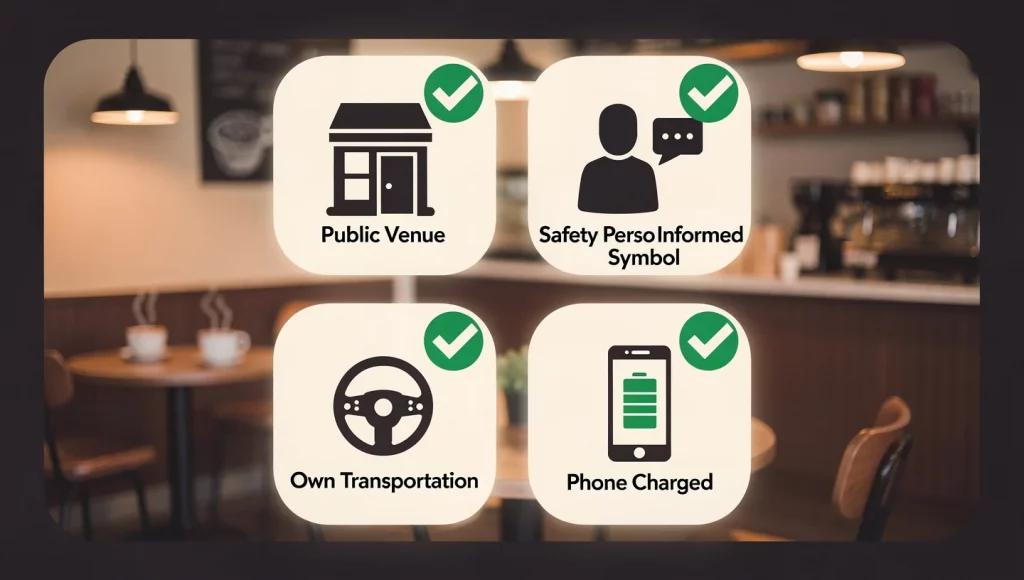
The First-Date Safety Protocol
Before the Date
☐ GuyID Trust Profile checked — gov ID verified? Vouches? Trust Tier?
☐ Inform a friend: where you’re going, who you’re meeting (share verified info), when you expect to return
☐ Set up a check-in: “I’ll text you at 8pm. If you don’t hear from me by 8:30, call.”
☐ Charge your phone fully
☐ Screenshot and share their profile with your safety person
During the Date
☐ Meet at a public venue you know — restaurant, café, bar with staff presence
☐ Drive yourself or use your own rideshare (never depend on them for transportation)
☐ Don’t leave food or drink unattended
☐ Trust your instincts — if something feels wrong, leave. No explanation required.
☐ Keep the first meeting brief (1-2 hours) — enough to assess in person without overcommitting
After the Date
☐ Text your safety person: “Home safe”
☐ Reflect: did they match their online persona? Did anything feel inconsistent?
☐ Were they respectful of boundaries? Did they pressure for more time, a different venue, or coming to your home?
☐ Trust your assessment — if the date felt right, plan a second. If anything felt off, it’s okay to not continue.
What the First Meeting Should Confirm
The first meeting is a reality check — not a commitment. It confirms: the person looks like their photos (basic), they behave consistently with their online persona (deeper), they respect boundaries (critical), and your in-person instinct aligns with your digital impression (decisive). One meeting doesn’t confirm character. It confirms enough to justify a second meeting — where deeper assessment begins.
Stage 5: Early Dating (Weeks 2-8) — Character Emerges Through Behavior
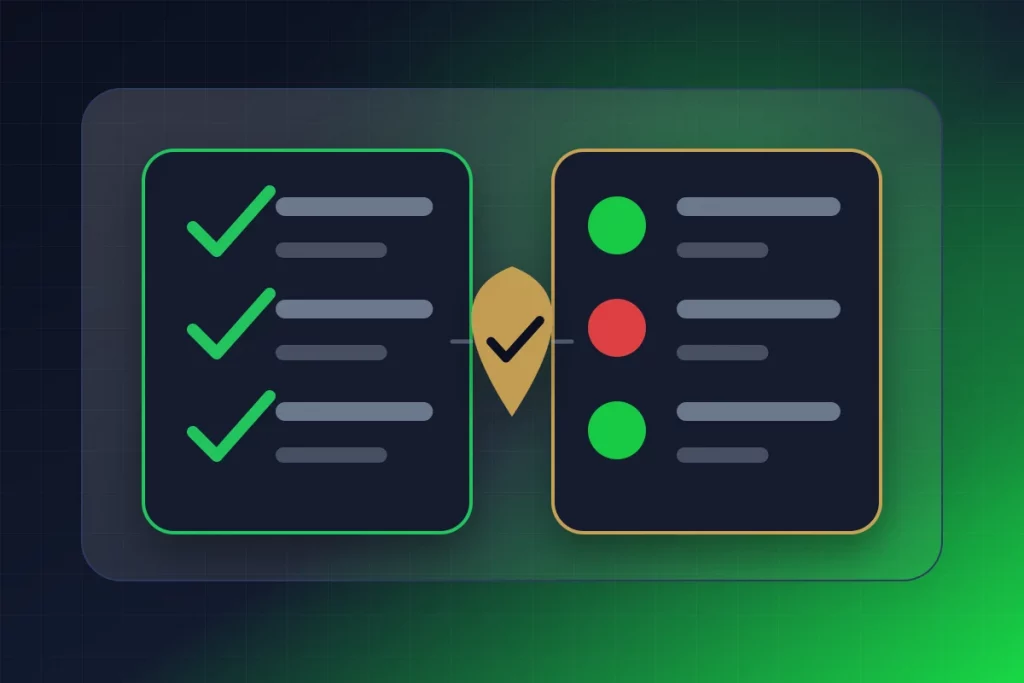
The early dating stage is where character reveals itself — through actions, not words. Safely dating someone you met online during weeks 2-8 means observing behavior across contexts while gradually expanding trust.
What to Observe
- How they treat service staff: Waiters, baristas, drivers. Kindness to people with no power over them reveals baseline character. Rudeness to service staff predicts rudeness to partners once the courtship performance ends.
- How they handle disagreement: The first minor conflict or difference of opinion reveals conflict style. Do they discuss respectfully, dismiss, steamroll, or withdraw? How someone handles small disagreements predicts how they’ll handle large ones.
- Consistency between claims and observable reality: Their claimed career matches their lifestyle? Their described social life matches what you observe? Do they mention friends and family naturally, or is their life story conspicuously devoid of other people?
- Boundary respect: When you set a boundary (time, pace, physical, informational), do they respect it gracefully or test it? Early boundary testing is the most reliable predictor of future boundary violation.
- Alcohol and self-regulation: How do they behave after a drink or two? Self-regulation under mild social disinhibition reveals patterns that full sobriety conceals.
Information Sharing During Early Dating
After multiple in-person dates with consistent positive signals: you can share your general neighborhood (not exact address), your workplace field (not specific employer and location), and more personal stories and values. Still protect: home address (meet elsewhere), financial details, children’s detailed information if applicable. Trust is building — but it’s built on weeks of observed behavior, not months of verified consistency. Share proportionally.
Stage 6: Deepening (Months 2-6) — Trust Expands with Verification
The deepening stage is where the relationship becomes serious — where you consider introducing them to friends and family, where physical intimacy deepens, and where the emotional stakes climb significantly.
Verification at This Stage
- Introduce to your social network: Your friends and family meeting this person provides the social verification that your individual assessment can’t match. Multiple perspectives catch things single perspective misses. “What did you think?” asked honestly of people who know you well provides the external reality check that months of one-on-one dating can’t.
- Confirm their social network: Have you met their friends? Their family? Their colleagues? A person who keeps you entirely separated from every other relationship in their life — after months of dating — is maintaining compartmentalization that warrants investigation. Genuine relationships integrate.
Information Sharing as Trust Deepens
With months of in-person verified behavior: sharing home address (they can visit), workplace (they know where you work), and deeper personal history becomes proportionally appropriate. Financial details (income, debts, assets) should still wait for the commitment stage — when financial trust becomes directly relevant.
Stage 7: Commitment — When Trust Becomes Financial and Physical
The commitment stage — moving in together, financial entanglement, marriage discussions, introducing to children — is where the stakes reach maximum. Safely dating someone you met online at this stage means ensuring that the trust underpinning the commitment has been verified at every layer.
The Commitment Verification Checklist
- ☐ GuyID Trust Profile at TRUSTED tier or above — government ID confirmed, social vouches received
- ☐ Background check completed — criminal history, sex offender registry, court records
- ☐ Months of consistent in-person behavior observed across multiple contexts
- ☐ Your trusted friends and family have met them and provided honest assessments
- ☐ You’ve met their friends and family — their social network is real and accessible
- ☐ Financial discussions have been honest and verifiable (employment confirmation, general financial picture)
- ☐ No unresolved red flags from any earlier stage
Financial Trust Specifically
Before any financial entanglement — joint accounts, co-signing, shared expenses, major purchases, lending money — the person’s financial picture should be discussed honestly and their identity should be background-checked. Financial trust extended to someone whose identity and history haven’t been verified through documents is financial risk accepted voluntarily. Verify first.
The Safety Practices That Never Stop
Some safety practices aren’t stage-specific — they apply continuously throughout safely dating someone you met online.
Permanent Rules
- Never send money to someone before verified, in-person relationship: This rule has no expiration. Emotional connection doesn’t equal financial safety. Time invested doesn’t equal identity confirmed.
- Trust your instincts at every stage: If something feels wrong at month 6, it matters as much as if it felt wrong at day 6. Duration doesn’t invalidate instinct. The feeling that “something is off” deserves investigation regardless of how long you’ve been together.
- Maintain your own social network: Isolation — whether gradual or sudden — is a warning sign at any stage. A healthy partner encourages your friendships, family connections, and independent life. A partner who systematically reduces your connections is creating the dependency that exploitation requires.
- Keep financial independence: Even in committed relationships, maintaining personal financial accounts, personal credit, and financial knowledge protects you. Financial dependence created through a partner’s management of “your” money is a control mechanism, not a convenience.
- Report if you discover deception: If at any stage you discover the person you’ve been dating has fabricated identity, lied about fundamental facts, or engaged in manipulation — report to the dating platform where you met and, if financial fraud occurred, to law enforcement (IC3, FTC). Your report protects the next person.

Summary: Safety Is a Journey, Not a Checkpoint
How to safely date someone you met online isn’t answered by a single checklist at the first date. It’s answered by a seven-stage practice that evolves as the relationship deepens: screen before matching (60 seconds), verify during conversation (awareness + tools), protect the off-app transition (portable trust), control the first meeting (public venue, safety person, exit plan), observe during early dating (behavior across contexts), verify before deepening (social network, background check), and confirm before commitment (full verification + financial transparency).
At every stage, the principle is the same: trust proportional to verification. Share information proportional to confirmed trust. And verify through tools and documents, not through feelings and conversation — because feelings can be manufactured by a scammer in ways that documents and real human vouches cannot.
The tools are free. The Trust Profiles are checkable in 10 seconds. The red flags checklist is bookmarkable. The proactive approach works at every stage. What you’re looking for — genuine connection with a trustworthy person — is absolutely findable. The safety practices don’t prevent connection. They ensure the connection you find is real.
From First Match to Real Relationship — Safely
GuyID protects every stage: 60+ free screening tools for matching, Trust Profiles for verification, portable Date Mode links for off-app transitions, and the trust framework that follows your relationship from first swipe to commitment. Women check for free.
Screen Your Next Match Free
Build Your Trust Profile
Frequently Asked Questions
How do I know if someone I met online is safe to date?
When should I meet someone I matched with online?
What personal information should I share when dating someone from an app?
How do I stay safe when moving from the dating app to WhatsApp?
What are the biggest red flags when dating someone from an app?
How long should I date someone before trusting them financially?
Evidence note
The FTC reported 64,003 romance-scam reports in 2023, with $1.14 billion in reported losses and a $2,000 median reported loss (Federal Trade Commission, 2024).