
Reader Briefing
Reader Briefing
Start here if you need a practical read on the business case for dating verification: market failure, demand, and opportunity: who should use verification, what signals to check, and what to do before moving from online interest to an in-person plan.
Who this is for
- People meeting someone from a dating app or social platform.
- Anyone checking identity, profile consistency, and trust signals.
- People trying to avoid romance scams, fake profiles, or pressure tactics.
- Online daters improving conversations, profiles, or match screening.
You’ll learn
- How to evaluate identity signals without treating any single check as certainty.
- Which trust signals matter and how to weigh them together.
- How to spot inconsistencies, pressure, or behavior patterns that deserve caution.
- Where GuyID tools fit into a quick pre-date screening workflow.
- When to slow down, ask for more context, or walk away.
- How to turn the article’s advice into a concrete next step.
Bottom line
Verification reduces uncertainty; it does not guarantee future behavior. Use a layered approach: confirm identity signals, compare profile consistency, ask for a short video call, keep early plans public, and slow down when someone pressures you to skip normal safety steps.
Key takeaways
- Identity verification improves confidence, not certainty.
- Patterns matter more than isolated incidents.
- A short video call can reveal many inconsistencies.
- Pressure to skip reasonable safety steps is useful information.
- Use GuyID tools to turn vague concerns into specific checks.
Free Tools
Catfish Probability Detector
Check whether a dating profile has suspicious identity or photo signals.
Dating Bio Red Flag Detector
Review a bio for scam, pressure, or trust-warning language.
Dating Safety Checklist
Use free GuyID tools before moving from chat to a real date.
Next step
Create your GuyID trust profile
Share consent-based trust signals before a date without turning the conversation into an interrogation.
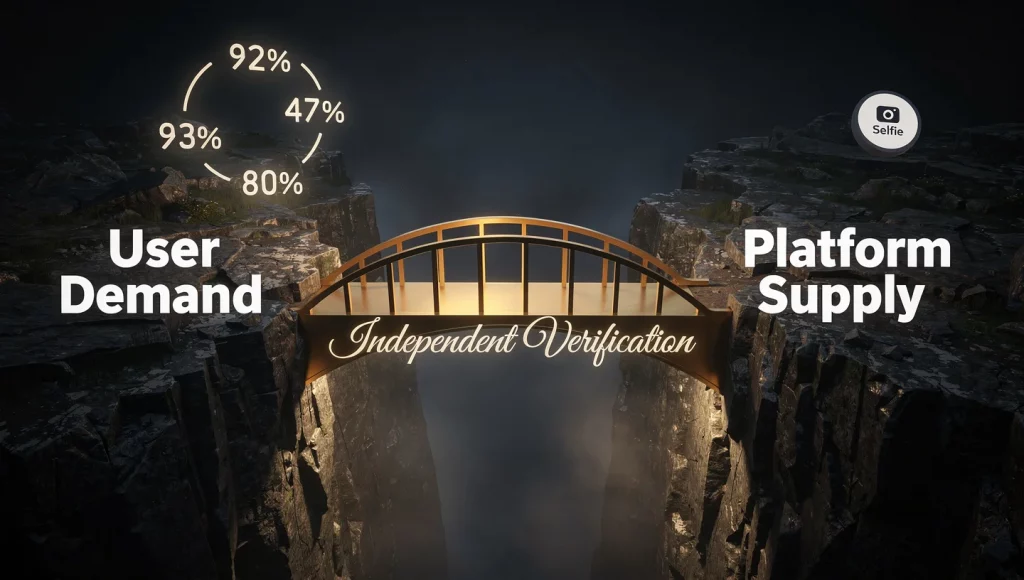
Zero mainstream platforms verifying legal identity. The business case for dating verification isn’t theoretical — it’s a documented market failure creating a documented demand gap with documented willingness to pay. The market for independent dating verification isn’t emerging — it’s overdue. This analysis maps the business case: the demand signals, the market sizing, the competitive moat, and why the timing aligns for the trust layer that the dating industry structurally needs but can’t build itself.
Whether you’re evaluating the dating verification market as an investor, a potential partner, a journalist covering dating safety, or a user wondering why verification platforms like GuyID exist — this analysis provides the data-driven case for why dating verification is both a market necessity and a market opportunity.
NavigateTable of Contents30 sections
⚡ Key Takeaways
Overwhelming demand exists for verification dating apps don’t provide
The demand is documented, growing, and unmet by any platform.
80M US dating app users × willingness to pay for safety = a multi-billion-dollar addressable market. Globally: 350+ million dating app users across markets with similar safety demands.
Dating apps structurally can’t fill the gap — creating permanent demand for independent verification
Seven structural barriers prevent platforms from providing identity verification, character assessment, or portable trust. The gap is permanent by design — not temporary by neglect.
AI threats and regulatory pressure are accelerating the timeline
AI-generated scams increase urgency for identity verification. UK/EU regulations mandate stronger safety measures. Both forces compress the timeline from “eventually needed” to “urgently needed.”
The Market Failure: Documented Demand Without Supply
The business case for dating verification begins with a textbook market failure: massive, documented consumer demand for a product category that the incumbent industry structurally cannot provide.
The Demand Side
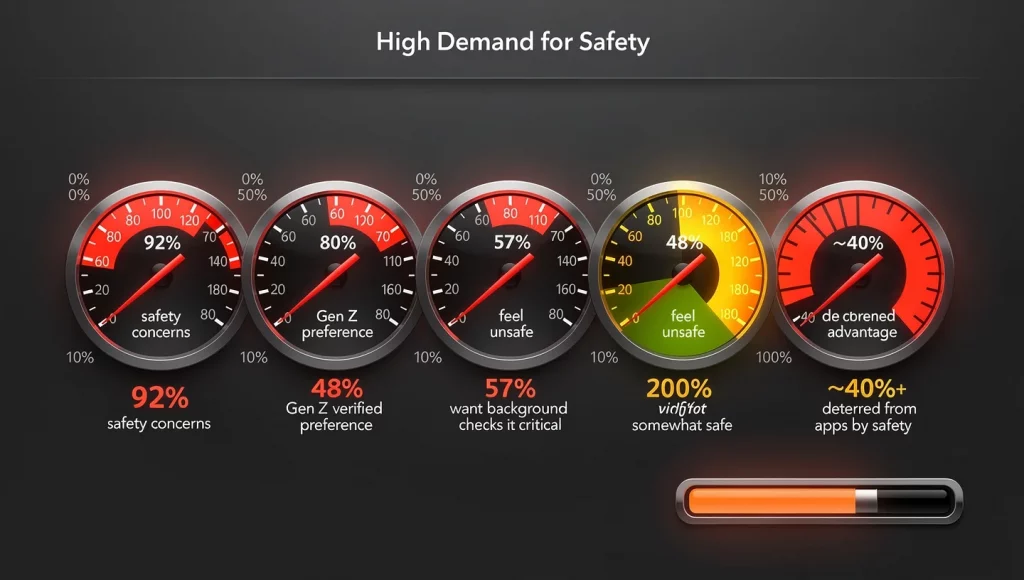
Users want significantly more verification than any dating platform offers. The demand isn’t ambiguous — it’s quantified across multiple independent research sources, all pointing in the same direction: users want verified identity, verified character, and verified safety at levels no platform provides.
The Supply Side
Every major dating platform verifies one thing: face matches photos. Zero platforms verify legal identity. Zero provide character assessment. Zero offer portable verification. Zero do background checks. The gap between what users demand and what platforms supply is enormous, documented, and — due to structural barriers — permanent within the dating app business model.
The Market Failure Definition
A market failure occurs when the existing market participants cannot or will not supply a product that consumers demonstrably demand. The dating verification gap is a textbook case: incumbent platforms face structural barriers (business model conflicts, competitive dynamics, verification ceilings) that prevent them from supplying what users demand. The resolution of market failures historically comes from new market entrants — companies that build business models specifically around the unmet demand.
The Demand Signals: Quantified and Growing
The demand for dating verification is documented across multiple independent data sources — each measuring a different dimension of the same underlying need.
| Demand Signal | Number | Source | What It Means for Verification |
|---|
Every signal points in the same direction: users want more verification, trust the current system less than platforms claim, and reward verification with engagement when it’s available. The demand exists. The supply doesn’t. The gap is the market.
US Addressable Market
These aren’t overlapping niche segments — they’re the majority of the market expressing demand for verification beyond what platforms provide.
Revenue Potential
Ancillary services (background checks, safety apps, verification tools) represent a growing share. A verification platform that provides comprehensive trust assessment at a fraction of background check cost — with the convenience of a shareable link rather than per-check payment — addresses the same willingness to pay at dramatically better economics for the user.
Global Opportunity
350+ million people use dating apps globally. The safety concerns driving US demand are universal — romance scams operate globally, AI threats are borderless, and the trust gap exists on every platform in every market. A verification model that works in the US — government ID + social vouching + portable trust — is applicable in every market with government-issued identification, which is effectively every country.
Why Dating Apps Leave the Gap Open: The Structural Case
The business case for dating verification is strengthened by the permanence of the supply gap. This isn’t a problem that dating apps will eventually solve — seven structural barriers prevent it.
The Barriers in Business Terms
No growth-stage company voluntarily adds this friction when competitors don’t.
- Competitive dynamics: The first platform to require strong verification loses signups to platforms that don’t. Race-to-the-bottom on friction. No first mover emerges voluntarily.
- Platform lock-in value: Verification that works on competitors’ platforms destroys competitive moat. No platform builds portable verification that helps rival users.
- Off-platform revenue gap: Users on WhatsApp generate zero platform revenue. No business case for investing in off-platform safety infrastructure.
- Liability concerns: Verifying identity creates potential liability for failures. Platforms minimize liability by minimizing verification scope.
These barriers are permanent features of the dating app business model — not temporary conditions that investment or innovation will resolve. The supply gap is structural, which means the market opportunity for independent verification is structural: not a window that will close when platforms catch up, but a permanent niche that platform economics prevent incumbents from filling.
The Competitive Landscape: Who’s Addressing the Gap
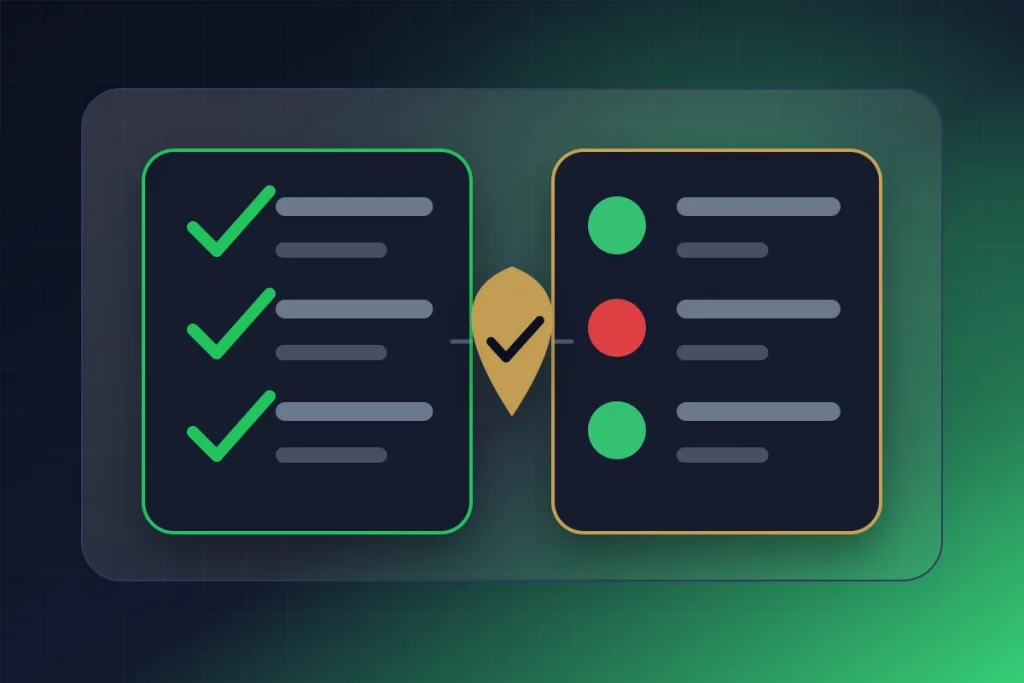
The dating verification market is early-stage — few players, limited awareness, and no established category leader. This early-stage positioning creates both opportunity and competitive dynamics worth understanding.
Incumbent Dating Apps
Match Group (Tinder, Hinge, Match) and Bumble Inc. invest in safety features within their platforms but face the structural barriers that prevent comprehensive verification. Their verification innovations (gesture selfies, video selfies) iterate within the photo-matching paradigm rather than advancing to identity or character verification. They’re optimizing the current model, not transforming it.
Background Check Services
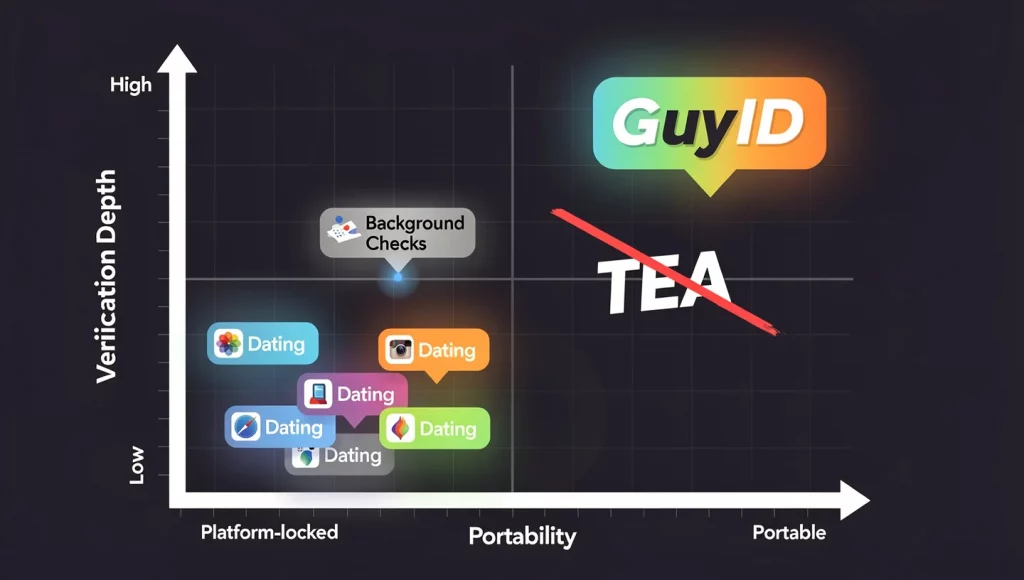
Valuable but narrow: screens criminal history only, requires personal information you may not have from a dating match, too expensive for routine use on every match, and provides no character assessment. Background checks and vouching are complementary, not competitive.
Defunct/Weakened Competitors
TEA (The Everyone App) — a dating trust verification platform — was removed from the App Store in 2025, creating a market gap. Other dating safety apps have struggled with adoption, monetization, or technical execution. The competitive landscape is clearing rather than crowding.
The GuyID Positioning
GuyID occupies a unique position: comprehensive verification (government ID + social vouching + progressive tiers) that’s portable (works on every platform), consent-based (voluntary, not mandatory), and specifically designed for dating contexts. No incumbent dating app provides this combination. No background check service provides social vouching or portability. No defunct competitor successfully combined all three pillars. The positioning is differentiated and defensible.
The Regulatory Tailwind: Governments Mandating Stronger Verification
Regulation is compressing the timeline for dating verification adoption — converting “eventually needed” into “legally required.”
Current Regulatory Landscape
- UK Online Safety Act: Requires platforms to implement age verification and protect users from fraudulent content — creating compliance mandates that push platforms toward stronger identity verification.
- EU Digital Services Act: Imposes transparency and user safety obligations on platforms operating in the EU — increasing accountability for harm occurring on dating platforms.
- US state-level legislation: Multiple US states are considering or implementing dating app safety requirements — age verification mandates, safety feature requirements, and transparency obligations. The regulatory trend is toward more requirements, not fewer.
What Regulation Means for Independent Verification
Regulation creates two tailwinds for independent verification platforms. First, regulatory mandates force platforms to invest in verification — normalizing the concept and creating user expectations that independent providers can exceed. Second, platforms seeking compliance may partner with or integrate independent verification services rather than building comprehensive systems in-house — creating B2B opportunities for verification providers.
The AI Accelerant: Why the Timeline Is Compressing
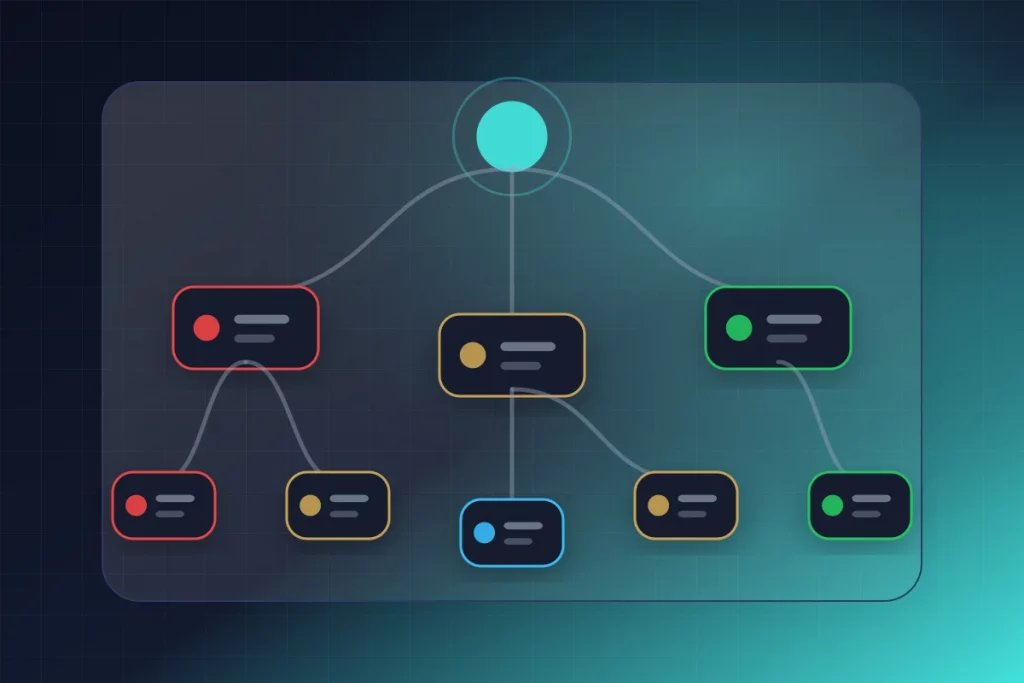
The AI era is the accelerant that compresses the business case for dating verification from “strong long-term opportunity” to “urgent near-term necessity.”
How AI Changes the Calculus
Pre-AI, the dating safety problem was manageable through incremental platform improvements — better selfie checks, smarter AI moderation, faster response to reports. The AI-generation revolution broke this incremental improvement model: deepfakes defeat selfie verification, AI-generated photos defeat reverse image search, and chatbots defeat behavioral analysis. The incremental approach — making existing methods slightly better each quarter — is structurally unable to keep pace with AI advancement.
The Urgency AI Creates
Government ID verification — the one method structurally immune to AI — becomes not just valuable but essential. The AI threat transforms dating verification from a “nice to have” safety supplement into a “must have” trust infrastructure. This urgency shift accelerates adoption timelines for verification platforms that offer AI-proof methods.
The GuyID Model: How the Business Case Is Implemented
GuyID implements the business case for dating verification through a model designed to address every dimension of the market opportunity.
The Product
Three-pillar verification — government ID (identity), social vouching (character), and progressive Trust Tiers (consistency) — delivered through a portable Date Mode link that works on every platform. Plus 60+ free safety tools (reverse image search, catfish detection, bio analysis) that provide immediate value and drive platform adoption.
The Market Approach
The free-to-check model creates the network effect: every woman who checks a Trust Profile experiences the value, normalizing the expectation that matches should be verified. Every verified man who shares his Date Mode link creates adoption pressure on unverified men.
The Competitive Moat
- Network effects: More verified users make the platform more valuable for everyone. Each user who verifies and shares their link creates verification pressure on their matches — driving organic adoption.
- Data advantage: The growing database of verified identities, vouching networks, and trust signals creates a trust graph that new entrants can’t replicate overnight.
- Category ownership: As the first comprehensive dating verification platform (government ID + vouching + portable trust), GuyID defines the category rather than competing within an established one.
- Platform independence: Working with all dating apps rather than competing with any creates partnerships rather than adversarial relationships — a structural advantage that dating-app-owned verification can’t replicate.
The Timing
TEA’s 2025 App Store removal cleared the primary competitor. AI threats are creating urgency. Regulatory tailwinds are building. Gen Z expectations are normalizing verification. The 2026 launch window aligns with accelerating demand, cleared competitive landscape, and regulatory momentum — the convergence that transforms a strong business case into an optimal timing case.
Summary: An Inevitable Market
The supply gap is permanent (seven structural barriers prevent platform-side solutions). The competitive landscape is clearing (TEA removed, no comprehensive competitor). The regulatory environment is accelerating (UK/EU mandates, US state legislation). And the AI threat is compressing the timeline from gradual adoption to urgent necessity.
The question isn’t whether independent dating verification will become a significant market — the forces driving it are too powerful and too convergent. The question is which model wins: narrow background-check-only services, platform-adjacent safety features, or comprehensive trust platforms that combine identity verification, character assessment, and portable trust. GuyID’s three-pillar model — government ID + social vouching + progressive Trust Tiers + portable Date Mode links — addresses the broadest demand set with the deepest competitive moat in the narrowest competitive window.
For users: the business case means the verification you’ve been demanding is arriving — not from dating apps (they can’t) but from independent platforms built specifically for trust. Build your Trust Profile today — you’re early, and early adopters define the standard that everyone else follows.
The Market Demands Verification. GuyID Delivers It.
Government ID + social vouching + Trust Tiers + portable Date Mode links. Women check for free. Build your Trust Profile.
Build Your Trust Profile
Try Free Safety Tools
Frequently Asked Questions
What’s different about GuyID’s approach?
What regulatory trends support dating verification?
Who are GuyID’s competitors?
What evidence should a dating verification provider publish?
Evidence note
Pew Research Center found that 60% of U.S. adults favored requiring background checks before a dating profile is created; support was 47% among people who had used online dating (Pew Research Center, 2023).
The FTC reported 64,003 romance-scam reports in 2023, with $1.14 billion in reported losses and a $2,000 median reported loss (Federal Trade Commission, 2024).