

Reader Briefing
Reader Briefing
Start here if you need a practical read on ghosting and dating: why it happens: who should use verification, what signals to check, and what to do before moving from online interest to an in-person plan.
Who this is for
- People meeting someone from a dating app or social platform.
- Readers preparing for a first in-person date.
- Anyone checking identity, profile consistency, and trust signals.
- People trying to avoid romance scams, fake profiles, or pressure tactics.
You’ll learn
- How to evaluate identity signals without treating any single check as certainty.
- Which trust signals matter and how to weigh them together.
- How to spot inconsistencies, pressure, or behavior patterns that deserve caution.
- How to move from online conversation to a safer first meeting.
- Where GuyID tools fit into a quick pre-date screening workflow.
- How to compare options using practical safety and trust criteria.
Bottom line
Verification reduces uncertainty; it does not guarantee future behavior. Use a layered approach: confirm identity signals, compare profile consistency, ask for a short video call, keep early plans public, and slow down when someone pressures you to skip normal safety steps.
Key takeaways
- Identity verification improves confidence, not certainty.
- Patterns matter more than isolated incidents.
- Verify before meeting privately or sharing sensitive details.
- A short video call can reveal many inconsistencies.
- Pressure to skip reasonable safety steps is useful information.
Free Tools
Catfish Probability Detector
Check whether a dating profile has suspicious identity or photo signals.
Dating Bio Red Flag Detector
Review a bio for scam, pressure, or trust-warning language.
Dating Safety Checklist
Use free GuyID tools before moving from chat to a real date.
Next step
Create your GuyID trust profile
Share consent-based trust signals before a date without turning the conversation into an interrogation.
But normalization absolutely doesn’t equal ethical acceptability — and understanding the full landscape of ghosting and dating helps you navigate the phenomenon without internalizing it as a reflection of your worth. This guide covers why ghosting has become epidemic in modern dating, how it affects different people differently, the ethics of ghosting at various relationship stages, and practical evidence-based strategies for both preventing and effectively processing the experience.
NavigateTable of Contents17 sections
Why Ghosting and Dating Are Now Inseparable
Ghosting as a social phenomenon existed well before dating apps — but technology transformed it from an awkward social violation into a frictionless, consequence-free exit strategy that has become deeply endemic to how modern people form and abruptly dissolve connections in 2026:
Zero-accountability environments. Dating apps connect strangers without shared social context — no mutual friends, no workplace overlap, no neighborhood proximity. When there’s no one to answer to (no friend who’ll say “That was rude” or “She asked about you”), the social pressure that historically discouraged ghosting evaporates entirely. The connection between ghosting and dating apps is structural: the technology that makes connection easy also makes disconnection effortless and invisible. Research from the National Library of Medicine on digital communication patterns confirms that reduced social accountability correlates directly with increased ghosting frequency.
Ghosting and dating apps create a paradox: the abundance of options that makes finding someone easier also makes discarding someone easier. When matches feel replaceable, the effort required to send a “I don’t think we’re a match” text feels disproportionate to the connection’s perceived significance — even though that 10-second text would prevent days of confusion for the other person.
Conflict avoidance as cultural default. Modern communication culture increasingly prioritizes comfort over directness. The American Psychological Association identifies increasing conflict avoidance as a generational trend — and ghosting is conflict avoidance in its purest form: ending something without the discomfort of a conversation about ending it.
Ghosting at Different Relationship Stages
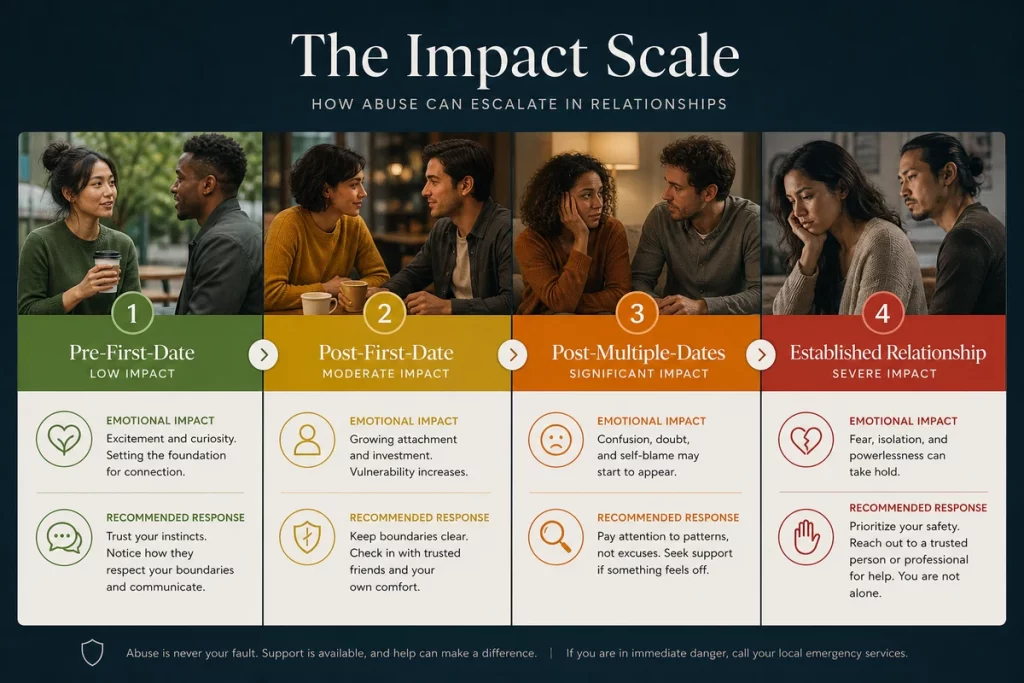
Not all ghosting is equally harmful — the impact depends heavily on the stage at which it occurs and the expectations that had been established:
Pre-first-date ghosting. Matched but never met. Exchanged a few messages. One person stops responding. This is the most common and least harmful form of ghosting and dating interaction — because no real-world connection was established and the emotional investment was minimal. While still technically ghosting, the expectation of continued communication after a few app messages is lower than at later stages. Many people don’t consider this “real” ghosting — it’s closer to natural attrition in a high-volume matching environment.
Post-first-date ghosting. You met in person, had what seemed like a good time, and then — silence. This level of ghosting and dating dynamic is more impactful because an in-person meeting created a real social interaction with real chemistry assessment. The person chose to meet you, spent time with you, and then couldn’t send a single follow-up message to communicate their decision. At this stage, a brief “I had a nice time but didn’t feel a romantic connection” text is the minimum human decency — and its absence is a genuine communication failure.
Post-multiple-dates ghosting. You’ve been on 3-5 dates over several weeks. Real conversation happened. Physical intimacy may have begun. Future plans were discussed. And then they disappeared. This level of ghosting and dating creates genuine psychological harm because the connection had developed substance, expectations were forming based on demonstrated investment, and the abrupt removal of someone who was becoming part of your routine produces a real loss response. At this stage, ghosting is indefensible — the person who ghosts after multiple dates is either deeply conflict-avoidant or deliberately callous.
Established relationship ghosting. Months or years into a relationship — and they vanish. This is the most extreme and most harmful form of ghosting, sometimes accompanied by blocking on all platforms and creating total inaccessibility. Established relationship ghosting shares characteristics with love bombing then ghosting patterns and may indicate narcissistic discard. Professional therapeutic support is strongly recommended for processing this level of abandonment.
Who Ghosts and Why
The ghosting and dating research identifies several psychological profiles of people who ghost:
The conflict-avoidant. The largest category. They’re not malicious — they’re emotionally unable to have uncomfortable conversations. Every time they consider sending the “I’m not interested” message, the vividly anticipated discomfort (the other person’s potential disappointment, potential argument, guilt) overwhelms the moral imperative to communicate. So they don’t. They intellectually understand it’s wrong. They genuinely feel guilty about it. And they do it again next time because the pattern is driven by avoidance, not ethics.
The overwhelmed. Dating app volume can produce genuine overwhelm — dozens of active conversations, multiple date prospects, and the cognitive burden of managing them all. Some people ghost not from any deliberate, conscious decision but from conversational entropy: they didn’t consciously decide to stop responding; they just… stopped, as the conversation simply fell below the attention threshold of their attention in a crowded field. The connection between ghosting and dating volume is real: people managing significantly fewer concurrent connections ghost measurably less frequently.
The avoidant attacher. People with avoidant attachment styles may ghost when connection becomes too intimate — the closeness triggers their avoidant withdrawal, and the relationship is abandoned rather than processed. This is particularly relevant in love bombing then ghosting dynamics where the person creates intense connection then flees from the intimacy they generated.
The player. Serial daters who ghost once they’ve gotten what they wanted — whether that’s attention, physical intimacy, or the ego boost of another “conquest.” For players, ghosting and dating are inseparable because ghosting IS the exit strategy that allows the cycle to continue without the accountability that honest endings would create.
The safety-motivated. Some ghosting — particularly by women exiting connections with men who exhibited red flags — is a legitimate safety response. When someone fears that explicit rejection will trigger harassment, threats, or violence, ghosting becomes protective rather than avoidant. This context doesn’t apply to the majority of ghosting situations, but it’s important to acknowledge that not all ghosting comes from the same place.
The Psychological Impact of Ghosting and Dating
The full ghosting meaning and impact includes several documented psychological effects:
Self-esteem erosion. Being ghosted — particularly repeatedly — erodes self-worth through the mechanism of unexplained rejection. Each ghosting experience deposits a small amount of “I’m not enough” into your self-concept, and the deposits accumulate because no counter-narrative exists (the ghoster never explained that the reason had nothing to do with you).
Hypervigilance in future connections. After being ghosted, many people develop monitoring anxiety in subsequent connections: interpreting every delayed text as potential ghosting, every schedule change as pending abandonment. This hypervigilance — while understandable — can damage healthy new connections by introducing surveillance dynamics that the new partner hasn’t earned and that genuine green flag behavior doesn’t warrant.
Attachment pattern reinforcement. For people with anxious attachment, ghosting and dating confirm the core anxious belief: “People leave without warning.” For people with avoidant attachment, being ghosted reinforces: “See? Getting close to people is dangerous.” Both patterns are deepened by ghosting experiences — making future healthy connection more difficult.
The slow fade aftermath. Even the anticipation of ghosting — watching communication patterns for decline signals, analyzing response times for evidence of the slow fade — produces anxiety that diminishes the enjoyment of connections that are perfectly healthy. The ghost’s shadow falls across connections that haven’t been ghosted yet, contaminating the present with past experience. This anticipatory anxiety is one of the most insidious long-term effects of the ghosting and dating culture because it doesn’t require being ghosted to activate — merely the knowledge that ghosting is common and unpredictable is sufficient to introduce monitoring behavior into every new connection. The person you’re texting right now may be perfectly reliable and genuinely interested, but the memory of being ghosted before means you can’t fully relax into the connection until enough time has passed to demonstrate that this person communicates differently than the one who disappeared.
The Ethics of Ghosting and Dating
When is ghosting ethically defensible? The honest answer: rarely, but in specific circumstances that deserve acknowledgment.
Defensible ghosting: When genuine safety concerns exist — the other person exhibited threatening, aggressive, or red flag behavior that makes an honest rejection conversation feel physically or emotionally dangerous. In pre-first-date, minimal-contact situations where no real relationship was established and the total interaction consisted of a few app messages that created no reasonable expectation of continued engagement. When you’ve already communicated your lack of interest clearly and the person continues pursuing despite the direct message — at which point further engagement enables their boundary violation rather than resolving the situation.
Indefensible ghosting: After meeting in person and sharing a real social interaction. After multiple dates where expectations and patterns were established. After physical intimacy was shared, creating vulnerability that deserves respectful acknowledgment. After explicit discussions about the future of the connection. After any interaction where reasonable expectations of continued communication have been established through consistent demonstrated behavior. In all of these situations, the ethical minimum is a brief, honest message: “I’ve enjoyed getting to know you, but I don’t feel the romantic connection I’m looking for. I wish you the best.” That message takes 10 seconds to compose and send. It costs virtually nothing emotionally beyond a moment of mild discomfort. And it prevents days of confusion, self-doubt, monitoring anxiety, and self-blame for the person receiving it.
The golden rule applied to ghosting and dating: Would you want to be ghosted in this exact situation, at this stage, with this level of established connection? If the honest answer is no, send the message. Your 30 seconds of delivery discomfort versus their days of processing confusion and self-generated negative narratives is not a defensible ethical trade — regardless of how normalized the behavior has become in modern dating culture.
How to Handle Being Ghosted
The full processing framework is covered in our ghosting meaning guide — here’s the essential version for ghosting and dating situations:
One follow-up message, then silence. After 3-5 days of unexplained silence, one message is appropriate: “Hey — haven’t heard from you. Hope everything’s okay.” If unanswered for another 3+ days, the ghosting is confirmed. Do not send additional messages — each one extends your pain without changing the outcome.
Resist self-blame. The reason for the ghosting lives in the ghoster’s psychology — conflict avoidance, overwhelm, avoidant attachment, or player behavior — not in anything you did or didn’t do. Ghosting and dating culture means that even the most attractive, engaging, compatible person gets ghosted because the behavior is about the ghoster, not the ghosted.
Set internal timelines. Decide in advance: “72 hours of unexplained silence after established communication = ghosting confirmed.” This internal boundary prevents the indefinite liminal state that ghosting exploits — you’ve pre-defined the moment when silence becomes your answer.
Process and redirect. Allow yourself to feel the disappointment (it’s real) without feeding it through rumination. Then redirect: update your dating profile, reach out to other matches, attend an event, invest in the parts of your life that don’t depend on someone else’s communication choices.
Reducing Ghosting in Your Dating Life
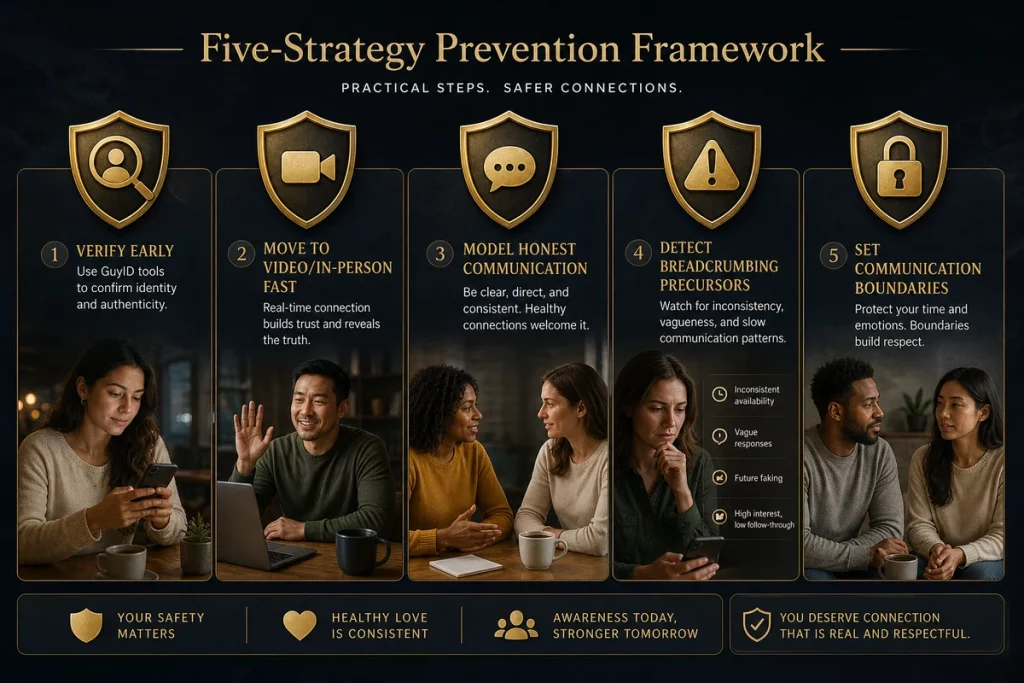
Verify matches early. Reverse image search photos. Video call before meeting. GuyID verification for identity confirmation. Verified matches involve more invested people who are less likely to ghost because the verification process itself demonstrates communication maturity and accountability. Share your Date Mode link to establish mutual transparency. Use GuyID’s free screening tools before emotional investment — because the 5 minutes spent verifying saves potentially days of ghosting-aftermath processing.
Move to video and in-person faster. Text-only connections are easiest to ghost. Once a person has seen your face on video and met you in real life, you become a real person in their mind rather than a text thread — and real people are significantly harder to ghost without discomfort.
Model the communication you want to receive. If you decide a connection isn’t working, send the message: “I’ve enjoyed our conversations but I don’t think we’re a romantic match. I wish you well.” This 10-second text models the communication standard you want others to meet — and over enough interactions, it raises the bar for the dating culture you participate in. Be the person who doesn’t ghost, even when ghosting would be easier.
Watch for breadcrumbing patterns early. Low-effort communication, vague plans, and inconsistent availability are the precursor signs that a ghost is forming. If someone’s engagement level is declining (the slow fade) or was never substantial (breadcrumbing), addressing the pattern directly or disengaging proactively prevents the ghosting from blindsiding you later.
Set boundaries for the communication level you need. “I need consistent communication to feel connected. If you’re losing interest, I’d rather hear that directly than experience silence.” This boundary, communicated early, establishes the standard — and the person’s response (respect or dismissal) tells you whether they’re capable of the communication maturity that a healthy connection requires.
How GuyID Helps
GuyID should appear when it is useful, not as a banner ad. A GuyID Trust Profile gives someone a portable way to share trust signals before a date, while identity verification and social vouching help turn vague profile claims into clearer next steps.
Useful next steps:
- Create a GuyID Trust Profile when you want a cleaner way to share verified trust signals.
- Use GuyID free tools and related guides when you need a checklist before meeting someone.
- Treat identity verification as confidence-building, not a guarantee.
- Use social vouching when you want context from people who already know the person.
- Sign up only when the extra trust layer helps the decision you are already trying to make.
Frequently Asked Questions
Why is ghosting so common in modern dating?
Four converging factors: dating apps create zero-accountability environments where disconnection is frictionless; abundance mentality reduces the perceived significance of any individual connection; cultural conflict avoidance makes uncomfortable conversations feel disproportionately difficult; and normalization creates self-reinforcing permission (“everyone does it”). The relationship between ghosting and dating technology is structural — the same features that make connection easy also make disconnection consequence-free.
Is ghosting ever acceptable?
In limited circumstances: safety concerns (the person exhibited threatening behavior), pre-first-date minimal-contact situations where no real relationship was established, and situations where you’ve already communicated disinterest and the person continues pursuing. After meeting in person, after multiple dates, and certainly after any explicit discussions about a shared future — a brief, honest message is the ethical minimum that ghosting and dating culture should demand.
How do I stop getting ghosted?
You can’t prevent someone else’s behavior — but you can reduce ghosting likelihood and minimize its impact: verify matches through GuyID’s free tools (verified people ghost less). Move to video and in-person faster (real connections are harder to ghost), watch for low-investment patterns that precede ghosting, set internal timelines for when silence becomes your answer, and match your emotional investment to the connection’s demonstrated investment level.
Should I text someone who ghosted me?
One follow-up message after 3-5 days is reasonable. If that goes unanswered for another 3+ days, the ghosting is confirmed. Additional messages beyond this extend your distress without producing a different outcome. The silence IS the communication — they’ve chosen to end the connection through absence rather than words, and continuing to reach out doesn’t change that choice.
Will a ghoster ever come back?
Some do — weeks or months later. Whether to engage depends on context. A genuine explanation with accountability deserves a conversation. A casual “hey stranger” without acknowledgment suggests habitual ghosting and dating behavior that will repeat. If the original dynamic involved love bombing, a return is likely hoovering. Our ghosting meaning guide covers return scenarios in detail.
How do I get over being ghosted?
Accept the silence as the answer (don’t wait indefinitely for an explanation that’s likely never coming). Resist self-blame (the ghosting reflects their communication limitations, not your worth). Talk to a trusted friend (external perspective counters the self-generated negative narratives). Feel the disappointment without feeding it through rumination. Redirect your energy toward connections that demonstrate the consistency and communication your standards require. The National Domestic Violence Hotline provides support if the ghosting occurred within an abusive dynamic.
Is ghosting a form of emotional abuse?
In established relationships or as part of a deliberate manipulation cycle (love bombing → ghosting → hoovering), yes — it constitutes emotional manipulation. In early-stage dating with minimal investment, ghosting is more accurately described as poor communication and emotional cowardice rather than deliberate abuse. The distinction matters for processing: established-relationship ghosting may require therapy and trauma processing; early-dating ghosting typically requires self-compassion and redirected energy.