

How to Tell If Someone Is a Catfish and Protect Yourself
To know if you’re talking to a catfish, you have to spot the disconnect between who they claim to be and how they behave. Look for picture-perfect photos, a love story that moves way too fast, and a mountain of excuses for why they can’t video chat. These are the classic, immediate signs.
This guide will show you exactly how to tell if someone is a catfish, what steps to take, and how to protect yourself.
The First Signs of a Catfish: What to Look For
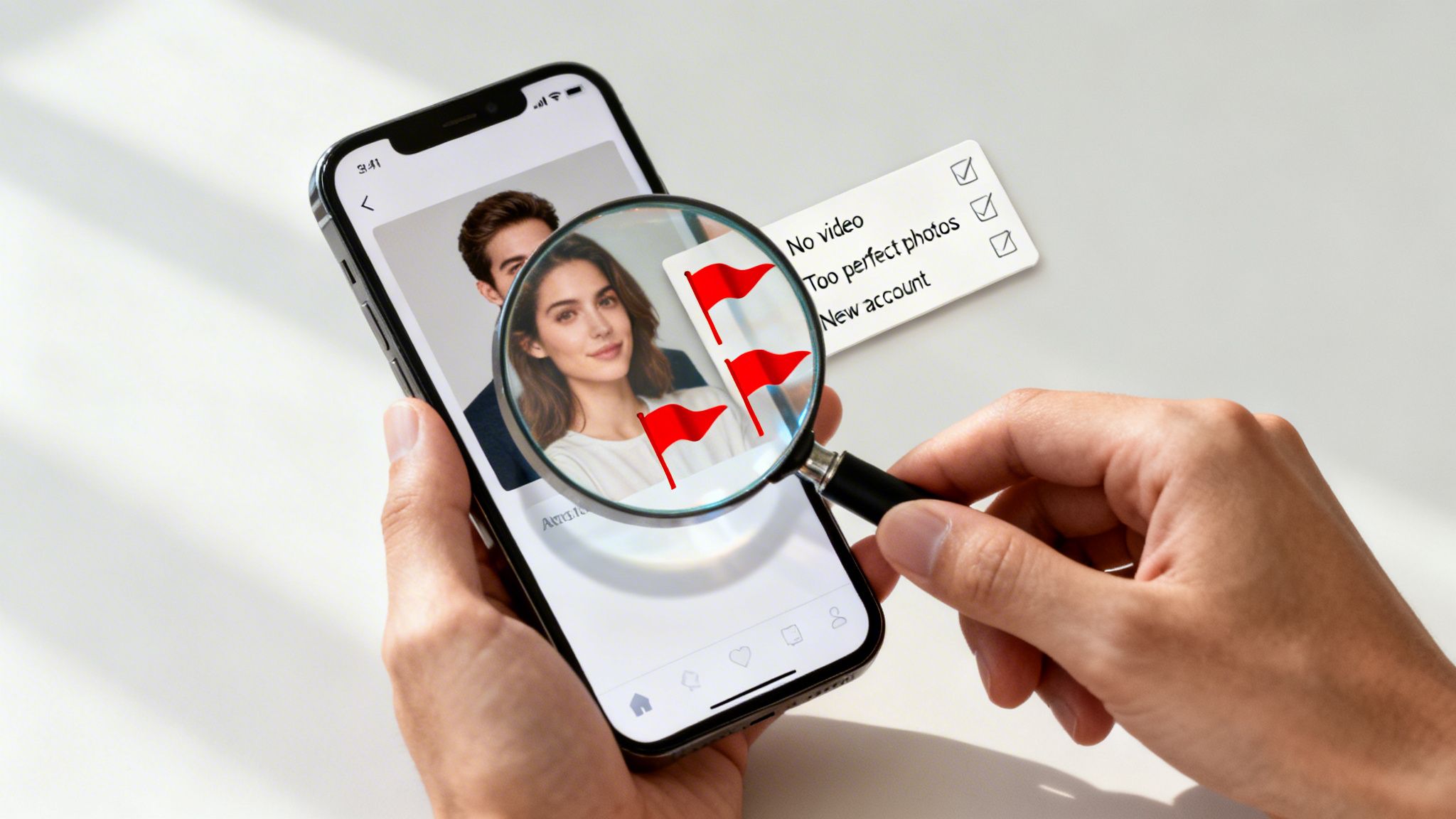
As the founder of GuyID, my 13+ years in data analytics have shown me that deception always leaves a digital footprint. You can learn to spot these signs. The first step is to trust your instincts when something feels off.
An estimated 54 million people in the U.S. have been catfished, according to a 2022 survey from Gitnux.org. These scams jumped by 30% between 2020 and 2022, affecting roughly 100 million victims a year. You can dig into the numbers yourself in the complete catfishing statistics from Gitnux.org.
To help you quickly tell the difference, here’s a look at common red flags versus what you’d expect from a genuine person.
Catfish Red Flags vs Genuine Profile Signals
| Red Flag (Potential Catfish) | Green Flag (Likely Genuine) |
|---|---|
| Photos look like a professional modeling portfolio. | Photos are candid, varied, and show them with friends or family. |
| Has a dramatic, over-the-top life story (e.g., overseas doctor, deployed soldier). | Their story is grounded, with verifiable details about their job and life. |
| Pushes for intense emotional connection almost immediately. | The connection builds at a natural, steady pace. |
| Always has an excuse to avoid a live video call. | Eager to video chat to confirm you’re both real. |
| Social media profiles are new, private, or have few friends/posts. | Established social media profiles with years of activity and engagement. |
| Pushes to move the conversation off the dating app quickly. | Comfortable chatting on the platform until trust is built. |
While this table gives you a starting point, let’s break down the three most telling signs in more detail.
Their Profile Seems Too Good to Be True
A classic catfish tactic is a profile filled with magazine-quality photos, but you won’t find a single candid shot of them at a barbecue or on vacation with family. This is a massive red flag.
A catfish’s profile feels sterile and perfectly curated because the images are almost always stolen from an influencer’s feed, a model’s portfolio, or a random person's social media. If every picture is a flawless, professional headshot and there are no casual, everyday photos, you should be skeptical.
For men who want to prove they're the real deal, this is why proactive verification is so powerful. Having your profile verified through a service like GuyID instantly sets you apart from suspicious accounts by confirming you are who you say you are.
Their Story Is Overly Dramatic or Vague
Catfish often spin elaborate, soap opera-style backstories. They might tell you they’re a widowed doctor working for an international charity, a successful entrepreneur facing a sudden business crisis, or a soldier deployed in a remote location. These stories are engineered to create sympathy and, conveniently, explain why they can never meet.
Pay close attention to inconsistencies. Do the details of their stories shift over time? Are they suspiciously vague about their job, where they went to school, or who their friends are? A real person can answer simple questions, but a catfish will deflect or give you generic answers.
They Avoid Real-Time Communication
A catfish will do almost anything to get out of a live video call, because it would immediately expose them. The excuses are endless, and you’ll hear them all:
- Their camera is suddenly “broken.”
- They have a terrible internet connection where they are.
- They’re in a public or secret location where they can’t talk.
- They feel shy or just aren't “ready” for a video call yet.
A genuine person who is truly interested will be excited to connect with you. If they repeatedly dodge a quick, 2-minute video chat, you have your answer. For women looking to verify a match, making this a non-negotiable step is crucial for your safety. A simple way to get an initial read is by using GuyID's free catfish probability checker, which can flag suspicious profiles early on.
Analyzing Their Photos and Digital Footprint

The fastest way to check their photos is with a reverse image search. This trick tells you where else online that photo exists and is one of the most powerful tools for sniffing out a catfish.
You can drop their picture into Google Images or use one of GuyID's free safety tools. A quick search can reveal if their photo is used on other sites with different names—a dead giveaway. If the image pops up on a stock photo website or an influencer’s public profile, you've found a huge red flag.
What to Look For in a Reverse Image Search
When you get the search results, you’re hunting for inconsistencies. Catfish are lazy and almost never use original photos. They steal them from public social media accounts, model portfolios, or stock image sites.
Here’s exactly what you're looking for:
- Multiple Names: Does the photo show up on social media profiles with different names, ages, or locations? This is a clear sign the person you're talking to isn't real.
- Stock Photos or Model Portfolios: If the image links back to a site like Getty Images or a professional model's online portfolio, it’s stolen.
- Influencer or Public Figure Accounts: Scammers love pulling photos from popular influencers who have thousands of public images.
A single photo appearing under multiple identities is one of the most definitive signs of a catfish. For a deeper dive, our guide on how to reverse image search for online dating breaks down the steps.
Evaluating Their Broader Digital Footprint
You need to look at their entire digital footprint. A real person's online history usually stretches back for years. A catfish’s profile, on the other hand, is often a digital ghost town.
Start with the age of their social media accounts. A genuine Facebook or Instagram profile will usually have a history going back years. A profile created last week is suspicious.
Next, check their connections. A scammer's profile might have very few friends or thousands of generic followers with zero real engagement. Look for tagged photos—pictures posted by other people that include them. A catfish will have none of that.
Inconsistencies in Profile Details
This is where their story starts to fall apart. You need to cross-reference everything they've told you against their public profiles. If they claim they're a lifelong Miami resident but their old Facebook posts are all tagged in Seattle, you’ve found a crack in their story.
Pay close attention to these common slip-ups:
- Education and Career: They say they’re a neurosurgeon, but you can’t find a LinkedIn profile or any evidence of their prestigious career.
- Friends and Family: They talk constantly about their close-knit family, yet there are no photos or mentions of them on any social profile.
- Hobbies and Interests: Their dating profile says they love mountain biking, but every single photo is a pristine, professional-looking shot with no one else in it.
These small details are where a catfish gets lazy. They're betting you won't bother to check.
Decoding Their Story and Communication Style

Pay close attention to love bombing, a classic manipulation tactic. They’ll flood you with over-the-top affection, calling you their soulmate or planning a future together before you’ve even had a real, meaningful conversation. This is designed to create a fast, unearned emotional bond.
Once you've done the initial checks, listen closely to what they’re actually saying—and how they’re saying it. Their narrative is usually a carefully constructed script that’s either too good to be true or riddled with drama.
Spotting Inconsistent and Over-the-Top Stories
A catfish’s life story is a work of fiction. After more than 13 years in data analytics, I can tell you these fake narratives are full of predictable patterns, often centered around high-stakes, emotionally charged jobs.
Some of the most common catfish personas include:
- The Overseas Professional: They claim to be a doctor on a UN mission, an engineer on a remote oil rig, or a contractor managing a huge project abroad.
- The Deployed Soldier: This is a classic. It gives them a built-in reason for bad communication, no video calls, and zero chance of meeting.
- The Widowed Single Parent: This story is engineered to pull at your heartstrings, creating instant empathy and a powerful urge to help.
The story itself isn’t the only red flag. The absence of mundane, verifiable details should set off alarm bells. Ask about their favorite local coffee shop or a recent movie they saw. A real person can answer these easily; a catfish will deflect.
The Ultimate Test: Refusing to Video Chat
The single most definitive way to expose a catfish is their absolute refusal to get on a video call. A live video chat would instantly shatter their illusion, so they’ll come up with an endless stream of excuses to avoid it.
This hesitation is a massive red flag. Romance scams led to a staggering $1.14 billion in losses in 2023 alone, according to WifiTalents (2023). You can see more on these trends by reviewing the comprehensive catfishing data from WifiTalents.
A person who is genuinely interested in you will be excited to see and talk to you. Persistent excuses about a broken camera, terrible internet, or being “too shy” are textbook catfish behavior.
You have every right to feel safe, and verifying who you’re talking to is a non-negotiable part of that. If their conversation style feels off, you can also use GuyID's free safety tools like the Conversation Red Flag Scanner at GuyID to analyze your chats for suspicious language patterns.
For men looking to build trust, proactively suggesting a video call is a major green flag. For women, insisting on one before getting emotionally invested is a fundamental safety measure. If they say no, you have your answer.
Spotting Pressure Tactics and Financial Requests
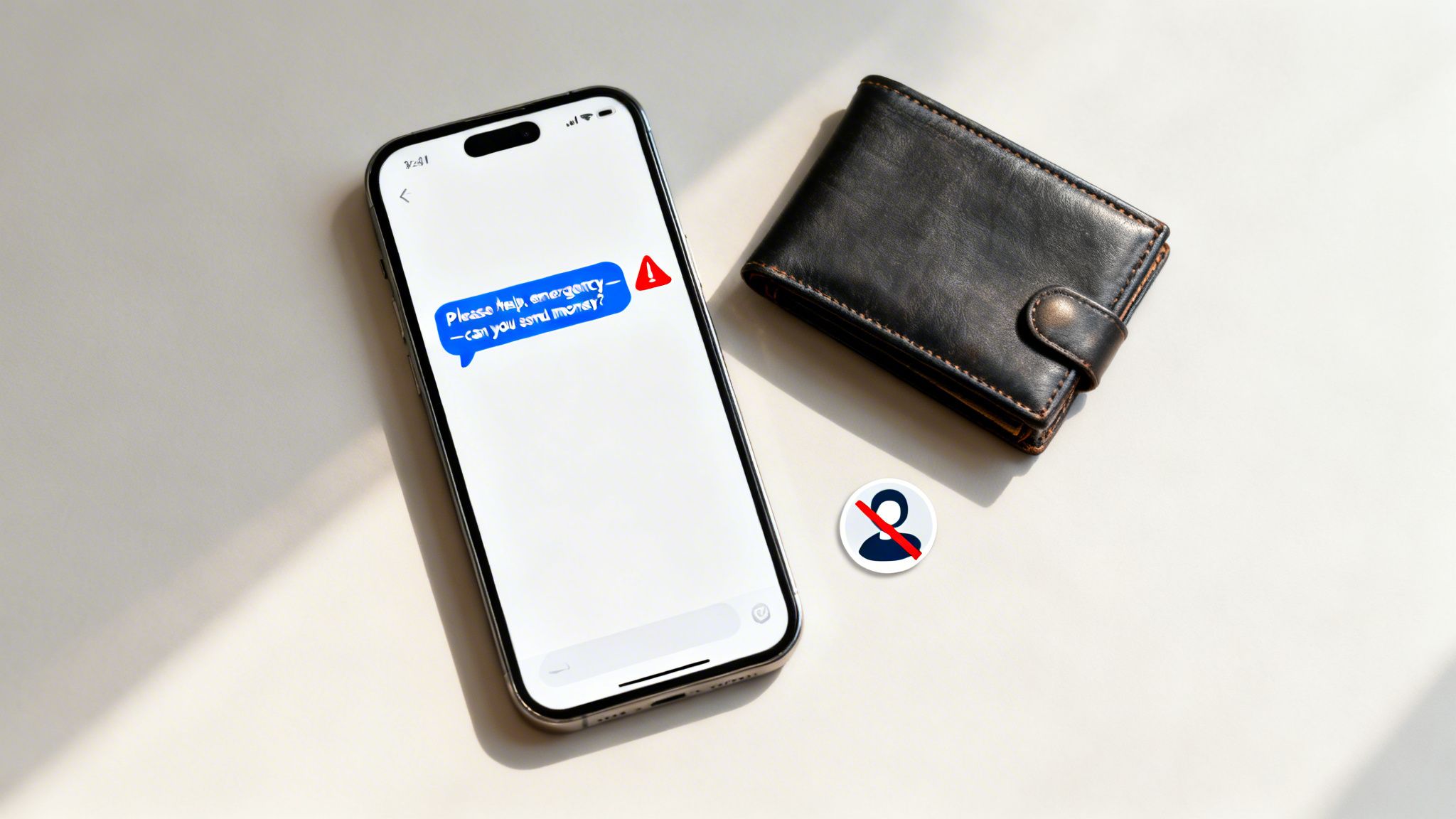
When charming conversation pivots to a desperate plea for cash, you’ve reached the most dangerous phase. This is where emotional manipulation turns into outright financial fraud. A scammer never just asks for money; they create a crisis designed to short-circuit your rational thinking with a sense of panic.
The FTC reported that in 2022, nearly 20,000 Americans lost $740 million in romance fraud. A 2023 study from ComplyCube revealed that these scams are running rampant on platforms like Facebook (32%) and Plenty of Fish (16%). You can learn more about the devastating impact of these scams and the need for identity verification from ComplyCube.
Common Scam Scenarios to Watch For
Catfishers stick to a handful of core stories because these narratives work well at exploiting empathy. They’re banking on your desire to be the hero who saves the day.
Here are the scripts they use over and over:
- The Medical Emergency: They, or a child, have a sudden, life-or-death medical issue that requires immediate payment for surgery.
- The Travel Problem: They were finally coming to see you, but now they’re detained by customs, their wallet was stolen, or they need cash for a flight change.
- The Business Deal Gone Wrong: The “entrepreneur” you’ve been talking to suddenly has a huge deal collapse and needs a small, short-term loan from you.
- Stranded Overseas: This is a go-to for those posing as military personnel or oil rig workers. They claim to be stuck in a foreign country without access to their money.
A genuine person who is into you will never ask for money, gift cards, or your banking details before you’ve met. Any financial request, no matter how convincing, is the final sign you’re dealing with a scammer.
Recognizing Different Types of Financial Requests
Scammers know that asking for a direct bank transfer can be jarring, so they often start with smaller asks to test the waters.
Keep your guard up for requests involving:
- Gift Cards: They'll ask for codes from iTunes, Google Play, or Steam, claiming they can’t make purchases from their location. Gift cards are virtually untraceable.
- Cryptocurrency: Any mention of Bitcoin or other crypto is an immediate red flag. These transactions are anonymous and irreversible.
- Setting Up New Accounts: They might ask you to open a new bank account or crypto wallet, supposedly for them. This is a tactic to use you for money laundering.
If you think you're being pushed into a financial scam, our free Romance Scam Risk Profiler at GuyID can help you evaluate the red flags in your situation.
A catfish's goal is to isolate you and make you feel like their only hope. The best thing you can do is pause, take a step back, and see this for what it is: a calculated tactic, not a real crisis.
How to Proactively Verify Your Match and Build Trust
Instead of just reacting to red flags, you can flip the script and take control of your dating safety from the start. Making identity verification a standard part of how you connect online changes the entire dynamic. It moves the conversation from a place of suspicion to one of mutual respect and assurance.
For women, this means you can ask a match to verify their identity without it feeling like a confrontation. Frame it as a standard precaution you take before getting emotionally invested.
If you’re a man who is serious about finding a real connection, you can get ahead of the “are you real?” question entirely. Proactively getting verified immediately addresses the safety concerns that most women have. It builds a powerful foundation of trust from the first message.
How to Ask for Verification Without Being Accusatory
Bringing up verification requires tact. The goal is to make it feel like a normal, reasonable step for both of you. A genuine person who cares about safety will likely appreciate the directness.
Here’s a simple script you can adapt:
"I've really enjoyed our conversation so far. As a general rule for my own safety, I like to verify who I'm talking to before we get too far. Would you be open to using a quick verification tool so we both know we're real?"
A scammer will almost always push back or try to guilt-trip you. A real person, however, will usually understand.
For Men: Proactively Building Trust
If you're a man who wants to stand out on dating apps, a verified identity is your best asset. A 2023 Pew Research Center survey found that 57% of women feel unsafe when dating online. Proving you're genuine gives you an immediate and powerful advantage.
This is exactly what platforms like GuyID were built for.
A verified profile badge acts as a clear signal of transparency and respect for your match's safety. It shows you understand the risks women face and are willing to take a real step to make them feel comfortable.
You can create a shareable, verified profile that includes a government ID check. This preemptively answers the identity question and establishes you as a safe person. For a deeper look, check out our complete guide on how to verify someone you meet through online dating.
Proactive verification is the clearest way to show you’re invested in building a connection based on honesty and mutual respect.
A Spectrum of Verification Methods
Not all verification is created equal. It's important to know what each method can—and can't—tell you.
Here's a look at the different ways you can confirm someone's identity.
| Verification Method | What It Proves | When to Use It |
|---|---|---|
| Reverse Image Search | If their photo has been used elsewhere online (e.g., on stock photo sites or other profiles). | Early on, when you first get photos or a profile link. A quick, initial check. |
| Social Footprint Check | Whether they have an established, consistent online presence (LinkedIn, Instagram, etc.). | After a few good conversations, to see if their stories match their public life. |
| Video & Voice Calls | That they are a real, live person who generally matches their photos. | Before getting too emotionally invested. A must-do before planning a meeting. |
| Comprehensive Platforms | Confirms identity against official documents (like a government ID) and other data points. | When you're ready to build serious trust or before meeting in person. |
Using a combination of these methods provides the strongest protection. A simple reverse image search might be enough to weed out a low-effort scammer, but a comprehensive check offers true peace of mind.
Using Free Tools for Quick Checks
Before you even ask for verification, you can run your own preliminary checks using free tools. This can help you decide if a match is worth your time.
GuyID offers a suite of free safety tools designed for this purpose, including:
- Reverse Image Search: Upload their photo to see if it’s a known stock image or appears on other profiles with different names.
- Catfish Probability Checker: Answer a few questions about your match's profile and behavior to get an instant risk assessment.
- Romance Scam Risk Profiler: This tool helps you analyze conversations for common scammer tactics, especially if you suspect financial motives.
These tools empower you to make informed decisions without needing to immediately confront your match. They give you objective data to either confirm your suspicions or give you the confidence to move forward.
What to Do After You Uncover a Catfish
The first and most important step is to cease all contact. Immediately block their profile on the dating app, their number on your phone, and their account on every social media platform. This is about cutting off their access so they can't continue the manipulation.
Taking Action to Protect Others
Once you’ve blocked them, report the fake profile on every single platform where you interacted with them. Every legitimate dating app and social site has a reporting tool. Use it to give the platform the evidence they need to take the scammer down.
If they got money from you, you are a victim of financial fraud. It's a crime, and you should report it to the authorities. Scammers count on their victims feeling too ashamed to come forward.
- In the United States, file a report with the Federal Trade Commission (FTC) at ReportFraud.ftc.gov.
- In the United Kingdom, report the incident to Action Fraud.
- In Canada, report it to the Canadian Anti-Fraud Centre.
For more detailed guidance, check out our complete walkthrough on how to report a dating scam. You did nothing wrong. Scammers are professional manipulators. Reporting them helps protect the entire dating community.
FAQ: How to Tell if Someone is a Catfish
Here are answers to some of the most common questions about identifying and dealing with a catfish.
What are the main reasons people catfish others?
The motivations vary, but most catfishers are driven by financial gain (romance scams), loneliness, or low self-esteem. A 2023 study from WifiTalents points to motives ranging from revenge and boredom to a desire to escape their own lives. Regardless of the reason, the behavior is deceptive and harmful.
How can I spot a catfish early without being accusatory?
Suggest a quick, casual video call. It's a low-pressure way to verify they are who they say they are. A genuine person will usually agree, while a catfish will make excuses about a "broken camera" or "bad internet." You can also ask for a specific, candid photo that can't be found online, like a selfie holding up a peace sign.
What should I do if my gut tells me something is wrong?
Trust your gut. If something feels off, it probably is. This is the time to use verification methods. Run a reverse image search on their photos and use free tools like the catfish probability checker at GuyID to get an objective risk score based on the red flags you’ve noticed.
Is it safe to meet someone if they pass a video call but won't verify their ID?
Be extremely careful. While a video call confirms they are a real person, refusing to formally verify their identity raises a serious question: what are they hiding? For your own safety, meeting someone who isn’t willing to take a simple step to build trust is a risk you shouldn’t have to take.
How can men proactively show they are not a catfish?
If you're a man who wants to build trust quickly, proactive verification is your best tool. Using a platform like GuyID to verify your identity shows you respect your match's safety and are serious about making a genuine connection. A verified badge on your profile instantly sets you apart from fakes and scammers.
What is the most reliable way to protect myself from catfishing?
Set your standards from the beginning and stick to them. Make a quick video call a non-negotiable step before you get emotionally invested. For an even higher level of safety, ask your matches to verify their identity through a trusted third-party service before you agree to meet in person. This filters out fakes and lets you focus on real people.
Ready to date with confidence? GuyID provides the tools you need to build trust and verify identity, ensuring you connect with real people. Explore our verification platform and free safety tools today at https://guyid.com.
Generated with Outrank tool