

Free Tools
Catfish Probability Detector
Check whether a dating profile has suspicious identity or photo signals.
Dating Bio Red Flag Detector
Review a bio for scam, pressure, or trust-warning language.
Dating Safety Checklist
Use free GuyID tools before moving from chat to a real date.
Next step
Create your GuyID trust profile
Share consent-based trust signals before a date without turning the conversation into an interrogation.
The person you’re dating says they’re single — but something feels off. They’re only available certain nights. They never invite you to their home. Their social media is suspiciously locked down. If you’re wondering how to find out if someone is married free, you’re not paranoid — you’re protecting yourself from one of the most common forms of dating deception. This guide provides 9 genuinely free methods to verify marriage status, explains what each reveals and its limitations, and covers the legal and ethical boundaries of relationship verification.
NavigateTable of Contents24 sections
Why Marriage Verification Matters in Dating
No major dating app — not Tinder, not Bumble, not Hinge — verifies relationship status. Users self-report “single,” “divorced,” or “separated” with zero documentation. This creates a verification gap that married individuals exploit: research from the National Library of Medicine on online dating deception suggests that a significant percentage of people on dating apps are in committed relationships — including marriages they haven’t disclosed.
The consequences of unknowingly dating a married person extend beyond emotional harm: potential involvement in custody disputes, financial entanglement, exposure to sexually transmitted infections from undisclosed sexual partners, and the legal implications of alienation of affection in the handful of states that still recognize that tort. Learning how to find out if someone is married free isn’t surveillance or paranoia — it’s basic due diligence that protects both your emotional wellbeing and your legal position in a dating landscape where no platform verifies what matters most.
The challenge: marriage records are public in the United States, but accessing them isn’t as simple as entering a name into Google. Different states and counties maintain different database systems, online access varies dramatically by jurisdiction, and the information is spread across multiple databases with no unified national portal. This guide consolidates the most effective free approaches into a single actionable protocol that takes under 20 minutes.
How to Find Out If Someone Is Married Free: 9 Methods
1. Social Media Deep Dive (Free — Best Starting Point)
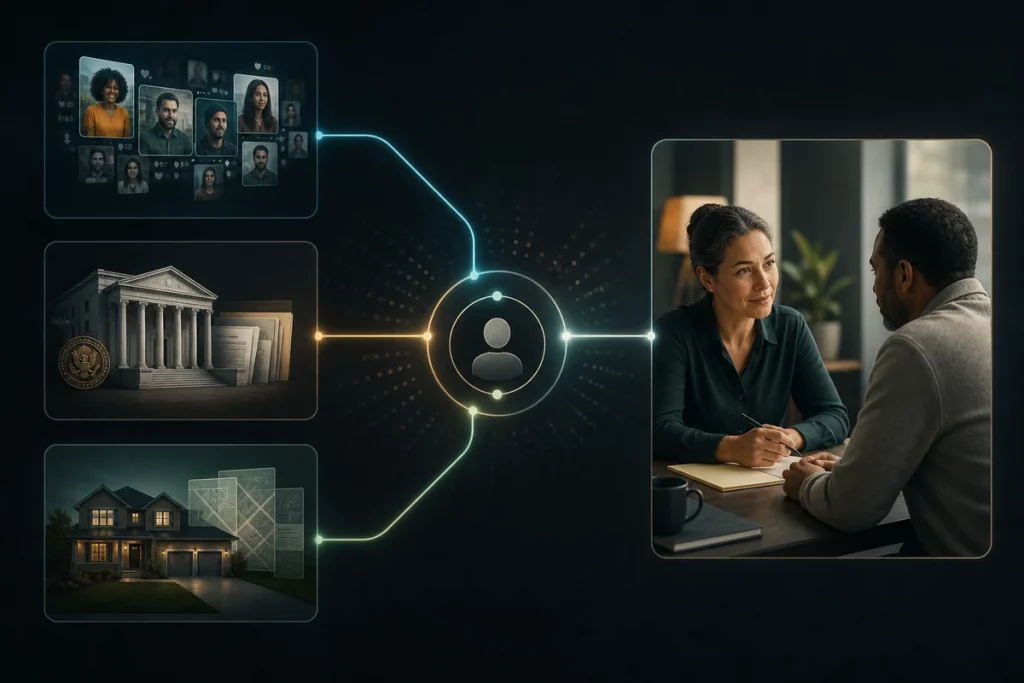
Search their name on Facebook, Instagram, and LinkedIn. On Facebook specifically, check: tagged photos (look for wedding photos, couple photos, or family photos with a partner), relationship status (if visible), tagged locations (joint check-ins at couples’ resorts or family events), and their friends list for someone who shares their last name and appears in couple-context photos. Instagram stories and highlights may reveal a home life they’re not showing you. LinkedIn sometimes shows relationship references in personal sections. This is the most effective single method for how to find out if someone is married free because social media captures the life they’re actually living, not the persona they’ve constructed for dating.
2. The Ring Finger Check (Free — In Person)
Look for a tan line, indentation, or callus on the ring finger of their left hand. People who regularly wear a wedding ring develop a visible mark that persists for weeks after removal. This isn’t definitive — some people have ring marks from non-marriage jewelry, and some married people don’t wear rings — but a clear ring indentation on the left ring finger combined with other suspicious behavior is a significant data point.
3. County Clerk Marriage Records (Free — Most Authoritative)
Marriage licenses are public records in the United States. Search “[county name] clerk marriage records” on Google and access the county’s online portal. Most counties allow you to search by name for marriage certificates filed in that jurisdiction. You’ll need their full legal name and the approximate county where they might have married. The limitation: if they married in a different county or state than where they currently live, you’d need to search that specific jurisdiction. This is the most authoritative free method because it accesses the actual government record — not aggregated data.
4. Property Records Search (Free)
Search “[county name] property records” and enter their name or their claimed address. Property ownership records show co-owners — and a property jointly owned with someone of a different last name, or someone of the same last name who isn’t a documented relative, may indicate a spouse. Property records also show the purchase date and co-buyer name, which can indicate a joint marital purchase. See our people search by address guide for the full property verification protocol.
5. Google Search Their Name + “Wedding” (Free)
Search: “[First Name] [Last Name] wedding” or “[First Name] [Last Name] married.” Wedding announcements, wedding registry pages (The Knot, Zola, registry sites), wedding photographer blogs, church bulletins, and newspaper announcements often appear in Google results. A wedding that occurred within the last few years and no divorce record suggests a current marriage. Also search their name plus “engagement” for announcements that may have preceded a wedding.
6. People Search Sites (Free)
Use Fast People Search, WhitePages, or Spokeo’s free tier to check their profile. The “possible associates” or “relatives” section often reveals a current spouse — particularly someone of a different last name listed at the same current address. Cross-reference with their claimed living situation. People search results showing a same-address associate who matches wife/husband demographics is one of the clearest indicators.
7. Voter Registration Records (Free — State Dependent)
Many states offer online voter registration lookup that shows registered address. Search your state’s voter registration portal and enter their name. If two people with a shared last name are registered at the same address, this may indicate a married couple. Some states show party affiliation and registration date, providing additional biographical data for cross-referencing. Not all states offer online access, and some restrict the information shown.
8. Ask Mutual Connections (Free — Social Approach)
If you share any mutual connections — Facebook friends, coworkers, gym acquaintances, neighborhood contacts — a casual inquiry can surface information that online searches miss. “Do you know [name]? I’ve been getting to know them” opens the door for mutual connections to share what they know. This social verification method is particularly effective because mutual connections know the person’s actual living situation in ways that public records may not reflect.
9. GuyID Verification (Free for Women)
Ask your match to verify through GuyID. Government ID verification confirms their legal name — which you can then use for more accurate county clerk searches. More importantly, the act of requesting verification signals that you take transparency seriously, and the response reveals character: a genuinely single person welcomes accountability; someone hiding a marriage typically deflects, gets offended, or disappears. Share your Date Mode link and observe whether they reciprocate or resist transparency.
Behavioral Signs They Might Be Married
While searching for records, also watch for behavioral patterns that strongly suggest an undisclosed marriage:
Availability restrictions. They’re only available on weekday evenings or specific nights of the week — never weekends, holidays, or spontaneously. A married person has a schedule built around a family that you can’t see. Consistent unavailability on family-centric times (Sunday mornings, holiday weekends, school pickup hours) is among the strongest behavioral indicators.
Communication blackouts. They text freely during work hours but go silent every evening between 6-10 PM, or they can only call during their commute. Communication that follows a rigid schedule — rather than the natural ebb and flow of a single person’s day — suggests they’re communicating only when their spouse isn’t present.
They never invite you to their home. After weeks or months of dating, you’ve never been to their place. Every meeting is at your home, hotels, restaurants, or neutral locations. A married person can’t bring a dating partner home. If the “my place is being renovated” or “my roommate situation is complicated” excuses persist beyond a few weeks, ask yourself what explanation makes sense besides a home they can’t show you.
Steps away to take calls. Gets visibly tense when their phone rings in your presence. Has their phone on silent with no notifications visible. Separate phones for “work” and “personal.” These are classic indicators of someone managing two separate relationship communication streams.
No social media connection. They won’t add you on Facebook, Instagram, or any platform where their real social life is visible. Or their social media is extremely locked down with no photos, no tagged content, and no evidence of a real social life. Someone hiding a marriage needs to keep their dating life and their married life in completely separate digital worlds.
Vagueness about their living situation. When asked where they live, they give a neighborhood rather than an address. When asked about their home, descriptions are vague. Genuine single people share their living situation naturally and invite you over when they’re comfortable — persistent vagueness about where and how they live is a significant red flag.
They pay cash for everything on dates. Credit card statements create a paper trail that a spouse could discover. Married people who are dating secretly often pay exclusively in cash, use separate bank accounts, or use Venmo/CashApp under an alternate name. While cash preference alone isn’t conclusive, combined with other behavioral signs it strengthens the pattern.
Their car has indicators of family life. Car seats, children’s toys, family stickers, multiple sets of sunglasses, or a general cleanliness level inconsistent with their “bachelor” story. People forget to sanitize their car of family evidence even when they carefully manage their dating persona. A casual observation during pickup or dropoff can reveal what their words conceal.
They’re rigid about when and how you contact them. “Only text me between 9 and 5.” “Don’t call me after 7 PM.” “Send messages on WhatsApp, not regular text.” Rigid communication rules serve the purpose of keeping their dating communication separate from the communication channels their spouse monitors. A single person might have preferences about communication, but they don’t need compartmentalized contact rules. This behavioral pattern, combined with the verification methods above, provides a comprehensive framework for checking marriage status through both records and observation.
Trust your instincts. If multiple behavioral signs are present, your gut feeling deserves attention — even if you can’t articulate exactly what’s wrong. Research from the American Psychological Association confirms that intuition often processes pattern information faster than conscious analysis. When your instinct says something doesn’t add up, it’s processing signals your analytical mind hasn’t cataloged yet. Combine that instinct with the free verification methods above and catfish detection techniques for a complete picture.
Legal and Ethical Considerations
Learning how to find out if someone is married free involves accessing public records — which is legal for personal use in the United States. However, important boundaries apply:
What’s legal: Searching public marriage records, property records, voter registrations, and freely available social media. Using people search sites that aggregate public data. Asking mutual connections about someone you’re dating. Requesting identity verification through services like GuyID. All of these are legal for personal relationship verification purposes. For a comprehensive multi-method approach, see our background check for dating guide.
What’s not legal: Accessing private databases without authorization. Impersonating someone to obtain records. Using the information to harass, blackmail, or threaten. Hiring a private investigator without complying with state licensing requirements. Accessing someone’s personal accounts, email, or phone without their consent.
The ethical standard: Use verification to protect yourself, not to harm others. If you discover someone is married, the appropriate response is to end the relationship and, if you choose, inform the spouse — not to use the information for leverage, revenge, or financial gain. The FTC provides guidelines on acceptable use of personal information that apply to dating verification contexts.
The Complete Verification Protocol
Here’s the optimized sequence for how to find out if someone is married free, organized from quickest to most thorough:
Quick screen (5 minutes): Social media deep dive + Google search their name + “wedding.” This catches the majority of cases where wedding announcements, tagged photos, or registry pages exist online. Also check for fake profile red flags while you’re reviewing their social media.
Records check (10 minutes): County clerk marriage records search + property records check + people search site (try Fast People Search or WhitePages free tier). This accesses the official documentation.
Behavioral observation (ongoing): Monitor availability patterns, communication schedules, phone behavior, willingness to host you, and social media transparency over the first few weeks of dating. Behavioral patterns often reveal what records don’t — particularly for recent marriages or marriages in jurisdictions with limited online record access. Watch for dating red flags that may indicate broader deception beyond marriage status.
Identity verification (2 minutes): Ask for GuyID verification. Confirmed legal name enables more accurate records searches, and the Trust Score social vouching provides peer validation of their relationship status. A person whose friends and connections have vouched for them through GuyID carries more credibility than public records alone can provide.
Total time for the full protocol: ~17 minutes plus ongoing behavioral awareness. Total cost: $0.
How GuyID Helps
GuyID should appear when it is useful, not as a banner ad. A GuyID Trust Profile gives someone a portable way to share trust signals before a date, while identity verification and social vouching help turn vague profile claims into clearer next steps.
Useful next steps:
- Create a GuyID Trust Profile when you want a cleaner way to share verified trust signals.
- Use GuyID free tools and related guides when you need a checklist before meeting someone.
- Treat identity verification as confidence-building, not a guarantee.
- Use social vouching when you want context from people who already know the person.
- Sign up only when the extra trust layer helps the decision you are already trying to make.
Frequently Asked Questions
Can I check if someone is married for free?
Yes. County clerk marriage records are public and free to search in most jurisdictions. Social media, Google searches, property records, people search sites, and voter registration databases all provide free information that can indicate marriage status. The 9 methods in this guide are all genuinely free and cover the most effective approaches for how to find out if someone is married free.
What’s the most reliable free method?
County clerk marriage records are the most authoritative because they’re the actual government filing. Social media deep dives are the most practically useful because they reveal the person’s real life — including wedding photos, family photos, and couple-context content that records alone don’t capture. The combination of both provides the highest confidence level.
Are marriage records really public?
In the United States, yes — marriage licenses and certificates are public records in all 50 states. Online access varies by county: some counties offer searchable online databases; others require in-person or mail requests. The National Center for Health Statistics maintains national marriage data, but individual records are accessed through county or state vital records offices. There’s no single national marriage database searchable by the public.
What if they got married in a different state?
Marriage records are filed in the county where the marriage took place — not where the couple currently lives. If someone married in Las Vegas but lives in New York, the record is in Clark County, Nevada. Without knowing where they married, you’d need to search multiple jurisdictions. Social media and Google searches often reveal wedding locations through announcements, tagged posts, and photographer mentions — which then directs your county clerk search.
What are the biggest signs someone on a dating app is married?
Restricted availability (never weekends or holidays), communication blackouts during evening hours, they never invite you to their home, phone always face-down, no social media connection, and vagueness about their living situation. A cluster of three or more of these behavioral signs combined with refusal to verify identity through GuyID or video call strongly suggests undisclosed relationship commitments.
Should I tell the spouse if I find out someone is married?
This is a personal decision with no universally right answer. Arguments for telling: the spouse deserves to know, it may protect their health (STI exposure), and it prevents the married person from continuing the deception. Arguments against: you may not have the full picture (separated but not yet divorced, open marriage), and the disclosure may create volatile situations. If you decide to tell, do so through written communication rather than in person, provide evidence without editorializing, and prioritize your own safety.
Do dating apps check if someone is married?
No major dating app verifies relationship status. Tinder, Bumble, and Hinge rely entirely on self-reporting. Photo verification confirms appearance, not marital status. This is why checking marriage status is essential for anyone using dating apps. GuyID addresses this gap through government ID verification and social vouching — creating accountability that dating apps don’t provide.
Can I check marriage records in Canada for free?
Canadian marriage records are maintained by provincial vital statistics offices and are generally less accessible online than U.S. records. Some provinces allow limited public searches; others require the person’s consent or a demonstrated legal need. For Canadian dating verification, social media, Canadian people search tools, and GuyID verification (which accepts Canadian government ID) are more effective approaches than attempting to access provincial marriage registries directly.