Reader Briefing
Reader Briefing
Start here if you need a practical read on ai-generated dating profile detection: the 2026 guide to what’s real: who should use verification, what signals to check, and what to do before moving from online interest to an in-person plan.
Who this is for
- People meeting someone from a dating app or social platform.
- Anyone checking identity, profile consistency, and trust signals.
- People trying to avoid romance scams, fake profiles, or pressure tactics.
- Online daters improving conversations, profiles, or match screening.
You’ll learn
- How to evaluate identity signals without treating any single check as certainty.
- Which trust signals matter and how to weigh them together.
- How to spot inconsistencies, pressure, or behavior patterns that deserve caution.
- Where GuyID tools fit into a quick pre-date screening workflow.
- How to compare options using practical safety and trust criteria.
- When to slow down, ask for more context, or walk away.
Bottom line
Verification reduces uncertainty; it does not guarantee future behavior. Use a layered approach: confirm identity signals, compare profile consistency, ask for a short video call, keep early plans public, and slow down when someone pressures you to skip normal safety steps.
Key takeaways
- Identity verification improves confidence, not certainty.
- Patterns matter more than isolated incidents.
- A short video call can reveal many inconsistencies.
- Pressure to skip reasonable safety steps is useful information.
- Use GuyID tools to turn vague concerns into specific checks.
Free Tools
Catfish Probability Detector
Check whether a dating profile has suspicious identity or photo signals.
Dating Bio Red Flag Detector
Review a bio for scam, pressure, or trust-warning language.
Dating Safety Checklist
Use free GuyID tools before moving from chat to a real date.
Next step
Create your GuyID trust profile
Share consent-based trust signals before a date without turning the conversation into an interrogation.
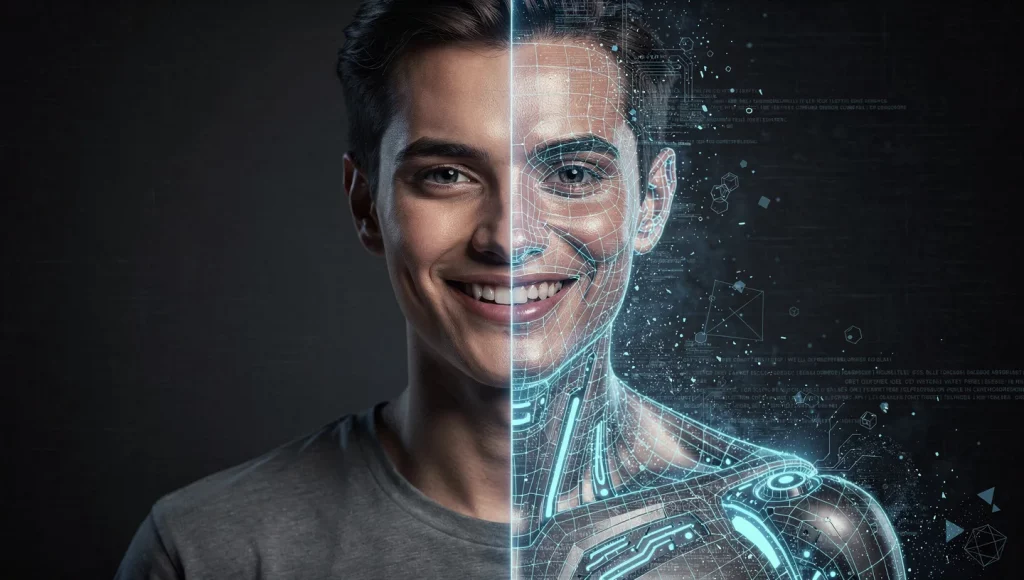
AI-generated dating profiles represent the most significant evolution in online dating fraud since dating apps were invented — because they defeat the detection methods that have worked for over a decade. Stolen photos? Reverse image search catches them. Broken English? Obviously suspicious. Refusal to video call? Classic catfish tell. But AI-generated dating profiles use original photos that produce no reverse search results, fluent AI-written conversations in any language, and deepfake video that can potentially pass live calls. Every traditional detection method is being neutralized. This guide teaches the new methods.
Detecting an AI-generated dating profile in 2026 requires techniques that didn’t exist two years ago — visual analysis for generative AI artifacts, conversation pattern analysis for chatbot detection, and verification methods exploiting the one thing AI cannot produce: legitimate government identification.
NavigateTable of Contents18 sections
⚡ Key Takeaways
AI photos produce no reverse image search results
AI photos are originals — not copies — so reverse image search finds nothing. A clean result is now ambiguous, not reassuring.
AI chatbots send 60+ messages in 12 hours with zero quality drops
No human maintains this volume and quality. The consistency itself is the tell that traditional analysis misses.
Visual detection: check skin, hands, backgrounds, and accessories
AI leaves artifacts: smooth skin without pores, hand anomalies, background distortion, accessory inconsistencies, and uniform eye reflections.
Government ID verification is the one layer AI cannot defeat
AI generates faces, text, and video. AI cannot generate legitimate government documents. GuyID’s identity verification is the AI-proof layer.
Why AI-Generated Profiles Are Fundamentally Different
Traditional fakes use stolen photos (detectable via reverse search), manually written bios (with grammatical tells), and human conversations (limited by operator capacity). AI-generated dating profiles use original AI-created photos (invisible to reverse search), AI-written text (fluent in any language), and AI chatbots (managing 60+ messages per 12 hours across unlimited targets). Nothing is copied from an existing source — so detection methods designed to find copies all fail.
A person can examine an AI-generated dating profile with a flawless face, a fluent bio, and brilliant conversation — and traditional methods return “no issues found.” Detecting AI profiles requires looking for what AI does differently from reality, not what it does wrong by traditional standards.
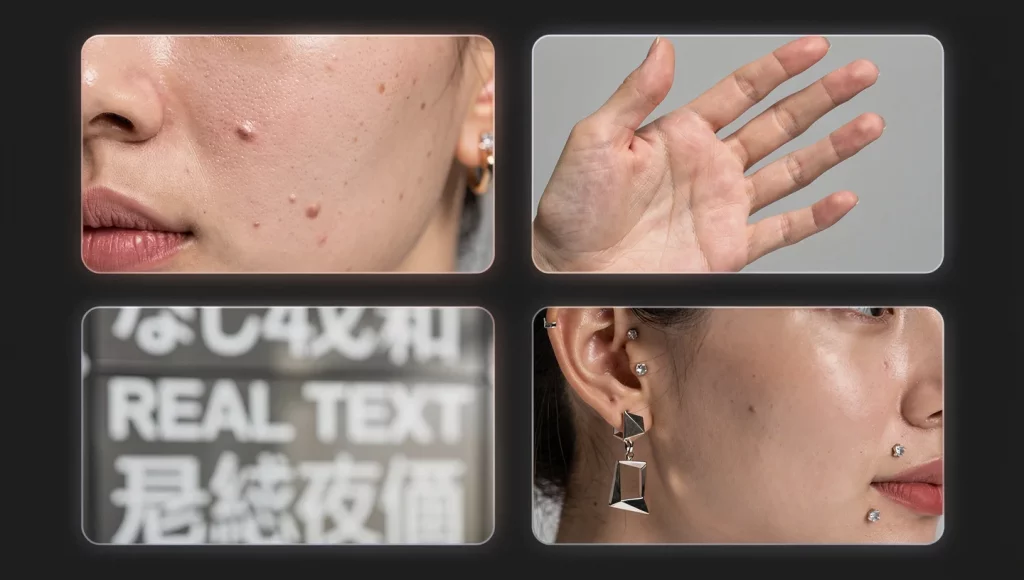
How to Detect AI-Generated Photos
Skin Texture
🟡 Excessively smooth skin with no pores, fine lines, or texture variation. AI generates skin as a uniform surface. Even filtered real photos retain texture — moles, pores, expression lines. Zoom into forehead and cheeks: real skin shows texture at any magnification; AI skin remains featureless.
Hands and Fingers
🟡 Wrong finger count, fingers merging, joints at impossible angles, disproportionate hands, or fingers tapering to points. Hands are AI’s most common failure. Count fingers on every visible hand. Check joint direction and finger separation.
Background Artifacts
🟡 Distorted text on signs, impossible architecture, melting/merging objects, inconsistent shadows, and spatial relationships that defy physics. Look past the face: can you read any text? Are building edges straight? Do shadows fall consistently?
Accessories and Details
🟡 Mismatched earrings, glasses merging into skin at temples, necklaces clipping through clothing, hair passing through shoulders. Examine small objects and fine details — AI’s most detectable errors.
Eye Reflections
🟠 Unnaturally uniform reflections that don’t match the environment. Real eyes reflect windows, light sources, and surroundings. AI eyes show generic, identical catchlights. Zoom into eyes: do reflections correspond to the scene?
The Photo Set Test
Examine ALL photos as a set. AI-generated sets share identical lighting, angle, composition, and quality — generated in one session. Real camera rolls have variation: indoor/outdoor, phone/DSLR, selfie/group, different time periods. Five identical-quality “casual selfies” suggest AI generation.
👁️
The Uncanny Valley Test
If a photo looks stunning but triggers subtle wrongness you can’t articulate — trust that feeling. Your visual cortex detects inconsistencies your conscious mind hasn’t named. The “almost perfect” quality of AI faces is detectable as vague discomfort. Investigate with the specific checks above.
How to Detect AI Chatbot Conversations
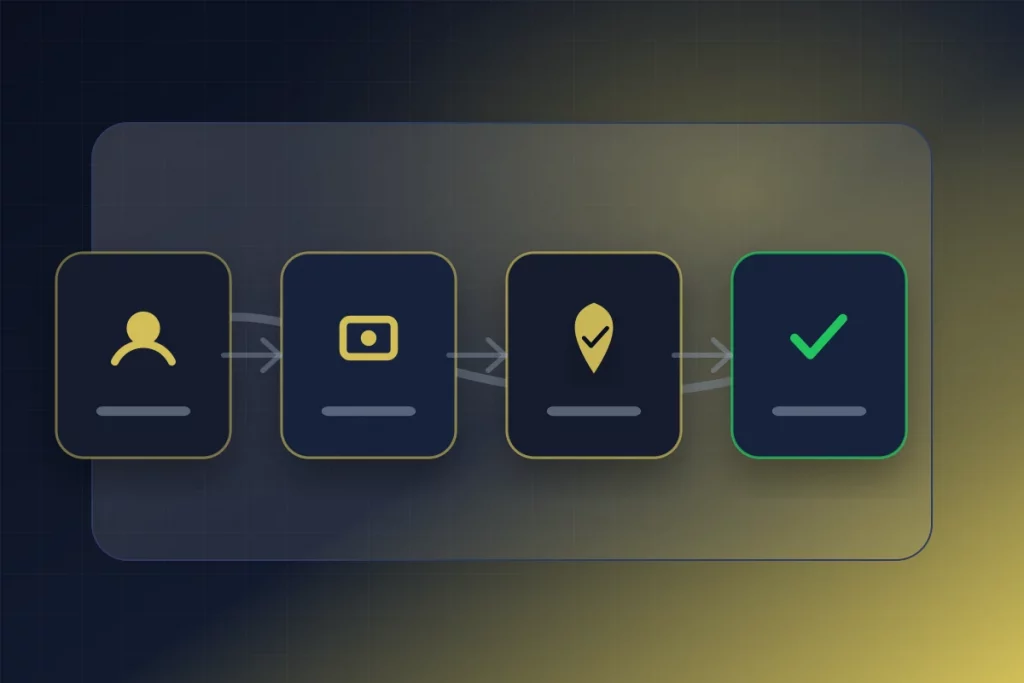
- 🟡 Consistency without variation: Every message well-composed with zero off days, tired replies, or abbreviations. Real humans fluctuate. AI doesn’t.
- 🟡 24/7 availability with no quality drops: Instant responses at 3am and 3pm, identical quality. No human is equally articulate across all hours.
- 🟡 Perfect emotional attunement: Never misreads your tone, never says the wrong thing, validates every emotion perfectly. AI is trained to mirror — real humans miscalibrate.
- 🟡 Generic engagement masquerading as specific: “That’s so fascinating, tell me more!” without naming what’s fascinating. AI generates contextually appropriate but actually generic responses. Real engagement references your specific details.
- 🟠 Inability to process nonsense: Send something absurd. A human responds with confusion or humor. AI attempts to meaningfully validate nonsense (“That’s such a unique perspective!”) because it’s trained to affirm rather than question.
How to Detect Deepfake Video Calls
Apply this active testing protocol during every video call with a match:
- 🟡 Full head turns: “Let me see your profile!” — deepfakes distort on side views because they’re calibrated for frontal.
- 🟡 Hand-over-face: Ask them to touch their nose — a hand between camera and deepfaked face disrupts the overlay, causing glitches.
- 🟡 Environment changes: “Walk to a different room” — changing lighting and background forces recalibration, producing visible artifacts.
- 🟡 Audio-visual sync: Watch for micro-delays between lip movement and audio — deepfakes have processing latency.
- 🟠 Rapid camera movement: “Show me your ceiling!” — motion blur disrupts face tracking, causing brief glitches or the real face showing through.
Normal calls include: natural head movement in all directions, hands touching face without artifacts, varied expressions with micro-movements, and consistent backgrounds. Deepfakes may show: face “floating” with boundary shimmer, reduced blinking, rigid movement avoiding profile views, and color differences between face and neck.
The Spontaneous Test: The Single Best Real-Time AI Detector
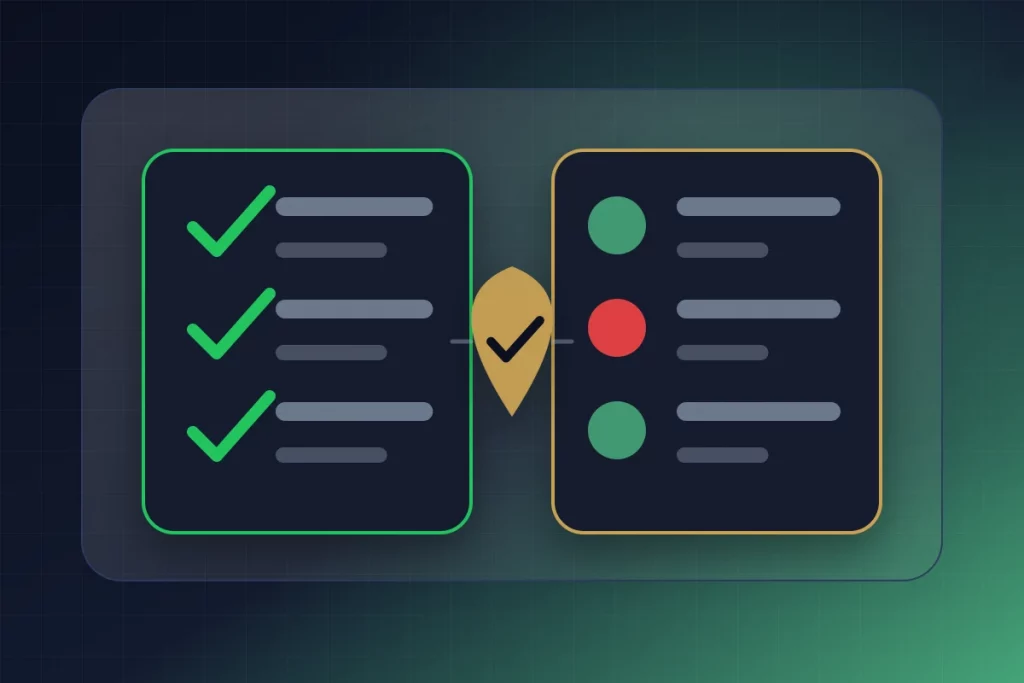
The test: “Send me a selfie right now holding up [specific number] fingers next to something [specific color].”
Why it works: A real human does this in 10-15 seconds. No AI system can generate it on demand — it requires understanding a multi-part request, physically performing it in a real environment, capturing a photo proving compliance, and delivering within human timeframe. AI-generated photos take processing time. Pre-curated libraries don’t contain such specific combinations.
Results: Photo in 10-30 seconds matching request = strong positive (real person). 2-5 minute delay = suspicious. Deflection or excuse = cannot produce on demand. Wrong details = cannot comply. This single test outperforms all other real-time AI detection methods.
Why Traditional Detection Methods Fail Against AI
| Traditional Method | Works Against Traditional Fakes | Fails Against AI Profiles |
|---|---|---|
| Reverse image search | Finds stolen photos | AI photos are originals — nothing to find |
| Grammar analysis | Non-native operators make errors | AI writes flawlessly in any language |
| Response time | Humans managing targets show delays | AI responds instantly to unlimited conversations |
| Video call request | Catfish can’t appear (wrong face) | Deepfakes can appear with synthetic face |
| Social media check | Fakes have thin footprints | AI can generate supporting content |
| “Too good to be true” gut | Model photos trigger suspicion | AI calibrates “attractive but believable” |
Every row shows neutralization. Traditional methods still catch the majority of fakes (most are still stolen-photo fakes). But for the growing AI-generated minority, these methods return false negatives. This is why the 5-layer detection framework includes AI-Era Detection as a distinct layer.
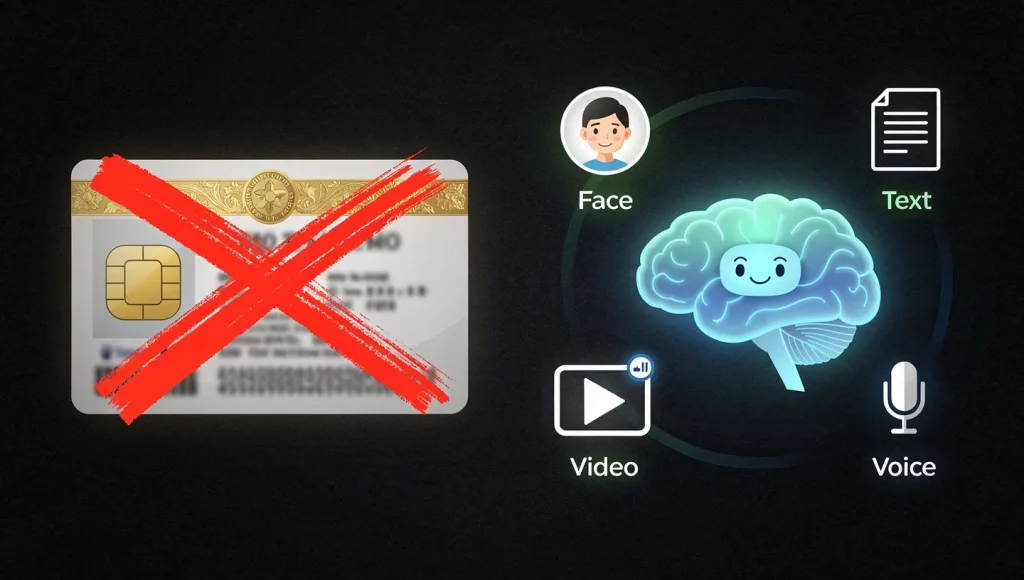
The One Thing AI Cannot Generate: Government ID
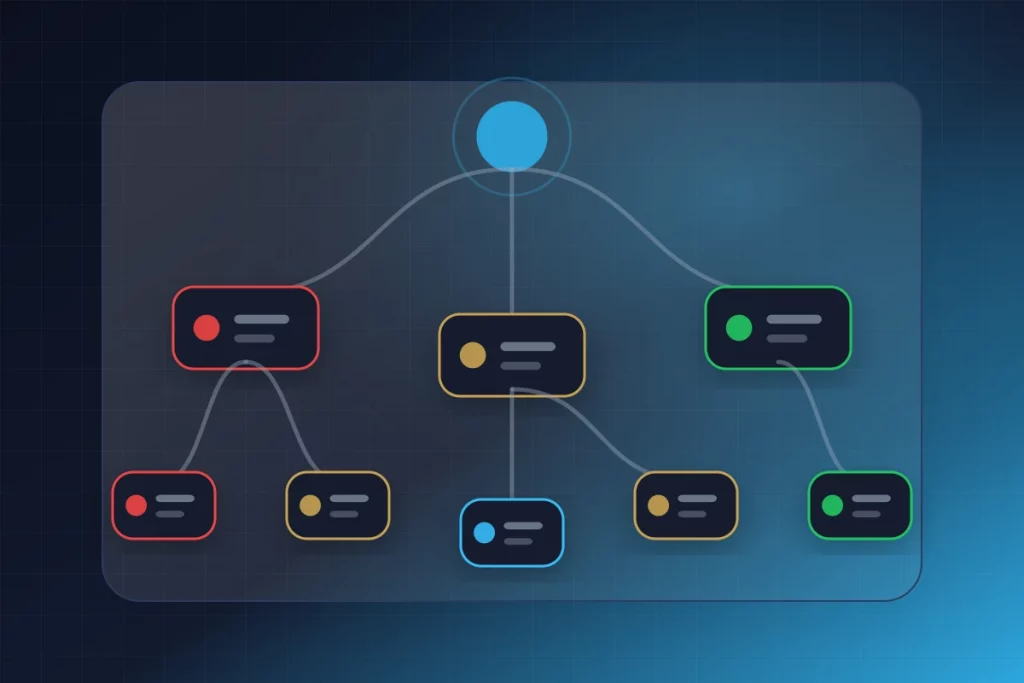
AI generates pixels. Government documents are physical objects issued through bureaucratic processes: identity registration, production with unique security features (holograms, watermarks, embedded chips), biometric data linked to databases, and traceable document numbers. No AI system can generate a physical document passing security validation, containing matching biometric data, and corresponding to government records.
When you see TRUSTED tier on a GuyID Trust Profile: the person has produced a legitimate government document matching their live face. No AI-generated dating profile can replicate this. The question “Is this AI?” becomes irrelevant when “Is this government-verified?” is confirmed.
This is why the dating trust score model — with government ID as its foundation — is the verification architecture built for the AI era. Photo-matching badges were designed for stolen photos. Trust scores built on government ID are designed for AI-generated everything.
The Complete AI-Era Detection Protocol
🟢 Phase 1: Photo Analysis (30 sec)
☐ GuyID reverse image search — clean = ambiguous for AI
☐ Skin texture (pores?), hands (finger count?), backgrounds (text legible?)
☐ Accessories (match?), eye reflections (environment-consistent?)
☐ Photo set variation vs identical AI-session quality
🟡 Phase 2: Conversation Analysis (over days)
☐ Response consistency (instant at all hours?)
☐ Quality consistency (never a lazy reply?)
☐ Emotional attunement (always perfect? never misreads?)
☐ Specific vs generic engagement
☐ Nonsense test (validate absurdity = AI)
🔵 Phase 3: Spontaneous Test (10 sec to request)
☐ “Selfie now, [number] fingers, next to something [color]”
☐ 10-30 sec response = strong positive
☐ Delay / deflection / wrong details = AI or fake
🟣 Phase 4: Video Call Active Testing
☐ Head turns, hand-over-face, room changes
☐ Audio-visual sync check, rapid camera movement
☐ Deepfake artifacts: face floating, reduced blinking, rigid positioning
🛡️ Phase 5: Definitive Verification
☐ Request GuyID Trust Profile (gov ID + social vouching)
☐ TRUSTED tier = government-verified identity
☐ AI cannot generate legitimate government ID
☐ Women check free — always
Summary: The AI-Proof Verification Layer
AI-generated dating profiles have neutralized the traditional toolkit. The new detection methods — AI photo artifacts, chatbot conversation analysis, deepfake video testing, and the spontaneous request test — provide the updated toolkit for 2026. But as AI improves, visual and conversational detection will become harder. Government ID verification is the one layer structurally immune to AI advancement.
GuyID’s Trust Tiers, built on government ID + social vouching, represent the verification architecture designed for a future where AI generates anything visual and conversational but cannot generate the documents proving a real person exists. Use every detection method. Apply the complete protocol. And when doubt remains, request the Trust Profile that eliminates it.
AI Can Generate Faces. It Can’t Generate Government IDs.
GuyID’s identity verification is the AI-proof layer: government ID biometric matching no AI can replicate. Plus 60+ free screening tools. Women check Trust Profiles for free. Built for the AI era.
Try Free Detection Tools
The AI-Proof Verification
Frequently Asked Questions
Can deepfakes pass dating app video calls?
Will AI detection methods keep working?
Can AI profiles pass dating app verification badges?
What should I do if a detector flags a profile image?
Related Reading
- Why Do People Create Fake Dating Profiles? 7 Motivations Explained (2026)
- Why Do Scammers Target Dating Apps? The $1.3B Answer (2026)
Evidence note
The FTC reported 64,003 romance-scam reports in 2023, with $1.14 billion in reported losses and a $2,000 median reported loss (Federal Trade Commission, 2024).