
Reader Briefing
Reader Briefing
Start here if you need a practical read on stalking is best defined as: the legal, digital, and dating safety guide: who should use verification, what signals to check, and what to do before moving from online interest to an in-person plan.
Who this is for
- People meeting someone from a dating app or social platform.
- Readers preparing for a first in-person date.
- Anyone checking identity, profile consistency, and trust signals.
- People trying to avoid romance scams, fake profiles, or pressure tactics.
You’ll learn
- How to evaluate identity signals without treating any single check as certainty.
- Which trust signals matter and how to weigh them together.
- How to spot inconsistencies, pressure, or behavior patterns that deserve caution.
- How to move from online conversation to a safer first meeting.
- Where GuyID tools fit into a quick pre-date screening workflow.
- When to slow down, ask for more context, or walk away.
Bottom line
Verification reduces uncertainty; it does not guarantee future behavior. Use a layered approach: confirm identity signals, compare profile consistency, ask for a short video call, keep early plans public, and slow down when someone pressures you to skip normal safety steps.
Key takeaways
- Identity verification improves confidence, not certainty.
- Patterns matter more than isolated incidents.
- Verify before meeting privately or sharing sensitive details.
- A short video call can reveal many inconsistencies.
- Pressure to skip reasonable safety steps is useful information.
Free Tools
Catfish Probability Detector
Check whether a dating profile has suspicious identity or photo signals.
Dating Bio Red Flag Detector
Review a bio for scam, pressure, or trust-warning language.
Dating Safety Checklist
Use free GuyID tools before moving from chat to a real date.
Next step
Create your GuyID trust profile
Share consent-based trust signals before a date without turning the conversation into an interrogation.
Stalking is best defined as a pattern of repeated, unwanted behavior directed at a specific person that causes them to feel afraid, threatened, or harassed. But that clinical definition barely scratches the surface of what stalking looks like in 2026 — where the behavior has evolved from physical following into a complex blend of digital surveillance, social media monitoring, location tracking, and the weaponization of technology that dating apps have placed directly into the hands of anyone with a smartphone and an obsessive interest in someone who doesn’t reciprocate it. Understanding how stalking is best defined as a legal concept, a behavioral pattern, and a dating safety risk equips you to recognize it when it’s happening — whether to you, to someone you know, or FROM someone whose behavior has crossed the line from persistent interest into criminal harassment.
NavigateTable of Contents17 sections
Stalking Is Best Defined As: The Legal Framework
Legally, stalking is best defined as a course of conduct directed at a specific person that would cause a reasonable person to feel fear. According to the National Domestic Violence Hotline, stalking laws vary by state but share common elements: the behavior must be repeated (a single incident typically doesn’t meet the legal threshold), directed at a specific individual, and sufficient to cause a reasonable person to feel afraid for their safety or the safety of others. The “reasonable person” standard means the fear doesn’t need to be proportionate to any specific threat — if a REASONABLE person in your situation would feel afraid given the pattern of behavior, the legal definition is met.
The American Psychological Association estimates that approximately 7.5 million people are stalked annually in the United States — with the majority of stalking occurring within the context of current or former intimate relationships. This statistic matters for the dating context because it means the most common stalker isn’t a stranger — it’s someone the target knows, has been in a relationship with, or has encountered through the dating process. The question “stalking is best defined as what?” has a direct dating-safety application: understanding the definition helps you recognize when a date’s behavior has crossed from persistent to predatory.
Research from the National Library of Medicine on stalking trajectories confirms that stalking behavior frequently escalates over time — from monitoring to contact attempts to threats to physical confrontation. The escalation trajectory makes early identification critical: behaviors that seem “annoying but harmless” at the monitoring stage may be the early phase of a pattern that becomes dangerous at the confrontation stage. This is why stalking is best defined as a PATTERN rather than a series of individual incidents — because the individual incidents (a text, a drive-by, a social media view) may seem benign in isolation while the PATTERN they form is genuinely threatening.
Forms of Stalking in 2026
Digital Stalking (Cyberstalking)
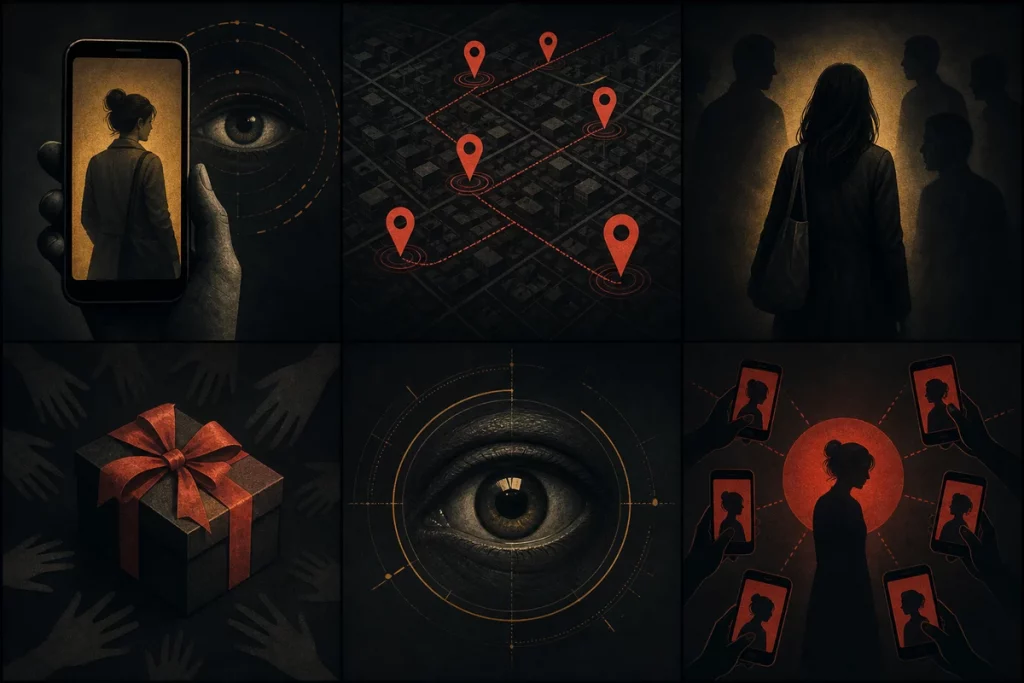
Monitoring someone’s online activity, creating fake profiles to access their social media, sending repeated unwanted messages across multiple platforms, hacking accounts, or using technology to track their location without consent. Cyberstalking has become the most common form of stalking because digital tools make surveillance dramatically easier than physical following — and the stalker can monitor from anywhere without the target’s awareness. In dating contexts, cyberstalking often begins with behaviors that dating culture has normalized: Googling a match, checking their Instagram, monitoring their online activity status. The line between due diligence and stalking is crossed when the monitoring becomes obsessive, non-consensual, and continues after the target has indicated they want no contact.
Physical Stalking
Following, showing up at the target’s home or workplace, waiting outside locations the target frequents, or driving by their residence. Physical stalking carries the highest immediate safety risk because it involves the stalker’s physical proximity to the target — which is the prerequisite for physical violence. In dating contexts, physical stalking may begin after a date that didn’t lead to a second date, after a relationship ending the stalker didn’t accept, or after a rejection that the stalker cannot process. The dating app safety guide covers why location privacy matters during the early dating phase — because a match who knows where you live before trust has been established has information that becomes dangerous if the connection doesn’t develop as they want.
Social Media Stalking
Creating multiple accounts to view someone’s profiles after being blocked, screenshotting and monitoring posts, sending messages through alternate accounts, commenting on every post, or using friends’ accounts to access content the target has restricted. While casual social media viewing is normal, the pattern becomes stalking when it’s obsessive, when the target has blocked or restricted the person, and when the monitoring produces the behavioral pattern (multiple accounts, persistent contact attempts despite blocking) that demonstrates the stalker’s refusal to accept the target’s boundary. The boundary-setting guide covers digital boundary communication — but stalking is distinguished from poor boundary respect by the stalker’s systematic circumvention of boundaries rather than accidental or one-time violations.
Proxy Stalking
Using third parties — friends, family, mutual connections, or even hired individuals — to monitor, contact, or gather information about the target. Proxy stalking is particularly insidious because it makes the target feel surveilled without being able to identify the source, and it recruits unwitting participants who may not understand they’re serving as instruments of harassment. In dating contexts, proxy stalking may involve a rejected match enlisting mutual friends to report on your dating activity, social life, or location — providing surveillance capability that direct monitoring (which you’ve blocked) can no longer provide.
Technology-Facilitated Stalking
Installing tracking software on the target’s devices, using AirTags or similar location trackers hidden in belongings, accessing shared accounts (cloud storage, location-sharing apps) that weren’t disconnected after a relationship ended, or exploiting the data that dating apps collect (location patterns, activity timestamps) to monitor the target’s behavior. Technology-facilitated stalking is the fastest-growing stalking category because consumer technology has made surveillance tools — originally designed for finding lost keys or monitoring children — available to anyone for any purpose, including stalking a former date or partner.
Harassment Campaigns
Organized campaigns of contact, threats, reputation damage, or intimidation — including filing false reports, spreading defamatory information, contacting the target’s employer, or weaponizing the legal system (filing frivolous lawsuits or false restraining orders). Harassment campaigns extend stalking beyond direct contact into systematic disruption of the target’s life, livelihood, and reputation — causing harm even when the stalker maintains no direct contact with the target. In post-relationship contexts, harassment campaigns may include sharing intimate content without consent (revenge porn), spreading false narratives to mutual connections, or using social media to publicly humiliate the target.
Stalking in Dating Contexts: Where the Line Gets Crossed
Dating culture creates a gray zone where behaviors that could constitute stalking are sometimes normalized or even romanticized. Understanding where the line falls is essential for both recognizing stalking when it targets you AND ensuring your own behavior doesn’t cross into stalking territory:
Checking their social media before a date: normal. Monitoring their social media daily after they’ve stopped responding: stalking. The distinction is purpose and consent: pre-date verification serves safety; post-rejection monitoring serves obsession. When they’ve communicated disinterest (directly or through non-response), continued monitoring violates the boundary their silence established.
Texting after a date to express interest: normal. Sending 15 unanswered texts escalating from friendly to angry to pleading: stalking. The pattern matters: a single follow-up text after no response is normal social friction. Multiple escalating messages after clear non-response is a harassment pattern that the target experiences as threatening regardless of the sender’s stated intentions. The ghosting guide addresses the pain of non-response — but that pain doesn’t justify contact that the other person has indicated (through silence) they don’t want.
Showing up at a public event you both attend: normal. Showing up at their workplace, home, or gym after they’ve ended contact: stalking. The distinction is whether the encounter is organic (shared social context) or engineered (deliberately appearing where you know they’ll be for the purpose of contact they haven’t consented to). Our red flags guide identifies appearing unexpectedly at a date’s locations as an early warning sign of controlling behavior that may escalate to stalking.
Reverse image searching profile photos before meeting: normal safety precaution. Hiring someone to investigate a person who rejected you: stalking. The purpose determines the category: safety-motivated verification before a date is responsible; investigation-motivated surveillance after rejection is predatory. The line is drawn by the other person’s consent and your purpose: verification they’d approve of is due diligence; investigation they’d be alarmed by is stalking. Our background checks guide covers the ethical framework for pre-date verification that respects both people’s dignity.
The “I just want to know you’re safe” excuse. Some stalking behaviors in dating contexts are disguised as concern: checking your location because “I worried when you didn’t text back,” driving by your house because “I just wanted to make sure you got home okay,” contacting your friends because “I was concerned about you.” The disguise is effective because the stated motivation sounds caring — but the actual behavior is surveillance that was neither requested nor consented to. Genuine concern asks “are you okay?” via a text. Concern-disguised stalking monitors without consent and acts on the information gathered without the target’s knowledge. The distinction matters legally and psychologically: when someone uses “care” language to justify surveillance behavior, they’re providing the manipulation framework that will characterize their behavior in any relationship that develops.
The role of dating apps in enabling stalking. Dating apps inadvertently create stalking opportunities through the data they collect and display: approximate distance (exploitable for location triangulation), activity status (enabling monitoring of when someone is online), and the very structure of matching (creating a sense of “connection” that a rejected party may feel entitled to maintain). The dating app safety guide covers how to minimize the data trail you leave on dating platforms — because the information you share through apps becomes the surveillance toolkit for anyone whose interest in you becomes obsessive. Disabling precise location, limiting profile detail, and using GuyID’s verification rather than app-native features all reduce the data available to potential stalkers while maintaining the genuine safety infrastructure you need.
How to Recognize When You’re Being Stalked
Stalking often escalates gradually — which means recognizing it requires trusting the accumulation of “small” incidents rather than waiting for a single dramatic event:
They won’t accept “no.” You’ve ended the relationship, declined a second date, blocked their number, or stopped responding — and they continue to contact you through new channels, alternate accounts, or third parties. The refusal to accept your clearly communicated boundary is the behavioral foundation of stalking. Every subsequent contact after “no” has been communicated — regardless of how the contact is framed (“I just want closure,” “I need to explain,” “I can’t stop thinking about you”) — is a boundary violation that the legal definition of stalking encompasses.
They know things they shouldn’t. They reference details about your life that you haven’t shared with them — where you went last Tuesday, who you were with, what you posted on a private account. This knowledge indicates monitoring that exceeds what normal social awareness would provide, and the feeling of being watched that it produces is a legitimate fear response to actual surveillance.
They escalate when ignored. The contact pattern intensifies in response to your non-response: more frequent messages, angrier tone, threats (direct or implied), showing up in person after digital contact fails. Escalation in response to boundary enforcement is the most dangerous stalking indicator because it demonstrates that the stalker responds to frustration with intensification rather than acceptance — a trajectory that predicts the most serious stalking outcomes. The escalation may include new channels (contacting your workplace after you’ve blocked their personal messages), new tactics (involving mutual friends as intermediaries), or new emotional registers (shifting from pleading to anger to threatening self-harm as leverage). Each escalation tests whether the new level of intensity will produce the response the previous level didn’t — and every response at ANY escalation level teaches the stalker that sufficient intensity eventually breaks through your defenses, guaranteeing further escalation in the future.
You change your behavior because of them. You avoid certain locations, check your mirrors more frequently, feel anxious leaving home, modify your social media behavior, or take precautions you wouldn’t otherwise take. When another person’s behavior changes YOUR daily life — not through mutual agreement but through the fear their pattern has produced — the impact meets the “reasonable fear” component of the stalking definition regardless of whether the individual incidents seem dramatic enough to report.
Protecting Yourself From Stalking in Dating Contexts
Limit information shared early in dating. Don’t share your home address, workplace, or daily routine with anyone you haven’t verified and met multiple times. Use GuyID’s free screening tools for identity verification before meeting — because knowing WHO you’re dealing with is the first line of defense against someone who might become a safety concern. Share your Date Mode link through GuyID to establish verified identity before sharing personal logistics.
Document everything. Screenshots of messages, records of calls, photos of unwanted appearances, timestamps of contact attempts. Documentation serves two purposes: it provides evidence for law enforcement if reporting becomes necessary, and it provides an objective record that counters the minimization (“it’s not that bad”) that stalking targets often apply to their own experience.
Block comprehensively. When you decide to end contact, block across ALL platforms simultaneously — phone, text, email, every social media account, every messaging app. Partial blocking (blocking their number but not their Instagram) leaves channels open that the stalker will exploit. The boundary-setting guide covers the importance of comprehensive, not partial, boundary implementation.
Tell your support system. Friends, family, coworkers, and building security should know what’s happening — because stalkers exploit the secrecy that targets maintain out of shame or minimization. A support system that knows the situation provides additional eyes, witnesses contact attempts, and ensures you’re not processing the experience in isolation. Our platonic relationship guide covers why your non-romantic support network is essential during any safety concern.
Report to law enforcement. Stalking is a crime in all 50 US states and at the federal level. Report the pattern — with documentation — to local law enforcement. A police report creates an official record even if immediate action isn’t taken, and it establishes the foundation for a protective order if the behavior continues or escalates. Many targets delay reporting because individual incidents seem “too small” or because they fear not being taken seriously — but the report addresses the PATTERN, not individual incidents, and law enforcement evaluates the pattern’s cumulative threat rather than the severity of any single contact. Filing the report also protects you legally if the situation escalates: a documented history of reported behavior strengthens any future protective order application and demonstrates that you communicated your fear through official channels rather than only through personal boundary-setting that the stalker ignored.
Consider a protective order. If the behavior persists after reporting, a protective/restraining order provides legal consequences for continued contact. The process varies by state — the National Domestic Violence Hotline (1-800-799-7233) can guide you through the specific process in your jurisdiction and connect you with legal advocates if needed.

How GuyID Helps
GuyID should appear when it is useful, not as a banner ad. A GuyID Trust Profile gives someone a portable way to share trust signals before a date, while identity verification and social vouching help turn vague profile claims into clearer next steps.
Useful next steps:
- Create a GuyID Trust Profile when you want a cleaner way to share verified trust signals.
- Use GuyID free tools and related guides when you need a checklist before meeting someone.
- Treat identity verification as confidence-building, not a guarantee.
- Use social vouching when you want context from people who already know the person.
- Sign up only when the extra trust layer helps the decision you are already trying to make.
Frequently Asked Questions
How is stalking best defined?
Stalking is best defined as a pattern of repeated, unwanted behavior directed at a specific person that causes them to feel afraid, threatened, or harassed. The key elements: it must be repeated (not a single incident), unwanted (the target has not consented to the contact), and sufficient to cause a reasonable person fear. Modern stalking includes digital surveillance, social media monitoring, and technology-facilitated tracking alongside traditional physical following — and all forms carry legal consequences in every US state.
Is checking someone’s social media considered stalking?
Casual social media viewing is not stalking. The behavior becomes stalking when it’s obsessive (checking multiple times daily), circumvents blocks (creating new accounts after being blocked), extends to monitoring through third parties or fake profiles, and produces a pattern that the target would find threatening if they were aware of its extent. The line: if the person knew exactly how much you were monitoring them, would they feel afraid? If yes, the monitoring has crossed into stalking territory.
What should I do if someone from a dating app is stalking me?
Block them comprehensively across all platforms. Document all contact attempts (screenshots with timestamps). Tell your support system. Report to the dating app. Report to local law enforcement with your documentation. Consider a protective order if the behavior persists. And contact the National Domestic Violence Hotline (1-800-799-7233) for guidance specific to your situation. Don’t respond to ANY contact — every response, even a firm “stop contacting me,” teaches the stalker that persistent contact eventually produces a response.
How do I prevent stalking when online dating?
Limit personal information shared before trust is established: no home address, no workplace location, no daily routine details. Use GuyID’s free verification tools to confirm identity before meeting. Meet in public for the first several dates. Use a Google Voice number rather than your real phone number. Disable precise location sharing on dating apps. And trust your instincts — if someone’s interest feels too intense too fast, the intensity may be the early phase of the obsessive attachment pattern that stalking represents.