
Free Tools
Catfish Probability Detector
Check whether a dating profile has suspicious identity or photo signals.
Dating Bio Red Flag Detector
Review a bio for scam, pressure, or trust-warning language.
Dating Safety Checklist
Use free GuyID tools before moving from chat to a real date.
Next step
Create your GuyID trust profile
Share consent-based trust signals before a date without turning the conversation into an interrogation.
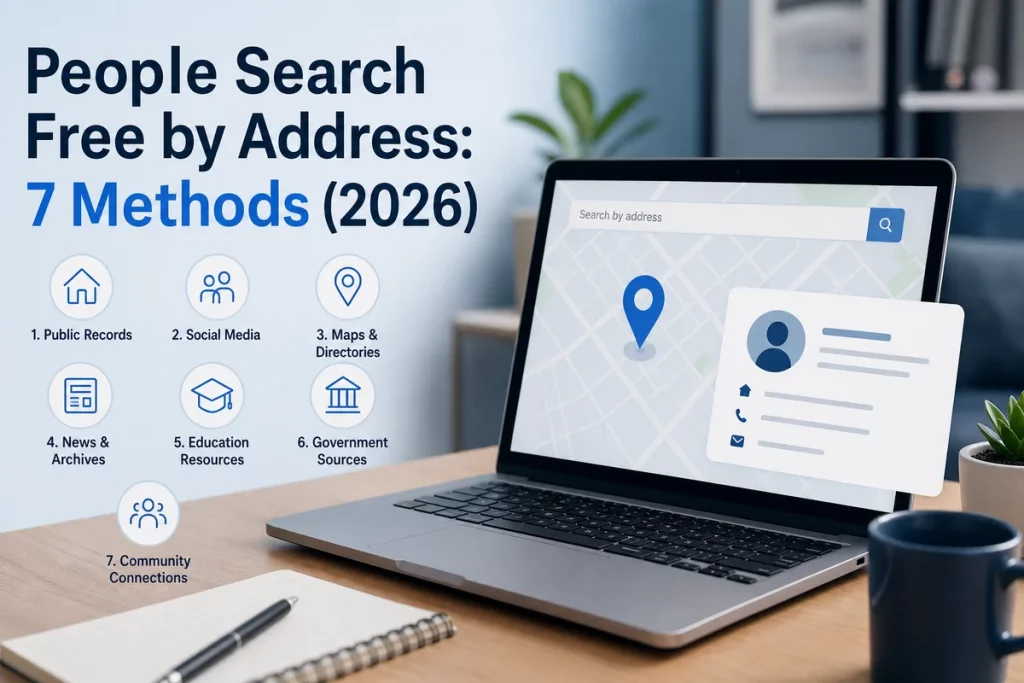
Whether you’re investigating who lives at a specific address, verifying a dating match’s claimed location, or checking out a new neighbor, a people search free by address is one of the most useful — and most misunderstood — online research tools available. The good news: multiple free methods exist that provide real, actionable information without a subscription. The bad news: most “free” people search websites are bait-and-switch operations designed to funnel you into paid plans. This guide cuts through the noise with 7 genuinely free address lookup methods, explains what each one reveals, and shows how to use address verification specifically for dating safety.
NavigateTable of Contents24 sections
What a People Search Free by Address Can Reveal
A free address lookup pulls from publicly available records to identify who lives or has lived at a specific address. Here’s what you can typically find:
| Data Category | Source | Availability |
|---|---|---|
| Current residents | County property records, voter registration | Free via government websites |
| Property owner | County assessor/recorder | Free — searchable in most U.S. counties |
| Property value and tax history | County tax assessor | Free — public record |
| Sales history | County recorder, Zillow, Redfin | Free |
| Previous residents | USPS change-of-address data, aggregators | Partial — some free, full history requires paid |
| Registered voters at address | State voter registration databases | Free in most states |
| Sex offender proximity | National Sex Offender Public Website | Free — government database |
The most reliable free data is property ownership and tax records — because these are maintained by county governments with legal accuracy requirements. Resident history is less reliable through free sources because it depends on data aggregation that may be outdated or incomplete. For dating safety purposes, the most valuable data points from a people search free by address are: whether the address is real and deliverable (USPS verification), whether it’s a residential location vs. commercial or vacant (Google Street View), whether the property owner matches your match’s claimed identity (county records), and whether registered sex offenders live at or near the address (NSOPW).
What free address searches can’t tell you: Whether someone currently rents at the address, how many people live there, whether the person you’re checking actually lives there, or anything about their character or intentions. An address check is a location research tool, not proof of identity. Consider it alongside consent-based identity signals and the methods in our dating background check guide.
Red flags that free address searches reveal: The address doesn’t exist in USPS records (fabricated). Google Street View shows a commercial building, vacant lot, or demolished structure rather than a home. The county shows no property records for the address at all (may be a very new development or a fabricated address). The property is in a completely different state or region than your match claims to live. The address appears on Airbnb or VRBO as a short-term rental (they may not actually live there). These are all findings you can get for free that paid services don’t improve upon.
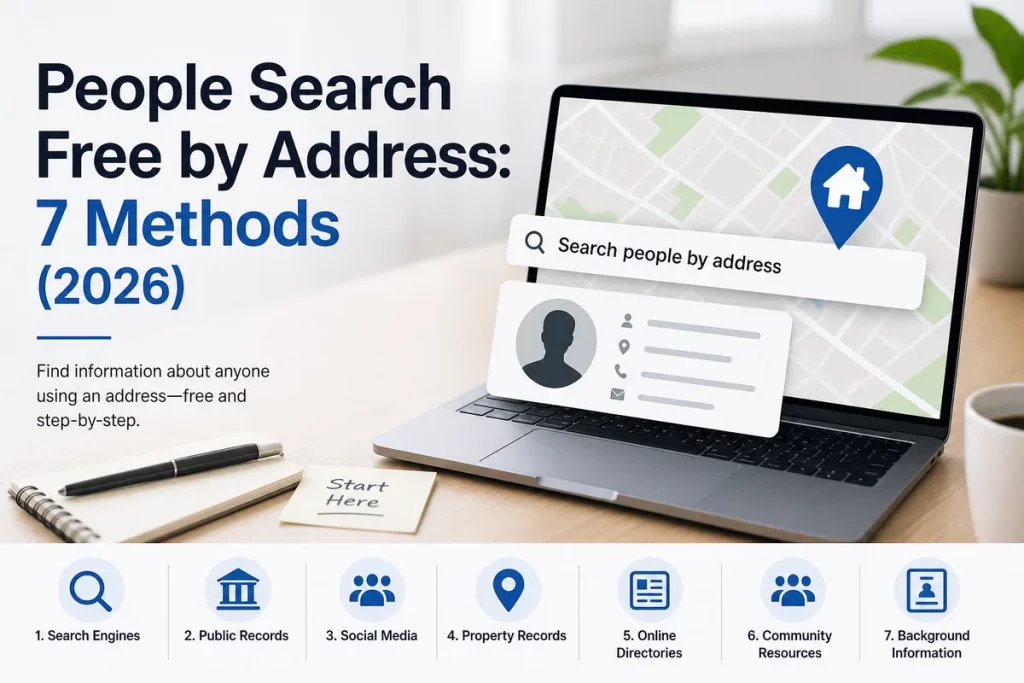
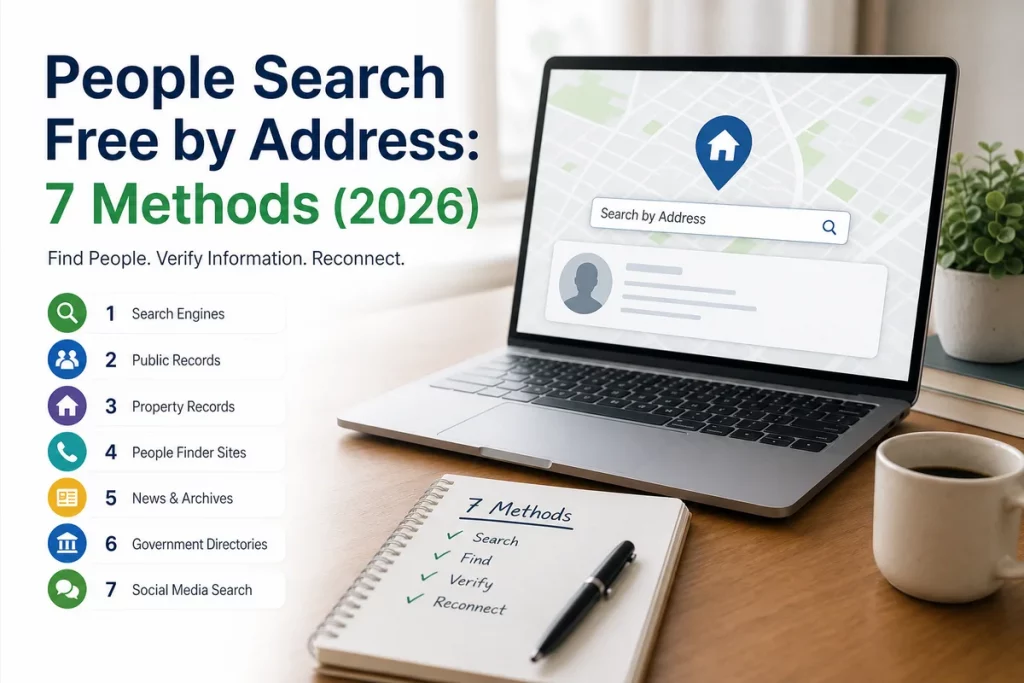
7 Genuinely Free People Search by Address Methods
1. County Property Records (Free — Most Reliable)
Every U.S. county maintains public property records searchable by address. Go to your county assessor or recorder’s website and enter the address. You’ll see the property owner’s name, purchase date, sale price, assessed value, and tax history. Search “[county name] property records search” to find the portal. This is the gold standard for a people search free by address — it’s government-maintained data with legal accuracy requirements.
2. Google Maps / Street View (Free — Visual Verification)
Enter the address on Google Maps and switch to Street View. This visually confirms: Is it a real residential address? Is it an apartment building or a single-family home? Does the neighborhood match what your match described? Does the property look consistent with their claimed lifestyle? Visual verification catches fake addresses, commercial locations posing as residences, and significant misrepresentations about living situations.
3. State Voter Registration (Free — Confirms Residents)
Many states offer free online voter registration searches. Enter the address or a name to see registered voters at that location. This confirms whether someone is actually registered at the address they claim. Search “[state name] voter registration lookup” for your state’s portal. Not all states offer address-based searches — some only allow name-based lookups.
4. Zillow / Redfin / Realtor.com (Free — Property Details)
Real estate platforms provide detailed property information including owner estimates, sales history, tax records, neighborhood data, and previous listing photos. Zillow’s free search shows the estimated value, square footage, bedrooms/bathrooms, and last sale date — useful context for evaluating whether someone’s claims about their living situation are consistent with reality.
5. USPS Address Verification (Free — Confirms Deliverability)
The USPS ZIP Code Lookup tool confirms whether an address is a valid, deliverable mailing address. If someone gives you an address that USPS doesn’t recognize, the address may be fake. This is a quick pass/fail check that takes 10 seconds and catches fabricated addresses immediately.
6. National Sex Offender Registry (Free — Critical Safety)
Search the National Sex Offender Public Website by address to see registered sex offenders living nearby. This is arguably the most important safety check when doing a people search free by address for dating purposes. The database covers all 50 states and is maintained by the U.S. Department of Justice.
7. Google Search (Free — Catches Everything Else)
Search the full address in quotes on Google. This surfaces: news mentions (has anything notable happened at this address?), business registrations (is it actually a commercial property?), Airbnb/VRBO listings (do they actually live there or just rent it short-term?), and court records that reference the address. A Google search catches edge cases that dedicated tools miss.
Paid Services vs. Free Methods
Paid people-search services such as BeenVerified and TruthFinder may include address-based searches in subscription plans. Prices and terms change, so check the provider’s current terms before purchasing. Consider what the service adds beyond free methods:
What paid services offer that free methods don’t: Historical resident data showing who lived at the address 5-10 years ago, associated phone numbers and email addresses for current residents, possible relatives of the current occupant, and all data aggregated into a single formatted report rather than requiring seven separate searches across different websites. For investigators, journalists, or people conducting frequent lookups, this aggregation saves meaningful time.
What paid services don’t improve: Accuracy of property ownership data (both paid and free use the same county assessor records), current resident identification (both rely on the same USPS and public data sources), sex offender proximity checks (the government NSOPW database is free, more current, and more comprehensive than commercial aggregations), and visual verification (Google Street View is free and no paid service replicates it).
Where paid services can mislead: Aggregated address reports sometimes include incorrect “current residents” based on outdated data — showing people who lived at the address years ago as if they’re still there. This can create false impressions about who you’d find at a specific location. County records and voter registration provide more current and accurate occupancy data for free.
The verdict: For a single address lookup — checking one specific location for dating safety or personal purposes — the 7 free methods provide equivalent information for the categories that matter most: who owns the property, whether the address is real and residential, and whether sex offenders live nearby. Paid services add the convenience of single-search aggregation and historical resident data. For occasional use, free methods are superior. For frequent investigations, a paid subscription may justify its cost through time savings.
Step-by-Step: How to Run a Free Address Search
Here’s the optimized sequence for running a people search free by address, organized from quickest to most thorough:
Quick check (2 minutes): Enter the address on Google Maps and switch to Street View. Confirm the address is real, residential, and consistent with what you were told. This visual check catches fake addresses, commercial properties, and significant misrepresentations immediately.
Ownership check (3 minutes): Search “[county name] property records” on Google and enter the address in the county assessor’s portal. Note the owner name, purchase date, and assessed value. Compare the owner name against what your match told you about their living situation.
Safety check (1 minute): Search the address on NSOPW.gov. Check for registered sex offenders at the address and within the surrounding area. This is non-negotiable before visiting anyone’s home.
Validation check (1 minute): Enter the address in the USPS ZIP Code Lookup tool. Confirm it’s a valid, deliverable mailing address. An address that USPS doesn’t recognize may be fabricated.
Deep check (5 minutes): Search the address on Zillow/Redfin for property details, sales history, and valuation. Search on your state’s voter registration portal for registered voters at the location. Google the full address in quotes for news mentions, business registrations, or Airbnb listings.
**Total time: ~12 minutes.
Using Address Lookup for Dating Safety
If your dating match has shared their address — or you’ve inferred it from context — here’s how a people search free by address fits into your dating verification process:
Verify the address exists and is residential. USPS confirmation + Google Maps/Street View takes 2 minutes. If they claimed to live in a downtown condo and the address is actually a vacant lot or commercial building, that’s a definitive red flag. Look at the Street View imagery date — if it’s recent, it provides a reliable snapshot of the property’s condition and type.
Check property ownership. Does the property owner name match your match? If they claim to own their home but the county records show a different owner, that’s worth clarifying. They may be renting (which is perfectly normal), or they may be fabricating details about their life. Cross-reference the owner’s name against your match’s claimed name for consistency.
Run the sex offender registry. Check NSOPW.gov for the address they’re inviting you to visit. This takes 30 seconds and is the most important safety check before visiting anyone’s home. Also check the surrounding neighborhood — the registry shows offenders within a specified radius.
Check for rental vs. ownership consistency. If your match claims to be wealthy and own property, but county records show no property in their name within the area, it could indicate exaggeration. Neither scenario is inherently dangerous, but inconsistencies between claims and records warrant attention.
Look for recent sales or foreclosures. Zillow and county records show recent sales. If the property was recently sold or is in foreclosure, your match may be in a transitional living situation — which, again, is fine, but inconsistencies between their story and the records are the flags to watch for.
Context, not surveillance. Address verification for dating should be about confirming basic safety — not stalking or conducting surveillance. Use this information to confirm what your match has told you, not to show up unannounced. The goal is safety verification, not control. If they haven’t given you their address, obtaining and using it without their knowledge crosses ethical boundaries.
Combine with identity verification. An address check tells you about a location — not about a person. For full dating verification, combine address lookup with reverse image search (photo verification), phone number lookup (phone verification), video calls (real-time confirmation), and GuyID identity verification (definitive ID confirmation). The complete dating verification guide covers the full protocol step by step.
See our first date safety guide for the full safety protocol, and share your GuyID Date Mode link for mutual verification before any in-person meeting.
Privacy and Legal Considerations
Searching publicly available property records, voter registration databases, and government registries is legal for personal use in the United States and Canada. However, important boundaries apply that every user should understand before conducting a people search free by address:
Legal uses: Searching public records for personal safety assessment before visiting someone’s home. Verifying an address before meeting someone you connected with on a dating app. Checking sex offender registries for your safety and the safety of your family. Confirming property ownership for personal knowledge. All of these are legitimate, legal uses of publicly available information that don’t require the other person’s consent or knowledge.
Restricted uses: Using address information to stalk, harass, threaten, or intimidate someone — regardless of the information’s public availability. Showing up unannounced at someone’s address without their explicit invitation. Using address data for employment decisions, credit decisions, or housing decisions (these require FCRA compliance and formal background check procedures). Accessing non-public databases through deception or unauthorized means.
Privacy respect: If someone hasn’t voluntarily shared their address with you, obtaining it through a people search free by address and using it without their knowledge or consent crosses ethical boundaries — even if the search itself is perfectly legal. The ethical standard for dating verification is straightforward: use tools to confirm information someone has shared with you, not to discover information they’ve deliberately chosen not to share. Showing up at someone’s address uninvited is never acceptable regardless of how you obtained it.
How GuyID Helps
GuyID should appear when it is useful, not as a banner ad. A GuyID Trust Profile gives someone a portable way to share trust signals before a date, while identity verification and social vouching help turn vague profile claims into clearer next steps.
Useful next steps:
- Create a GuyID Trust Profile when you want a cleaner way to share verified trust signals.
- Use GuyID free tools and related guides when you need a checklist before meeting someone.
- Treat identity verification as confidence-building, not a guarantee.
- Use social vouching when you want context from people who already know the person.
- Sign up only when the extra trust layer helps the decision you are already trying to make.
Frequently Asked Questions
Can I really search for people by address for free?
Yes. County property records, Google Maps, state voter registration databases, Zillow, USPS address verification, the sex offender registry, and Google Search all provide free address-based information. A people search free by address using these 7 methods takes 15-20 minutes and provides the most critical data: who owns the property, whether the address is real, and nearby sex offender registrations.
What’s the best free people search by address tool?
County property records are the most reliable because they’re government-maintained with legal accuracy requirements. For visual verification, Google Maps Street View is unmatched. For safety, the NSOPW sex offender registry is essential. No single tool covers everything — the combination of all 7 free methods provides comprehensive coverage.
Is it legal to search someone’s address?
Yes — property records, voter registration, and government registries are public information. Searching them for personal safety purposes is legal. What’s not legal is using the information to stalk, harass, or show up uninvited. For dating, the ethical standard is using address tools to verify information someone has shared with you, not to discover information they’ve chosen not to share.
Do I need BeenVerified for an address search?
No. For a single address lookup, the 7 free methods in this guide provide equivalent information for the most important categories. BeenVerified adds convenience (one search vs. many) and historical resident data, but doesn’t improve accuracy for current property ownership or sex offender proximity — the two most important data points for dating safety.
How do I verify a dating match’s address?
If they’ve shared their address: (1) USPS verification confirms it exists, (2) Google Street View shows the property type, (3) county records show the owner, (4) NSOPW checks for sex offenders nearby. For full dating verification beyond just address, use GuyID’s free screening tools and the complete dating background check protocol.
Can I find out who lives at an address for free?
You can find the property owner through county records (free) and registered voters through state voter registration databases (free in most states). Finding all current residents (including renters) is harder through free methods — this is where paid services add value. However, for dating safety purposes, confirming the property owner and checking the sex offender registry are the most critical checks, and both are completely free.
What if the address my match gave me doesn’t exist?
A fake address is a definitive red flag. If USPS doesn’t recognize it, Google Maps shows no building, or the county has no records — the person gave you a fabricated address. This indicates either a catfish or someone deliberately hiding their identity. Do not meet this person in person without further verification. Report the profile to the dating app.
Are “free people search” websites actually free?
Most are not. The genuinely free methods are government databases (county records, voter registration, sex offender registry), Google Maps, USPS, and real estate platforms like Zillow. These provide the most important data without any payment.