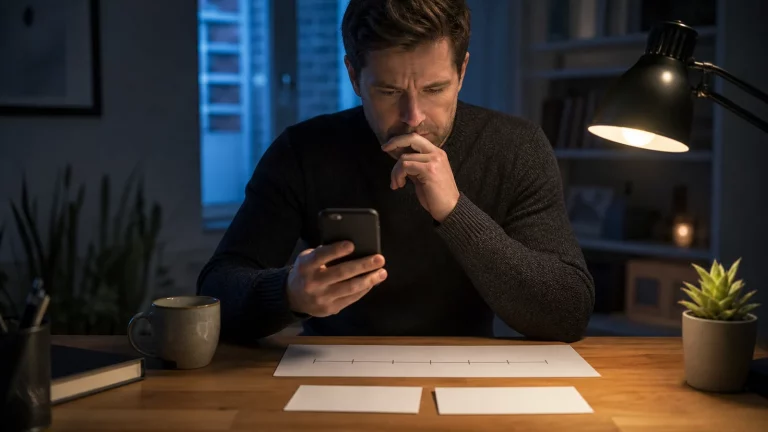

Reader Briefing
Reader Briefing
Start here if you need a practical read on is coffee meets bagel safe? a 2026 verification and privacy review: who should use verification, what signals to check, and what to do before moving from online interest to an in-person plan.
Who this is for
- People meeting someone from a dating app or social platform.
- Readers preparing for a first in-person date.
- Anyone checking identity, profile consistency, and trust signals.
- People trying to avoid romance scams, fake profiles, or pressure tactics.
You’ll learn
- How to evaluate identity signals without treating any single check as certainty.
- Which trust signals matter and how to weigh them together.
- How to spot inconsistencies, pressure, or behavior patterns that deserve caution.
- How to move from online conversation to a safer first meeting.
- Where GuyID tools fit into a quick pre-date screening workflow.
- How to compare options using practical safety and trust criteria.
Bottom line
Verification reduces uncertainty; it does not guarantee future behavior. Use a layered approach: confirm identity signals, compare profile consistency, ask for a short video call, keep early plans public, and slow down when someone pressures you to skip normal safety steps.
Key takeaways
- Identity verification improves confidence, not certainty.
- Patterns matter more than isolated incidents.
- Verify before meeting privately or sharing sensitive details.
- A short video call can reveal many inconsistencies.
- Pressure to skip reasonable safety steps is useful information.
Free Tools
Catfish Probability Detector
Check whether a dating profile has suspicious identity or photo signals.
Dating Bio Red Flag Detector
Review a bio for scam, pressure, or trust-warning language.
Dating Safety Checklist
Use free GuyID tools before moving from chat to a real date.
Next step
Create your GuyID trust profile
Share consent-based trust signals before a date without turning the conversation into an interrogation.
NavigateTable of Contents28 sections
Coffee Meets Bagel can be used safely, but it cannot prove that every profile is honest or that every match has good intentions. The app gives members useful controls—including selfie verification, reporting, unmatching, and account privacy options—but its own terms say that it does not routinely verify every user’s identity or conduct criminal background checks.
That makes the honest answer more nuanced than a simple yes or no: Coffee Meets Bagel has meaningful safety features, but the most important protections still come from how you verify a match, protect your personal information, and plan an in-person meeting.
This review was last checked on July 25, 2026. Features and policies can change, so confirm important settings in the current app before relying on them.
Quick answer: Is Coffee Meets Bagel safe?
Coffee Meets Bagel is a legitimate dating app with several practical safeguards. Its optional selfie-verification process is designed to check that a live person resembles the face in a profile’s main photo. Members can also report or unmatch someone, and paid privacy features can limit who sees a profile.
Those tools reduce some risks, but they do not establish a complete identity, screen a person’s criminal history, or determine whether someone is single, emotionally safe, financially honest, or looking for the same kind of relationship as you.
Use the app as an introduction service—not as a substitute for your own judgment.
| Safety question | What Coffee Meets Bagel can help with | What it cannot establish |
|---|---|---|
| Is there a live person behind the profile? | A selfie-verification check can provide additional confidence | That the person is trustworthy or using their full legal identity |
| Do the photos appear to belong to the user? | Verification compares a live selfie submission with the main profile photo | That every photo, biographical detail, or claim is accurate |
| Has the person passed a background check? | No routine criminal-background screening is promised | Criminal history, relationship status, or offline conduct |
| Can I stop contact? | Reporting and unmatching tools are available | That the person cannot try to contact you elsewhere |
| Can I control profile visibility? | Some discovery and privacy controls are available; additional controls may require a subscription | Complete anonymity or control over information already shared |
What Coffee Meets Bagel’s selfie verification actually does
Coffee Meets Bagel’s verification feature asks a member to complete a short selfie process. The company’s verification FAQ describes a liveness check and a comparison with the profile’s main photo. A successful check can produce a verification badge.
That badge is useful because it addresses a narrow but common question: does a live person appear to match the face presented on this profile?
It does not mean:
- Coffee Meets Bagel has completed a criminal-background check.
- The profile uses the person’s complete legal name.
- Their age, occupation, location, education, or relationship status has been independently verified.
- They are safe to meet alone.
- Their intentions are honest.
- Their other photos are current.
Coffee Meets Bagel’s terms are explicit about these limits. The company says it does not conduct criminal-background checks and does not routinely verify the identity of users, although it may perform verification or screening to help prevent fraud.
Treat the badge as one positive signal, not a universal seal of approval.
Why optional verification still matters
No single app feature can remove dating risk, but friction can deter some low-effort impersonation. A live selfie comparison is more informative than an unverified gallery by itself. If two otherwise similar profiles are available, a verified one may be the more sensible starting point.
You can still verify the wider story through normal conversation:
- Ask specific, natural follow-up questions about details in the profile.
- Notice whether answers remain consistent over time.
- Suggest a brief video call before meeting.
- Reverse-search suspicious or unusually polished photos if something feels wrong.
- Stop if the person creates urgency, avoids reasonable verification, or becomes hostile when you set a boundary.
Verification should make good judgment easier; it should not switch it off.
Is your personal information private on Coffee Meets Bagel?
Like other dating services, Coffee Meets Bagel needs personal data to operate. Its privacy policy describes collection that can include account information, profile details, photos, messages and app activity. When a person uses identity or photo-verification features, the process can involve photos, video, facial geometry, identity documents, or other sensitive verification data, depending on the check used. Coffee Meets Bagel identifies Persona as a third-party verification provider.
That does not automatically make the process unsafe, but it creates a real privacy tradeoff: verification can increase confidence in a profile while requiring the user to submit more sensitive information.
Before verifying, read the current in-app notice and privacy policy. Check:
- what information the verification requires;
- which company processes it;
- why it is collected;
- how long it may be retained;
- whether deletion is automatic or must be requested;
- whether the badge remains if verification data is removed.
Do not put information in a public dating profile that you would not want a stranger to connect to your real-world identity. A first name, recognizable employer, precise neighborhood, and searchable job title can be enough to locate someone’s professional profile, address history, or family accounts.
A safer profile setup
Use enough detail to create a real conversation without publishing a personal dossier.
- Prefer a broad area over a precise neighborhood.
- Describe your field without naming a small employer.
- Avoid photos that show a house number, workplace badge, vehicle plate, child’s school, or daily commute.
- Use dating-app photos that are not all duplicated on public social accounts.
- Keep your surname, personal email, and home address private.
- Review location, contact-sync, notification, and photo permissions on your phone.
- Use a unique password wherever a password is required, and protect the email account connected to the service.
Privacy is not secrecy. It is choosing when—and with whom—different pieces of your life become connected.
Common Coffee Meets Bagel scams and warning signs
The Federal Trade Commission warns that romance scammers often build a relationship online, create a reason they cannot meet, and eventually ask for money. The exact story changes; the pattern is remarkably consistent.
Leave the conversation or slow it down if a match:
- asks for money, gift cards, cryptocurrency, wire transfers, or financial “help”;
- offers to teach you investing or pushes you toward a trading platform;
- sends a link and pressures you to log in, pay a fee, or “verify” yourself on another site;
- moves the conversation off the app immediately and then deletes the profile;
- claims to be overseas, deployed, on an oil rig, or otherwise permanently unavailable for a simple video call;
- develops an intense emotional bond unusually fast;
- refuses live video while repeatedly making excuses;
- asks for intimate images, then threatens to share them;
- requests one-time security codes or screenshots of private account information;
- tells a dramatic emergency story that requires urgent payment;
- uses language, location details, or life facts that repeatedly contradict the profile.
Never send money to a dating-app match you have not met and independently verified. Do not accept money on their behalf, move funds between accounts, receive packages for them, or let them use your bank account. Those requests can expose you to fraud or make you an unwitting participant in a crime.
If someone sends an unfamiliar link, do not open it from a message. Navigate to the relevant company through its official app or type the known address yourself.
How Suggested and Discover affect safety
Coffee Meets Bagel offers more than one way to encounter profiles. Suggested presents a curated set of potential matches, while Discover can provide a broader browsing experience. The product design may influence how many profiles you review, but it does not change the basic safety rule: placement in a recommendation is not a character reference.
An algorithm can estimate compatibility from preferences and app activity. It cannot observe how a person treats partners offline.
Use the same checks whether a profile appears in Suggested, Discover, or another section:
- review the entire profile rather than reacting to one photo;
- look for specific, internally consistent information;
- use available verification filters or badges as one input;
- keep early communication in the app;
- report suspicious behavior so the platform can review it.
A safer process before meeting a Coffee Meets Bagel match
A good safety routine should feel normal, not investigative. The aim is to move from a low-information app profile to a real-world meeting in measured steps.
1. Keep the first conversation in the app
In-app messaging preserves access to reporting controls and avoids immediately exposing your phone number or social accounts. There is no need to move to text simply because a match asks.
2. Look for consistency, not perfection
Ask open questions about something specific in the profile. Genuine people can be nervous, vague, or slow to reply; one awkward response is not proof of deception. Repeated contradictions, evasiveness, and pressure matter more.
3. Suggest a brief video call
A five- or ten-minute call can confirm that you are talking to the person shown and help both people decide whether an in-person date makes sense. A video call still cannot establish someone’s background or intentions, but it adds another independent signal.
4. Do a limited public-information check
If you know enough to search, confirm only what is relevant to your safety. You are looking for major inconsistencies—not assembling a private surveillance file. A basic search can sometimes reveal stolen photos, a fake employer, or an identity that does not align with the story.
5. Make a public first-date plan
Choose a populated venue that you can enter and leave independently. Tell a trusted person where you will be, who you are meeting, and when you expect to check in. Arrange your own transportation and keep your phone charged.
RAINN recommends meeting in public, telling someone the plan, staying in control of transportation, and trusting your instincts. Those precautions are appropriate even when a profile is verified.
6. Protect physical and digital boundaries
Do not let politeness override discomfort. You may end the date at any point. Consent to meet is not consent to physical contact, a ride home, another location, or a future date.
Avoid sharing your home address until trust has developed. Be cautious with alcohol or anything that makes it harder to assess a situation. Never leave a drink unattended.
How to report or unmatch someone
Coffee Meets Bagel provides reporting and unmatching tools within the app. Its help center says reports are anonymous to the reported member. Reporting is appropriate for suspected fraud, impersonation, harassment, hate, threats, sexual misconduct, underage use, or other behavior that may violate the platform’s rules.
Before unmatching, save any evidence you may need, such as screenshots, the profile name, dates, payment requests, phone numbers, or external usernames. Unmatching can remove your access to the conversation.
If money or account access is involved:
- Contact the relevant bank, card provider, or payment platform immediately.
- Change compromised passwords and secure the associated email account.
- Report the profile to Coffee Meets Bagel.
- Report suspected romance fraud to the appropriate national fraud authority. In the United States, the FTC accepts reports at ReportFraud.ftc.gov.
- Contact local emergency services if there is an immediate threat.
Platform reporting is useful, but it is not a substitute for law enforcement, financial institutions, or specialist support when harm has occurred.
Are Coffee Meets Bagel’s paid features safer?
Paid plans may offer features that improve privacy or control, such as enhanced filters, visibility options, or Incognito-style browsing. These can reduce unwanted exposure and make it easier to focus on profiles with particular signals.
They do not make another person safer.
If you are considering a subscription mainly for safety, judge each feature by the risk it actually changes:
| Paid feature type | Potential safety or privacy benefit | Important limit |
|---|---|---|
| Incognito or restricted visibility | Fewer people may see your profile before you express interest | People you engage with can still view what you share |
| Advanced filters | Can reduce the volume of unsuitable profiles | Profile answers may be incomplete or inaccurate |
| Activity information | May help identify abandoned or rarely used accounts | Activity does not establish honesty |
| Read or engagement indicators | Can reduce uncertainty about messaging | They reveal nothing about offline conduct |
Pay for convenience or privacy controls you genuinely value—not for a promise of safety the subscription cannot deliver.
What happens if you pause or delete your account?
Pausing and deleting are different actions. Pausing can hide or limit an account without permanently erasing it. Deletion is intended to close the account, but it may not cancel a subscription purchased through Apple, Google, or another payment provider.
Before leaving:
- follow the current in-app deletion instructions;
- separately cancel any active subscription through the place where you purchased it;
- retain confirmation emails or screenshots;
- review the privacy policy for data-retention and deletion details;
- revoke unnecessary app permissions on your device.
If your concern involves harassment or fraud, preserve evidence before deleting the conversation or account.
Coffee Meets Bagel safety checklist
Use this short checklist before deciding to meet:
- The profile has specific, consistent information.
- A verification badge is present, or you have used another reasonable way to confirm the face.
- You have spoken long enough to notice whether the story remains consistent.
- A brief video call has happened.
- No one has asked for money, codes, investments, intimate images, or secret financial help.
- The person accepts your pace and boundaries without argument.
- The first meeting is in a public place.
- A trusted person has the plan and a check-in time.
- You control your transportation.
- You are willing to leave immediately if the situation feels wrong.
You do not need proof that someone is dangerous before ending contact. Discomfort, pressure, or repeated boundary testing is enough.
How GuyID Helps
GuyID should appear when it is useful, not as a banner ad. A GuyID Trust Profile gives someone a portable way to share trust signals before a date, while identity verification and social vouching help turn vague profile claims into clearer next steps.
Useful next steps:
- Create a GuyID Trust Profile when you want a cleaner way to share verified trust signals.
- Use GuyID free tools and related guides when you need a checklist before meeting someone.
- Treat identity verification as confidence-building, not a guarantee.
- Use social vouching when you want context from people who already know the person.
- Sign up only when the extra trust layer helps the decision you are already trying to make.
Frequently Asked Questions
Does a verified Coffee Meets Bagel profile mean the person is safe?
No. Verification is designed to show that a live person resembles the main profile photo. It does not prove the person’s background, intentions, relationship status, or future conduct.
Does Coffee Meets Bagel perform background checks?
Its terms state that it does not conduct criminal-background checks on users. If background information is important to your decision, do not treat membership or a verification badge as evidence that screening occurred.
Is it safe to give a Coffee Meets Bagel match my phone number?
It is usually safer to keep early conversations in the app. Share a personal number only when you are comfortable with the possibility that it may connect the person to your surname, social accounts, address, or other public records. A secondary number can create some separation, but it is not anonymous by default.
Should I only match with verified profiles?
Prioritizing verified profiles is a reasonable preference because it adds one useful signal. Some genuine members may remain unverified, however, and verified members still require normal caution.
Can I report someone after unmatching?
Access and procedures can change, so capture the necessary profile and conversation details before unmatching. Use Coffee Meets Bagel’s current help-center instructions or contact support if the profile is no longer visible.
Is Coffee Meets Bagel safer than other dating apps?
Safety depends on the exact features, how widely members use them, moderation quality, and your own habits. Coffee Meets Bagel’s selfie verification and reporting controls are useful, but a credible comparison would need to examine the current policies of each alternative using the same criteria. Membership on a mainstream dating app should not be treated as evidence that every member has been screened or is safe to meet.
The bottom line
Coffee Meets Bagel offers credible tools for reducing impersonation and managing unwanted contact. Selfie verification, reporting, unmatching, and privacy controls all have practical value.
The limits matter just as much. Coffee Meets Bagel does not routinely establish every user’s identity or run criminal-background checks, and a verification badge cannot certify someone’s character. Using the app safely means combining platform tools with gradual verification, careful privacy choices, scam awareness, public first meetings, and boundaries that you are prepared to enforce.
The safest mindset is neither automatic trust nor automatic suspicion. It is informed confidence, built one verifiable step at a time.
Sources
- Coffee Meets Bagel Terms of Service
- Coffee Meets Bagel Privacy Policy
- Coffee Meets Bagel: Profile Verification FAQ
- Coffee Meets Bagel: Staying safe on CMB
- Coffee Meets Bagel: How do I report a bagel?
- Coffee Meets Bagel: How do I delete my account?
- Federal Trade Commission: What to Know About Romance Scams
- RAINN: Tips for Safer Dating Online and In Person
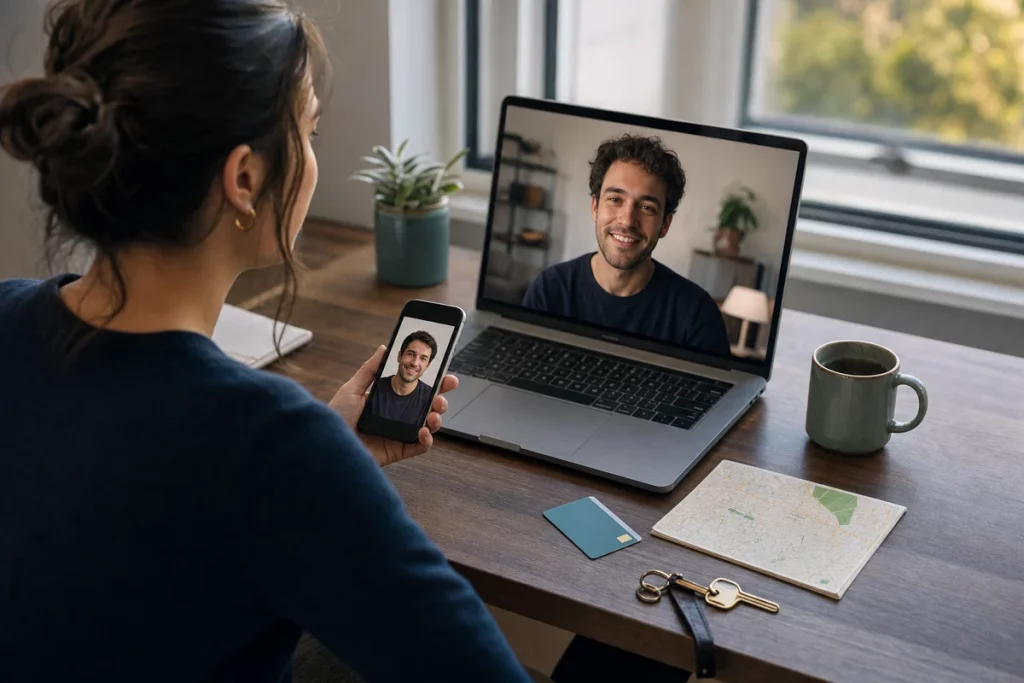
Build confidence in steps instead of treating one badge as complete proof.
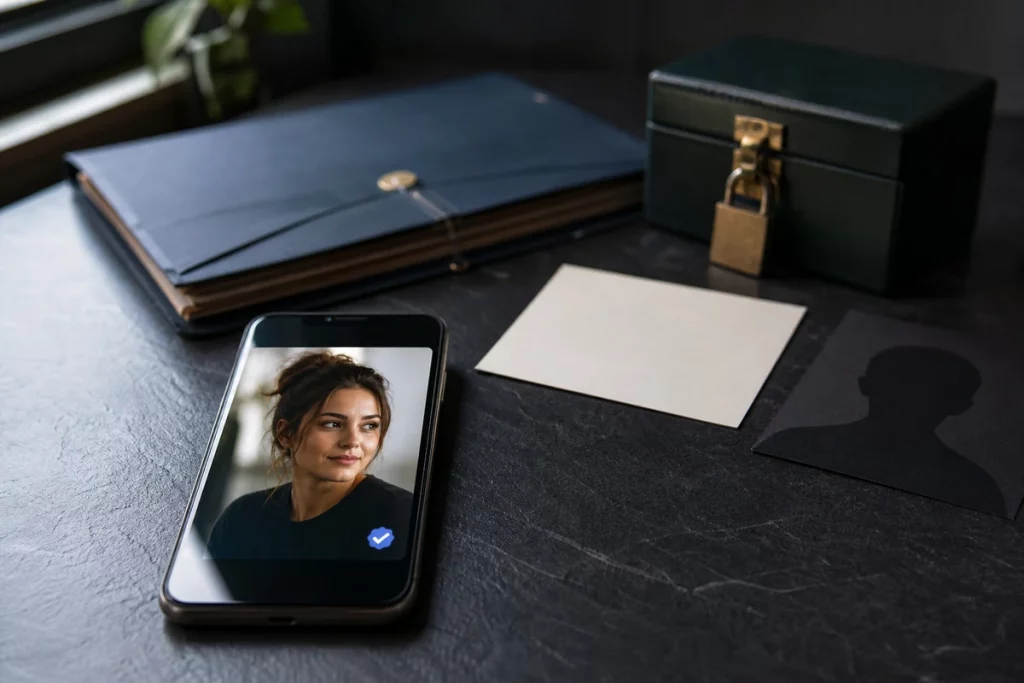
A verification badge can connect a face to a live user; it does not establish background or intent.
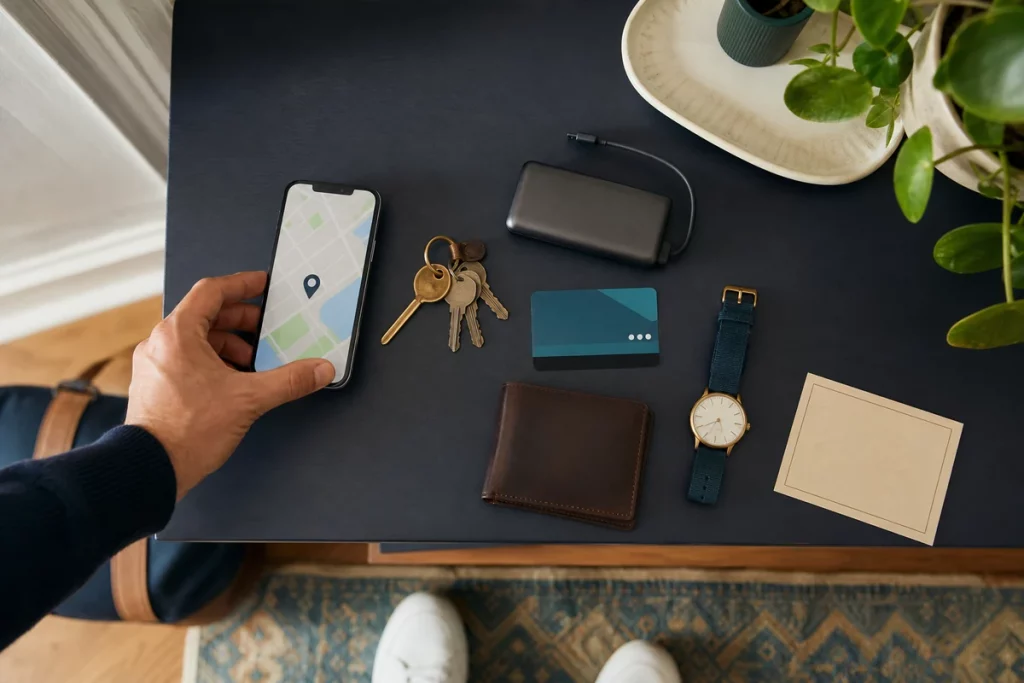
Pause when the story is inconsistent, money is requested, or a reasonable boundary is challenged.