Deepfake Dating Scams: How AI Fakes Photos, Video Calls & Voices (2026)
Deepfake dating scams have crossed the line from theoretical threat to daily reality. In 2026, scammers use AI-generated faces to build fake profiles, voice cloning to make phone calls as someone they’re not, and real-time face-swapping technology to appear on video calls as an entirely different person. The result is a new breed of dating fraud where the old advice — “just do a video call to confirm they’re real” — no longer provides the protection it once did. With 35% of Americans reporting they’ve spotted AI-generated or modified photos on dating apps (McAfee, Feb 2026) and 1 in 4 encountering fake profiles or AI bots altogether, deepfake dating scams represent the fastest-evolving threat in online dating safety.
What makes deepfake dating scams uniquely dangerous is that they undermine the verification methods daters have relied on for a decade. Reverse image search? Deepfakes generate original faces with no source to find. Video call verification? Real-time face-swapping now passes casual inspection. Grammar and language checks? AI chatbots write fluent, emotionally intelligent messages in any language. Romance scam losses already exceed $1.3 billion annually (FTC, 2026), and as deepfake technology becomes cheaper and more accessible, that number is projected to accelerate. This guide explains exactly how deepfake dating scams work, what the technology can and cannot do in 2026, and the verification strategies that still protect you.
What Are Deepfake Dating Scams?
Deepfake dating scams are romance fraud operations that use artificial intelligence to create convincing fake identities across multiple verification channels — photos, voice, and video — that would have been impossible to fabricate just two years ago. The term “deepfake” originally referred to AI-generated video that superimposes one person’s face onto another’s body, but in the dating scam context, it encompasses the full spectrum of AI identity fabrication.
In a traditional romance scam, the scammer uses stolen photos from a real person — a vulnerability that reverse image search was designed to catch. In deepfake dating scams, the scammer generates an entirely original person who has never existed. There is no original source to find because the face was created by AI from mathematical models, not copied from a real human’s social media. This single technological shift has neutralized the most widely recommended anti-scam tool in online dating.
The scope of the threat is already massive. McAfee’s February 2026 research found that 35% of Americans have spotted AI-generated or modified photos on dating and social apps — meaning more than a third of dating app users have directly encountered deepfake content. But the more alarming figure is the unknown: how many AI-generated profiles did people encounter without recognizing them? With 630,000+ cybercriminals operating romance scams globally (SpyCloud, Feb 2026) and AI tools becoming cheaper and more accessible every month, deepfake dating scams are scaling faster than any previous evolution of online fraud.
The Three Technologies Powering Deepfake Dating Scams
Understanding the specific technologies behind deepfake dating scams helps you know what’s possible, what’s coming, and where the current weaknesses are that enable detection.
Technology 1: AI-Generated Profile Photos
Generative image models — Midjourney, Stable Diffusion, DALL-E 3, Flux, and their open-source derivatives — create photorealistic images of people who have never existed. A scammer types a prompt like “attractive woman, 28 years old, brown hair, outdoor cafe setting, natural lighting, smiling” and receives a photo indistinguishable from a real smartphone selfie at first glance.
The sophistication has accelerated dramatically. In 2024, AI-generated faces often had visible artifacts — distorted ears, mismatched earrings, impossible finger configurations, and blurred backgrounds. By 2026, the latest models have largely eliminated these tells. More critically for deepfake dating scams, scammers can now generate entire photo sets of the same fictional person — different outfits, different locations, different lighting, different poses — creating a profile that looks like a real person’s camera roll rather than a set of stolen images.
The business economics are devastating. Generating 50 unique photos of a fictional person takes minutes and costs pennies in AI compute. A scam operation can create hundreds of unique fake identities per day, each with 5-10 convincing photos, making manual detection by dating platforms nearly impossible at scale.

Technology 2: Real-Time Face-Swapping for Video Calls
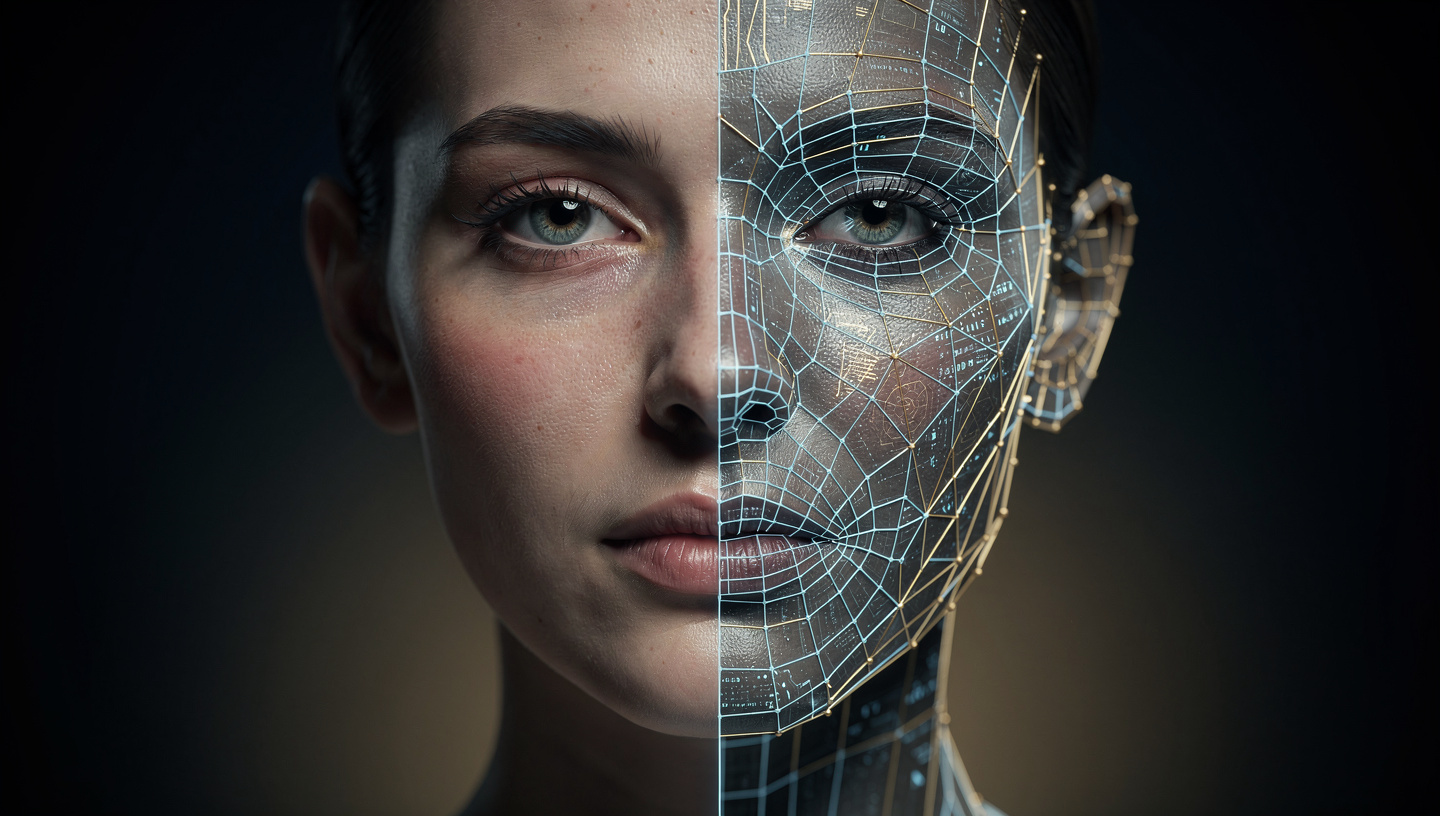
The technology that makes deepfake dating scams most dangerous is real-time face-swapping software that overlays a synthetic face onto the scammer’s real face during a live video call. The software tracks the scammer’s head movements, facial expressions, and lip movements, then renders the synthetic face with matching animation — creating a video call where the person on screen looks like their dating profile photos even though a completely different person is sitting behind the camera.
These tools — including DeepFaceLive, FaceFusion, and various proprietary solutions — originally required powerful GPUs and technical expertise. By 2026, simplified versions run on consumer laptops and even high-end smartphones. A scammer with moderate technical skills can set up a convincing face-swap in under an hour. The barrier to entry for video deepfakes has dropped from “PhD-level AI research” to “YouTube tutorial.”
This is the specific threat that undermines the most common dating safety advice: “insist on a video call.” Video calls are still more reliable than text-only interaction, but they are no longer definitive proof of identity. The critical distinction is that current face-swapping technology works best under controlled conditions — frontal view, consistent lighting, minimal movement. Disrupting these conditions is key to detection.
Technology 3: Voice Cloning for Calls and Voice Messages
Voice cloning AI can generate a convincing synthetic replica of any voice from as little as 3-10 seconds of sample audio. In deepfake dating scams, this means a scammer who has access to a short audio clip — from a social media video, a YouTube appearance, or even a brief voice note — can clone that voice and use it for phone calls and voice messages.
Combined with face-swapping, voice cloning creates a complete synthetic identity that operates across both visual and audio channels. The scammer appears on video as one person (face-swap) and sounds like that person (voice clone), while being an entirely different human being sitting in a scam compound thousands of miles away.
Voice cloning services are commercially available at costs ranging from free (limited quality) to $30-50/month (near-human quality). Some services are specifically designed for real-time voice transformation during live calls, enabling the scammer to speak naturally while the AI transforms their voice in real-time.
How Scammers Use Deepfakes in Real Dating Scenarios
Understanding how deepfake dating scams play out in practice — the specific scenarios where deepfakes are deployed and the decisions they’re designed to influence — helps you recognize them in your own dating experience.
Scenario 1: The AI-Generated Profile Farm
A scam operation generates 200+ unique fictional identities using AI image generation, each tailored to a specific target demographic (young professional women, divorced men over 40, LGBTQ+ community members). Each identity has 5-8 photos, a crafted bio, and is deployed across multiple dating platforms simultaneously. AI chatbots handle initial conversations across all profiles, with human operators taking over for high-value targets who show financial potential. This is the most common and scalable application of deepfake dating scams — and the reason 1 in 4 Americans have encountered fake profiles (McAfee, Feb 2026).
Scenario 2: The Deepfake Video Confirmation
A target who has been in a text-based relationship for three weeks asks for a video call. In the past, this would end most scams. In 2026, the scammer agrees — using face-swapping software to appear as the person in their dating photos. The call lasts 5-10 minutes, the target sees a face matching the profile, hears a matching voice, and is now convinced the person is real. The emotional investment deepens. The financial exploitation phase begins. This scenario is the most dangerous application of deepfake dating scams because it specifically defeats the safety measure most experts recommend.
Scenario 3: The Voice-Clone Phone Relationship
Some victims prefer phone calls over video. A scammer using voice cloning conducts lengthy daily phone calls where the voice matches a chosen persona. The victim builds deep emotional attachment through voice — an intimacy channel that feels more personal than text. The cloned voice is consistent across every call, reinforcing the belief in a real person. When the financial request comes, it arrives through a voice the victim has heard for weeks — making it feel personal and genuine rather than scripted.
Scenario 4: The Pig Butchering Deepfake Combo
The most financially destructive variant combines deepfake dating scams with pig butchering investment fraud. The scammer uses deepfake photos and video to build a convincing romantic relationship, then introduces a fake investment platform. The deepfake identity lends credibility to the investment recommendation — “this successful, attractive person I’ve video-called with is sharing their personal investment strategy with me.” The dual credibility of verified (deepfaked) identity and demonstrated (fabricated) financial success makes this combination devastatingly effective. FBI cases involving this combination report individual losses of $100,000 to $1 million+.
How to Detect Deepfake Photos on Dating Profiles
Detecting deepfake dating scam photos requires looking beyond what looks obviously fake and focusing on what looks too perfect. Current AI image generation has a characteristic aesthetic — and knowing what to look for catches most fake profiles.
Visual Detection Techniques
- The “AI perfect” aesthetic: AI-generated faces tend to have unnaturally smooth skin, perfectly even lighting, symmetrical features, and an airbrushed quality. Real smartphone photos have skin texture, minor blemishes, uneven lighting, and the natural imperfections that come from handheld photography. If every photo looks like it was professionally retouched, it may have been AI-generated rather than retouched.
- Background analysis: AI struggles with complex backgrounds. Zoom into the area behind the person and look for: text that doesn’t form readable words, architectural elements that don’t follow real geometry (windows that change size, walls at impossible angles), trees and plants with unrealistic branching patterns, and crowd scenes where background faces are smeared, distorted, or obviously non-human.
- Accessory inconsistencies: Earrings that don’t match between photos (or within the same photo), necklaces that merge into skin at the edges, glasses frames that bend incorrectly, watch faces with nonsensical displays, and buttons or zippers that don’t align. AI generates these elements statistically rather than physically, leading to subtle impossibilities.
- Hand and finger analysis: Despite massive improvements, AI still struggles with hands. Count the fingers. Check for impossible bending angles. Look for fingers that merge together or fade into the background. Hands holding objects (coffee cups, phones, utensils) are particularly challenging for AI and often show subtle errors.
- Eye analysis: Look at the reflections in both eyes — in a real photo, both eyes reflect the same light source at the same angle. AI-generated eyes sometimes show different reflections, asymmetric catchlights, or an unnaturally glassy quality. The iris pattern may be too uniform compared to real human irises.
Technical Detection Methods
- Reverse image search remains valuable. While AI-generated faces won’t appear on Google Images as stolen photos, GuyID’s reverse image search can still identify when AI-generated photos have been used across multiple scam profiles. Scam operations sometimes reuse AI-generated faces across platforms — meaning the same fictional face might appear on Tinder, Bumble, and Hinge under different names.
- AI detection tools: Dedicated AI image detection tools analyze pixel-level patterns that distinguish AI-generated images from real photography. These tools examine noise patterns, frequency domain signatures, and statistical regularities that human eyes cannot perceive. While not foolproof, they add a technical layer to your visual analysis.
- Metadata analysis: Real photos contain EXIF data — camera model, GPS coordinates, timestamp, aperture settings. AI-generated images typically lack this metadata entirely or contain generic placeholder data. If a dating profile photo has no EXIF data, it wasn’t taken by a real camera.
The single most effective defense against deepfake dating scam photos: ask your match to send a specific selfie right now. “Can you send me a photo holding up three fingers and pointing at something red?” A real person can do this in 10 seconds. No AI can generate an on-demand photo matching specific, spontaneous criteria. If they can’t or won’t comply — or if there’s always a delay before the photo arrives (suggesting they’re generating it with AI) — treat this as a significant red flag.
How to Detect Deepfakes During Video Calls
Video call detection is the most critical skill for defending against deepfake dating scams in 2026, because deepfake video calls are specifically designed to defeat the most commonly recommended safety measure. Current face-swapping technology has specific, testable weaknesses that you can exploit with deliberate actions during the call.

Active Detection Techniques (Ask Them to Do These)
- Request a full head turn — all the way to profile view. Deepfake face overlays track the frontal face well but often glitch, blur, or distort when the subject turns their head beyond 45 degrees. The synthetic overlay loses registration with the real face underneath, creating visible artifacts around the jawline, ears, and neck. Ask casually: “Turn around and show me what’s behind you” — this forces a full head rotation that stress-tests the deepfake.
- Ask them to wave their hand across their face. Face-swapping software struggles with occlusion — when real objects pass between the camera and the synthetic face. A hand waving across the face may cause the overlay to flicker, disappear momentarily, or show the real face underneath for a split second. This is one of the most reliable current detection methods for deepfake dating scams.
- Request they touch specific parts of their face. “Touch your nose” or “push your hair behind your ear” — these actions require the hand to interact with the face region where the deepfake overlay is active. The collision between real hand movements and synthetic face rendering often produces visible artifacts: the hand may appear to pass through the face, the face may distort momentarily, or there may be a brief “shimmer” at the boundary.
- Ask them to change environments. “Can you walk to a window?” or “Switch to your other camera.” Each environmental change forces the deepfake software to adapt to new lighting conditions, background complexity, and camera angle. These transitions are moments of maximum vulnerability for face-swapping systems.
- Request unusual lighting. “Turn off the overhead light” or “Shine your phone flashlight on your face” — dramatic lighting changes expose the inconsistency between how real skin responds to light and how the synthetic overlay renders light changes. Real skin has subsurface scattering that changes dynamically; deepfake overlays often respond with a slight delay or incorrect color shift.
Passive Detection Signals (Watch for These)
- Face-edge artifacts: A subtle “halo” or color boundary around the edges of the face where the synthetic overlay meets the real background. This is especially visible when the background is complex or the person moves.
- Lip sync delay: Real-time voice cloning combined with face-swapping introduces processing lag. Watch for a slight desynchronization between mouth movements and audio — the lips may move fractionally before or after the corresponding sound arrives.
- Expression limitations: Current deepfakes handle standard expressions (smiling, talking, nodding) well but struggle with unusual expressions. Extreme surprise, exaggerated frowning, or rapid expression changes may produce unnatural results.
- Resolution inconsistency: The face may appear slightly sharper or slightly blurrier than the surrounding image. This is because the deepfake overlay is rendered at its own resolution, which may not perfectly match the camera’s native resolution.
- The “uncanny valley” feeling: If something feels slightly off about the video call — even if you can’t articulate exactly what — trust that instinct. Your brain’s facial recognition system is remarkably sophisticated and can detect anomalies that your conscious mind cannot identify. The vague feeling that “something isn’t right” during a video call with a deepfake dating scam operator is your subconscious detection system working correctly.
How to Detect AI Voice Cloning in Deepfake Dating Scams
Voice cloning adds another layer of deception to deepfake dating scams. Here’s how to detect synthetic voice during phone calls and voice messages.
- Listen for the “flat” quality. Cloned voices in 2026 are remarkably natural in controlled conditions, but they often lack the full dynamic range of real human speech. Real voices have micro-variations in pitch, rhythm, and volume that reflect breathing, emotion, and physical state. Cloned voices tend to be more consistent — almost too smooth — lacking the natural raggedness of human speech.
- Test with emotional conversation. AI voice models handle neutral conversation well but struggle with authentic emotional expression. If you share something genuinely sad, exciting, or surprising, listen for whether their vocal response matches the appropriate emotional register. Real humans have involuntary vocal changes during emotional conversations — voice cracking when sad, pitch rising when excited. Cloned voices may maintain an unnaturally even tone.
- Listen for background consistency. Real people calling from different locations have different background sounds — traffic, wind, room echo, other people. A cloned voice processed through AI often has a suspiciously consistent, clean audio background across every call, regardless of their claimed location.
- Request specific vocal tasks. “Can you sing a few notes?” or “Say this tongue twister: ‘She sells seashells by the seashore.'” Voice cloning software handles normal speech patterns but may produce artifacts with singing, rapid repetitive syllables, or unusual vocalizations that fall outside its training data.
- Compare voice messages to live calls. If voice messages sound different from live call audio — different audio quality, different room acoustics, different breathing patterns — one of the two channels may be using cloned audio while the other is real (or differently cloned). Consistency between pre-recorded and live audio is a positive trust signal.
Why Traditional Dating Safety Advice Is Failing Against Deepfakes
The dating safety advice that worked before 2024 is increasingly insufficient against deepfake dating scams. Understanding exactly which recommendations have been compromised — and which still work — is essential for calibrating your defenses.
| Traditional Advice | Effectiveness Before Deepfakes | Effectiveness Against Deepfake Dating Scams (2026) |
|---|---|---|
| “Reverse image search their photos” | High — caught stolen photos | Low — AI generates original faces with no source to find |
| “Insist on a video call” | Very high — scammers couldn’t appear as their photos | Medium — face-swapping passes casual inspection but has detectable artifacts |
| “Watch for bad grammar” | High — most scammers weren’t native English speakers | Very low — AI writes fluent, natural text in any language |
| “Be suspicious of too-fast responses” | Medium — human scammers had response delays | Very low — AI responds instantly 24/7 with personalized messages |
| “Check their social media presence” | High — scammers had thin digital footprints | Medium — AI can generate fake social histories, but depth is hard to fake |
| “Ask for a specific spontaneous selfie” | Very high — impossible without being the real person | Still high — AI can’t yet generate specific on-demand photos convincingly |
| “Verify through government ID + social vouching” | Very high — couldn’t be faked | Still very high — AI cannot fabricate verified real-world identity |
The pattern is clear: deepfake dating scams have neutralized most digital verification methods while real-world identity verification remains effective. This is why the defense strategy must evolve from “check the digital content” to “verify the real-world person.”
Verification Strategies That Still Beat Deepfake Dating Scams
Despite the power of deepfake technology, several verification strategies remain effective against deepfake dating scams in 2026 — because they test for things AI cannot fake: real-world existence, spontaneous physical presence, and verified legal identity.
Strategy 1: The Spontaneous Real-World Request
Ask your match to do something specific, spontaneous, and physical: send a selfie holding three fingers up while touching their ear. Stand next to a specific local landmark and take a photo. Write your name on a piece of paper and hold it up. These requests require a real person to exist in the real world — no AI can generate these on demand, and any delay in providing them (suggesting AI generation in progress) is itself a red flag.
Strategy 2: Video Calls with Active Deepfake Testing
Video calls remain valuable, but only when combined with the active detection techniques described above — full head turns, hand occlusion, environment changes, and lighting changes. A passive video call where someone sits still and talks frontally can be deepfaked convincingly. An interactive video call that continuously challenges the face-swapping system’s limitations exposes artifacts that reveal the deception.
Strategy 3: Identity Verification Through GuyID
The most robust defense against deepfake dating scams is verified real-world identity — something no AI can fabricate regardless of its capabilities. GuyID provides government ID verification (biometric matching against official government documents) combined with social vouching from real friends and colleagues. A verified GuyID Trust Profile proves that a real human being with a confirmed legal identity exists — the one thing no deepfake, chatbot, or AI system can generate.
The portable Date Mode link means this verification works across all dating platforms. Ask any match — whether from Tinder, Bumble, Hinge, Instagram, or LinkedIn — to share their GuyID verification link. Women check for free. In an era of deepfake dating scams, requesting verified identity is not paranoid — it’s the minimum reasonable standard for dating safety.
Strategy 4: Meeting in Person (with Safety Precautions)
The ultimate deepfake detector is an in-person meeting. No AI can create a physical person. Meeting in a public place, telling a friend your plans, and sharing a photo of your match with someone you trust provides definitive identity confirmation. While this should never be the first step (always verify before meeting), it remains the gold standard for authentication that no technology can defeat.
Strategy 5: GuyID’s Free Safety Tools
Use GuyID’s suite of 60+ free safety tools as a first-pass screening on every match. The catfish probability detector analyzes multiple profile signals to assess deception likelihood — calibrated for the AI-enhanced scam landscape. The dating bio red flag detector identifies suspicious language patterns. The reverse image search catches cases where AI-generated faces have been reused across multiple scam profiles. These tools provide data-driven assessment when your own judgment may be compromised by attraction or emotional investment.
Summary: Defending Against Deepfake Dating Scams in 2026
Deepfake dating scams represent a paradigm shift in online dating fraud. The AI tools that power them — image generation, face-swapping, and voice cloning — have compromised the digital verification methods that daters relied on for a decade. Reverse image search catches fewer fake profiles when AI generates original faces. Video calls provide less certainty when face-swapping software operates in real time. Grammar checking is useless when AI chatbots write flawlessly in any language.
But deepfake dating scams are not undetectable. AI-generated photos still have characteristic tells for trained observers — excessive perfection, background artifacts, accessory inconsistencies, and hand anomalies. Video call deepfakes break under specific active testing: full head turns, hand occlusion, environment changes, and lighting shifts. Voice clones lack the full dynamic range and emotional authenticity of real human speech.
The most critical defense against deepfake dating scams is understanding that AI excels at faking digital content but cannot fake real-world identity. Spontaneous real-world requests (specific selfies, specific actions) test for physical existence. Government ID verification through GuyID — combined with social vouching from real friends — confirms identity at a level no deepfake can reach. In-person meetings provide definitive proof.
The arms race between deepfake technology and detection will continue accelerating. The photos will get more realistic. The face-swaps will get smoother. The voice clones will get more natural. But verified real-world identity will remain beyond AI’s capabilities. Building identity verification into your dating process now — through tools like GuyID’s free safety tools and verified trust profiles — protects you not just against today’s deepfake dating scams, but against whatever the technology produces next.
Review our complete guides on how to spot a romance scammer, AI romance scams in 2026, and the latest romance scam statistics for the full picture of the evolving threat landscape.
GuyID verifies real people through government ID and social vouching — the one thing deepfakes cannot generate. 60+ free safety tools, portable trust profiles, and verification that works across every dating platform. Women check for free.
Frequently Asked Questions About Deepfake Dating Scams
What are deepfake dating scams?
Can deepfakes fool video calls?
How common are deepfake dating scams in 2026?
How can I tell if a dating profile photo is AI-generated?
Is it still safe to date online with deepfakes?
Can voice cloning be detected during phone calls?
What’s the best protection against deepfake dating scams?
Will deepfake detection get easier or harder over time?

Founder, GuyID · Dating Safety Researcher · 13+ Years in Data Analytics
Ravishankar Jayasankar is the founder of GuyID, a consent-based dating trust verification platform. With 13+ years in data analytics and a deep focus on consumer trust, Ravi built GuyID to close the safety gap in digital dating. His research found that 92% of women report dating safety concerns — validating GuyID’s mission to make online dating safer through proactive, consent-based verification. GuyID offers government ID verification, social vouching, a Trust Tiers system, and 60+ free interactive safety tools.