
Dating Safety When Moving to WhatsApp: The Transition Protocol (2026)
The moment your dating conversation moves from Bumble, Tinder, or Hinge to WhatsApp is the most dangerous transition in online dating. Every safety feature — verification badges, AI moderation, messaging controls, reporting tools — vanishes. You become an unverified person talking to another unverified person on a messaging platform with zero dating-specific protection. And scammers know this. They push for the WhatsApp transition as quickly as possible — often within 24-48 hours — specifically to escape the dating app’s safety infrastructure and operate in an unmonitored environment where $1.3 billion in annual romance scam extraction (FTC, 2026) primarily occurs. Understanding dating safety when moving to WhatsApp transforms this vulnerable transition from a safety gap into a verification checkpoint.
This guide covers exactly what to do before, during, and after the WhatsApp transition — the safety steps that maintain protection through the moment all platform safety disappears.
Why the WhatsApp Transition Is the Most Dangerous Moment in Online Dating
The WhatsApp transition is dangerous not because WhatsApp itself is unsafe — it’s a secure messaging platform used by 2+ billion people. It’s dangerous because the transition represents a complete safety infrastructure change: from a dating-specific environment with verification, moderation, and reporting to a general messaging environment with none of those features applied to dating.
The Safety Infrastructure Cliff
On a dating app, you have: a verification badge (however limited) confirming photos, AI systems scanning for scam patterns, human moderators reviewing flagged content, reporting tools connected to the platform’s trust and safety team, messaging controls (women-first on Bumble, comment-required on Hinge), and a profile history that can be investigated if issues arise.
On WhatsApp, you have: end-to-end encryption (which protects privacy but also means no AI scanning of message content), no dating-specific moderation, no verification system, reporting tools that aren’t calibrated for romance scams, and a phone number that reveals more personal information than a dating app handle. The transition isn’t a gradual decrease in safety — it’s a cliff.
Why Scammers Exploit This Specific Transition
Scammers push for WhatsApp migration specifically because it serves their operational model. On the dating app, their behavior is monitored — AI detection systems scan for scam-associated patterns, and user reports trigger profile review. On WhatsApp, they operate in the dark: no platform AI scanning their romance scam scripts, no moderation team reviewing their love-bombing patterns, and no reporting mechanism that connects back to their dating app profile. The WhatsApp transition is the scammer’s escape hatch — and they use it within the first 24-48 hours before the dating app’s detection systems have time to flag them.
What Disappears When You Leave the Dating App
| Safety Feature | On the Dating App | On WhatsApp |
|---|---|---|
| Verification badge | ✅ Visible on profile | ❌ Doesn’t exist |
| AI scam pattern detection | ✅ Scanning messages in real-time | ❌ End-to-end encryption prevents scanning |
| Human moderation | ✅ Reviews flagged content | ❌ No dating-specific moderation |
| Dating-specific reporting | ✅ “Report scam” with investigation | ❌ Generic reporting only |
| Messaging controls | ✅ Women-first, comment-required, etc. | ❌ Anyone with number can message |
| Profile investigation capability | ✅ Platform can review history | ❌ No dating context for investigation |
| Identity information exposed | First name only (most apps) | Phone number (reveals more via lookup) |
| GuyID Trust Profile | ✅ Shareable in bio/prompt | ✅ Shareable as link in chat |
Seven safety features disappear. One persists: portable verification through GuyID. This is why the WhatsApp transition is the highest-impact moment for sharing your Trust Profile — it’s the only trust signal that survives the move.

Red Flags: When the WhatsApp Push Is Suspicious
Moving to WhatsApp is natural and normal in dating — most relationships eventually transition off the dating app. The question isn’t whether to transition, but when the push signals something suspicious. Here are the red flags specific to the WhatsApp transition.
Timing Red Flags
- 🟡 WhatsApp push within the first 5 messages: They’ve barely established any conversation and already want to leave the platform. Genuine interest builds conversation first; scam operations prioritize speed of migration.
- 🟡 WhatsApp push within 24 hours of matching: One day of messaging is insufficient to establish the comfort that justifies sharing a phone number. Urgency this early serves the scammer’s timeline, not yours.
- 🟡 “I’m rarely on this app” or “I’m deleting this soon”: Manufactured scarcity — creating urgency to move off-platform by suggesting the conversation will be lost otherwise. Genuine users who are rarely on the app would still be available when they check it.
Method Red Flags
- 🟡 They provide a WhatsApp number but refuse to give their dating app profile info: They want you on WhatsApp (unmonitored) but won’t let you reference their dating profile (where they could be reported). Compartmentalization protects the scam operation.
- 🟡 They suggest Telegram instead of WhatsApp: Telegram’s disappearing messages and anonymous accounts make it even harder to track. While some people genuinely prefer Telegram, the suggestion during a dating context adds a layer of operational security that benefits scammers more than genuine daters.
- 🔴 They send a “verification link” before or during the transition: “Verify yourself here before I give you my number” → phishing scam. No legitimate verification requires external links. Report immediately.
When the Transition Is Normal and Healthy
- ✅ After several days of meaningful conversation on the dating app
- ✅ After a successful video call (identity confirmed visually)
- ✅ When both parties express mutual interest in continuing to talk
- ✅ When the transition feels natural rather than urgent or pressured
- ✅ When both parties share their GuyID Trust Profiles at the transition
The Safe WhatsApp Transition Protocol
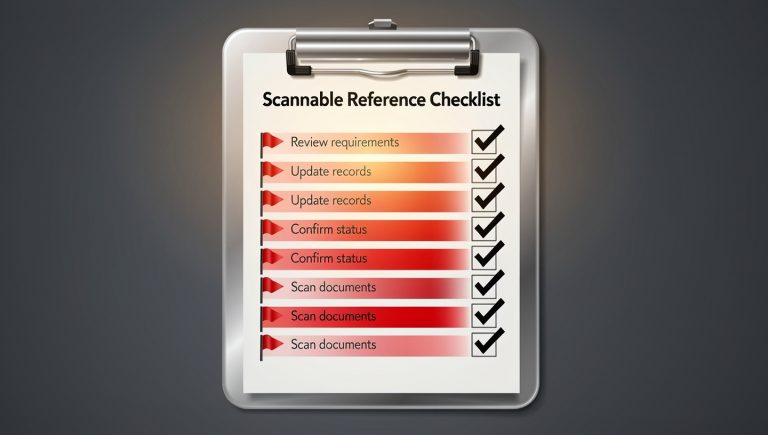
Here’s the step-by-step protocol for dating safety when moving to WhatsApp — designed to maintain protection through the transition while keeping the interaction natural.
☐ Have at least 3-5 days of meaningful conversation — not just surface chat
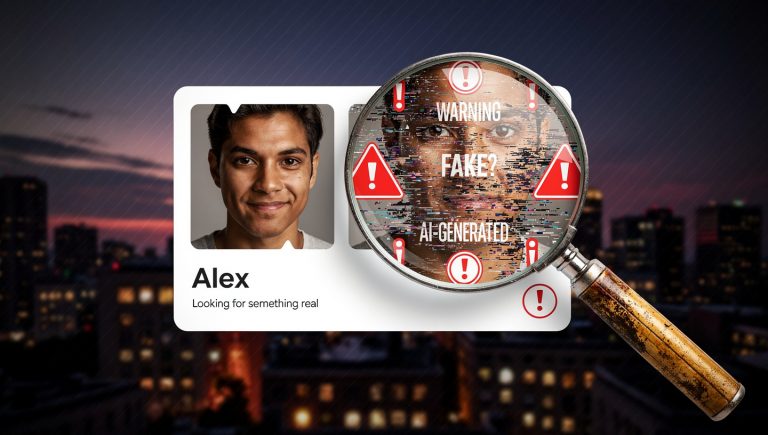
☐ Confirm the 60-second fake profile check was clean (GuyID tools)
☐ Complete a video call with active deepfake testing — the person is who their photos show
☐ Check their GuyID Trust Profile if available — or note its absence
☐ Configure your WhatsApp privacy settings (see next section)
☐ Share your number AND your GuyID Date Mode link simultaneously:
“Here’s my number: [number]. And here’s my verified identity since we’re leaving the app: [GuyID link]”
☐ Request theirs: “Do you have a GuyID profile too?”
☐ Screenshot their dating profile before the conversation potentially disappears
☐ Note their phone number area code — does it match their claimed location?
☐ Watch for WhatsApp-specific scam patterns (see section below)
☐ Continue verifying: do their stories remain consistent with the dating app conversations?
☐ Schedule an in-person meeting — WhatsApp should be a bridge to meeting, not a permanent channel
☐ Maintain privacy boundaries: don’t share home address, financial info, or workplace location yet
☐ Any mention of money, investments, or financial needs → definitive red flag
WhatsApp Privacy Settings for Dating Safety
Before sharing your phone number with any dating match, configure these WhatsApp settings. One-time setup, permanent protection. This is the privacy foundation of dating safety when moving to WhatsApp.
| Setting | Location | Set To | Why |
|---|---|---|---|
| Last Seen | Settings → Privacy → Last Seen | “My Contacts” or “Nobody” | Prevents matches from monitoring when you’re online — pattern tracking enables control/stalking |
| Profile Photo | Settings → Privacy → Profile Photo | “My Contacts” | Prevents unknown contacts from seeing your photo — a dating match isn’t in your contacts yet |
| About | Settings → Privacy → About | “My Contacts” | Your About text may reveal personal info not shared on the dating app |
| Status | Settings → Privacy → Status | “My Contacts” | Status updates may reveal location, activities, or personal content |
| Groups | Settings → Privacy → Groups | “My Contacts” | Prevents being added to scam groups or spam without consent |
| Read Receipts | Settings → Privacy → Read Receipts | Off (optional) | Reduces pressure to respond immediately — removes “seen” timestamp that can create urgency dynamics |
| Two-Step Verification | Settings → Account → Two-Step Verification | On (set a PIN) | Prevents account hijacking — scammers sometimes try to take over targets’ WhatsApp accounts |
If you’re uncomfortable sharing your real phone number with a dating match, consider using a secondary number through Google Voice, TextNow, or a prepaid SIM. This creates a buffer between your dating interactions and your primary phone number — preventing reverse phone lookups that can reveal your full name, address, and other personal information. The secondary number is for dating. Your real number is for people whose identity you’ve verified. For the complete information protection strategy, see the dating app privacy guide.

Romance Scam Patterns That Emerge on WhatsApp
Once the conversation moves to WhatsApp, certain scam patterns emerge that were suppressed on the dating app (where detection systems would have flagged them). Here’s what to watch for in the first days and weeks of WhatsApp dating conversations.
Week 1: Escalation Phase
- 🟡 Messaging intensity increases dramatically: On the dating app, they were engaged. On WhatsApp, they become constant — good morning texts, midday check-ins, goodnight messages. This intensity builds emotional dependency and creates the sense of an accelerated relationship. Compare: genuine interest increases naturally over time; love-bombing intensity is immediate and disproportionate.
- 🟡 Future planning begins early: “When we meet, I want to take you to…” “I can see us traveling together.” “I’ve been thinking about our future.” Genuine planning develops over weeks of getting to know someone. Future-pacing within the first week on WhatsApp is relationship simulation, not relationship development.
- 🟡 Vulnerability sharing that feels scripted: They share a personal story (childhood difficulty, recent loss, health scare) that creates emotional intimacy quickly. If the vulnerability feels like a performance rather than a natural revelation — too polished, too early, too perfectly calibrated to elicit sympathy — it may be a scripted manipulation technique.
Week 2-4: Extraction Setup Phase
- 🟡 Career or financial situation mentioned with increasing detail: Their “business” or “investments” become a conversation topic. This isn’t casual sharing — it’s building the context for either a financial emergency request or a pig butchering investment introduction.
- 🟡 Small test of compliance: A minor request — “Can you send me a gift card for my nephew’s birthday?” or “Could you help me pay this small bill?” — tests whether you’ll comply with financial requests. The amount is intentionally small. The precedent is intentionally set.
- 🔴 Any financial request or investment recommendation: The definitive signal. No genuine romantic partner requests money on WhatsApp before establishing a verified, in-person relationship. No genuine partner introduces trading platforms. Zero exceptions.
Ongoing: Monitoring Patterns
- 🟡 Continued refusal of video calls on WhatsApp: WhatsApp has built-in video calling. There’s no technical barrier. If they agreed to video on the dating app but refuse on WhatsApp (or vice versa), the inconsistency suggests the dating app call may have been deepfaked and they can’t replicate it on WhatsApp, or they never intended to prove their identity beyond the text channel.
- 🟡 Availability patterns that don’t match their claimed life: A claimed 9-to-5 professional messaging constantly during work hours. A claimed person in your timezone with a message activity pattern that suggests a different timezone. Availability should match the life described.
When to Move Back to the Dating App — or Walk Away
Sometimes the safe response to a WhatsApp red flag is returning the conversation to the dating app — where monitoring, reporting, and verification are restored. Sometimes it’s walking away entirely.
Move Back to the Dating App If:
- You notice moderate red flags (🟡) that you want to investigate further with the benefit of platform reporting tools available
- They refuse video calls on WhatsApp but you want to try the dating app’s built-in video features
- You want to review their dating profile for story consistencies before continuing
How to frame it: “Hey, I actually prefer chatting on the app for now — let’s keep talking there.” No explanation needed. A genuine person won’t mind. A scammer who needs to stay off-platform will resist — which is itself informative.
Walk Away and Report If:
- Any 🔴 financial red flag appears — money requests, investment recommendations, gift card requests
- Story inconsistencies accumulate across conversations
- They refuse all forms of identity verification (video calls, GuyID Trust Profile, spontaneous selfie requests)
- Your catfish probability assessment returns high risk and observations confirm it
How to disengage: Stop responding. Block on WhatsApp. Return to the dating app, report their profile with evidence. If money was sent: follow the complete reporting protocol (IC3, FTC, bank). If you’ve been catfished: follow the recovery checklist.
Summary: Make the Transition a Checkpoint, Not a Gap
The WhatsApp transition is the most dangerous moment in online dating — not because WhatsApp is unsafe, but because every dating-specific safety feature vanishes at the transition while the relationship’s emotional investment continues deepening. Scammers exploit this gap by design: push to WhatsApp quickly, operate in the dark, extract money or information without platform monitoring.
The safe approach transforms this gap into a checkpoint: verify identity before transitioning (video call + 60-second tool check), share portable verified trust at the transition moment (GuyID Date Mode link), configure WhatsApp privacy settings before sharing your number, and monitor for WhatsApp-specific scam patterns in the first weeks.
The transition from a dating app to WhatsApp should feel like moving from one safe space to another — not like stepping off a cliff. When you verify before transitioning, share portable trust at the transition, and maintain the red flag awareness that serves you on every channel, the WhatsApp transition becomes what it should be: the next step in getting to know a verified person, not the moment safety disappears.
Share your GuyID Trust Profile at the WhatsApp transition — the moment all dating app safety disappears. Government ID verified. Social vouches visible. Trust Tier displayed. The safety feature that follows you off the app. Women check for free.
Frequently Asked Questions: Dating Safety When Moving to WhatsApp
Why is moving to WhatsApp dangerous when dating?
How quickly should I agree to move to WhatsApp?
What WhatsApp privacy settings should I change before dating?
How do I maintain safety on WhatsApp without dating app features?
What are the biggest red flags on WhatsApp dating conversations?
Should I use a secondary number for dating WhatsApp?
What should I do if I notice red flags on WhatsApp?

Founder, GuyID · Dating Safety Researcher · 13+ Years in Data Analytics
Ravishankar Jayasankar is the founder of GuyID, a consent-based dating trust verification platform. With 13+ years in data analytics and a deep focus on consumer trust, Ravi built GuyID to close the safety gap in digital dating. His research found that 92% of women report dating safety concerns — validating GuyID’s mission to make online dating safer through proactive, consent-based verification. GuyID offers government ID verification, social vouching, a Trust Tiers system, and 60+ free interactive safety tools.