Reader Briefing
Reader Briefing
Start here if you need a practical read on online dating scams: how to spot and avoid them: who should use verification, what signals to check, and what to do before moving from online interest to an in-person plan.
Who this is for
- People meeting someone from a dating app or social platform.
- Readers preparing for a first in-person date.
- Anyone checking identity, profile consistency, and trust signals.
- People trying to avoid romance scams, fake profiles, or pressure tactics.
You’ll learn
- How to evaluate identity signals without treating any single check as certainty.
- Which trust signals matter and how to weigh them together.
- How to spot inconsistencies, pressure, or behavior patterns that deserve caution.
- How to move from online conversation to a safer first meeting.
- Where GuyID tools fit into a quick pre-date screening workflow.
- When to slow down, ask for more context, or walk away.
Bottom line
Verification reduces uncertainty; it does not guarantee future behavior. Use a layered approach: confirm identity signals, compare profile consistency, ask for a short video call, keep early plans public, and slow down when someone pressures you to skip normal safety steps.
Key takeaways
- Identity verification improves confidence, not certainty.
- Patterns matter more than isolated incidents.
- Verify before meeting privately or sharing sensitive details.
- A short video call can reveal many inconsistencies.
- Pressure to skip reasonable safety steps is useful information.
Free Tools
Catfish Probability Detector
Check whether a dating profile has suspicious identity or photo signals.
Dating Bio Red Flag Detector
Review a bio for scam, pressure, or trust-warning language.
Dating Safety Checklist
Use free GuyID tools before moving from chat to a real date.
Next step
Create your GuyID trust profile
Share consent-based trust signals before a date without turning the conversation into an interrogation.
Online dating connects millions of people seeking meaningful relationships, but scammers exploit these platforms to deceive unsuspecting users. Romance scams cost Americans substantial reported lossesillion in 2025 alone (FTC, 2026), with large organized networks of cybercriminals operating globally. This guide teaches you how to identify deceptive profiles, recognize manipulation tactics, and protect yourself from catfishing and financial exploitation while navigating online dating scams.
NavigateTable of Contents12 sections
⚡ Key Takeaways
Romance scammers use emotional manipulation first
Love-bombing, fake emergencies, and mirroring your interests are designed to bypass your rational defenses and create artificial intimacy before financial requests begin.
Inconsistent information is the clearest warning sign
Watch for profiles with generic photos, limited social presence, reluctance to video chat, and stories that change across conversations. many Americans have encountered fake profiles.
Financial requests are the definitive red flag
Never send money via gift cards, wire transfers, or cryptocurrency to someone you haven’t met in person — regardless of how compelling their story or how strong your connection feels.
Over half of US daters suspect they’ve encountered scams
With millions of Americans on dating apps, the scale of vulnerability is enormous.
Verification tools provide objective protection
Using identity verification platforms like GuyID and specialized detectors helps you make informed decisions when emotions cloud judgment.
How to Recognize Red Flags in Online Dating Profiles
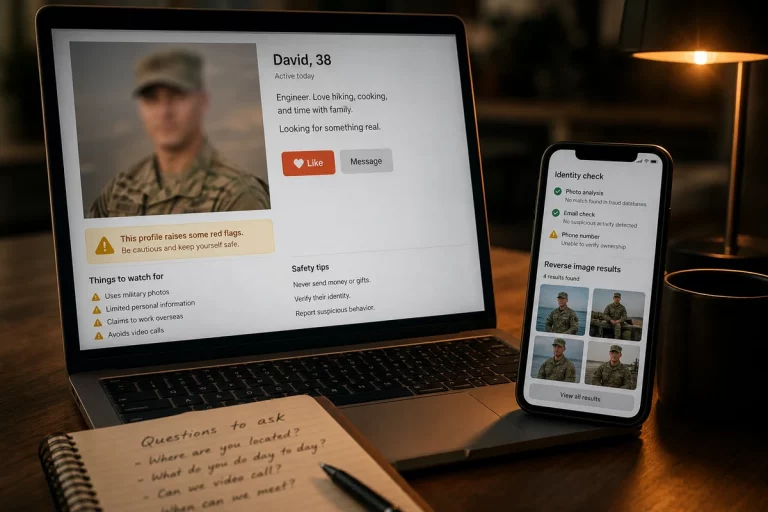
Scammers invest significant effort into creating convincing fake profiles, but telltale signs expose their deception when you know what to look for. Scammers often use stolen or generic photos, and their profiles typically lack the detailed personal information that genuine users naturally share. You’ll notice these profiles feature professional-quality images that seem too polished or appear across multiple dating platforms.
Authentic profiles demonstrate social connections and verifiable details about work, hobbies, and location. Fake accounts show limited friends or followers on linked social media, if they provide any social links at all. Scammers avoid sharing information you could verify independently, such as workplace details or mutual connections in your area.
Watch for reluctance to provide additional photos or engage in video calls. Genuine people eagerly share more about themselves and welcome opportunities to connect face to face. Scammers make excuses about broken cameras, poor internet connections, or scheduling conflicts that mysteriously never resolve. These patterns are among the most reliable indicators of online dating scams.
🔍
Pro Tip
Run a reverse image search on profile photos using GuyID’s free safety tools, Google Images, or TinEye to check if the same picture appears on other websites or social media accounts under different names. This takes less than 60 seconds and catches the majority of fake profiles.
- Check if profile photos appear too professional or model-like — scammers use stock photos, AI-generated images, or stolen pictures from influencers
- Look for vague descriptions about work, location, or personal interests that lack specific, verifiable details
- Notice if social media links are missing or lead to sparse accounts created recently with few real connections
- Question profiles that avoid specifics about their daily life, workplace, or routine — genuine people share these naturally
- Be suspicious of accounts created very recently with few connections, no tagged photos, and minimal engagement history
Common Emotional Manipulation Tactics Used by Scammers
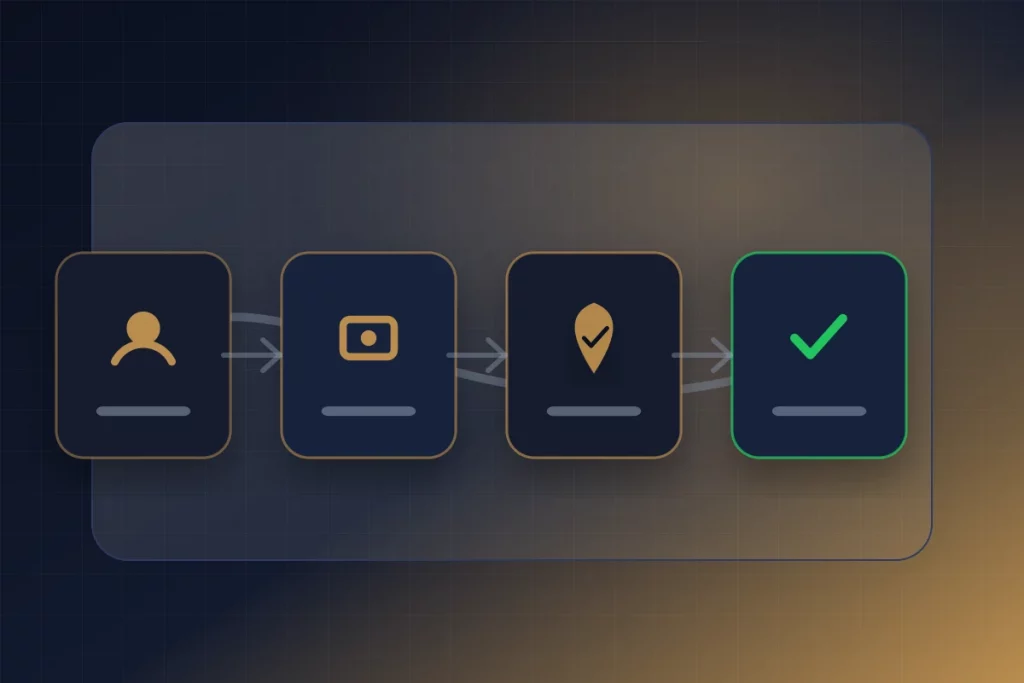
Scammers excel at psychological manipulation, using techniques designed to bypass your rational defenses and create artificial intimacy. Love-bombing builds trust quickly by overwhelming targets with excessive compliments, declarations of deep feelings, and talk of future plans within days or weeks of initial contact. This manufactured intensity feels thrilling but serves to lower your guard and make you emotionally invested before you can properly assess the relationship — a hallmark of online dating scams.
The technique exploits natural human desires for connection and validation. Scammers mirror your interests perfectly, agree with your opinions enthusiastically, and claim you’re their soulmate or perfect match. They create a sense of urgency around the relationship, suggesting fate brought you together and time is precious. AI bots can now send 60+ messages in just 12 hours, making this manipulation easier to scale than ever.
Scammers identify and exploit personal vulnerabilities you reveal in conversations. If you mention loneliness, recent loss, or financial stress, they position themselves as the solution to your problems. They offer emotional support that feels genuine while simultaneously creating dependence on the relationship.
“Scammers rely on social engineering techniques to seduce victims emotionally before making financial requests. They study psychology to understand what makes people trust — and how to manipulate those instincts for criminal gain.”
- Excessive compliments and declarations of love within the first few conversations — genuine connections don’t move this fast
- Rapid progression from casual chat to serious relationship discussions — healthy relationships develop gradually over weeks and months
- Perfect alignment with your interests, values, and life goals — real people have differences; scammers mirror everything you say
- Creating urgency by claiming limited time, special circumstances, or that you must act now before it’s too late
- Isolating you from friends or family who might question the relationship — this is a classic manipulation tactic across all forms of abuse
Common Scammer Stories and Financial Red Flags to Watch For
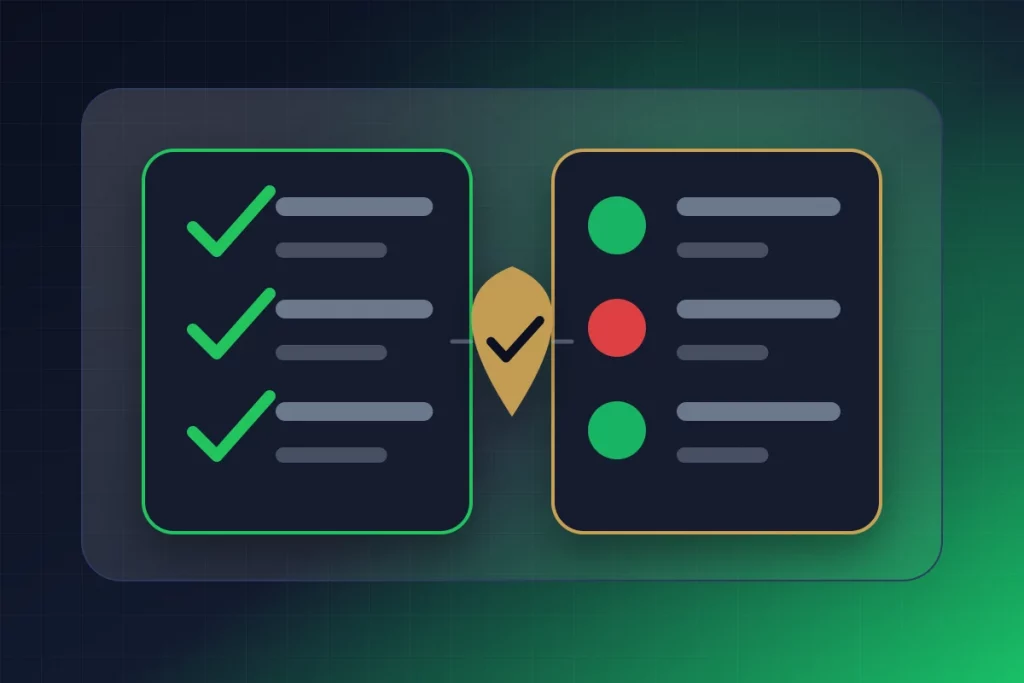
Scammers rely on predictable narratives that explain why they need money and why verification is difficult. Common stories involve working overseas, military deployment, oil rig assignments, or international business that conveniently prevents in-person meetings. These scenarios create built-in excuses for why video calls are challenging and why they might need financial help — and they are the most dangerous phase of online dating scams.
Typical scam stories include frozen bank accounts, urgent medical emergencies for themselves or family members, visa or travel document fees, or customs charges for packages. The requests escalate gradually, starting with small amounts to test your willingness before demanding larger sums. Each story creates time pressure that discourages you from thinking critically or seeking outside advice. With substantial reported investment-fraud losses lost to investment scams in 2024 (FTC) — many of which started as romance scams — the financial stakes are enormous.
Payment requests use untraceable methods like gift cards, wire transfers, or cryptocurrency that offer no recourse once sent. Legitimate people accept standard payment methods and never pressure you into unfamiliar financial transactions. Scammers insist on these specific methods because they know recovery is nearly impossible.
| Scam Method | Common Story | Key Red Flag |
|---|---|---|
| Gift cards | “Need cards for phone service or bills” | Legitimate people never request gift cards for emergencies |
| Wire transfer | “Frozen account needs temporary help” | Banks don’t freeze accounts requiring wire transfers to strangers |
| Cryptocurrency | “Investment opportunity or transfer fees” | Romantic partners don’t involve you in crypto transactions |
| Package forwarding | “Send items to your address for reshipping” | This involves you in fraud or money laundering schemes |
⚠️
Critical Rule
Never send money, gift cards, or cryptocurrency to someone you haven’t met in person, regardless of how compelling their story sounds or how strong your emotional connection feels. This single rule prevents the majority of romance scam losses.
- Ask for specific details about their situation that you can verify independently
- Request a video call to confirm their identity before considering any financial help
- Research the story they’re telling to see if it matches common scam patterns
- Consult trusted friends or family members about the request before acting
- Contact the dating platform to report suspicious behavior or financial solicitation
How to Make Informed Decisions and Protect Yourself from Online Dating Scams
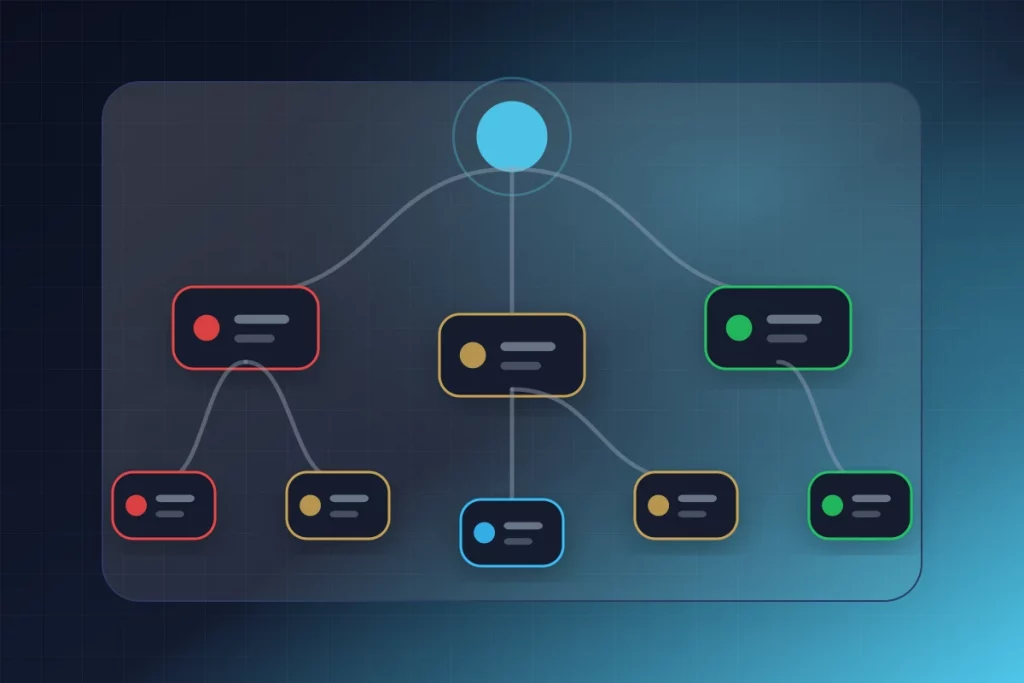
Protecting yourself from online dating scams requires combining skepticism with practical verification strategies that confirm someone’s identity before emotional or financial investment deepens. Use multiple appropriate signals when evaluating identity — video calls at random times, checking their social media presence for consistency, and looking for mutual connections who can vouch for them.
Avoid sharing sensitive personal information like your home address, workplace details, financial information, or daily routines until you’ve met in person multiple times and established genuine trust. Scammers use this information to make their stories more convincing or to target you for additional fraud. Keep early conversations focused on getting to know each other without revealing exploitable details.
Be especially skeptical when someone’s story keeps changing or they provide inconsistent information about their background, location, or circumstances. Genuine people maintain consistent narratives because they’re telling the truth. Scammers struggle to remember the details of their fabricated stories across multiple conversations.
Safe vs. Risky Dating Behaviors
✅ Safe Responses
Video callsInsist on video before deepening relationship
Social mediaVerify accounts show years of authentic activity
MeetingMeet in public after reasonable getting-to-know period
SupportDiscuss new relationships with trusted friends/family
VerificationUse reverse image search and identity verification tools
🚫 Risky Behaviors
Video callsAccept broken camera excuses indefinitely
Social mediaTrust newly created accounts with minimal history
MeetingAgree to keep relationship online-only for months
SupportKeep relationship secret from people who care about you
VerificationTake profile information at face value without checking
-
Schedule video calls at different times to confirm they’re who they claim and actually available when they say they are
-
Check that social media accounts show consistent long-term activity with real friends, tagged photos, and genuine engagement
-
Search their name, phone number, and email address for any red flags or scam reports online
-
Notice if they avoid answering direct questions about verifiable details like where they work, where they went to school, or who their friends are
-
Report suspicious profiles to the dating platform immediately to protect other users
Conclusion: Turn Red-Flag Awareness Into a Repeatable Safety Check
Now that you understand the red flags and manipulation tactics scammers use, you can enhance your safety with specialized verification tools designed specifically for detecting online dating scams. These resources help you objectively assess profiles and detect warning signs you might miss when emotions are involved.
Dating Bio Red Flag Detector
The dating bio red flag detector analyzes profile text for language patterns common in scam accounts — identifying suspicious phrasing, inconsistent details, and manipulation tactics that human readers often miss. This AI-powered analysis gives you an objective risk assessment within seconds.
Catfish Probability Detector
The catfish probability detector evaluates multiple signals to estimate profile authenticity — examining photo consistency, profile completeness, behavioral indicators, and communication patterns to provide a comprehensive risk score.
Reverse Image Search
GuyID’s reverse image search tool checks whether profile photos appear elsewhere online under different names — the fastest way to catch profiles using stolen or stock images. Combined with Google Images, TinEye, and Yandex, this multi-engine approach catches the majority of fake photos.
Romance Scam Risk Calculator
The romance scam risk calculator analyzes conversation patterns and profile data against known scam indicators.
Combining your knowledge of scam tactics with data-driven analysis from GuyID’s 60+ free safety tools creates a powerful defense against deception. Review dating safety statistics to understand how widespread these scams are and why verification matters. For men who want to proactively prove they’re safe, a GuyID Trust Profile with government ID verification and social vouching provides the kind of multi-layered trust that no dating app badge can match.
Frequently Asked Questions
What are the most common red flags that indicate a romance scam?
How can I verify if someone I met online is genuine?
How do online dating scams typically start?
What payment methods do romance scammers prefer?
Evidence Note
The FTC identifies fake profiles, rapid off-platform contact, money requests, and inconsistent images as warning signs, and recommends stopping communication and reporting a suspected romance scam.