
Identity verification trends 2026 for safer dating
Most online daters assume platforms have foolproof identity verification to keep them safe. The reality is far more concerning. Scammers have evolved sophisticated tactics that bypass traditional checks, leaving users vulnerable to catfishing and fraud. In 2026, new identity verification technologies are finally catching up to these threats. This guide explores cutting-edge verification trends transforming online dating safety, helping you understand how to protect yourself while finding genuine connections. You’ll learn to recognize red flags, leverage advanced tools, and make informed decisions about who you trust online.
Overview of Identity Verification Challenges in Online Dating
Online dating platforms have struggled to keep pace with evolving fraud tactics. Traditional identity verification methods like uploading photo IDs or taking selfies seem reassuring, but scammers have learned to manipulate these systems. Deepfake technology now creates convincing fake videos. Stolen identities get reused across multiple profiles. Social engineering tricks users into trusting verified accounts that hide malicious intent.
The statistics paint a troubling picture. Dating scams rose significantly, exploiting weak identity checks on platforms. Users report losing money, emotional wellbeing, and trust in online connections. Even profiles displaying verification badges can belong to scammers who purchased stolen credentials or used sophisticated forgery techniques.
Platforms face a difficult balancing act. Implementing rigorous verification creates friction that drives users away. Making checks too easy invites fraudsters. Privacy concerns add another layer of complexity, as users rightfully worry about sharing sensitive documents with dating apps. This creates confusion about what verification actually proves.
Many daters feel uncertain about how to interpret verification indicators. Does a blue checkmark guarantee someone is who they claim? Can you trust a profile that passed facial recognition? The answer depends on which verification methods the platform uses and how thoroughly they implement them. Without understanding these nuances, users remain vulnerable.
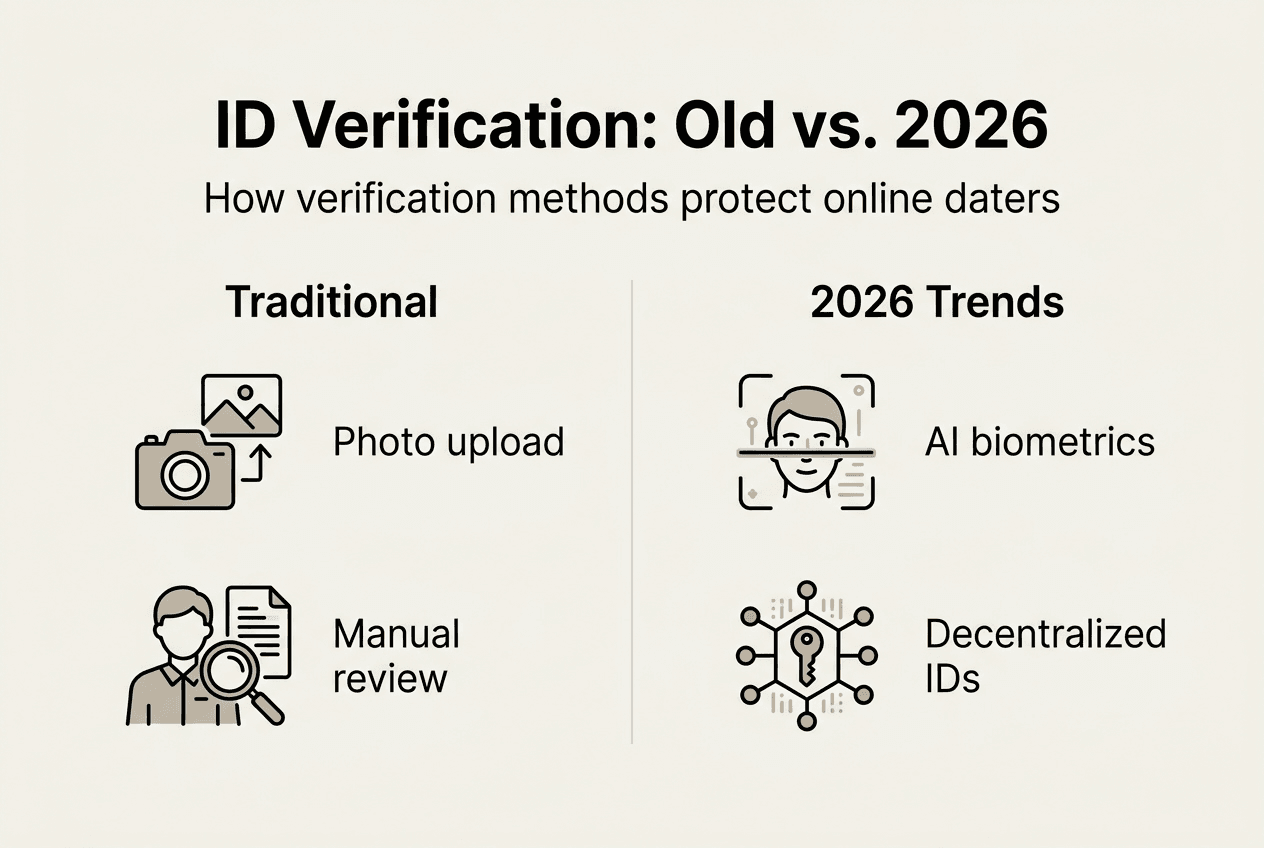
How identity verification trends have shifted from legacy to modern approaches in 2026
- Scammers exploit gaps between user expectations and actual verification strength
- Multiple identity verification types exist but platforms rarely explain their limitations
- Users need education about what different verification badges actually confirm
- Privacy concerns prevent some platforms from implementing stronger checks
This challenge demands new approaches that combine stronger security with better user experience and privacy protection.
Top Identity Verification Trends Transforming Online Dating in 2026
The identity verification trends landscape has shifted dramatically. AI-driven biometric checks and decentralized IDs are becoming mainstream in identity verification. These technologies address previous weaknesses while introducing capabilities that seemed futuristic just years ago.
AI-Powered Biometric Identity Verification
Artificial intelligence now powers facial recognition systems that detect subtle inconsistencies invisible to human reviewers. Liveness detection ensures the person creating an account is physically present, not using a photo or video recording. These systems analyze micro-movements, skin texture, and lighting patterns to identify spoofing attempts. The technology has become sophisticated enough to catch deepfakes that fool casual observers.
Decentralized Identity Verification Systems
Decentralized identity verification represents a paradigm shift in how personal data gets managed. Instead of platforms storing your documents on centralized servers vulnerable to breaches, you control your verified credentials through encrypted digital wallets. When joining a new platform, you share only necessary information without uploading documents repeatedly. This approach enhances both security and privacy.
- Continuous authentication monitors behavior patterns throughout user sessions rather than verifying once at signup
- Multi-factor verification combines biometrics with device fingerprinting and behavioral analysis for layered security
- Interoperable standards allow verified identities to transfer between platforms without redundant checks
- Privacy-preserving cryptography enables verification without exposing underlying personal data
- Blockchain-based audit trails create tamper-proof records of all verification events
2026 Verification Methods at a Glance
These trends work best when combined rather than used in isolation. A platform using AI facial recognition plus behavioral analysis provides stronger protection than either method alone. The key is understanding how each technology contributes to overall security.
Look for platforms that clearly explain which identity verification trends they use and what each method confirms about a user’s identity.
The shift toward user-controlled identity represents perhaps the most significant change. Traditional systems required trusting platforms with sensitive documents. Decentralized approaches flip this model, giving you ownership while still providing platforms with verification confidence. This reduces data breach risks and gives you portability across services.
Comparing Traditional and 2026 Identity Verification Methods
Understanding the differences between legacy and modern identity verification trends helps you evaluate platform security. Legacy methods struggle with accuracy and fraud resilience compared to next-gen solutions. The contrast reveals why 2026 technologies offer substantial improvements.
Why Traditional Identity Verification Falls Short
Traditional photo ID uploads provided convenience but created multiple vulnerabilities. Scammers easily obtained fake IDs or used stolen documents. Platforms storing these images became attractive targets for data breaches. Users worried about privacy had legitimate concerns about who accessed their documents. The verification only confirmed someone uploaded an ID — not that the person matched the document.
Selfie verification added a layer by requiring users to photograph themselves. However, scammers adapted by using photos of the real ID holder or employing basic photo manipulation. Without liveness detection, printed photos or screen displays could fool these systems. The method improved on simple ID uploads but remained insufficient against determined fraudsters.

Traditional photo ID uploads create the exact vulnerabilities that modern identity verification trends are designed to fix
| Aspect | Traditional | 2026 Methods |
|---|---|---|
| Forgery resistance | Low–Med | Very High |
| Privacy protection | Low | High |
| Ongoing verification | None | Continuous |
| Data portability | None | High |
| User convenience | High | Med–High |
| Cost to implement | Low | Med–High |
AI-based behavioral analysis operates differently from document checks. These systems monitor how users interact with platforms, flagging suspicious patterns like mass messaging, scripted responses, or login anomalies. This approach catches scammers who passed initial verification but exhibit fraudulent behavior later. The continuous nature provides ongoing protection rather than a one-time gate.
Decentralized identity systems offer the strongest privacy and security combination. You maintain encrypted credentials on your device or secure wallet. Platforms verify these credentials cryptographically without seeing underlying documents. If a platform gets breached, your actual identity documents remain safe. The trade-off involves higher initial setup complexity and lower current adoption rates.
- Traditional methods prioritize convenience over security
- Modern identity verification trends balance multiple factors including privacy
- No single method provides perfect protection alone — layering is essential
- Combining verification types creates the strongest security posture
- User education remains critical regardless of technology sophistication
The security improvements come with considerations. More rigorous verification takes longer and requires better technology. Some users find multi-step processes frustrating. Platforms must weigh these factors against the protection benefits. The trend clearly moves toward stronger verification as technology makes it more seamless.
How to Apply 2026 Identity Verification Trends for Safer Online Dating
Understanding these identity verification trends matters little without knowing how to use them practically. Awareness and proactive use of new verification tools drastically reduces victimization rates. These strategies help you leverage modern verification for genuine safety improvements.
Evaluate Platforms Using Identity Verification Trends
Start by evaluating what identity verification trends your chosen platforms actually use. Don’t assume a verification badge means the same thing across different services. Some platforms only verify email addresses, while others use facial biometrics. Understanding this distinction helps you calibrate trust appropriately. Look for platforms transparent about their verification processes and security measures.
Layer Your Identity Verification Signals
Multiple verification indicators provide stronger confidence than any single signal. A profile showing government ID verification, facial biometric confirmation, phone number verification, and social media linking deserves far more trust than one with only email verification. Scammers rarely invest effort in passing multiple verification types. This layered approach significantly reduces risk.
- Never rely solely on platform verification to establish trust
- Use independent verification tools to cross-check suspicious profiles
- Watch for inconsistencies between verified information and profile details
- Limit sensitive information sharing until establishing a genuine connection
- Trust your instincts when something feels wrong despite verification badges
Recognize that even verified profiles can belong to scammers who purchased stolen credentials or exploited system weaknesses. Pay attention to behavioral red flags like rushed intimacy, requests for money, reluctance to video chat, or stories that don’t add up. Verification confirms identity elements but doesn’t guarantee good intentions.
Before meeting someone from a dating app, run their profile through multiple identity verification checks — reverse image searches, phone number lookups, and behavioral analysis tools — to catch red flags that platform identity verification trends might miss.
Regularly use specialized safety tools that complement platform verification. These services analyze profiles for scam indicators, check photos against known catfish databases, and assess overall risk probability. They catch threats that slip through platform verification by using different detection methods and broader data sources.
Platforms supporting decentralized identity verification offer enhanced security but require initial setup. The investment pays off through better privacy protection and verification portability. As adoption grows, this approach will become standard. Early adopters gain security benefits while helping drive industry improvement.
Balance caution with openness. Excessive skepticism defeats the purpose of online dating. The goal is informed trust based on multiple verification signals, behavioral consistency, and gradual relationship development. Modern verification tools enable this balanced approach better than ever before.
Enhance Your Safety with GuyID’s Advanced Identity Verification Tools
Navigating online dating safely requires more than hoping platforms catch every scammer. GuyID provides specialized tools that put 2026 verification technologies directly in your hands. These resources help you identify red flags and assess risk before investing emotional energy or sharing sensitive information.
Dating Bio Red Flag Detector
The dating bio red flag detector analyzes profile text for patterns commonly associated with scammers — identifying suspicious language, inconsistent details, and manipulation tactics that human readers might miss. This AI-powered analysis gives you objective risk assessment within seconds.
Catfish Probability Detector
When you suspect a profile might be fake, the catfish probability detector evaluates multiple signals to calculate likelihood of deception — examining photo authenticity, profile consistency, and behavioral indicators to provide a comprehensive risk score. This helps you make informed decisions about whether to continue engaging.
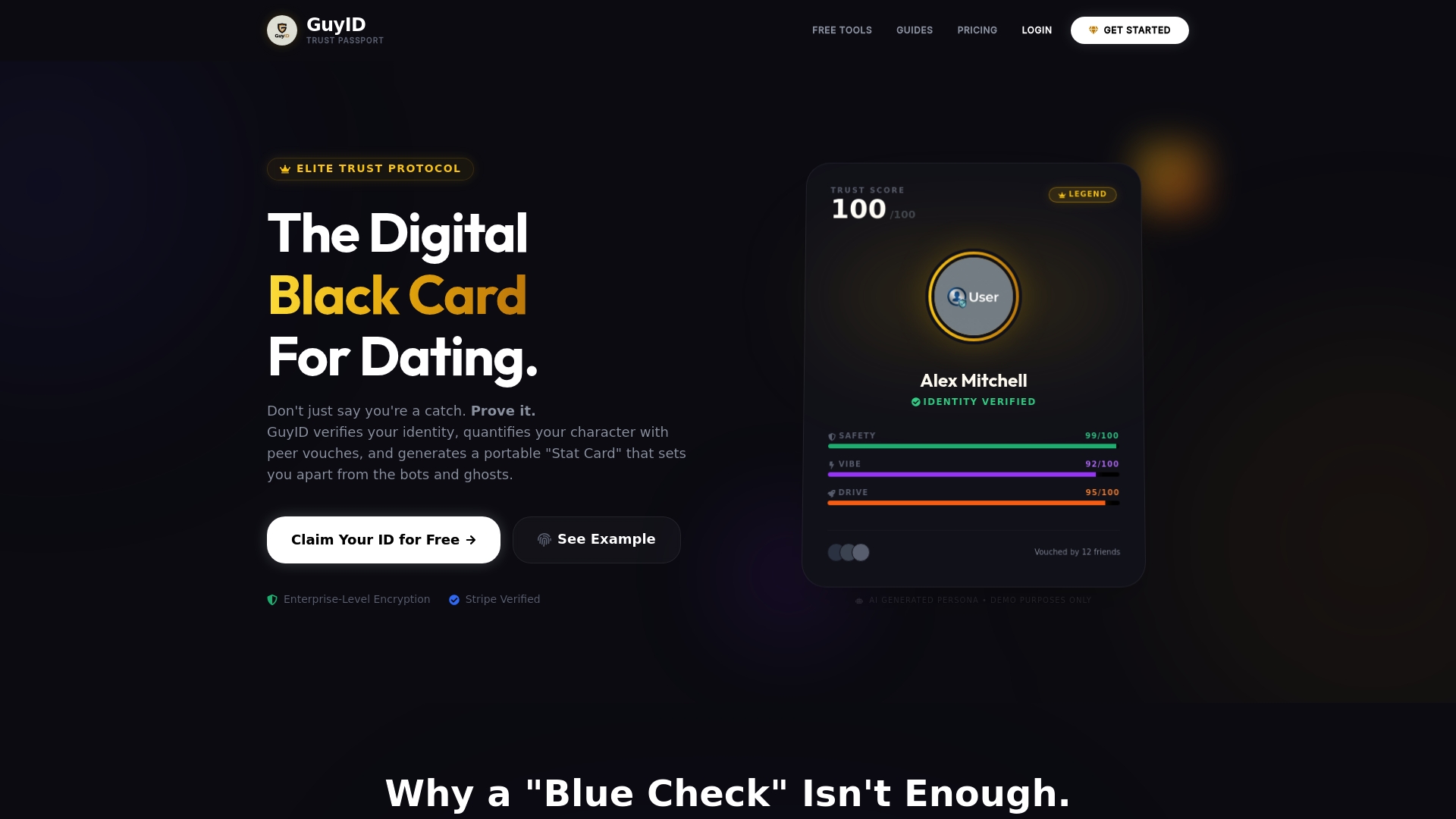
GuyID puts advanced identity verification tools directly in your hands
Dating Safety Statistics
Staying informed about emerging threats matters as much as checking individual profiles. Access dating safety statistics to understand current scam trends and evolving tactics. Knowledge about what scammers are doing right now helps you recognize threats faster and protect yourself more effectively.
GuyID’s consent-based identity verification puts the latest verification trends in your hands — completely free for women.
Frequently Asked Questions About Identity Verification Trends
What are the most reliable identity verification methods in online dating?
How can I tell if someone is faking their identity despite verification badges?
Are decentralized identity systems safe to use on dating platforms?
What should I do if I suspect a dating scammer despite verification?

Founder, GuyID · Dating Safety Researcher · 13+ Years in Data Analytics
Ravi Shankar is the founder of GuyID, a consent-based identity verification platform for online dating. With 13+ years in data analytics and a deep focus on consumer trust, Ravi built GuyID to close the safety gap women face in digital dating. His research found 92% of women report safety concerns, validating GuyID’s mission to lead the next wave of identity verification trends.
Connect on LinkedIn